2026 Best Plunger Cylinder Types for Global Buyers?

Time:2026-09-29 Author:Charlotte
0%

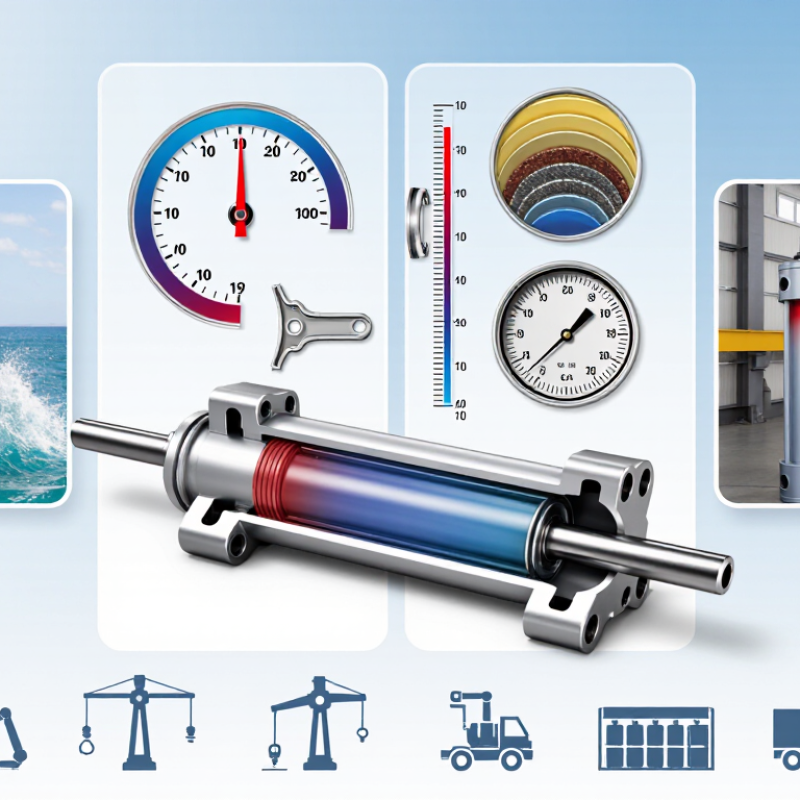
Choosing the right Plunger Cylinder for 2026 requires more than comparing prices or advertised load ratings. Buyers should examine bore diameter, stroke length, mounting design, sealing materials, operating pressure, and corrosion protection. A cylinder installed beside a coastal loading dock faces different risks from one operating inside a clean factory. Small details matter.

Industry data supports this careful approach. Grand View Research estimates that the global hydraulic cylinders market was valued at more than USD 15 billion in 2023, with continued growth expected through the decade. MarketsandMarkets also identifies construction, industrial machinery, and material handling as major demand areas. These figures describe hydraulic cylinders broadly, not every Plunger Cylinder application. That distinction is important, and often overlooked.

Hydraulics educator Brendan Casey has repeatedly warned buyers, “There is no such thing as a maintenance-free hydraulic system.” His point is practical. Even a well-designed cylinder needs clean oil, correct alignment, suitable seals, and scheduled inspection. For global buyers, the best 2026 choice may therefore be the cylinder with clearer documentation, stronger after-sales support, and verified testing, rather than the lowest quotation. ISO 6020 and ISO 6022 specifications can help compare dimensions and performance, but they do not replace application testing. No ranking is perfect. Supplier claims still require checking against drawings, test records, and real operating conditions.
2026 Best Plunger Cylinder Types for Global Buyers?

Plunger Cylinder Basics: Structure, Motion, and Key Operating Principles

A plunger cylinder converts fluid pressure into straight-line force. Its main parts are a barrel, a close-fitting plunger, a head or gland, and seals that limit leakage where the plunger exits. Unlike a conventional piston cylinder, the plunger itself extends from the body; it does not rely on a piston seal moving along the barrel. That distinction matters. In many designs, pressure acts on the plunger’s end area, so force depends on pressure and effective area. A smaller area can mean less force, even when the supply pressure stays constant.

During operation, pressurized fluid enters the cylinder and pushes the plunger outward. When pressure is released, return may come from a spring, gravity, or an external load, depending on the design. The stroke is usually controlled by the cylinder’s geometry and system controls. In a workshop, a plunger that moves smoothly under a centered load may bind when the load is slightly off-axis. Side loading, dirty fluid, worn seals, and poor mounting can all shorten service life. Check pressure ratings, stroke length, mounting alignment, and return method against the actual duty cycle. One detail is easy to overlook: a simple cylinder is not automatically a forgiving one. A little misalignment can matter.

Main Plunger Cylinder Types and Their Distinctive Design Features

2026 Best Plunger Cylinder Types for Global Buyers

Main Plunger Cylinder Types and Their Distinctive Design Features

Plunger cylinders use a moving ram to create hydraulic force. Single-acting designs extend under fluid pressure and retract through gravity or an external load. Their simple structure reduces maintenance points. They suit lifting platforms, presses, and heavy support systems. However, retraction speed can vary when load conditions change. This detail is easy to overlook.

Double-acting plunger cylinders use hydraulic pressure in both directions. They offer controlled extension and retraction, especially during repeated industrial cycles. Their design usually includes additional sealing and fluid passages. These parts improve control but require cleaner oil and careful inspection. In field testing, seal wear often appears before visible leakage.

Telescopic plunger cylinders contain several nested stages. They provide long strokes within a compact closed length, making them useful for trailers and lifting equipment. Hollow plunger cylinders include a central opening for pulling rods, cables, or threaded components. They are practical for tensioning and maintenance work. Locknut versions mechanically hold a raised load after extension. That feature supports safer servicing, but operators must engage the lock correctly. The word “best” is misleading here. Stroke length, side-load resistance, mounting space, fluid temperature, and local service access should guide selection. A technically strong cylinder may still perform poorly when installation conditions are ignored.

This chart compares common design features, not performance ratings. “Yes” indicates a feature typically associated with the design; actual configurations vary by manufacturer and application. Single-acting cylinders extend hydraulically and retract by load, gravity, or a spring. Hollow-ram designs add a central opening, while telescopic designs use nested stages to provide a long stroke from a compact retracted length. Double-acting ram cylinders use hydraulic pressure for extension and retraction.

How to Match Cylinder Types with Industrial Applications

Matching a plunger cylinder to an application starts with the load, stroke, and available space. Unlike double-acting cylinders, single-acting plunger cylinders use pressure in one direction and rely on gravity or an external force for return. They suit lifting tables, presses, and maintenance jacks where the load can retract the plunger. No powered return is needed. But horizontal installation can create problems if the plunger cannot retract reliably.

For high-force, short-stroke lifting, a compact, single-acting design may be practical. For controlled movement in both directions, a double-acting cylinder is usually a better fit. Telescopic designs can provide a long stroke where installation space is limited, such as vehicle lifting equipment. The trade-off is more moving stages and greater attention to alignment.

Grand View Research estimated the global hydraulic cylinder market at USD 14.1 billion in 2023, reflecting demand across construction, agriculture, and industrial equipment. That market figure does not determine the right cylinder; operating pressure, side loads, duty cycle, and contamination do. Check the mounting points and return method against the actual machine. Small details matter. A cylinder sized only by lifting force may wear unevenly when the load is off-center.

Critical Buying Factors for Global Plunger Cylinder Purchasers

2026 Best Plunger Cylinder Types for Global Buyers?
Critical Buying Factors for Global Plunger Cylinder Purchasers

Choosing a plunger cylinder starts with the job, not the catalog photo. Confirm the required force, operating pressure, stroke, and duty cycle. A cylinder that fits the space may still be undersized for repeated loads. Check how the plunger returns, too; some designs rely on an external force, which may not suit every installation. Small details matter.

Inspect the working environment closely. Dust, moisture, temperature swings, and side loading can shorten seal life or damage the rod. Ask for material specifications, seal options, dimensional drawings, and pressure-test records. These documents make supplier comparisons more reliable. Verify mounting dimensions against your equipment before ordering, especially when sourcing across regions. A few millimeters can become an expensive delay.

Also clarify delivery lead times, replacement-part availability, and how technical questions are handled after purchase. Request written confirmation of the exact configuration. That sounds obvious, but assumptions still cause avoidable problems. A lower purchase price may not reflect the cost of downtime or difficult maintenance. There is no universal best type; the right choice depends on load, installation, and service conditions. Even experienced buyers sometimes miss one constraint. Recheck the application before committing.

2026 Best Plunger Cylinder Types for Global Buyers? - Critical Buying Factors for Global Plunger Cylinder Purchasers
Cylinder type How it works Typical applications Main advantages Limitations to consider Critical purchasing checks
Single-stage, solid-plunger cylinder Hydraulic pressure extends one solid plunger. Most designs are single-acting; retraction is provided by the load, gravity, a spring, or another mechanism specified by the design. Presses, lifting and jacking equipment, ejectors, and other applications needing a straight-line push. Simple construction and a direct force path; a practical choice when the required stroke and retracted length fit the installation. A single stage can have a long closed length relative to its stroke. A single-acting design does not provide powered retraction. Confirm required force, stroke, operating pressure, retraction method, mounting dimensions, and whether the plunger needs external guidance.
Telescopic, multi-stage plunger cylinder Two or more nested stages extend in sequence to produce a long total stroke from a comparatively short retracted length. Many are single-acting, though configurations vary. Dump bodies, mobile equipment, lifting platforms, and installations with limited stowed space but substantial extension requirements. Provides a long stroke where a single-stage cylinder of equivalent stroke may not fit when retracted. Stage sequence, load capacity at each stage, side-load sensitivity, and overall stability require careful review. Multi-stage designs can be more complex to service. Check total and per-stage stroke, retracted and extended lengths, stage sequencing, load position, mounting, and manufacturer guidance on side loads.
Hollow-plunger cylinder A hollow plunger has a central opening that can accommodate a rod, cable, or similar component, depending on the cylinder design. Pulling, tensioning, strand or cable work, and applications where a load or component must pass through the center. Allows a through-center arrangement that a conventional solid plunger cannot provide. The opening affects the available load-bearing area and may limit the usable force compared with a similarly sized solid-plunger design. Verify the through-hole diameter and usable length, rated force and stroke, load connection, alignment, and whether the application requires a separate return mechanism.
Double-acting plunger / ram cylinder Hydraulic pressure is applied to extend and retract the plunger. Porting and internal construction are design-specific. Applications requiring controlled powered motion in both directions or where the load cannot reliably retract a single-acting cylinder. Provides powered retraction and can offer better control of return motion than a load-return arrangement. Requires hydraulic supply and control for both directions. It is a specialized configuration, so verify that the selected design genuinely supports the required return force and duty cycle. Confirm extension and retraction forces, port locations, circuit compatibility, operating pressure, seals, and the specified return-load limits.
Buying factor: force and operating pressure Hydraulic force is related to pressure and effective area. Actual usable force can be affected by friction, geometry, and system losses. Size the cylinder for the required load and duty, not only the maximum pressure listed for a component. Confirm that the cylinder, hoses, fittings, valves, and power unit are compatible with the intended operating pressure.
Buying factor: stroke, mounting, and stability Stroke and mounting determine whether the cylinder fits and remains suitably supported through its working movement. Compare the required stroke with retracted and extended lengths, pin or flange dimensions, alignment, and available space. Ask the supplier for applicable side-load limits and support requirements; do not assume a plunger is suitable for unsupported lateral loading.
Buying factor: fluid, seals, and environment Seal materials and surface protection must suit the hydraulic fluid, temperature range, contamination exposure, and operating environment. Specify the actual fluid and temperature range, plus exposure to dust, water, corrosion, or chemicals. Confirm seal compatibility, surface protection, ingress protection where applicable, and maintenance requirements with the manufacturer.
Buying factor: documentation and global delivery Requirements vary by destination, industry, installation, and applicable local regulations. Request a dimensioned drawing, rated operating data, installation and maintenance instructions, materials and seal information, and any test or conformity documents required in the destination market. Confirm language, spare-part availability, packaging, delivery terms, and warranty conditions before ordering.

Installation, Maintenance, Safety, and International Supply Considerations

2026 Best Plunger Cylinder Types for Global Buyers

Choosing a plunger cylinder starts with the load, stroke, speed, and installation space. Single-acting models suit lifting tasks with gravity-assisted return. Double-acting models offer controlled movement in both directions. Telescopic designs help when long strokes must fit into compact equipment. During installation, align the cylinder carefully and prevent side loading. A small angle error can damage the rod, seals, and mounting points. Use rated hoses, secure fittings, and suitable supports. Never rely on hydraulic pressure alone to hold a raised load.

Maintenance should include weekly leak checks, rod cleaning, and inspection of mounting bolts. Replace damaged seals before oil contamination spreads through the system. Check fluid compatibility with seal materials and operating temperatures. Safety depends on pressure relief protection, guarding, and clear lockout procedures. Keep hands away from moving parts. Pressure can remain trapped after shutdown. Verify zero pressure before service. A practical mistake is checking the cylinder but ignoring the pump, hose, and frame around it.

For international supply, buyers should provide drawings, duty cycles, mounting details, fluid specifications, and local performance requirements. Ask for material records, dimensional inspection reports, pressure-test results, and traceable serial information. Confirm packaging protects machined surfaces from moisture during sea transport. Spare seal kits reduce downtime at remote sites. Lead times can change when custom coatings or nonstandard ports are required. I would also review communication quality before ordering. A perfect quotation cannot repair unclear technical data. Inspections before shipment are useful, but they do not replace careful commissioning onsite.

FAQS

What does a plunger cylinder do?

It converts fluid pressure into straight-line force. Pressurized fluid pushes the plunger outward.

How is a plunger cylinder different from a piston cylinder?

The plunger extends from the cylinder body. It does not use a piston seal moving along the barrel.

What determines the force it produces?

Force depends on pressure and the plunger’s effective area. A smaller area can produce less force at the same pressure.

How does the plunger return?

Return may come from a spring, gravity, or an external load. Check that the chosen method suits the installation.

What can cause binding or early wear?

Side loading, dirty fluid, worn seals, and poor mounting can cause trouble. Even slight misalignment may matter.

What should buyers check before choosing a cylinder?

Confirm required force, operating pressure, stroke, and duty cycle. Also check the working environment and mounting dimensions.

Which documents and details are useful when comparing options?

Request material specifications, seal options, dimensional drawings, and pressure-test records. Get the exact configuration confirmed in writing.

Does a lower purchase price always mean a better choice?

Not necessarily. Downtime and difficult maintenance can add costs later. It is easy to miss one constraint, so recheck the application.

Conclusion

Choosing the right Plunger Cylinder in 2026 requires a clear understanding of its structure, movement, and operating principles. Designed to convert fluid pressure into controlled linear motion, plunger cylinders differ in rod configuration, sealing methods, pressure capacity, stroke length, and installation style. Common types may include single-acting, double-acting, compact, heavy-duty, and customized designs, each offering distinct advantages for lifting, pressing, clamping, positioning, or material handling applications.

Global buyers should match cylinder type with working load, motion frequency, operating environment, available space, and required precision. Important purchasing factors include materials, corrosion resistance, seal quality, pressure and temperature ratings, service life, compatibility with the hydraulic or pneumatic system, documentation, and total cost. Correct installation, alignment, lubrication, inspection, and scheduled maintenance help prevent leakage and premature wear, while appropriate guarding and pressure control improve workplace safety. For international supply, buyers should also confirm packaging, technical support, spare parts availability, delivery conditions, quality inspection procedures, and compliance with applicable local requirements.


Charlotte

Charlotte

Charlotte is a seasoned marketing professional with a deep understanding of the company's portfolio and a passion for elevating its presence in the market. With a keen eye for detail and a commitment to excellence, she ensures that our professional blog is regularly updated with insightful articles......