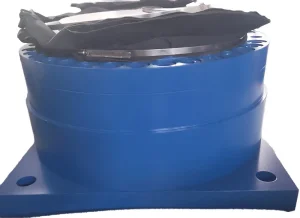
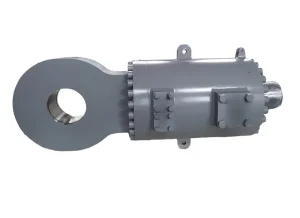
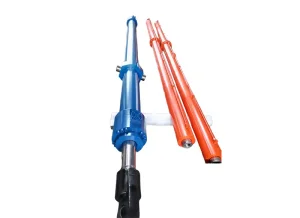
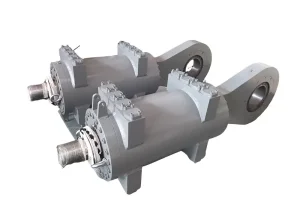
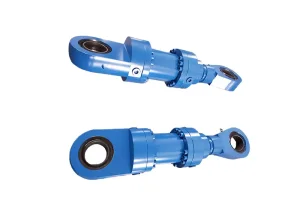
Precision-machined, drop-in replacement cylinders engineered to withstand heavy vibration, high radiation heat, and continuous 24/7 duty cycles.
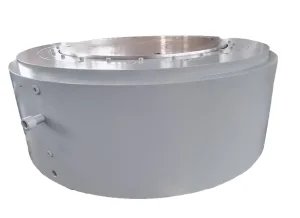
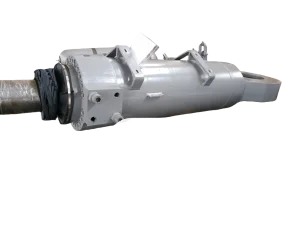
Analyzing the macro-economic demand, structural mechanical requirements, and supply-chain dynamics of hydraulic thrust roller systems across modern thermal processing plants.
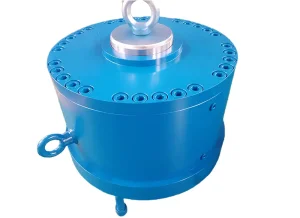
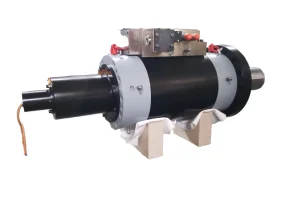
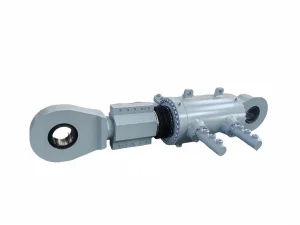
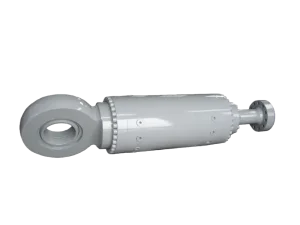
Rotary kilns are the structural backbone of global cement clinker production, pyrometallurgical ore reduction, and chemical calcination. Operating on an inclined axis (typically 3% to 5% slope), a rotating kiln shell weighing thousands of metric tons experiences continuous downward axial force due to gravity. The rotary kiln hydraulic cylinder—integrated into the Hydraulic Thrust Roller (HTR) system—acts as the dynamic load-balancing mechanism that controls this axial drift.
Without precise, controlled hydraulic thrust, uneven contact between kiln tires (riding rings) and support rollers causes catastrophic fatigue, surface spalling, ring gear misalignments, and costly unscheduled downtime. Leading cement conglomerates and mining operations prioritize heavy-duty hydraulic thrust cylinders to ensure controlled axial travel (typically ±10mm to ±30mm stroke window), extending tire and roller operational lifespans by up to 300%.
As industrial manufacturing expands across Southeast Asia, the Middle East, Latin America, and Africa, global demand for specialized Rotary Kiln Hydraulic Cylinder Exporters & Manufacturers has surged. Sourcing teams seek manufacturing partners capable of delivering heavy-wall forged cylinders, custom mounting geometries, and superior seal packings capable of resisting extreme thermal radiation (ambient temperatures up to +180°C near the kiln shell) and abrasive airborne dust.
Understanding how hydraulic thrust cylinders master the force vectors, thermal growth, and tribological stresses of rotating kiln barrels.
A rotary kiln hydraulic thrust roller system continuously monitors the axial position of the kiln shell using mechanical limit switches or digital magnetostrictive sensors. When the kiln drifts downward under gravity, the hydraulic cylinder receives pressurized fluid from a specialized hydraulic power unit (HPU). The cylinder exerts an upward axial force against the thrust roller bevel, gently pushing the entire kiln shell upward by 10 to 20 mm over a calculated cycle (e.g., 8 to 24 hours). Once reaching the upper threshold, pressure is gradually relieved, allowing the kiln to move downward in a controlled drift.
Kiln loading changes dynamically based on clinker feed rate, coating buildup inside refractory bricks, and rotational velocity. The hydraulic cylinder must withstand static loads while accommodating dynamic hydraulic spikes without seal extrusion or rod deflection.
Exporters of rotary kiln hydraulic cylinders must adhere to rigorous structural standards:
The technological evolution of rotary kiln thrust actuation: Moving from passive mechanical control to intelligent, sensor-integrated electro-hydraulic systems.
Modern rotary kiln cylinders feature embedded Magnetostrictive Linear Position Sensors and internal pressure transducers. Real-time stroke telemetry and pressure data are fed directly into plant SCADA/DCS systems. Algorithmic telemetry enables early detection of abnormal shell axial resistance, hydraulic pressure spikes, or seal leakage long before physical failure occurs.
To eliminate stick-slip phenomenon during low-velocity axial adjustments, high-end thrust roller cylinders incorporate hydrostatic support pockets. Pressurized oil film pockets maintain liquid separation between sliding guide surfaces, dramatically lowering breakaway friction coefficient (μ < 0.005) and eliminating stick-slip induced vibrations in massive kilns.
Radiant heat from the kiln shell (which can reach +350°C shell skin temperature) degrades conventional polyurethane seals rapidly. Exporters are implementing multi-layered stainless steel thermal baffles, water-cooled jacketed rod guards, and high-temp synthetic fluid compatibility (e.g., phosphate ester or synthetic polyol esters) to ensure thermal stability.
| Development Era | Actuation Technology | Sealing & Fluid Architecture | Control Precision | Maintenance Paradigm |
|---|---|---|---|---|
| Generation 1 (Legacy) | Mechanical thrust rollers with fixed stop rings | NBR seals, standard mineral hydraulic oil | No axial position control | Reactive (High roller wear) |
| Generation 2 (Standard) | Single/Double-acting hydraulic cylinders with limit switches | FKM Viton seals, external heat deflectors | ±10 mm limit switch control | Time-based preventative overhaul |
| Generation 3 (Current High-End) | Proportional hydraulic thrust cylinders with internal LVDT | PTFE-Bronze low-friction composite seals | ±1.0 mm continuous proportional stroke | Condition monitoring & telemetry |
| Generation 4 (Future Roadmap) | Autonomous Electro-Hydraulic Actuators (EHA) with Digital Twin | Hydrostatic oil film bearing + ceramic coating | ±0.1 mm closed-loop adaptive positioning | AI predictive failure analytics |
Tailor-engineered hydraulic thrust roller cylinders operating in harsh industrial environments worldwide.
In 2,500 to 10,000 TPD dry-process cement lines, rotary kilns operate under continuous heat and heavy dust load. The hydraulic cylinder drives the thrust roller against the main tire to balance axial movement caused by the kiln’s 3.5% to 4% inclination angle, ensuring smooth gear mesh with the main pinion.
Used in Nickel Pig Iron (NPI), Direct Reduced Iron (DRI), and Lithium Carbonate spodumene calcination kilns. These processes feature high process temperatures and high operational speeds. Custom heavy-duty cylinders with high-temperature FKM seals prevent hydraulic oil oxidation and seal degradation.
Pulp & paper lime reburning kilns, titanium dioxide (TiO2) calciner kilns, and soda ash production kilns require ultra-precise axial movement to maintain gas tight sealing at both inlet and outlet hood seals. Hydraulic cylinders ensure repeatable, smooth stroke travel.
Overcoming field failure modes, addressing installation constraints, and providing drop-in replacements for major global equipment brands.
As specialized Rotary Kiln Hydraulic Cylinder Exporters, engineering teams deliver 100% interchangeable replacement cylinders that align perfectly with original mounting centerlines, port layouts, and hydraulic stroke parameters for leading OEMs, including:
*Disclaimer: All OEM brand names and trademarks belong to their respective owners. Replacement units are independently engineered by Xuanda Hydraulic for compatible fitment.
Addressing essential procurement, engineering, and maintenance inquiries for overseas clients and OEM buyers.
Discover specialized hydraulic cylinders designed for heavy equipment across cement plants, steel mills, stacker reclaimers, and power facilities.