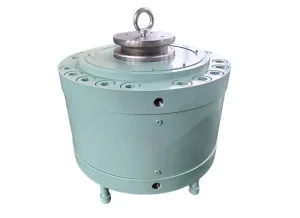
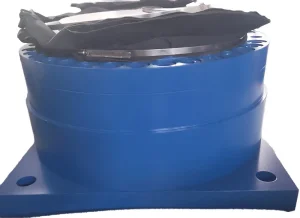
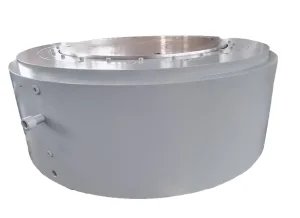
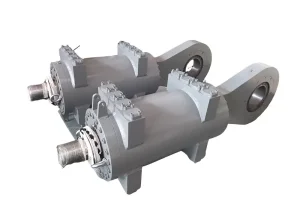
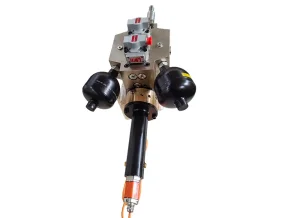
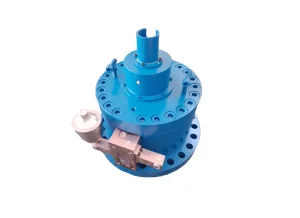
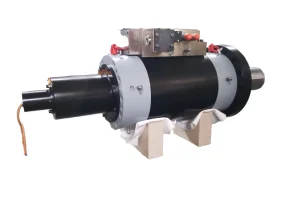
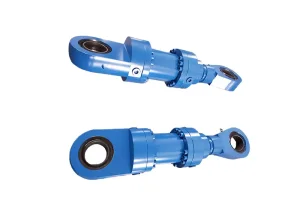
Explore our flagship clearance seal servo cylinders and heavy-duty industrial mill actuators engineered for zero stick-slip and maximum MTBF under severe field operating conditions.
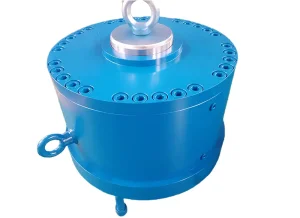
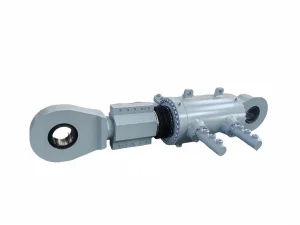
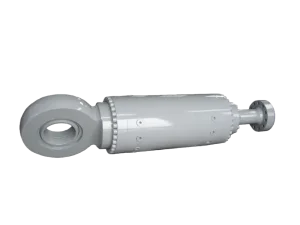
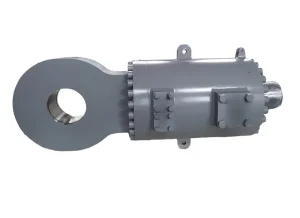
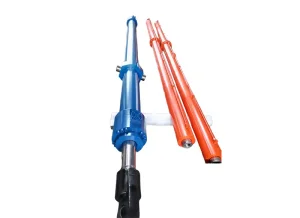
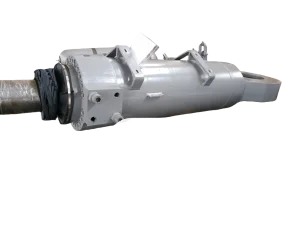
In high-frequency servo testing systems, continuous heavy-duty crushing mills, and precision aerospace simulation rigs, conventional dynamic contact seals (elastomeric U-cups, PTFE step-seals, polyurethane rings) impose severe design constraints. Mechanical contact generates dynamic friction hysteresis, thermal degradation, stick-slip motion at low velocities, and eventual seal blowout due to abrasive particulate ingress or fluid shear heating. Clearance seal hydraulic cylinders represent the technological pinnacle of non-contact fluid restriction, utilizing precise annular micro-gaps to isolate hydraulic pressure chambers while maintaining near-zero frictional resistance.
As a leading Chinese custom hydraulic cylinder manufacturer and global exporter, Changzhou Xuanda Hydraulic Electromechanical Equipment Co., Ltd. engineers clearance seal cylinders engineered with sub-micron radial tolerances. By controlling the annular gap between the piston and cylinder barrel (typically between 5 µm and 18 µm, depending on fluid viscosity and operating pressure), our design creates a controlled viscous fluid film that acts as both a lubricant and a seal, completely eliminating metal-to-metal contact and seal friction.
Traditional polymer seals suffer from high static friction ($F_s > F_k$), causing micro-shudder during velocity transition. Clearance seal design delivers linear dynamic response down to 0.01 mm/s velocity without stick-slip behavior.
Because sealing is achieved through a controlled laminar oil film rather than elastomeric deflection, there are no elastomeric seals to harden, wear, tear, or degrade thermally under high-frequency dynamic operation.
Unconstrained by polymer temperature thresholds (-20°C to +80°C), all-metal clearance seal cylinders operate smoothly in extreme environments from -50°C up to +260°C when paired with high-temperature synthetic fluids.
A side-by-side technical evaluation for system integrators, design engineers, and industrial plant procurement managers.
| Performance Characteristic | Clearance Seal Cylinder (Xuanda Precision) | Hydrostatic Support Servo Cylinder | Conventional Elastomeric/PTFE Cylinder |
|---|---|---|---|
| Sealing Mechanism | Micro-gap Viscous Oil Film (5-15 µm) | Externally Pressurized Hydrodynamic Pocket | Direct Mechanical Contact (PTFE/NBR/PU) |
| Breakaway Static Friction | Near Zero (< 0.05 bar differential) | Near Zero (< 0.08 bar differential) | High (2.0 - 5.0 bar differential) |
| Frequency Response | Up to 100 Hz | Up to 80 Hz | Limited (< 15 Hz) |
| Internal Leakage Rate | Controlled laminar return (0.1 - 1.5 L/min) | Medium return flow (1.0 - 3.5 L/min) | Zero external / Negligible internal |
| Side Load Capability | Moderate (Requires precision external alignment) | Extremely High (Hydrostatic lift pockets) | Moderate (Dependent on wear bands) |
| Oil Cleanliness Requirement | ISO 4406 14/11/8 (NAS Class 5) | ISO 4406 15/12/9 (NAS Class 6) | ISO 4406 19/16/13 (NAS Class 10) |
| Thermal Endurance | Up to +260°C (All Metal Construction) | Up to +150°C | Max +80°C to +120°C (Seal degradation) |
Deploying tailored hydraulic actuators across continuous-duty production facilities in over 30 countries worldwide.
Cement vertical roller mills (VRM) and high-pressure grinding roller (HPGR) presses operate under violent shock loads and abrasive clinker dust. Xuanda manufactures heavy-duty replacement loading cylinders compatible with Loesche LM, UBE UM, Pfeiffer MPS, FLSmidth ATOX, HCRI, TCD/TRM, Chengdu Leejun CLF, and CITIC Heavy Industries equipment. Engineered with heavy forged alloy barrels, induction-hardened chrome rods, and robust scraper arrangements, these cylinders maintain continuous grinding force while resisting fatigue failure.
Simulating structural fatigue on aircraft wings, automotive chassis, and seismic dampers requires actuators capable of millions of dynamic motion cycles without hysteresis. Clearance seal cylinders excel in closed-loop electro-hydraulic servo test stands, where non-contact sealing allows displacement control within ±1 µm and force response without friction non-linearities.
Steel plant Automatic Gauge Control (AGC) cylinders demand micro-second response speeds under immense rolling loads. In high-temperature rolling environments, clearance seal actuators prevent seal thermal hardening, keeping strip thickness tolerances consistent across multi-shift production runs.
From cement rotary kiln hydraulic thrust roller cylinders balancing axial thermal expansion to stacker-reclaimer hydraulic harrow cylinders working in open-pit coal yards, Xuanda provides specialized stroke lengths up to 8,000mm and bore diameters up to 1,200mm with integrated position sensing.
Achieving a reliable 5-micron radial clearance requires sub-micron machine tool control, advanced thermal stabilization, and strict quality control protocols. Changzhou Xuanda operates high-precision machine tools imported from Germany and Japan, paired with deep-hole boring machines, CNC internal honing units, and laser interferometry measuring setups.
Utilizing high-frequency internal honing machines to achieve bore cylindricality within 0.003 mm and surface finish $Ra \le 0.05 \mu m$. Cylinder rods undergo High-Velocity Oxygen Fuel (HVOF) thermal spraying or ceramic coating to maximize wear resistance and corrosion immunity in marine and chemical environments.
Modern industrial systems demand real-time diagnostics. Xuanda embeds non-contact magnetostrictive linear displacement transducers (LVDT) and digital pressure/temperature sensors directly into the cylinder head end, enabling predictive maintenance alerting via Industrial Ethernet (Profinet, EtherCAT).
Through finite element analysis (FEA) and 3D fluid-structure interaction (FSI) modeling, our R&D team continuously refines clearance gap geometries—introducing labyrinth grooves and hydrodynamic pressure pockets to minimize volumetric fluid loss while guaranteeing total zero-contact levitation under side-load spikes.
Future green manufacturing initiatives require compatibility with fire-resistant HFC/HFDU fluids and biodegradable synthetic esters. Our all-metal clearance seal designs eliminate chemical compatibility failures common with conventional elastomeric seals.
When specifying custom clearance seal cylinders or replacement cement machinery hydraulic cylinders, engineering teams should compile the following technical parameters to ensure drop-in operational performance:
Specify working pressure ($P_{work}$), peak shock pressure ($P_{max}$), stroke velocity range ($v_{min}$ to $v_{max}$), operational frequency (Hz), and expected duty cycle hours per annum.
Define hydraulic media type (ISO VG 32/46/68 mineral oil, synthetic ester, water-glycol), operating fluid temperature range, and filtration system rating (microns absolute).
Confirm mounting style (ISO 6020/2 flange, trunnion, spherical eye clevis), rod tip thread configuration, port size/flange code (SAE J518), and physical envelope dimensions.
Expert answers addressing B2B engineering, maintenance, and procurement inquiries.
Select your specialized application below to review product specifications or consult directly with our hydraulic engineering export department.