Engineered to OEM interfaces and heavy industrial duty cycles. Select a specialized hydraulic cylinder configuration below for detailed technical specifications and export options.
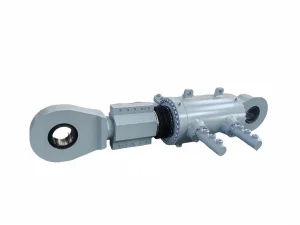
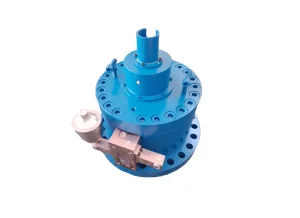
Cost-Effective Hydraulic Cylinder for Tianjin Cement Design Institute (TCD/TRM) Vertical Roller Mill Manufacturer, Exporters
View Specifications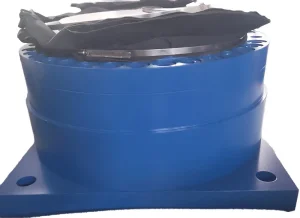
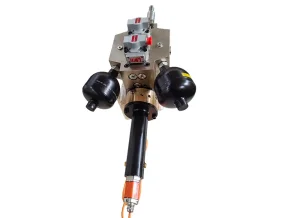
Custom Hydraulic Cylinder for Chengdu Leejun Roller Press Manufacturers, Exporter
View Specifications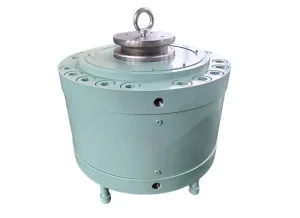
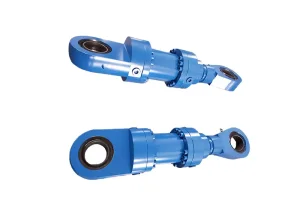
Custom Hydraulic Thrust Roller Cylinder for Cement Rotary Kiln Exporters, Exporter
View Specifications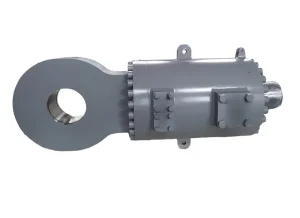
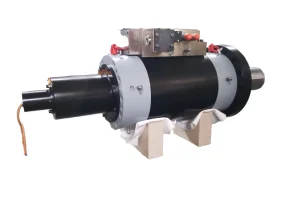
Durable Hydraulic Cylinder for UBE UM Vertical Roller Mill Manufacturers, Exporter
View Specifications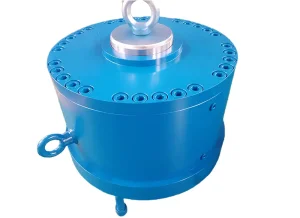
Custom Hydraulic Cylinder for Hefei Cement Research Institute (HCRI) Roller Press Manufacturer, Manufacturers
View Specifications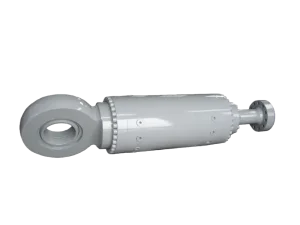
Cost-Effective Hydraulic Cylinder for FLSmidth ATOX Vertical Roller Mill Exporters, Exporter
View SpecificationsBridging the gap between extreme mechanical force, dynamic precision, and operational longevity in global heavy industries.
In high-demand hydraulic actuation systems—ranging from closed-loop electro-hydraulic servo loops to heavy-duty pulverizing mills—conventional elastomeric nitrile or polyurethane U-cup seals introduce substantial static friction ($\mu_s$). When hydraulic fluid pressure initiates movement, the disparity between static friction and dynamic kinetic friction ($\mu_k$) causes stick-slip oscillation (chatter). This phenomenon compromises control sensitivity, induces positioning hysteresis, accelerates seal degradation, and inflicts micro-vibrations across the mechanical frame.
Leading global Low-Friction Seal Hydraulic Cylinder Exporters solve this tribological challenge by engineering composite elastomeric-PTFE seal matrices, micro-hydrodynamic clearance profiles, and hydrostatic pressure pockets. By reducing the coefficient of friction to $\mu \le 0.03$, low-friction cylinders allow sub-micron positioning responsiveness ($\pm 1\mu m$), minimal heat generation under high-frequency cycling ($>10 \text{ Hz}$), and extended operational mean time between failures (MTBF).
Industrial hydraulic cylinders operating in heavy processing environments—such as vertical roller mills (Loesche LM, UBE UM, Pfeiffer MPS) and high-pressure grinding rolls (Leejun, HCRI, CITIC Heavy Industries)—are continuously subjected to transient pressure surges exceeding $35\text{ MPa}$, violent side loading, and elevated temperatures up to $150^\circ\text{C}$.
Low-friction sealing systems do not merely reduce drag; they minimize thermal dissipations inside the cylinder seal gland. By keeping localized seal boundary temperatures below the thermal degradation threshold of elastomeric energizers, seal life is multiplied by 3x to 5x compared to standard polyurethane packings.
Analyzing global demand drivers, export logistics, and regional adoption of high-efficiency low-friction hydraulic actuation.
Global cement plants are transitioning toward high-capacity Vertical Roller Mills (VRM) and Roller Presses to achieve energy reduction targets. Low-friction hydraulic cylinders manage dynamic grinding bed variations, preventing roller bounce and maintaining uniform crushing forces across raw meal and clinker lines.
Continuous casters, Automatic Gauge Control (AGC) systems, and hot strip mills demand instant response from servo-actuated hydraulic cylinders. Low-friction PTFE Stepseals and clearance seal configurations prevent gauge thickness drift during high-speed strip rolling operations.
Aerospace actuators, automotive fatigue test benches, and earthquake simulation platforms require high-frequency cyclic motion ($5\text{--}50\text{ Hz}$) with virtually zero breakout friction. Exporters deliver custom hydrostatically guided servo cylinders tailored for dynamic fidelity.
A deep technical analysis into sealing profiles, material science, and surface topography optimization.
Standard elastomeric seals exhibit high sliding resistance due to direct polymer-to-metal molecular adhesion. Low-friction designs utilize modified Polytetrafluoroethylene (PTFE) compounded with 15% to 40% bronze powder, carbon fiber, or molybdenum disulfide ($\text{MoS}_2$).
Low-friction seal performance relies heavily on maintaining a stable microscopic oil film without sacrificing sealing integrity (micro-hydrodynamic lubrication).
| Sealing Technology | Static Friction ($\mu_s$) | Dynamic Friction ($\mu_k$) | Max Velocity (m/s) | Typical Industrial Application |
|---|---|---|---|---|
| Standard U-Cup (Polyurethane) | 0.15 - 0.25 | 0.08 - 0.12 | 0.5 m/s | Standard Industrial Cylinders & Dump Trucks |
| Stepseal / Glyd Ring (PTFE + Bronze) | 0.03 - 0.05 | 0.01 - 0.03 | 5.0 m/s | VRM Grinding Mills, Servo Drives, Roller Presses |
| Clearance Seal (Precision Fit Bushing) | 0.001 - 0.005 | 0.001 - 0.003 | 15.0 m/s | High-Frequency Test Rigs, Sub-Micron Actuation |
| Hydrostatic Support (Oil Pocket Float) | ∼ 0.0001 | ∼ 0.0005 | 10.0 m/s | Heavy Lateral Load Rigs & AGC Mill Actuators |
Overcoming premature seal failure, oil contamination, and pressure loss across mission-critical equipment.
Problem: Grinding bed fluctuations in Loesche LM, UBE UM, Pfeiffer MPS, and TCD/TRM mills cause rapid pressure spikes and continuous dynamic jittering. Traditional rubber packings tear and overheat within months, leading to unplanned kiln shutdowns.
Low-Friction Exporter Solution: Replacement cylinders equipped with heavy-section PTFE Glyd rings, dual guide rings (bronze-filled PTFE), and high-temperature Viton energizers. The reduced friction allows accumulators to absorb bed shocks instantly, extending seal life to over 3 years of 24/7 operation.
Problem: Roller presses manufactured by Chengdu Leejun, HCRI, and CITIC Heavy Industries push floating rollers against fixed rollers under forces exceeding $5000\text{ kN}$. Severe misalignment (skewing) during rock crushing subjects piston rods to destructive side loads, gouging cylinder walls and tearing seals.
Low-Friction Exporter Solution: Integrating spherical alignment clevis mounts with composite low-friction wear bands capable of absorbing $150\text{ N/mm}^2$ transverse forces. Piston seals maintain dynamic contact without seal deformation or metallic scoring.
How next-generation hydraulic cylinder exporters are incorporating smart sensors, self-healing materials, and green energy protocols.
Integration of magnetostrictive position sensors (LVDT), internal oil cavity pressure transducers, and micro-temperature sensors directly inside the cylinder head. Enables predictive maintenance and early seal wear detection via IoT gateways.
Deployment of carbon-nanotube (CNT) reinforced PTFE formulations and self-lubricating diamond-like carbon (DLC) rod coatings. Reduces dynamic friction to $\mu < 0.01$ while increasing wear resistance against abrasive clinker dust by 400%.
Transition toward eco-friendly synthetic ester and water-glycol hydraulic fluids. Low-friction exporters are engineering chemical-resistant fluoropolymer seal compounds compatible with biodegradable fluids without swelling or hardening.
Crucial dimensional and operating parameters to verify before procuring custom low-friction cylinders from Chinese manufacturing exporters.
Exporters maintain precise database references for international heavy equipment OEMs. Replacement cylinders feature 100% drop-in mechanical interchangeability for:
Expert answers to common engineering, procurement, and exporter questions regarding low-friction hydraulic actuation systems.
A clearance seal cylinder relies on a precision-machined micro-gap (typically $5\text{--}15\ \mu\text{m}$) between the honed bore and a metallic piston with zero elastomeric contact. It provides essentially zero friction and ultra-high sensitivity, but allows a controlled internal oil bypass leakage. In contrast, a low-friction PTFE seal cylinder utilizes bronze or carbon-filled PTFE seal rings energized by elastomeric O-rings. It provides zero internal leakage while reducing dynamic friction by over 80% compared to conventional polyurethane seals.
Stick-slip occurs when static friction ($\mu_s$) is significantly higher than dynamic friction ($\mu_k$). When pressure builds up behind a conventional rubber seal, the piston remains stationary until force overcomes static friction, causing the cylinder to jerk forward. Because dynamic friction is lower, it accelerates, drops pressure, stops, and repeats. PTFE-based low-friction seals exhibit almost identical static and dynamic friction coefficients ($\mu_s \approx \mu_k \approx 0.03$), allowing smooth, continuous micro-positioning down to $\pm 1\ \mu\text{m}$.
Yes. Low-friction hydraulic cylinders engineered for heavy processing equipment are fitted with specialized composite guide rings (such as woven fabric reinforced resin or bronze-filled PTFE wear bands). These guide bands absorb side thrust forces up to $150\text{ N/mm}^2$ without metal-to-metal contact, preventing piston rod scoring while isolating the primary sealing lips from eccentric distortion.
Exported cylinders undergo rigorous quality protocols under ISO 9001 certification. Tests include 100% hydrostatic pressure testing at $1.5\times$ working pressure, internal leakage drift testing, low-pressure friction breakaway force measurement, stroke verification, and ultrasonic/magnetic particle testing of welds. Export packaging includes rust-inhibitor oil flushing, plastic port capping, vacuum vapor barrier wrapping, and heavy-duty fumigated wooden crating.
Absolutely. Engineering teams utilize 3D laser scanning, CMM coordinate measuring, and reverse-engineering software to generate complete manufacturing CAD models from worn or obsolete cylinders. Engineers can optimize the internal seal configuration to low-friction PTFE standards while maintaining identical external mounting dimensions for seamless drop-in field replacement.
When combined with high-temperature elastomeric energizers (such as Viton / FKM or Fluorosilicone), PTFE low-friction seals operate continuously at temperatures up to $+200^\circ\text{C}$. The reduced friction minimizes localized friction heating, resulting in a typical seal operational life exceeding 20,000 to 30,000 continuous operating hours under rated industrial conditions.
Explore our full line of specialized heavy-duty hydraulic cylinders for cement plants, power generation, stacker reclaimers, and metal forging.
Cost-Effective Hydraulic Cylinder for FLSmidth ATOX Vertical Roller Mill Exporters, Exporter
View Specifications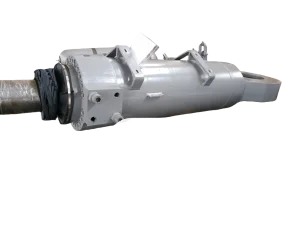
China Hydraulic Cylinder for Pfeiffer MPS Vertical Roller Mill Exporters, Exporter
View Specifications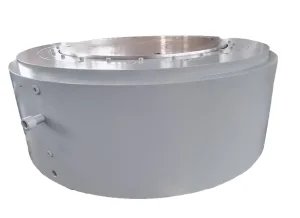
China Hydraulic Cylinder for CITIC Heavy Industries Roller Press Manufacturers, Exporters
View Specifications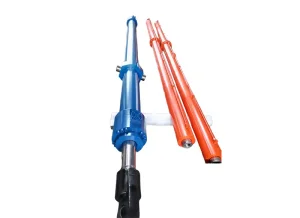
China Hydraulic Harrow Cylinder for Cement Stacker & Reclaimer Manufacturer, Exporter
View Specifications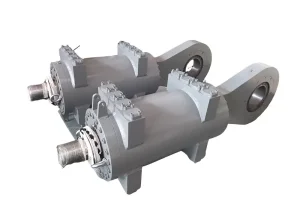
Budget Friendly Hydraulic Cylinder for Loesche Vertical Roller Mill Manufacturer, Exporters
View Specifications