What Is a Tie Rod Hydraulic Cylinder and How Does It Work?

Time:2026-10-29 Author:Henry
0%

A Tie Rod Hydraulic Cylinder may look simple: a steel tube, two end caps, a piston, and long rods running along the outside. Yet each part helps control force, alignment, and sealing under pressure. Inside the barrel, hydraulic fluid pushes the piston. The piston moves the rod, which transfers linear force to a machine component. Simple in principle. Not effortless in practice.

The design is common in industrial equipment because it can be serviced without replacing the entire assembly. Tie rods clamp the cylinder’s end caps against the barrel, while seals limit fluid leakage and guide the moving rod. ISO 6020-2 specifies dimensions for selected, 16 MPa medium-duty cylinders, giving designers a useful basis for interchangeability. Grand View Research’s hydraulic-cylinder market analysis also tracks demand across equipment sectors such as construction and material handling. Market figures describe a broad category, however; they should not be mistaken for tie-rod-cylinder sales alone.

The details matter. A scratched rod, a contaminated oil supply, or a poorly aligned mounting point can shorten service life. Engineers therefore match bore, stroke, pressure, mounting style, and operating environment to the actual load. A useful explanation also needs a trustworthy voice. I cannot verify a named specialist’s exact quotation from the material provided, so I will not invent one. That restraint matters. Understanding the cylinder’s working cycle—and its limits—helps readers choose, inspect, and maintain it with greater confidence.
What Is a Tie Rod Hydraulic Cylinder and How Does It Work?

What a Tie Rod Hydraulic Cylinder Is

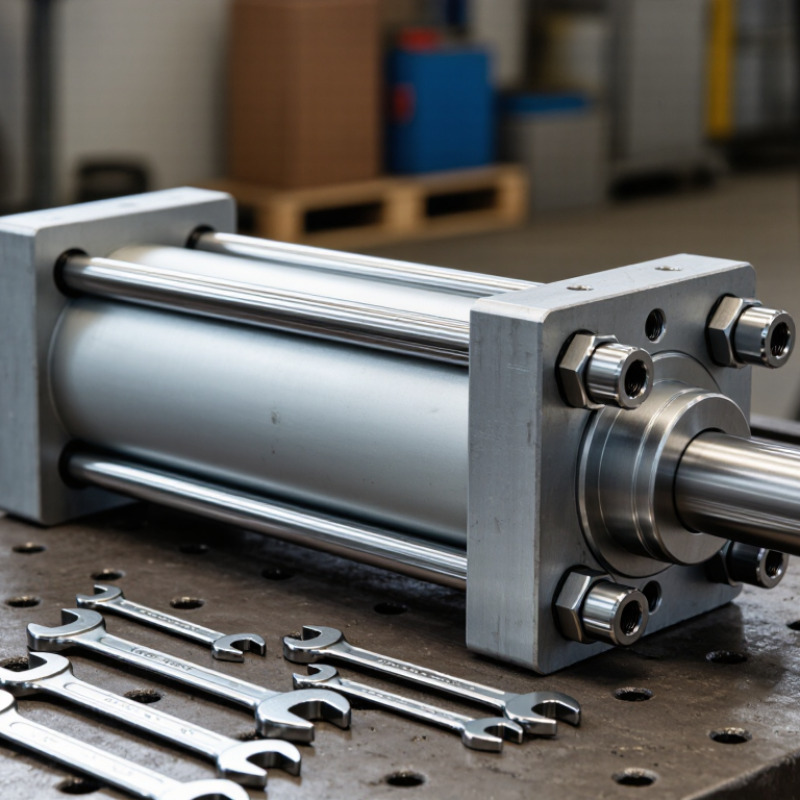
A tie rod hydraulic cylinder is a linear actuator whose end caps are held against the cylinder barrel by long, threaded steel rods. Inside, hydraulic fluid pushes a piston, and the piston moves a rod through a sealed end cap. The tie rods carry the force that would otherwise pull the end caps apart. They are visible along the outside of the barrel, often with nuts at each end. A familiar sight on factory machinery.

When pressurized fluid enters one port, it drives the piston and extends the rod. Fluid leaving through the other port returns to the system. Reversing the flow retracts the rod. The extension force is approximately pressure multiplied by the piston area; retraction force is lower because the rod takes up part of that area. ISO 6020-2:2015 specifies a 16 MPa (160 bar) nominal-pressure basis for its compact-cylinder series. That figure is a useful standards reference, not a universal tie-rod cylinder rating. Actual limits depend on the cylinder design, seals, mounting, and operating conditions. It is easy to treat the rods as simple fasteners, but their preload and condition matter; loose nuts or corrosion deserve attention during inspection.

The Main Components and Their Functions

What Is a Tie Rod Hydraulic Cylinder and How Does It Work?

The Main Components and Their Functions

A tie rod hydraulic cylinder uses pressurized fluid to create straight-line force. Its barrel contains a piston that separates two working chambers. A polished piston rod connects the piston to the machine load. When fluid enters one chamber, the piston moves and pushes or pulls the rod. Small parts matter.

End caps close the barrel and guide the rod. Seals around the piston and rod limit internal leakage and keep contaminants out. Tie rods run along the outside of the barrel, holding the end caps firmly in place. Ports direct fluid into or out of each chamber. In practice, worn seals can reduce force or cause visible fluid around the rod. A sturdy-looking cylinder can still have a problem you cannot see.

Tips: Check the rod for scratches, dents, or uneven wear. Keep the ports and exposed rod clean during inspection. Follow the equipment maker’s pressure and maintenance guidance. Don’t assume a slow-moving cylinder only needs more pressure; trapped air, leakage, or load problems may also be involved. A careful inspection beats a guess.

How Hydraulic Pressure Produces Linear Motion

A tie-rod hydraulic cylinder converts pressurized fluid into straight-line motion. Inside its barrel, a piston separates two working chambers and connects to a projecting rod. Tie rods hold the end caps firmly against the barrel, helping the cylinder stay assembled as pressure rises. When oil enters one chamber, pressure acts across the piston’s effective area and pushes it along the barrel. The rod moves with it, extending to push a machine part or load. Simple, but not frictionless. Seals, surface condition, and side loading all affect how smoothly it moves.

A directional valve controls which chamber receives oil. To retract the rod, the valve sends pressure to the opposite side while displaced oil exits through a return port. Force depends on pressure and piston area; speed depends mainly on fluid flow.

Retraction can be faster but produce less force, because the rod reduces the piston area available to the oil. Real motion may also feel uneven if air remains in the circuit or the load binds. That detail is easy to overlook. A technician can observe rod movement, check for leaks, and compare pressure and flow readings with the equipment specifications to help identify a problem.

How Tie Rods Hold the Cylinder Assembly Together

What Is a Tie Rod Hydraulic Cylinder and How Does It Work?

How Tie Rods Hold the Cylinder Assembly Together

Tie rods are long steel bars running outside a hydraulic cylinder’s barrel. Threaded ends and nuts clamp the end caps against the barrel, keeping the assembly together as pressure rises. Inside, pressurized fluid pushes the piston; the resulting force also loads the end caps outward. The rods resist that separating force in tension. Simple, but not effortless.

ISO 6020-2:2015 specifies a 160-bar nominal-pressure series for compact hydraulic cylinders. That figure describes a cylinder series, not a universal safe operating pressure for every design. Actual limits depend on the cylinder’s construction, mounting, and operating conditions. Rod preload matters too: uneven tightening can distort an end cap or compromise sealing. Follow the maker’s specified tightening sequence and torque; guessing from a wrench feel is unreliable. A small caveat: tie rods hold the assembly together, but they do not correct poor alignment or side loading.

Tips: Inspect rods and nuts for corrosion, looseness, or damaged threads during maintenance. Look closely around the end caps for fresh oil. If a leak appears, depressurize the system before inspection, and check the approved service procedure rather than simply tightening every nut.

Common Uses and Operating Considerations

Tie-rod hydraulic cylinders are widely used in manufacturing presses, packaging equipment, agricultural machinery, and material-handling systems. Their threaded rods hold the end caps against the barrel, creating a serviceable, compact actuator. Pressurized oil moves the piston, and the attached rod delivers straight-line force. They work well for repetitive strokes, but side loading can quickly wear seals and rod bearings. A slightly misaligned mount may look harmless at installation.

Operating conditions matter. Check pressure, stroke length, mounting alignment, fluid cleanliness, and operating temperature against the cylinder’s specifications. The U.S. Department of Energy’s 2014 Improving Pumping System Performance sourcebook estimates that pumping systems account for nearly 20% of global electricity demand. This figure covers pumping broadly, not cylinder losses; still, it shows why unnecessary pressure, idle operation, and leaks deserve attention. Small leaks matter. Inspect rod surfaces for scratches and seals for seepage, especially where dust or washdown is common.

Tips: Keep the load centered, secure the mounting bolts, and inspect connections during routine maintenance. If a cylinder runs hot or moves unevenly, stop and investigate rather than simply increasing system pressure. Sizing is sometimes rushed; real loads can behave differently from calculations.

FAQS

What is a tie-rod hydraulic cylinder?

It uses pressurized fluid to create straight-line force. A piston moves inside a barrel and drives a connected rod. Small parts matter.

Which parts make up the cylinder?

Key parts include the barrel, piston, rod, end caps, seals, ports, and external tie rods. Each has a practical job.

How does hydraulic pressure move the rod?

Fluid enters one chamber and pushes the piston along the barrel. The rod moves with it, pushing or pulling a load.

What controls extension and retraction?

A directional valve sends fluid to the required chamber. During retraction, fluid enters the opposite side while displaced oil exits through a return port.

Why can retraction produce less force?

The rod takes up some piston area, leaving less area for fluid pressure to act on. Retraction can be faster, but not always stronger.

What do the tie rods do?

They clamp the end caps against the barrel and resist outward force as pressure rises. They do not fix misalignment or side loading.

What signs may suggest a cylinder problem?

Look for oil around the rod or end caps, scratched rod surfaces, corrosion, loose nuts, or damaged threads. A clean exterior cannot rule out hidden trouble.

Why might a cylinder move slowly or unevenly?

Trapped air, leakage, a binding load, friction, or side loading may affect movement. Adding pressure is only a guess, not a diagnosis.

Is 160 bar a safe limit for every tie-rod cylinder?

No. It describes a nominal-pressure series, not a universal operating limit. Check the specific cylinder’s pressure guidance and service procedure.

Conclusion

A Tie Rod Hydraulic Cylinder is a mechanical actuator that converts pressurized hydraulic fluid into straight-line force and motion. Its main parts typically include a cylinder barrel, piston, piston rod, end caps, seals, and tie rods. The piston separates the fluid chambers inside the barrel, while the rod transfers the piston’s movement to an external load. Seals help contain the fluid and maintain pressure during operation.

When hydraulic fluid enters one side of the cylinder, pressure pushes the piston along the barrel, extending or retracting the rod depending on the direction of flow. Tie rods run along the outside of the assembly and clamp the end caps securely against the barrel, helping the cylinder withstand operating forces and simplifying maintenance. These cylinders are commonly used in industrial machinery, material-handling equipment, and other systems requiring controlled linear movement. Proper sizing, pressure limits, fluid condition, and routine inspection of seals and tie-rod fasteners support safe, reliable operation.


Henry

Henry

Henry is a dedicated marketing professional with a profound expertise in the company's offerings. With years of experience in the industry, he possesses an impressive understanding of the market dynamics and consumer behaviors that drive success. Henry is committed to sharing his insights through......