Choosing the right hydraulic accumulator is rarely a simple ranking exercise. A global buyer must compare pressure ratings, usable volume, temperature limits, fluid compatibility, service access, and regional compliance. This guide examines ten strong options for industrial, mobile, energy, and process applications. Each Hyd Accumulator is considered through practical performance, manufacturer documentation, maintenance requirements, and verified technical specifications.
Field experience shows that small details matter. A bladder accumulator may respond quickly in shock suppression, while a piston design often suits demanding energy-storage cycles. Diaphragm models can offer compact protection for smaller systems. Pre-charge pressure deserves careful attention. An incorrect setting can reduce efficiency, damage internal components, or create unstable machine behavior. A clean hydraulic circuit also extends service life.
These selections are not presented as universal winners. A product that performs well in a European test facility may need different approvals, seals, or fittings for use in Asia, North America, or the Middle East. Buyers should confirm pressure-vessel rules, documentation, spare-part availability, warranty terms, and local technical support before ordering. Details matter. This review uses manufacturer data and application-focused comparisons, but product information can change. Readers should recheck current certificates and specifications before installation. That caution is intentional. Reliable purchasing depends on evidence, not attractive brochures.
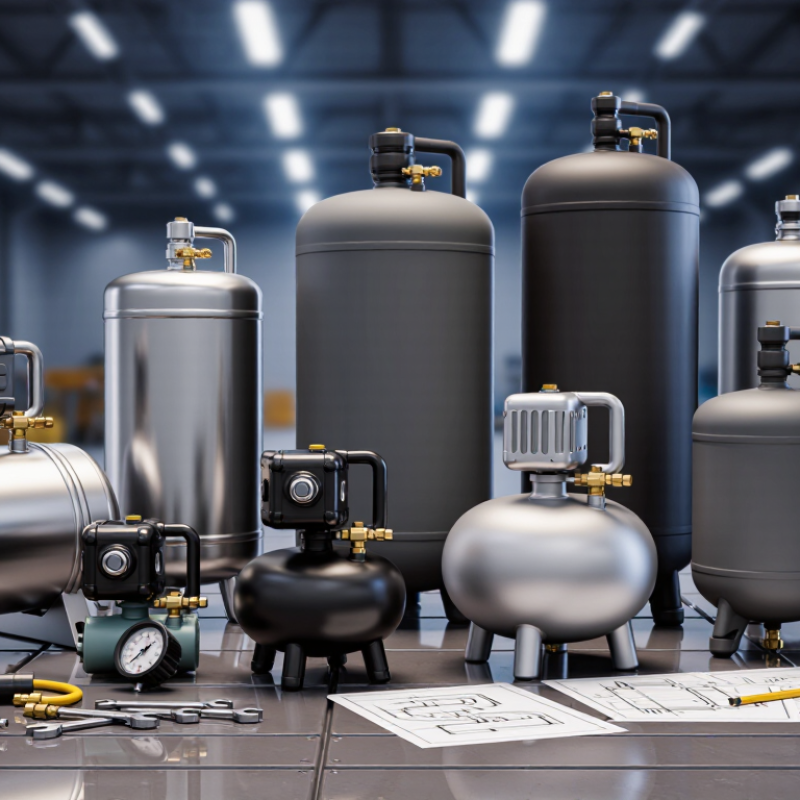
Hydraulic Accumulators: Purpose, Types, and Operating Principles
Hydraulic accumulators store pressurized fluid and release it when a system needs extra flow. They reduce pump workload, absorb pressure spikes, and support emergency movement during power loss. In practical systems, an accumulator may sit near a valve block, with a visible pressure gauge and short hydraulic lines.
The main types are bladder, piston, and diaphragm accumulators. Bladder models respond quickly and suit many mobile or industrial applications. Piston units handle larger volumes and demanding cycles, but their seals require careful inspection. Diaphragm designs are compact, although their capacity is usually limited. Inside each unit, hydraulic fluid compresses gas, commonly nitrogen. As fluid enters, gas pressure rises. When demand increases, the gas expands and pushes fluid back into the circuit. Incorrect pre-charge pressure can cause weak performance or internal damage. This detail is often underestimated.
Tips: Check the working pressure, temperature range, fluid compatibility, and required flow before selection. Confirm pre-charge pressure with approved equipment, and isolate the accumulator before maintenance. Keep service records. A small log can reveal gradual pressure loss. Calculations help, but field conditions may differ from design assumptions. Pipe length, temperature changes, and frequent cycling can alter real performance. Safety procedures should follow local regulations and qualified technical guidance.
| No. | Recommended Accumulator Configuration | Accumulator Type | How It Stores Energy | Typical Working Pressure* | Common Capacity Range | Best-Suited Applications | Main Advantages | Key Selection and Operating Notes |
|---|---|---|---|---|---|---|---|---|
| 1 | General-purpose energy storage | Bladder accumulator Fast response | Hydraulic fluid compresses a gas-filled bladder, normally charged with nitrogen. The compressed gas returns fluid to the circuit when system pressure falls. | Approximately 100–350 bar, depending on vessel design and certification | 0.5–50 L per unit; larger systems may use multiple units | Industrial power units, mobile machinery, presses, injection equipment, and emergency hydraulic functions | Quick response, low friction, good shock absorption, and relatively simple maintenance | Keep the bladder compatible with the fluid and temperature. Avoid excessive gas precharge, which can cause bladder damage or reduced usable volume. |
| 2 | High-volume energy storage | Piston accumulator Large capacity | A free-moving piston separates hydraulic fluid from precharged nitrogen. Pressure changes move the piston and transfer energy between the gas and fluid. | Approximately 100–700 bar, subject to cylinder, seal, and regional code requirements | 1–2,000 L or more in engineered systems | Large presses, steel mills, marine hydraulics, test benches, and high-flow industrial systems | Scalable volume, high flow capability, no elastomeric bladder, and suitability for large energy requirements | Seal friction, piston speed, cleanliness, and mounting orientation require careful consideration. Use position monitoring where piston travel must be controlled. |
| 3 | Compact pulsation control | Diaphragm accumulator Compact design | A flexible diaphragm separates the hydraulic fluid from nitrogen. Gas compression and expansion smooth pressure fluctuations in small circuits. | Approximately 25–350 bar, depending on construction and application | 0.07–3.5 L typically | Piston pumps, metering systems, compact power packs, agricultural equipment, and low-volume circuits | Small size, low weight, rapid response, and effective damping of pump pulsations | Best for relatively small fluid volumes. Confirm the permissible pressure ratio and ensure the diaphragm cannot be exposed to incompatible chemicals or excessive temperature. |
| 4 | Hydraulic shock suppression | Bladder surge accumulator Water hammer control | The gas cushion absorbs sudden pressure peaks created by rapid valve closure, pump start-up, or abrupt actuator deceleration. | Commonly 10–350 bar, selected above the normal operating pressure and below the allowable system pressure | 1–100 L, depending on pipe volume and transient severity | Long pipelines, hydraulic valves, mobile equipment, water hydraulics, and fast-moving actuators | Reduces peak pressure, vibration, noise, pipe stress, and component fatigue | Size from measured or calculated transient conditions rather than nominal pipe size alone. Install close to the shock source when practical and provide safe isolation and inspection provisions. |
| 5 | Pump pulsation damping | Diaphragm pulsation damper Stable flow | The gas chamber acts as a compliant volume that absorbs part of each pump discharge pulse and releases fluid between pulses. | Approximately 10–250 bar for many metering and process systems | 0.1–20 L typically | Positive-displacement pumps, chemical dosing, process skids, spray systems, and filtration equipment | Improves flow uniformity, reduces pipe vibration, protects instruments, and can lower pump noise | Precharge is application-specific and should be set with the pump operating range in mind. Use wetted materials compatible with the process fluid. |
| 6 | Emergency actuator operation | Bladder or piston accumulator bank Backup power | Stored nitrogen energy supplies hydraulic flow when the main pump or electrical power source is unavailable. | Typically 150–350 bar in industrial systems; higher ratings require appropriate vessel design and certification | 10–1,000 L total system volume | Emergency brakes, safety valves, landing gear, emergency steering, offshore equipment, and critical process controls | Provides fast, independent short-term hydraulic power and supports fail-safe operation | Calculate the required fluid volume at the minimum available pressure, including temperature effects and residual fluid volume. Add check valves, isolation valves, pressure indication, and a safe discharge method. |
| 7 | Thermal expansion compensation | Small bladder or diaphragm accumulator Pressure balancing | The accumulator accepts fluid expansion caused by temperature rise and returns fluid as the circuit cools, limiting pressure variation. | Approximately 10–350 bar, based on the circuit pressure and vessel rating | 0.2–20 L typically | Closed hydraulic circuits, hydraulic clamps, machine tools, test systems, and isolated sections of pipework | Reduces pressure spikes caused by trapped fluid and helps protect seals, hoses, and valves | Do not use the accumulator as a substitute for a correctly sized relief valve. Consider the total trapped-fluid volume, maximum temperature, and minimum system pressure. |
| 8 | Heavy-duty high-temperature service | Piston accumulator with high-temperature seals Rugged service | A piston separates nitrogen from hydraulic fluid while specially selected seals and materials withstand elevated temperature or demanding duty cycles. | Approximately 100–700 bar, subject to seal material, temperature, and pressure-vessel design | 5–500 L typically | Foundries, forging presses, high-cycle machinery, hot industrial environments, and severe-duty test rigs | Large capacity, robust construction, and no bladder fatigue under repeated high-flow operation | Seal selection is critical. Account for gas temperature, fluid viscosity, piston velocity, leakage tolerance, and inspection requirements under the applicable pressure-vessel regulations. |
| 9 | Corrosive or specialty-fluid service | Diaphragm accumulator with corrosion-resistant wetted parts Material compatibility | A diaphragm isolates the gas charge from the hydraulic or process fluid while corrosion-resistant materials protect the wetted chamber. | Approximately 10–350 bar, depending on material and design | 0.1–10 L typically | Water-glycol systems, chemical dosing, food-processing support equipment, marine systems, and specialty fluids | Limits gas-fluid contact, offers a compact footprint, and can be configured for demanding fluid compatibility requirements | Verify compatibility of the diaphragm, shell, ports, coatings, and seals with the exact fluid concentration and temperature. Confirm cleaning and hygiene requirements where applicable. |
| 10 | Low-temperature or clean-service operation | Piston or bladder accumulator with low-temperature materials Cold-climate ready | Compressed nitrogen stores energy while selected elastomers, seals, and hydraulic fluids remain functional at low ambient temperatures. | Approximately 50–350 bar in many systems, subject to the certified operating temperature | 1–100 L typically | Wind turbines, outdoor mobile equipment, cold-region hydraulics, aviation support equipment, and remote installations | Maintains response and pressure stability where viscosity and elastomer flexibility are affected by cold conditions | Specify the minimum ambient temperature, fluid pour point, seal compound, gas precharge temperature, and pressure-vessel material. Protect the unit from external impact and uncontrolled thermal cycling. |
| *Pressure and capacity figures are representative selection ranges, not universal limits. Actual values depend on vessel construction, fluid type, temperature, gas precharge, pressure ratio, safety factor, and the pressure-vessel regulations applicable in the destination market. Nitrogen should normally be used for precharging; never use oxygen or other flammable gases. | ||||||||
Start with the machine’s actual operating profile. Record pressure, temperature, fluid type, cycle frequency, and required flow. Bladder designs respond quickly. Piston designs suit larger volumes and demanding cycles. Diaphragm designs fit compact applications. The catalog title is not enough.
Check maximum pressure, minimum pressure, and gas pre-charge range. Follow the technical data closely. Incorrect pre-charge can cause unstable pressure or bladder damage. Ask for pre-charge tolerances in writing. This detail is often missing.
Request pressure-test records, material certificates, serial traceability, and installation instructions. Confirm replacement-part availability. Check whether the vessel meets destination-market pressure rules. A generic certificate may not be accepted. Confirm everything.
Install the unit near the hydraulic circuit. Use isolation and pressure-relief devices. Secure it vertically when required for bladder protection. Keep pipes clean and properly supported. Avoid sharp bends. Use dry nitrogen only for pre-charging.
Isolate the equipment, lock the controls, and verify zero pressure. Open the approved bleed point. Do not trust a gauge alone. Confirm the circuit cannot recharge. Stored pressure can release violently. Training should include a real depressurization demonstration.
Check pre-charge pressure, leaks, corrosion, and mounting hardware. Record pressure, temperature, date, and technician identity. Replace damaged hoses, unreadable gauges, and deformed clamps. Never improvise fittings. Conditions change. Old records may mislead.
Include freight, customs, adapters, testing, storage, and possible downtime. Also estimate inspection time and local service costs. A cheaper unit may become expensive after one seal failure. Keep critical seal kits nearby for remote projects.
Ask about service response times, bladder replacement, charging procedures, drawings, and warranty terms. The quotation should state volume, pressure, connections, standards, and inspection duties. Vague answers are warning signs. Some assumptions may still be wrong. Confirm them with the installer.
Choosing the 10 best hydraulic accumulators for global applications requires more than comparing pressure ratings. A Hyd Accumulator stores hydraulic energy, absorbs pressure shocks, compensates for leakage, and supports smoother system operation. The main types, including bladder, piston, and diaphragm designs, offer different advantages in response speed, capacity, temperature tolerance, and maintenance needs. Buyers should evaluate working pressure, fluid compatibility, volume, operating temperature, cycle frequency, installation space, and expected service life before selecting a suitable model for mobile equipment, industrial machinery, or energy systems.
Safe installation and regular maintenance are essential for reliable performance. Correct pre-charge settings, approved fittings, protective devices, inspection schedules, and pressure-relief arrangements help reduce operational risks. For international purchasing, buyers should also confirm applicable technical standards, documentation, delivery capability, replacement-part availability, warranty conditions, and after-sales support. A balanced comparison of performance, application suitability, total cost, and supplier service can help global customers choose an accumulator that delivers dependable efficiency and long-term value.

