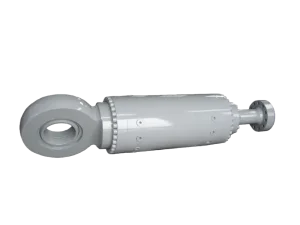
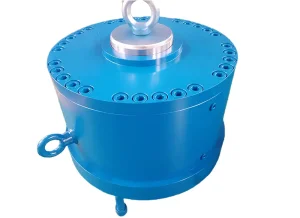
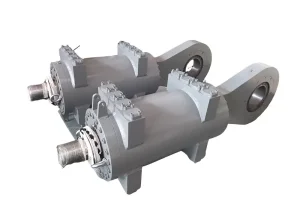
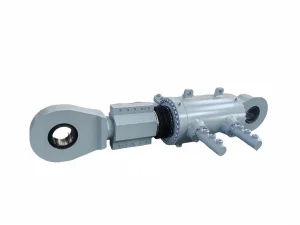
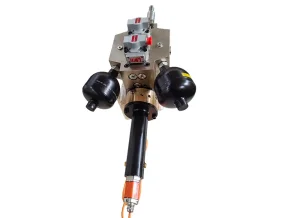
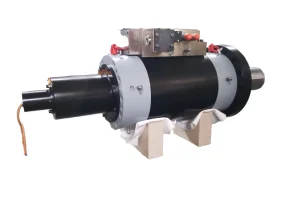
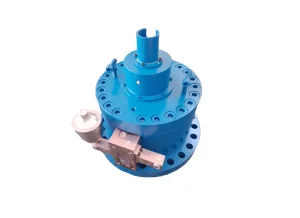
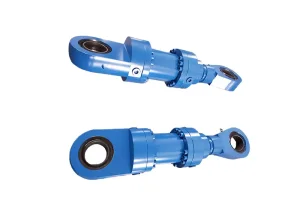
Engineered to exact OEM interface dimensions, delivering exceptional force density, non-rotating guide precision, and long-life seal performance across cement, metallurgical, and automated manufacturing lines.
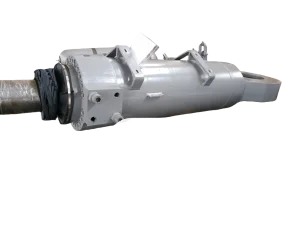
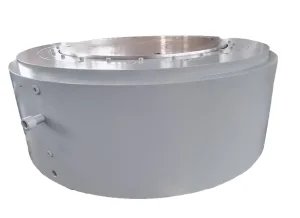
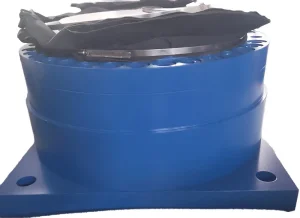
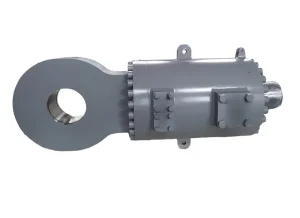
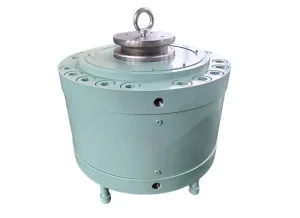
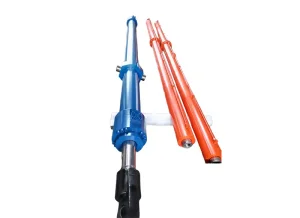
Analyzing how double piston air cylinders and dual-action fluid power systems deliver double the output force while eliminating rotational backlash in space-constrained industrial setups.
In modern factory automation, robotic assembly, and heavy industrial machinery, plant engineers face a continuous challenge: maximizing output thrust while reducing the physical footprint of pneumatic and hydraulic drive systems. Double Piston Air Cylinders (often termed twin-piston, dual-rod, or tandem air actuators) solve this fundamental engineering dilemma by utilizing two parallel or in-line piston assemblies tied to a unified output mechanism.
By supplying compressed air across both piston faces simultaneously, the effective working area is doubled without increasing the outer diameter of the cylinder tube. Theoretical output force for a double-piston pneumatic actuator operating under double-acting configuration is derived via:
F_total = P × (A_piston1 + A_piston2) × η_mechanicalStandard single-rod pneumatic cylinders suffer from torsional deflection under side loads or high-speed reciprocating duty. Double piston air cylinders naturally feature dual parallel piston rods connected by an integrated front yoke or tooling plate. This dual-shaft architecture distributes lateral forces across two distinct bearing points, effectively locking out angular play.
When specified with self-lubricating bronze sleeve bushings or linear ball recirculating guides, these actuators maintain non-rotating guidance accuracy within ±0.02° to ±0.05°, making them ideal for high-precision pick-and-place pickers, clamping units, press feeders, and heavy grinding mill auxiliary mechanisms.
Evaluating procurement economics, supplier qualifications, and how Changzhou Xuanda Hydraulic delivers cost savings without sacrificing material standards or ISO compliance.
In industrial B2B procurement, "budget-friendly" must never mean compromised manufacturing quality. A low purchase price quickly turns into an expensive mistake if a double piston air cylinder suffers premature seal degradation, rod scoring, or cylinder bore galling—resulting in line downtime costing thousands of dollars per hour.
True budget optimization stems from lean automated manufacturing, localized supply chains for raw materials, and high-precision CNC machining that eliminates manual rework.
Global plant operators for cement plants (using Loesche LM, UBE UM, Pfeiffer MPS, FLSmidth ATOX, TCD/TRM mills) and metallurgical facilities (CITIC Heavy, Leejun Roller Press) often face markup premiums when buying directly from legacy OEM brands.
Export-focused manufacturers like Changzhou Xuanda supply 100% interchangeable replacement actuators built to identical stroke, pressure, and mounting specifications—reducing procurement expenditure by 30% to 50%.
Global buyers require strict adherence to international standard frameworks. High-quality double piston air cylinders and heavy hydraulic cylinders are manufactured under ISO 9001 quality management systems, following ISO 15552, ISO 21287 (compact cylinders), and ISO 6432 dimensions.
This standardization ensures seamless drop-in fitment for international exports across North America, Europe, Southeast Asia, and the Middle East.
A deep dive into metallurgic selection, hard chrome plating techniques, high-performance sealing compounds, and precision honing tolerances.
The longevity of any double piston cylinder relies heavily on the internal surface finish of the cylinder barrel. For double piston air cylinders, extruded anodized aluminum alloy (6063-T5 or 6061-T6) provides a light, corrosion-resistant body. The inner wall undergoes precision honing and hard anodizing to achieve a surface hardness exceeding HV 400 with a surface roughness of Ra ≤ 0.15 µm.
In heavy-duty dual-piston hydraulic applications, seamless carbon steel tubes (ST52, E355, or 45# steel) are honed to micro-inch limits, ensuring zero micro-scratch bypass leakage under working pressures reaching 25 to 35 MPa.
Piston rods are constructed from high-tensile carbon steel (CK45, 40Cr) or 304/316 stainless steel. The rods undergo medium-frequency induction hardening to a depth of 1.5–2.5 mm, achieving a surface hardness of HRC 58–62.
Subsequent micro-cracked hard chrome plating (layer thickness 20 to 30 µm) provides exceptional resistance against abrasive particulate wear in high-dust environments such as cement mills, clinker grate coolers, and coal grinding plants. Salt spray testing confirms corrosion resistance exceeding NSS 96 hours (ISO 9227).
Dynamic friction between the piston seals and cylinder bore directly dictates break-out force, smooth low-speed motion, and thermal degradation limits. Double piston air cylinders from Changzhou Xuanda incorporate multi-stage sealing configurations tailored to working conditions:
To prevent severe impact damage when moving heavy payloads at linear speeds exceeding 500 mm/s, double piston cylinders incorporate adjustable needle-valve end-of-stroke cushioning. Air trapped in the cushion chamber is gradually throttled, converting kinetic energy into pneumatic backpressure smoothly.
From cement grinding mills and steel foundries to automated electronic assembly lines, explore real-world implementation case studies.
In vertical roller mills (Pfeiffer MPS, Loesche LM, UBE UM, FLSmidth ATOX, TCD/TRM) and high-pressure roller presses (Chengdu Leejun, CITIC Heavy, HCRI), heavy hydraulic and dual-action cylinders apply mill-roll grinding pressure.
Double piston designs stabilize loading forces against shock vibrations caused by raw material size fluctuations.
Continuous casting lines, steel plate tilters, furnace door hoists, and hot-rolling pinch roll adjusters subject actuators to severe thermal radiant heat and heavy ambient dust.
Specialized heat-resistant double piston actuators with external heat shields maintain high force stability in steel plant environments.
High-speed packaging, electronics component pick-and-place, semiconductor handling, and automotive stamping lines require dual-rod double piston slide tables.
They deliver smooth linear guidance, rapid cycle rates (>120 strokes/min), and repeatable end position stop accuracy within ±0.01 mm.
Smart pneumatics, integrated linear encoders, energy-reclaiming valve networks, and sustainable eco-friendly tribology.
The next decade of fluid power is defined by Industry 4.0 digitisation. Advanced double piston air cylinders are increasingly equipped with embedded IO-Link position sensors, magnetostrictive stroke transducers, and micro-vibration telemetry modules.
By continuously tracking stroke velocity, dynamic pressure curves, internal seal leakage, and thermal signatures, smart control platforms predict seal wear before catastrophic failure occurs, shifting maintenance from reactive downtime to scheduled intervals.
Compressed air generation represents up to 20% of total electrical energy costs in modern manufacturing plants. Future double piston air cylinder designs utilize dual-chamber regenerative flow circuits that recycle exhaust pressure during non-load return strokes, reducing air volume consumption by up to 25%.
Simultaneously, self-lubricating polymer bush matrices and diamond-like carbon (DLC) piston rod coatings enable zero-lube air cylinder operation, preventing oil-mist emissions in cleanroom food, pharmaceutical, and battery manufacturing facilities.
How Changzhou Xuanda turns complex site challenges into long-life engineering solutions through rigorous 3D modeling, FEA stress analysis, and full pressure testing.
Whether replacing worn cylinders from physical samples without drawings or designing custom dual-piston actuators for new OEM machinery, Xuanda engineers verify working pressure, force vectors, mounting envelopes, media compatibility, and ambient temperature ranges.
Advanced 3D modeling software evaluates structural stress points, rod buckling safety margins, dynamic fluid friction, and port flow velocities. FEA simulation guarantees that cylinder end caps, tie rods, and yokes comfortably handle peak surge loads up to 150% of rated capacity.
Every manufactured cylinder undergoes 100% factory pressure and leakage testing on automated test benches before packaging. Test reports confirm low-pressure breakout sensitivity, high-pressure seal tightness, stroke positioning accuracy, and smooth cushion deceleration.
Expert engineering answers to common procurement, structural design, and field maintenance questions.
Explore our complete range of application-matched hydraulic actuators, servo positioners, and heavy industrial cylinders for export markets nationwide and globally.