Explore our high-performance hydraulic cylinders and energy storage systems designed for cement mills, roller presses, and servo control systems.
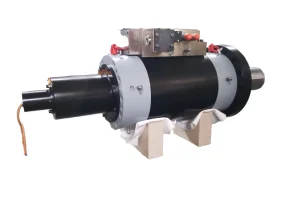
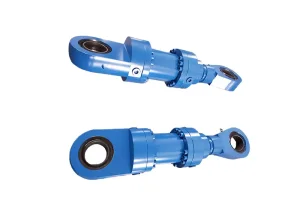
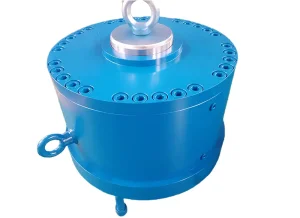
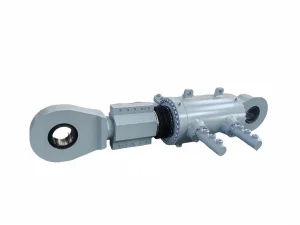
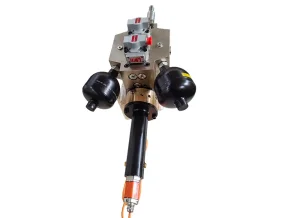
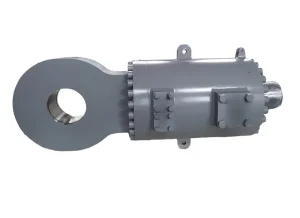
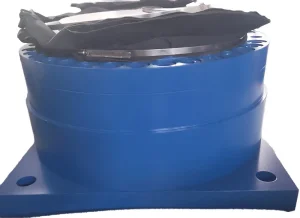
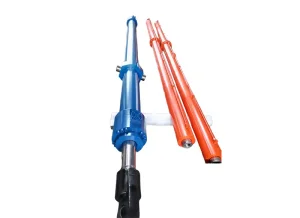
Analyzing the shift toward fluid-power energy optimization, cost-effective pressure vessel sourcing, and international export benchmarks for heavy machinery.
Industrial buyers are shifting focus from initial capital expenditure to total cost of ownership (TCO). Sourcing budget-friendly hydraulic accumulators from verified China exporters allows plant operators to achieve up to 40% savings on capital costs while retaining compliance with ASME, CE, and ISO 4413 pressure vessel standards.
With energy costs rising globally, hydro-pneumatic energy storage acts as an instantaneous kinetic energy buffer in heavy hydraulic circuits. By storing excess pump displacement during low-load intervals, modern accumulators enable motor downsizing, lowering factory peak grid demand and carbon emissions.
In high-frequency pulsing environments—such as cement vertical roller mills and forging presses—hydraulic shockwaves cause rapid seal degradation and structural fatigue. High-response bladder and piston accumulators absorb pressure spikes up to 350 bar, safeguarding servo valves and actuators.
Understanding gas-fluid interaction, nitrogen pre-charge physics, and structural sizing equations for optimal hydro-pneumatic performance.
A hydraulic accumulator is a hydro-pneumatic pressure vessel that stores kinetic energy by compressing an inert gas (typically High-Purity Nitrogen, N₂). Because hydraulic fluids are virtually incompressible, the compliance of the compressed gas envelope allows the system to store potential energy under pressure and release it instantly when circuit demand exceeds primary pump capacity.
The energy exchange inside a gas-loaded accumulator is governed by the polytropic gas law:
P₀ · (V₀)ⁿ = P₁ · (V₁)ⁿ = P₂ · (V₂)ⁿ
Where P₀ is pre-charge pressure, P₁ is minimum working pressure, P₂ is maximum operating pressure, and n represents the polytropic exponent. For ultra-fast energy release (adiabatic state, where no heat exchange occurs), n = γ = 1.4 for Nitrogen. For slow charge/discharge cycles (isothermal state), n = 1.0.
Selecting the appropriate accumulator architecture requires evaluating volumetric capacity, cycle frequency, pressure ratio, and fluid cleanliness.
| Accumulator Type | Max Pressure (Bar) | Volumetric Range (L) | Response Time | Permissible Gas Ratio (P₂/P₀) | Ideal Application |
|---|---|---|---|---|---|
| Bladder Accumulator | 330 - 550 Bar | 0.5L - 50L | Ultra-Fast (< 25 ms) | 4 : 1 max | High-frequency shock absorption, emergency braking systems |
| Piston Accumulator | 350 - 1000 Bar | 10L - 1500L+ | Moderate (30 - 80 ms) | 10 : 1 max | Large-scale heavy energy storage, cement roller press stabilization |
| Diaphragm Accumulator | 210 - 350 Bar | 0.07L - 4L | Instantaneous (< 10 ms) | 8 : 1 max | Mobile hydraulics, pulse dampening on micro-servo systems |
How IoT integration, composite metallurgy, and hybrid energy storage are redefining industrial hydraulic performance.
Traditional nitrogen pressure checks require manual downtime. Next-generation accumulators incorporate wireless piezoelectric sensors embedded directly into the gas valve body. These transmit real-time N₂ pressure and internal temperature telemetry to predictive maintenance dashboards, avoiding unexpected loss of pre-charge.
By replacing heavy forged steel shells with filament-wound carbon-fiber matrix shells, exporters are delivering Type-4 composite accumulators that achieve a 60% weight reduction. This transition is essential for mobile cranes, offshore marine systems, and aerospace hydraulic power units.
Piston accumulator efficiency is strongly impacted by dynamic seal friction. Advanced PTFE compounds blended with bronze or carbon fibers reduce breakout friction (stick-slip) by up to 75%, enabling smoother linear velocity control in closed-loop electro-hydraulic servo mechanisms.
Detailed engineering breakdowns of hydraulic energy buffer integration across key manufacturing sectors.
In cement processing facilities utilizing Loesche LM, FLSmidth ATOX, or Pfeiffer MPS vertical roller mills, hydraulic cylinders maintain immense pressure on grinding rollers. Heavy-duty piston accumulators connected to the tensioning circuit absorb extreme mechanical bounce caused by uneven clinker feed, stabilizing grinding force and preventing gearbox tooth fracture.
For raw meal and slag crushing in Chengdu Leejun or CITIC Heavy Industries roller presses, high-capacity hydraulic accumulator banks provide instant pressure restoration when uncrushable tramp metal passes between the rollers, returning the floating roll to nominal gap within milliseconds.
Precision hydrostatic support cylinders require pulse-free hydraulic fluid supply. Diaphragm accumulators installed directly adjacent to servo valves remove high-frequency pump ripple, preserving micro-positioning accuracy down to ±1 μm in dynamic structural testing.
A framework for international procurement managers evaluating OEM vs. aftermarket hydraulic accumulator and cylinder exporters in China.
When sourcing hydraulic pressure components globally, evaluating an exporter solely on initial purchase price can lead to hidden costs, long lead times, or non-compliance with regional pressure vessel regulations. A true budget-friendly hydraulic accumulator exporter delivers value through material integrity, rigorous pressure testing, and direct drop-in dimensional compatibility with existing plant machinery.
Verify that the exporter manufactures accumulators compliant with ASME VIII Div 1, CE/PED 2014/68/EU, or SELO (China TSG) standards. Certified pressure vessels ensure legal installation and safety compliance in European and North American plants.
High-pressure shells must be fabricated from seamless alloy tubing (e.g., 34CrMo4 or 42CrMo4) with ultrasonic non-destructive testing (NDT) to prevent structural micro-fractures under cyclic stress loading.
Top exporters offer custom SAE flange patterns, BSPP/NPT thread connections, and mounting bracket designs, allowing field replacement during planned maintenance shut-downs without piping modifications.
Explore additional specialized hydraulic solutions manufactured in Changzhou, China for global export.
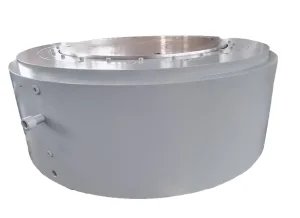
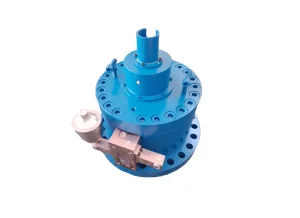
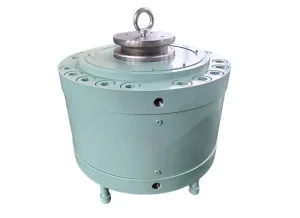
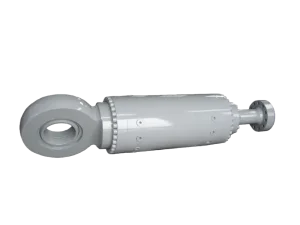
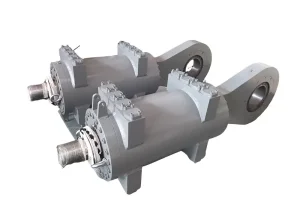
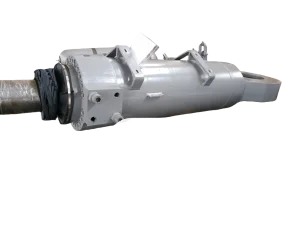
Answers to key technical inquiries regarding hydraulic accumulator sizing, pre-charge maintenance, seal selection, and international export procedures.
For standard energy storage and fluid accumulation cycles, the nitrogen pre-charge pressure P₀ is typically set to 0.9 · P₁ (where P₁ is the minimum operating system pressure at maximum fluid discharge). For shock absorption and pulse dampening applications, P₀ is generally set to 0.6 to 0.75 · P_mean (where P_mean is the average working line pressure). Setting pre-charge too high risks bladder or piston bottoming damage, while setting it too low reduces usable oil storage volume.
Never use compressed air or oxygen to pre-charge a hydro-pneumatic accumulator. Under high operating pressures (up to 350 bar), combining compressed oxygen or ambient air with atomized hydraulic mineral oil creates a highly volatile explosive mixture (the Diesel effect). Dry, High-Purity Nitrogen (≥ 99.99% purity) is completely inert, non-corrosive to internal vessel walls, and non-flammable.
Yes. Xuanda Hydraulic specializes in reverse-engineering and custom manufacturing replacement loading and suspension cylinders designed to fit the exact installation dimensions, pin-to-pin distance, fluid port configurations, and working parameters of OEM systems including Loesche LM, UBE UM, Pfeiffer MPS, and FLSmidth ATOX mills. All registered OEM brand names remain the property of their respective trademark holders; Xuanda supplies high-durability compatible replacement units.
In high-ambient environments near grate coolers and rotary kilns where hydraulic fluid temperatures exceed 80°C, standard NBR (Nitrile) seals degrade rapidly. We recommend FKM (Viton) or HNBR (Hydrogenated Nitrile) seals paired with bronze-filled PTFE wear rings. For ultra-low friction servo applications, specialized clearance seal or hydrostatic oil film support systems eliminate elastomeric friction altogether.
Every accumulator and cylinder exported by Xuanda Hydraulic undergoes 100% factory hydrostatic pressure testing (typically 1.5x working pressure), seal tightness testing, and dimensional inspection. International shipments include Material Test Certificates (MTC EN 10204 3.1), pressure test reports, NDT ultrasonic inspection reports, and export wooden crate packaging compliant with ISPM-15 heat-treatment standards.
Standard design models and drop-in OEM replacement cylinders generally feature a production lead time of 3 to 4 weeks upon drawing sign-off. Expedited emergency replacements for plant shutdown situations can be fast-tracked through our dedicated CNC machining cells within 10 to 14 days.
