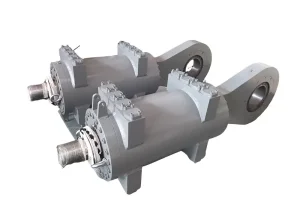
Standard and custom replacement hydraulic force cylinders manufactured in Changzhou, China — built to exact OEM specs for vertical roller mills and high-pressure roller presses.
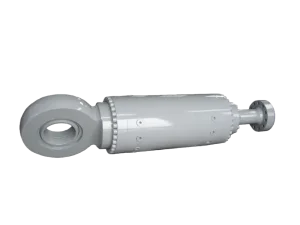
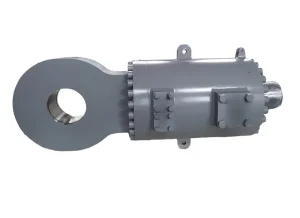
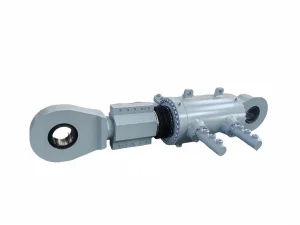
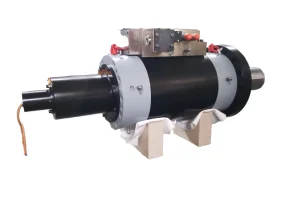
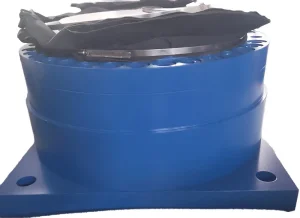
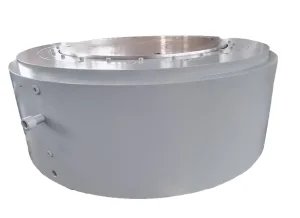
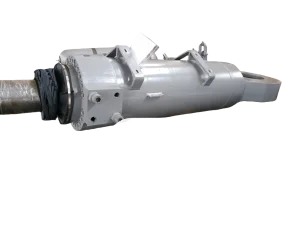
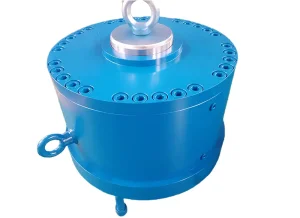
Raw material preparation forms the operational backbone of modern cement manufacturing, mineral processing, and thermal power generation. Raw mills—primarily Vertical Roller Mills (VRM) and High-Pressure Grinding Rolls (HPGR)—are tasked with reducing quarried limestone, clay, silica, iron ore, and coal into ultra-fine raw meal before pyro-processing in rotary kilns.
Across the global industrial landscape, electrical energy consumed during comminution accounts for approximately 60% to 70% of total plant power demands. Consequently, raw mill energy efficiency directly governs plant profitability. Over the past two decades, global cement manufacturing has aggressively shifted away from legacy ball mill systems toward high-efficiency Vertical Roller Mills and Roller Presses. This shift has placed immense pressure on the mechanical and hydraulic systems responsible for applying grinding forces.
Raw mill hydraulic cylinders must deliver continuous compressive loads between 100 kN and over 4,500 kN to pulverize hard, abrasive mineral boulders without mechanical structural fatigue.
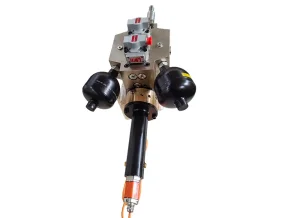
Feed bed fluctuations, ungrindable tramp metal, and particle size variations introduce heavy hydraulic shock waves. Loading systems rely on gas-charged accumulators for mill dampening.
Cylinders operate continuously in ambient environments with airborne particulate contamination, abrasive clinker dust, and elevated process gas temperatures up to 200°C.
Historically, European Original Equipment Manufacturers (OEMs) such as Loesche, FLSmidth, Pfeiffer, and Polysius maintained near-monopolistic control over spare hydraulic components, demanding exorbitant markup prices and 16-to-24-week delivery lead times. Today, global enterprise buyers are replacing high-markup OEM sourcing channels with specialized, certified China-based manufacturers who offer identical fit, form, and function at a fraction of the procurement budget—without compromising operational longevity or pressure integrity.
In a Vertical Roller Mill, the hydraulic cylinder does not merely raise or lower the grinding rollers—it acts as a dynamic force actuator and hydro-pneumatic spring system. The hydraulic loading assembly maintains constant pressure between the grinding rollers and the rotating mill table bowl.
| OEM Mill System | Actuation Type | Nominal Operating Pressure | Typical Bore / Rod Diameter | Seal Configuration | Mean Time Between Maintenance (MTBM) |
|---|---|---|---|---|---|
| FLSmidth ATOX | Pull-Rod Tension Cylinder | 210 - 260 Bar | Ø280mm / Ø180mm | Low-Friction PTFE + Double Wiper | > 36,000 Hours |
| Loesche LM Series | Tensioning Hydraulic Cylinder | 200 - 250 Bar | Ø320mm / Ø200mm | Tandem Step-Seal + Hydrostatic Ring | > 40,000 Hours |
| UBE UM Mill | Suspension Push/Pull Cylinder | 220 - 280 Bar | Ø350mm / Ø220mm | High-Temp Fluorocarbon (FKM) + PTFE | > 32,000 Hours |
| Pfeiffer MPS | Horizontal Tensioning System | 190 - 240 Bar | Ø260mm / Ø160mm | Clearance Seal Micro-Gap Fit | > 45,000 Hours |
| Leejun CLF Press | High-Pressure Roller Press Cylinder | 280 - 315 Bar | Ø400mm / Ø280mm | Heavy Duty Hydrostatic Support Servo | > 30,000 Hours |
| CITIC / HCRI Press | Diamond Profile Actuator | 250 - 300 Bar | Ø380mm / Ø250mm & Custom | Multi-Lip Chevron Packing + Bronze Guide | > 35,000 Hours |
Standard industrial hydraulic cylinders fail prematurely when subjected to the extreme lateral loads and dynamic pulse pressure spikes of raw mill grinding beds. Changzhou Xuanda Hydraulic integrates three specialized engineering solutions to dramatically extend service life:
Utilizing German-imported hone machinery, the cylinder bore and piston are machined to a radial clearance gap measured in micrometers (μm). By eliminating elastomeric contact seals, internal friction is reduced to near zero, enabling instantaneous dynamic response and zero wear over decades of high-frequency micro-strokings.
For closed-loop pressure control systems, our low-friction seal profiles incorporate bronze-filled and carbon-filled PTFE compounds backed by fluoroelastomer (FKM) O-rings. This eliminates stick-slip motion (breakaway friction), allowing mill automation controllers to stabilize grinding forces precisely.
In heavy roller presses (e.g., Leejun, CITIC), asymmetric feed conditions exert severe lateral bending forces up to 300 kN on the cylinder piston rod. Hydrostatic support pockets feed high-pressure hydraulic oil directly between the rod and guide sleeve, levitating the rod on a micro-thin oil film to prevent metal-to-metal scoring.
Procurement directors and plant general managers often face a critical trade-off between high OEM replacement pricing and unverified regional machine shops. Changzhou Xuanda Hydraulic bridges this gap by offering Western engineering precision backed by Chinese industrial cluster efficiency.
Located in Changzhou, Jiangsu—the premier heavy equipment manufacturing hub in East China—Xuanda is directly connected to world-class forging mills, specialized cold-drawing pipe plants, and chrome-plating facilities. By sourcing raw alloy steels (such as 42CrMo, 35CrMo, and 20CrMo) directly from top steel producers, material costs are optimized while maintaining strict mechanical tensile strength certification.
Our 20,000 m² modern factory houses heavy-duty German and Japanese 5-axis CNC machining centers, deep-hole boring machines (up to 12 meters stroke), and honing lathes capable of achieving bore surface finish roughness of Ra < 0.2 μm. Piston rods undergo induction hardening up to HRC 55-60 followed by hard chrome plating (minimum 30-50 μm thickness) or laser-cladded ceramic layers for corrosive raw mill environments.
Raw mill hydraulic cylinders operate across vastly different regional environments and plant configurations. Tailoring cylinder design to specific site conditions is vital to preventing premature seal failure, cylinder rod corrosion, and mill shutdowns.
Environment: Heavy airborne limestone dust with abrasive quartz contents.
Engineering Solution: Heavy-duty double scraper wipers, stainless steel rod protection bellows, and nickel-chrome dual-layer plated piston rods to resist abrasive pitting.
Environment: Ambient temperatures exceeding 50°C; continuous hydraulic oil temperatures > 80°C.
Engineering Solution: Fluorocarbon (FKM/Viton) high-temperature seals paired with bronze guide rings and integrated cooling jacket manifolds.
Environment: High humidity, acidic condensate, and chemical washing down routines.
Engineering Solution: 316 Stainless steel hydraulic oil ports, laser-cladded stainless steel rod coatings, and IP68-rated embedded LVDT position transducers.
When procuring aftermarket hydraulic cylinders for raw mills, engineering procurement teams should verify the following five technical parameters to guarantee 100% drop-in mechanical interchangeability:
Verify flange bolt circle dimensions, trunnion pin diameters, or clevis spherical bearing sizes according to ISO 6020/2 standards.
Confirm hydraulic fluid medium (e.g., Mineral Oil HL/HM, Synthetic Ester HEES, or Water-Glycol HFC) to specify correct elastomeric compounds.
Ensure retracted pin-to-pin distance (L_min) matches original mill clearance space to prevent mechanical bottoming out during maintenance.
Check direct-flanged valve manifold block configurations (CETOP / ISO 4401 pattern) for accumulator and relief valve mounting.
Explore high-performance cylinders built for specialized heavy applications including rotary kilns, grate coolers, stacker-reclaimers, and servo control systems.
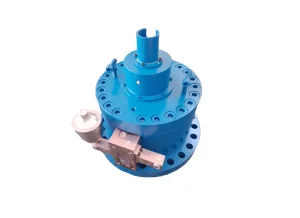
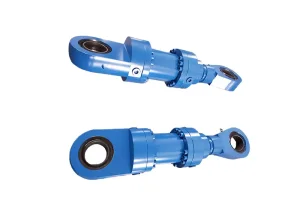
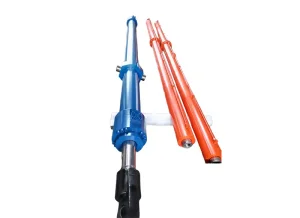
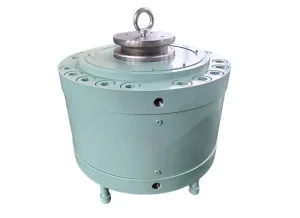
Provide your existing mill model, pin-to-pin dimensions, working pressure, or worn sample photos. Our hydraulic engineering staff will evaluate your application requirements within 24 hours.
Address: 389 Huanghe West Road, Xinbei District, Changzhou, Jiangsu, China
Email: [email protected]
Direct Phone: +86-519-83200615
