Explore our primary industrial cylinder solutions designed to withstand extreme forces, abrasive airborne dust, high continuous temperatures, and tight dynamic control loop tolerances.
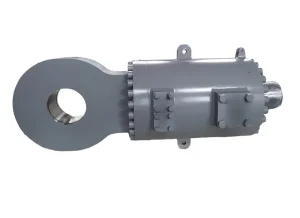
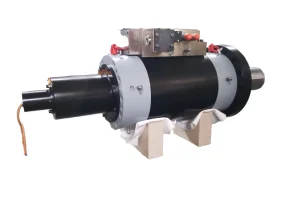
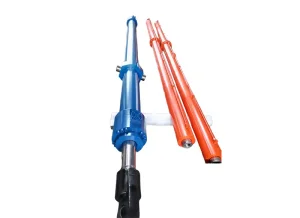
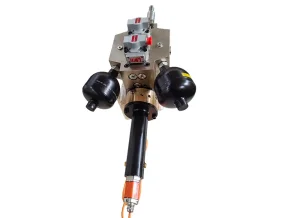
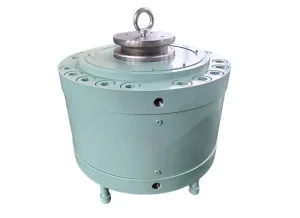
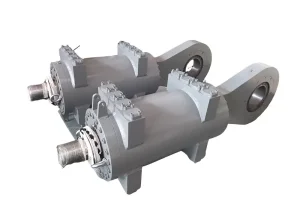
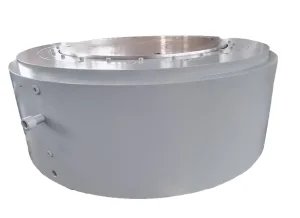
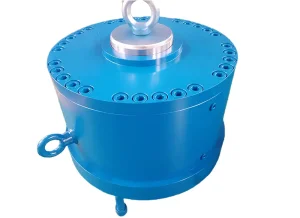
In modern heavy manufacturing—spanning cement grinding circuits, blast furnace metallurgy, mining extraction, and precision automated presses—the hydraulic cylinder is the primary mechanical muscle. Selecting between single-acting and double-acting hydraulic cylinders directly governs capital expenditure (CAPEX), operational expenses (OPEX), maintenance frequency, and process throughput.
Single-acting cylinders utilize pressurized hydraulic fluid supplied to one side of the piston to generate linear thrust in a single direction. The return stroke is actuated via external mechanical loads, gravitational force, or integrated heavy-duty return springs. Engineered primarily for simplified hydraulic circuits, dump trucks, positioning pins, and unidirectional holding systems, single-acting configurations minimize valve manifold complexity and fluid volume consumption.
Double-acting cylinders apply pressurized hydraulic fluid alternately to both the cap-end (bore side) and rod-end (annular side) ports. This fluid-powered duality enables active thrust and retract control, providing high-precision speed regulation, heavy-load stabilization, and rapid dynamic response. They serve as the benchmark drive mechanism for vertical roller mills (Loesche, UBE, Pfeiffer), roller presses, grate coolers, and closed-loop servo positioning systems.
Choosing the right cylinder design requires balancing force demands, stroke control accuracy, system fluid flow, and lifetime upkeep costs. The matrix below outlines fundamental design parameters to guide your procurement choices.
| Engineering Parameter | Single-Acting Hydraulic Cylinder | Double-Acting Hydraulic Cylinder | Primary Industry Impact |
|---|---|---|---|
| Force Vector & Power Stroke | Unidirectional (Push only); Return by gravity/spring | Bidirectional (Push & Pull under power) | Determines directional load capability |
| Hydraulic Circuit Complexity | Simple (1 fluid line, 3-way directional valve) | Advanced (2 fluid lines, 4-way spool/servo valves) | CAPEX of hydraulic power unit (HPU) |
| Positioning & Velocity Control | Moderate precision; limited speed control on return | Ultra-high precision (up to ±1 μm with servo LVDT) | Process repeatability and output consistency |
| Sealing System Wear Rate | Lower relative seal friction (single pressure chamber) | Dual-chamber dynamic seals required (PTFE/Bronze) | Maintenance intervals & seal replacement cycles |
| Retraction Speed | Governed by external spring or mass load rate | Controlled hydraulically by rod-side flow rate | Cycle time efficiency in fast press applications |
| Cost Profile (Initial Purchase) | Budget Friendly (Lowest CAPEX) | Higher initial cost; optimized TCO in heavy duty | Upfront procurement expenditure |
The global hydraulic cylinder market is experiencing a structural pivot. Plant managers no longer buy based on initial hardware price alone. Instead, they demand "budget-friendly" equipment with engineered information gain—proven high reliability that guarantees low total cost of ownership (TCO) across decades of continuous service.
Cement plants running vertical roller mills (VRMs) and high-pressure grinding rolls (HPGR roller presses) require cylinders that endure relentless shock vibrations, heavy grinding forces, and ambient clinker dust. High replacement costs from traditional OEM channels have created strong global demand for specialized manufacturers who offer drop-in replacement units engineered for extended wear life.
Continuous casters, ladle turrets, and hot rolling mills subject hydraulic cylinders to radiant thermal radiation exceeding 300°C alongside high fluid working pressures (up to 31.5 MPa). Double-acting cylinders with water-cooled jackets and synthetic fire-resistant fluid seals (FKM/Viton) are standard requirements across North American and European steel facilities.
Industries adopting IIoT framework and smart automation demand cylinders integrated with internal magnetostrictive displacement sensors and dynamic clearance sealing. These units replace cumbersome mechanical linkage systems with response frequencies exceeding 25 Hz and positioning repeatable to sub-micron thresholds.
At Changzhou Xuanda Hydraulic, our engineering R&D pushes fluid power performance boundaries through precision metallurgy, tailored seal configurations, and advanced surface coating chemistries.
Traditional cylinders subject internal guide bushings to accelerated asymmetric wear when operated under lateral force vectors. Our hydrostatic support servo cylinders feed high-pressure hydraulic oil directly into micro-machined pocket recesses along the piston guide ring. This creates a continuous pressurized oil film that completely floats the piston rod assembly, eliminating metallic contact, drastically lowering breakout friction, and extending guide ring operational lifespan up to 500% under heavy eccentric loads.
Standard elastomeric or PTFE dynamic seals exhibit stick-slip hysteresis, limiting high-frequency small-amplitude oscillation performance. Xuanda's clearance seal hydraulic cylinders use sub-micron CNC precision machining to achieve radial clearances under 5 μm between hardened steel sleeves and piston surfaces. Operating with zero dynamic elastomeric contact, these cylinders achieve near-infinite seal life and virtually zero friction for dynamic fatigue testing rigs and ultra-responsive servo loops.
To combat harsh marine salt spray, abrasive silica dust, and acidic plant environments, piston rods are treated with High-Velocity Oxygen-Fuel (HVOF) thermal spraying or nickel-chrome laser cladding. Yielding surface hardness ratings above 65 HRC and micro-crack-free barrier protection, our rods successfully withstand 1,000+ hours of neutral salt spray testing (ASTM B117) without micro-flaking or pitting.
Modern double-acting cylinders can be fitted with embedded magnetostrictive position transducers, pressure transducers, and wireless vibration monitoring nodes. Real-time telemetry outputs provide predictive maintenance alerts prior to seal failure, preventing catastrophic unscheduled line outages in continuous processing facilities.
Changzhou Xuanda Hydraulic manufactures direct drop-in replacement cylinders designed to match or exceed original equipment installation parameters for globally leading plant machinery brands.
Hydraulic loading cylinders for Loesche LM series grinding mills require extreme pressure stability and specialized shock-absorbing accumulator integration. Our cylinders maintain uniform grinding bed force across variable raw material feeds, preventing mill vibration trips.
Engineered to match the specific structural pin-mounting configurations and hydraulic pressure curves of UBE UM mills. Feature heavy-duty spherical bearings and dirt-wiper seal packs designed for clinker dust isolation.
High-pressure double-acting cylinders for high-pressure grinding rolls (HPGR). Designed for working pressures up to 31.5 MPa, incorporating compact diamond-shaped profile blocks to fit tight internal frame spaces.
Single-acting and double-acting thrust roller cylinders that actively push the massive rotating kiln assembly axially. Designed to resist severe heat, outdoor weather exposure, and continuous heavy thrust forces.
High-frequency stroke cylinders driving grate cooler reciprocating plates. Built with high-temperature Fluorocarbon (FKM) seals and reinforced rod wipers to withstand direct exposure to hot clinker dust.
Rugged outdoor single-acting and double-acting cylinders driving material harrows and boom luffing mechanisms in bulk material storage yards, featuring heavy corrosion protection and dust caps.
In industrial procurement, "budget-friendly" must never mean compromised material quality. Cheap cylinders with inferior seals or soft rod plating fail prematurely, costing tens of thousands of dollars per hour in lost plant output. We deliver genuine cost savings through supply chain integration and advanced manufacturing efficiencies:
Utilizing high-speed German and Japanese CNC lathes and automated honing machines reduces labor hours while achieving micron-level dimensional accuracy across large manufacturing runs.
Direct mill sourcing of seamless cold-drawn steel tubes (ST52, E355) and high-tensile alloy steel rod stock (42CrMo4) lowers material procurement overhead without degrading mechanical strength.
Zero modification required during plant overhauls. Port threads, pin centers, and mounting flanges directly match existing OEM footprints, saving expensive field modification hours.
By pairing optimized seal geometries with fine surface finishes (Ra < 0.2 μm on honed bores and Ra < 0.1 μm on chrome rods), seal wear is minimized, doubling standard maintenance intervals.
Clear engineering answers to help you select, configure, and maintain your single-acting and double-acting hydraulic cylinders.
Browse our full range of heavy industrial drive cylinders engineered for cement mills, steel works, stacker-reclaimers, and servo automation setups.
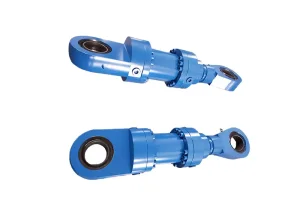
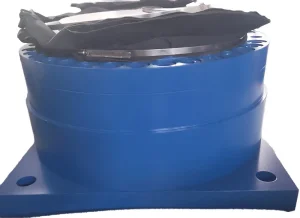
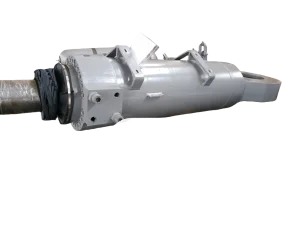
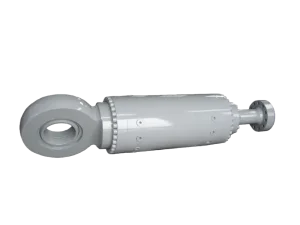
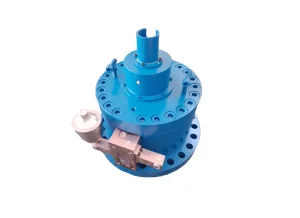
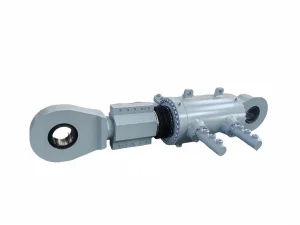
Whether you require replacement single-acting cylinders for plant maintenance or customized high-frequency double-acting servo cylinders for new machinery builds, our engineering team is ready to evaluate your operating parameters.
Changzhou Xuanda Hydraulic Electromechanical Equipment Co., Ltd. | 389 Huanghe West Road, Xinbei District, Changzhou, Jiangsu, China
