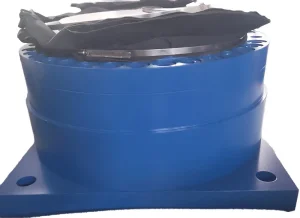
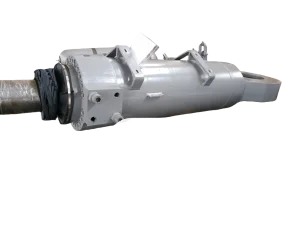
Direct OEM-compatible hydraulic loading solutions engineered for extreme pressure dynamics, abrasive dust isolation, and zero-downtime cement mill operations.
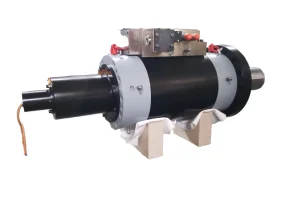
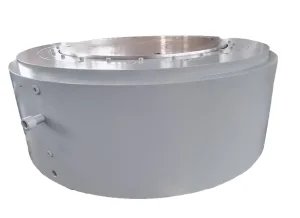
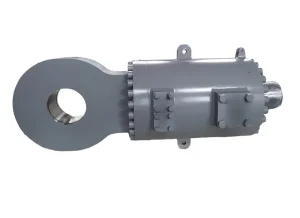
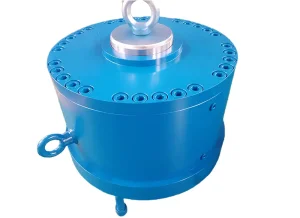
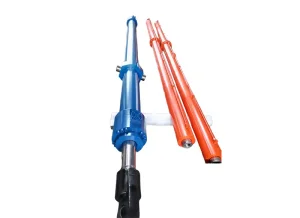
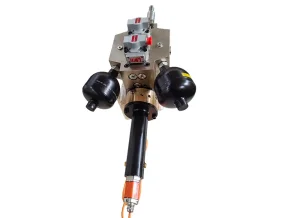
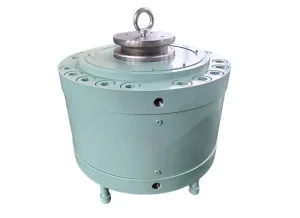
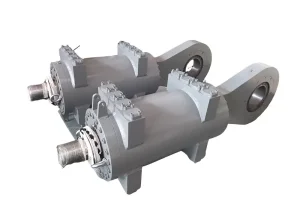
Analyzing how hydraulic loading systems govern grinding bed stability, specific energy consumption, and structural longevity in heavy-duty grinding mills.
Vertical Roller Mills (VRM) rely on heavy hydropneumatic force application systems. Hydraulic cylinders actuate rocker arm mechanisms that force heavy grinding rollers against a rotating grinding table. Maintaining constant pressure under violent mechanical shocks is critical to prevent bed collapsing and severe mill vibration.
Modern VRM installations achieve up to 30% to 45% reduction in electrical energy consumption per ton of ground clinker compared to legacy ball mill circuits. The hydraulic system plays a direct role by enabling precise regulation of grinding force, optimizing particle size distribution (Blaine value) in real time.
When ungrindable foreign materials (tramp iron) pass under the rollers, hydraulic loading cylinders must retract instantaneously to prevent catastrophic mechanical failure. High-frequency hydropneumatic accumulators paired with low-friction cylinder sealing allow fast dynamic response times under peak shock loads up to 40 MPa.
In high-pressure cement grinding, internal cylinder seal friction creates a stick-slip effect that delays roller response during feed fluctuation. By integrating high-end clearance seal technology and low-friction bronze-filled PTFE seal rings, modern budget-friendly manufacturers eliminate stick-slip, stabilizing grinding bed thickness within dynamic margins of ±1.5 mm.
How specialized Chinese heavy hydraulic manufacturers combine high-grade alloy metallurgy, precision machining, and cost efficiency to redefine global procurement benchmarks.
Procuring VRM cement mill hydraulic cylinders from specialized Chinese manufacturing hubs like Changzhou provides a 35% to 50% CAPEX advantage compared to Western European OEMs. This cost-efficiency stems from complete localized supply chains—ranging from raw alloy steel forging to specialized heat treatment—rather than compromising on material thickness or component quality.
China's heavy industrial machinery centers feature top-tier CNC boring and honing equipment imported from Germany and Japan. Cylinder bores are honed to a surface finish of Ra ≤ 0.08 μm, ensuring minimal seal friction and superior hydraulic oil film retention.
How intelligent hydraulics and low-carbon manufacturing are reshaping cement grinding operations worldwide.
The global cement sector's push toward net-zero CO2 emissions requires grinding blended cements with higher proportions of supplementary cementitious materials (SCMs), such as blast furnace slag (GGBFS) and calcined clays. Hydraulic loading cylinders must accommodate rapidly changing material grinds, higher moisture levels, and higher grinding pressure requirements.
Modern VRM hydraulic cylinders are evolving from pure mechanical force actuators into intelligent data-generating nodes. Built-in Linear Variable Differential Transformers (LVDT) position sensors, wireless vibration telemetry, and high-frequency pressure transducers stream real-time operational metrics directly to plant SCADA and Digital Twin dashboards.
To eliminate seal wear caused by heavy lateral side-loads on long-stroke cylinders, manufacturers are adopting hydrostatic oil-film support bearings. By maintaining a pressurized 15-micron oil layer between the piston rod and guide sleeve, mechanical metal-to-metal contact is entirely eliminated, extending seal service life beyond 50,000 continuous operating hours.
Specific operational environments require custom cylinder design parameters to guarantee reliability across raw meal, finish cement, slag, and coal grinding circuits.
Raw meal grinding involves high throughput rates with variable limestone hardness and moisture contents ranging from 2% to 12%. Hydraulic cylinders must handle rapid stroke adjustments to maintain grinding bed stability.
Recommended Spec: Double-acting heavy-duty cylinders with integrated hydropneumatic dampening, heavy wiper rings for dust exclusion, and large-bore porting (G1" or flange connections) for fast oil displacement.
Slag is extremely abrasive with high quartz content, generating fine particulate matter that destroys standard elastomer seals. Slag mills run under higher specific pressures (up to 31.5 MPa) to reach high Blaine fineness values ($>4500 cm^2/g$).
Recommended Spec: Hardened stainless steel piston rods with HVOF thermal spray coating, secondary scraper seal packs, fluorocarbon (FKM) outer wipers, and external flushing ports.
Coal grinding mills operated in cement power generation plants demand explosion-proof ATEX safety standards due to combustible coal dust hazards. Hydraulic actuators must prevent static accumulation and operate cleanly near thermal heat sources.
Recommended Spec: Non-sparking bronze rod glands, conductive seal compounds, stainless steel piping manifolds, and fire-resistant synthetic hydraulic fluid (HFD-U) compatible sealing elements.
Pre-grinding clinker via roller presses subjects hydraulic cylinders to extreme dynamic cyclic loading at high frequencies. Cylinder mountings experience extreme shear and bending stresses during continuous operation.
Recommended Spec: Forged steel cylinder heads with integrated spherical clevis bearings, heavy wall 42CrMo barrels, and clearance seal hydrostatic support sleeves.
Maximizing plant uptime through engineered replacement cylinders tailored for international OEM vertical roller mill architectures.
Engineered to match the exact mounting center distances, pin diameters, port alignments, and stroke limits of major OEM mill designs (including Loesche LM, FLSmidth ATOX, Pfeiffer MPS, UBE UM, CITIC, and HCRI). Zero civil or structural modifications needed during planned maintenance turnarounds.
Complete hydraulic package upgrades including high-pressure bladder accumulators, digital gas charging kits, block manifolds, and proportional directional control valves. Optimized gas volume calculations ensure seamless pressure dampening across variable table speeds.
From reverse-engineering worn sample cylinders during emergency shutdowns to providing onsite installation supervision, seal replacement training, and fluid cleanliness auditing, China's premier manufacturers provide end-to-end operational assurance.
Essential criteria for international procurement managers evaluating OEM hydraulic cylinder suppliers for heavy industrial plants.
Initial CAPEX purchase price represents less than 20% of a heavy-duty hydraulic cylinder's lifecycle cost. Evaluation frameworks must calculate unplanned downtime costs (which can exceed $10,000 per hour for a 5000 tpd cement line), seal replacement frequency, oil consumption, and maintenance labor hours.
Qualified manufacturers must provide complete material mill test reports (MTR) according to EN 10204 3.1 standards, UT (Ultrasonic Testing) defect inspection certificates for forged barrels, chrome thickness measurement logs, and NDT (Non-Destructive Testing) reports for heavy welds.
| Cylinder Parameter | Standard VRM Loading Cylinder | Heavy-Duty Slag Mill Cylinder | High-Precision Servo Cylinder |
|---|---|---|---|
| Bore Diameter Range | 180 mm – 450 mm | 250 mm – 560 mm | 100 mm – 320 mm |
| Nominal Pressure | 16.0 MPa – 25.0 MPa | 25.0 MPa – 31.5 MPa | 21.0 MPa – 35.0 MPa |
| Peak Shock Rating | 31.5 MPa | 40.0 MPa | 42.0 MPa |
| Rod Coating Type | Hard Chrome (40 μm) | Ni-Cr Double Layer / Laser Cladding | Ceramic / HVOF Tungsten Carbide |
| Sealing System | Polyurethane / Fabric Reinforced PTFE | Low-Friction PTFE + Viton Wipers | Clearance Seal / Hydrostatic Bearing |
| Operational Life (MTBF) | 25,000 Hours | 35,000 Hours | 50,000+ Hours |
Clear, definitive answers to technical and commercial questions raised by plant engineers and procurement teams.
Select specialized cylinders engineered for vertical roller mills, roller presses, stacker reclaimers, rotary kilns, and high-frequency servo drives.