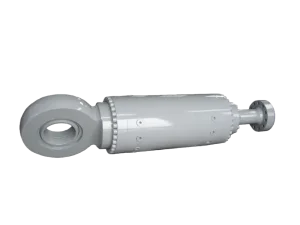
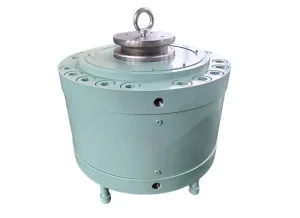
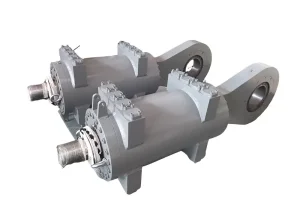
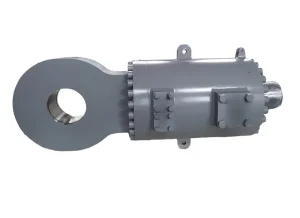
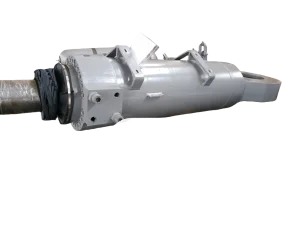
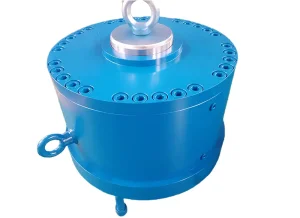
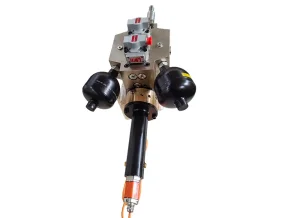
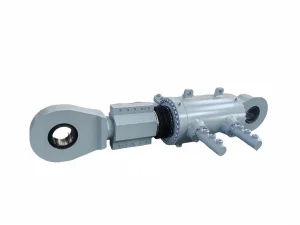
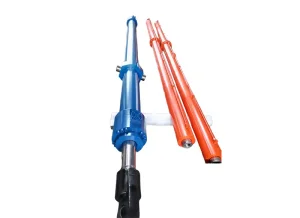
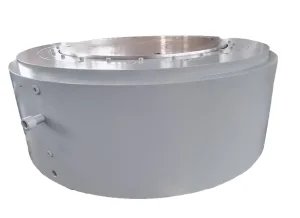
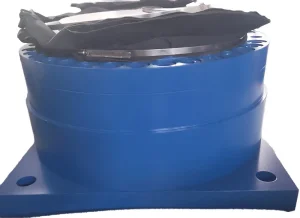
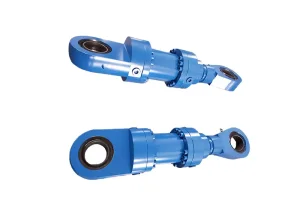
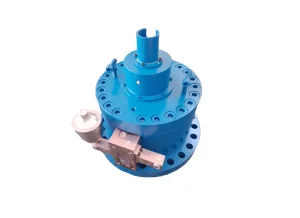
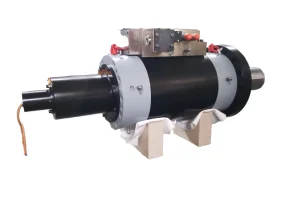
Engineered for extreme operating environments in vertical mills, rotary kilns, roller presses, and precision closed-loop servo control systems.
For enterprise buyers across Europe, the Americas, and the Middle East, CE certification serves as a fundamental benchmark of design integrity, operational safety, and structural compliance under extreme fluid dynamics.
Under the European Pressure Equipment Directive (PED 2014/68/EU), heavy-duty hydraulic cylinders operating at continuous fluid pressures above 0.5 bar fall into rigorous risk categories. Expert exporters execute volumetric stress calculations, burst pressure verification, and Non-Destructive Testing (NDT) to ensure seamless safety margins.
Compliance with EN ISO 4413:2010 (Hydraulic fluid power — General rules and safety requirements for systems and their components) mandates that actuators withstand unexpected shock loading, prevent thermal over-pressurization, and incorporate secondary seal containment protocols during mechanical fatigue cycles.
Export-ready hydraulic cylinders adhere strictly to ISO mounting dimensions, metric thread tolerances, and flange interfaces. This ensures plug-and-play interchangeability with OEM equipment manufactured by FLSmidth, Loesche, Pfeiffer, Metso, and ThyssenKrupp.
In vertical roller mill applications, hydraulic cylinders experience cyclic micro-pulsations of ±3.5 MPa at frequencies up to 12 Hz. Standard off-the-shelf cylinders suffer fatigue cracking at weld joints within 6,000 operating hours. CE-certified cylinders engineered in elite Chinese facilities utilize seamless forged 42CrMo4 steel heads, friction-welded rod tails, and finite element analysis (FEA) optimized stress fillets, delivering a minimum calculated service life of 50,000 hours under continuous dynamic duty.
| Regulatory Standard | Technical Scope | Mandatory Inspection / Certification Method | Impact on Hydraulic Reliability |
|---|---|---|---|
| PED 2014/68/EU | Pressure Equipment Directive for fluids in Group 2 | Hydrostatic proof pressure test at 1.5× max working pressure | Eliminates catastrophic cylinder barrel rupture under peak surges |
| EN ISO 4413:2010 | General safety rules for fluid power components | Risk assessment, zero-leakage seal integrity check, burst margin | Prevents mechanical side-load jamming & unexpected pressure drop |
| ISO 10100:2020 | Acceptance testing of hydraulic fluid power cylinders | Piston seal leakage rate test, friction force curve profiling | Guarantees low friction hysteresis & precise position feedback |
| EN 10204 3.1 / 3.2 | Metallic material certification traceablity | Spectrometric chemical analysis & ultrasonic flaw detection | Verifies raw material structural density & yield strength compliance |
The concentration of advanced machining clusters in Changzhou, Jiangsu Province, has reshaped global supply chains by combining precision metallurgy, automated CNC skiving/honing, and economies of scale.
By integrating raw forged tube sourcing, deep-hole boring, chrome plating, and assembly within a localized 30-kilometer radius, Chinese manufacturers cut supply chain lead times by 45%. This cluster efficiency lowers capital expenditure per unit by 30-40% compared to Western European OEMs without compromising dimensional tolerances or material longevity.
State-of-the-art Chinese exporters deploy 12-meter CNC deep-hole honing machines capable of achieving cylinder bore roughness of Ra < 0.1 µm and straightness within 0.02 mm/m. Piston rod surface treatment features dual-layer electroplated hard chrome (thickness 30–50 µm) or HVOF (High-Velocity Oxy-Fuel) thermal spray ceramic coatings that withstand over 1,000 hours of neutral salt spray testing (NSS ISO 9227 Rating 10).
The global industrial landscape is shifting rapidly toward digital integration, energy conservation, and extreme-durability tribological sealing systems.
Modern CE-certified hydraulic cylinders feature embedded magnetostrictive linear position transducers (such as MTS Temposonics) and integrated pressure/temperature sensors inside the piston rod and end caps. This allows real-time telemetry feeding directly into plant SCADA systems for predictive maintenance and zero unplanned downtime.
To eliminate stick-slip phenomenon in closed-loop servo positioning systems, manufacturers utilize hydrostatic oil cushions that float the piston rod on a pressurized oil film. Combined with PTFE-bronze composite step seals, dynamic friction coefficients are reduced to less than 0.03, enabling micro-meter accuracy positioning.
Next-generation vertical roller mill cylinders employ optimized clearance sealing and high-frequency response proportional valves, minimizing internal volumetric bypass leakage. This results in up to 18% reduction in hydraulic power unit (HPU) electrical energy consumption during continuous grinding operations.
Heavy machinery environments require tailor-made actuator designs engineered to endure abrasive dust, extreme temperature swings, and severe shock loads.
In vertical roller mills (FLSmidth ATOX, Loesche LM, Pfeiffer MPS, UBE UM, TCD/TRM) and high-pressure roller presses (Chengdu Leejun, CITIC Heavy Industries, HCRI), hydraulic cylinders act as the primary force loading mechanism. They apply hundreds of tons of downward force onto grinding rollers. Exporters design these cylinders with nitrogen accumulator shock-absorption manifolds, spherical swivel bearings, and heavy-duty wiper seals to prevent clinker dust ingress.
Kiln hydraulic thrust roller cylinders stabilize the axial movement of massive rotating rotary kilns operating 24/7 at temperatures exceeding 1000°C. Exporters equip these actuators with high-temperature Viton/FKM seals, water-cooled jacket housings, and heavy steel trunnion mounts to resist thermal expansion stresses.
Hydraulic harrow drive cylinders and boom luffing cylinders in stacker-reclaimers operate in outdoor marine and mining environments. Exposed to saltwater spray and heavy airborne dirt, these cylinders feature multi-layer ceramic rod coatings, stainless steel plumbing, and heavy wall thickness to survive bending moments caused by wind shear.
Clearance seal and hydrostatic support servo cylinders are critical components in turbine valve control, flight simulator motion bases, and metallurgical continuous casting mold oscillation. By removing contact seals in high-frequency short-stroke applications, service life extends to over 100 million motion cycles.
Evaluating Total Cost of Ownership (TCO), supplier manufacturing audits, and logistics optimization for international hydraulic cylinder sourcing.
3D CAD modeling, envelope dimension verification, pin diameter and flange bolt pattern matching.
Evaluating peak operating pressure, fluid viscosity, ambient temperature range, and dynamic shock vectors.
Reviewing CE, PED 2014/68/EU, ISO 9001 certificates, and NDT material inspection reports (EN 10204 3.1).
100% full-stroke hydrostatic proof testing, low-pressure seal slip test, and internal bypass leakage metering.
VCI anti-corrosion oil dipping, heavy-duty seaworthy fumigated wooden crate packing, and air/sea insurance.
Direct answers from our senior hydraulic engineering team regarding CE compliance, custom engineering, drop-in replacement compatibility, and export logistics.
CE Certification verifies that the hydraulic cylinder meets strict health, safety, and environmental protection standards established under the European Union Machinery Directive (2006/42/EC) and Pressure Equipment Directive (PED 2014/68/EU). For industrial buyers, a CE-certified cylinder guarantees that stress calculations, burst pressure safety factors (typically 2.5:1 or 4:1), material traceability (EN 10204 3.1), and hydrostatic testing have been independently audited. Importing non-certified cylinders risks severe customs holds, operational liability, and catastrophic site failures under peak hydraulic pressures.
Yes. Leading Chinese specialized hydraulic manufacturers maintain extensive technical databases of OEM installation interfaces for vertical roller mills (Loesche LM series, FLSmidth ATOX, Pfeiffer MPS, UBE UM) and roller presses (Chengdu Leejun, CITIC Heavy Industries). By utilizing precision reverse-engineering, 3D laser scanning, or client-provided interface drawings, exporters produce 100% plug-and-play replacement cylinders with exact pin diameters, oil port locations, stroke lengths, and matching seal packages, at significantly reduced lead times and cost.
Clearance Seal Cylinders utilize ultra-precise machining gaps (under 0.015 mm) between the piston and honed barrel, eliminating dynamic rubber/PTFE friction entirely for high-frequency vibration test rigs. Low-Friction Seal Cylinders incorporate specialized bronze-filled PTFE step seals and elastomeric energizer rings designed to minimize stick-slip motion in closed-loop servo loops. Hydrostatic Support Cylinders pump high-pressure oil directly into fluid pockets around the piston and rod bearing, creating a continuous oil film that floats the rod, enabling the cylinder to absorb extreme lateral side-loads without metallic contact or wear.
Every single exported hydraulic cylinder undergoes a multi-stage testing procedure according to ISO 10100 standards. This includes: (1) Low-Pressure Friction Slip Test at 0.5–1.0 MPa to check smooth movement; (2) Proof Pressure Test at 1.5 times the maximum rated working pressure (e.g., tested at 52.5 MPa for a 35 MPa rated cylinder) held for a minimum of 10 minutes; and (3) Internal Bypass Leakage Test across piston seals monitored via digital flow meters. Full pressure test certificates and charts are provided with shipping documentation.
Export packaging protocols mandate thorough internal flushing with anti-wear VCI (Vapor Corrosion Inhibitor) hydraulic testing oil. External unpainted machined surfaces, chrome rods, and mounting pins are coated with heavy-duty rust-preventative wax compound and wrapped in VCI protective film. Ports are sealed with heavy steel plug caps. The complete assembly is secured inside customized, ISPM-15 compliant heat-treated fumigated wooden crates with internal desiccant bags to withstand multi-month ocean voyages.
Standard OEM replacement cylinders with existing engineering drawings typically require 3 to 4 weeks for complete forging, machining, honing, assembly, and testing. Custom-designed complex actuators (such as integrated servo cylinders with internal LVDT sensors or specialized hydrostatic support bearings) take approximately 5 to 7 weeks. Fast-track emergency replacement programs are available for plant shutdown maintenance windows.
Explore our specialized replacement and custom engineered cylinders for cement grinding, stacker-reclaimers, grate coolers, and servo automation.