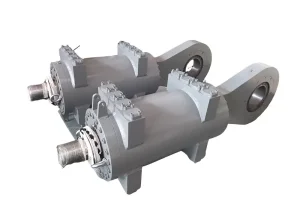
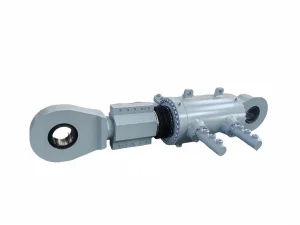
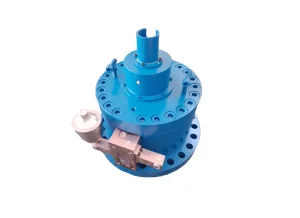
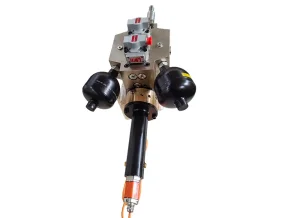
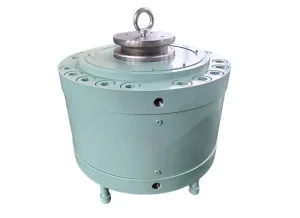
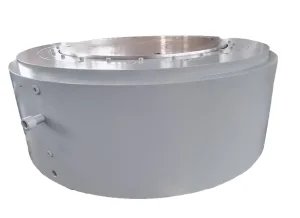
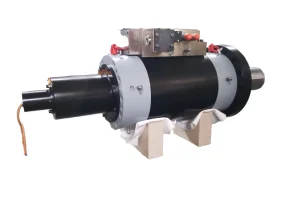
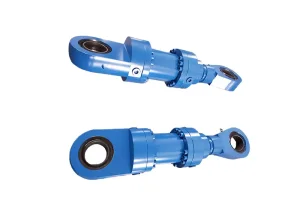
Explore our export-grade hydraulic cylinder assemblies and dynamic seal systems engineered for vertical mills, roller presses, stacker-reclaimers, and precision servo loops.
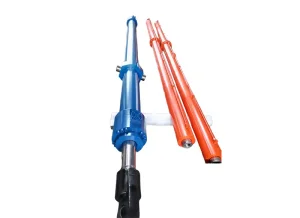
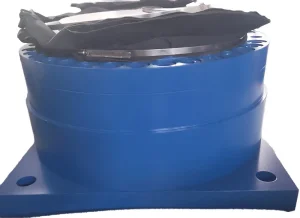
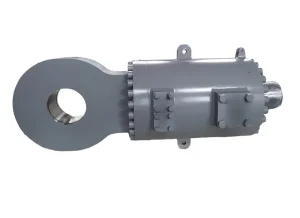
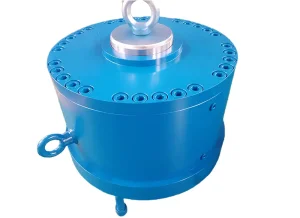
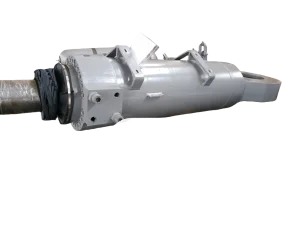
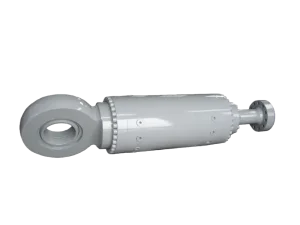
In modern industrial hydraulic engineering, fluid sealing components are no longer viewed as simple passive consumables; they constitute critical primary containment elements governing total system integrity, operational safety, and overall thermodynamic efficiency. For global engineering buyers and Tier-1 OEMs navigating international supply chains, sourcing from verified CE Certification Hydraulic O Rings Exporters is a fundamental compliance necessity dictated by European single-market regulations and global safety directives.
CE certification for hydraulic sealing assemblies and O-ring sealing components operates under the regulatory umbrella of the European Union’s Pressure Equipment Directive (PED 2014/68/EU) and the Machinery Directive (2006/42/EC). Under PED 2014/68/EU, fluid power equipment operating under fluid pressures exceeding 0.5 bar (50 kPa)—and routinely reaching extreme continuous working pressures of 35 MPa to 70 MPa (350 to 700 bar) in heavy industrial hydraulic cylinders—must adhere to strict material traceability, mechanical endurance, and safety factor protocols.
Rigorous structural verification ensuring static and dynamic seals maintain pressure integrity under sudden surge pressures, water hammer effects, and cyclical mechanical loading without catastrophic blowout.
Complete elimination of restricted Substances of Very High Concern (SVHC), polycyclic aromatic hydrocarbons (PAHs), and heavy metals from raw polymer formulations in accordance with EC 1907/2006.
Every export batch is supplied with certified material test reports (MTRs), detailing batch-specific compounding data, durometer hardness, tensile modulus, and elongation metrics.
Standardization across global jurisdictions requires compliance with dimensional and quality acceptance standards including ISO 3601-1 (inside diameters, cross-sections, and tolerances), ISO 3601-3 (surface quality acceptance criteria specifying allowable limits for flash, micro-voids, and radial marks), AS568 (Aerospace Standard sizes), and DIN 3771. When custom-engineered hydraulic cylinders are deployed in heavy industries—such as vertical roller mills, continuous casting lines, or cement rotary kilns—the structural compliance of every O-ring and energizer ring dictates equipment mean time between failures (MTBF).
The operational longevity of a hydraulic O-ring under severe operating conditions depends directly on its elastomeric compounding chemistry. Hydraulic fluids—ranging from conventional mineral oils (HLP/HVLP) to synthetic esters (HEES), water-glycol mixtures (HFC), and fire-resistant fluids (HFD-U)—exert complex physical and chemical forces on elastomeric matrices.
Leading manufacturers and exporters utilize advanced high-grade polymer bases tailored for specific industrial stress profiles:
Selecting the optimal hydraulic O-ring material requires balancing thermal boundaries, chemical compatibility, pressure thresholds, and mechanical friction requirements. The comprehensive technical matrix below details performance parameters for industrial procurement officers and hydraulic design engineers:
| Elastomer Base | Shore A Hardness | Operating Temp Range | Max Working Pressure (Unbacked) | Compatible Media | Primary Industrial Application |
|---|---|---|---|---|---|
| NBR (High ACN) | 70, 80, 90 Shore A | -30°C to +100°C | 10 MPa (100 bar) | Mineral oils (HLP, HVLP), Water-in-oil emulsions | Standard industrial cylinders, general hydraulics |
| HNBR | 80, 90 Shore A | -35°C to +150°C | 15 MPa (150 bar) | Synthetic esters, ozone, crude oil, bio-hydraulic fluids | Heavy construction machinery, mobile hydraulics |
| FKM (Peroxide-Cured) | 75, 90 Shore A | -20°C to +200°C | 15 MPa (150 bar) | Synthetic oils, flame-resistant fluids (HFD-U), high-temp acids | Metallurgical rolling mills, cement kiln thrust cylinders |
| Polyurethane (PU) | 93 to 95 Shore A | -35°C to +110°C | 25 MPa (250 bar) | Mineral hydraulic oils, grease, severe abrasive slurries | Roller press loading cylinders, mining harrow actuators |
| PTFE + Backup Ring | 55 to 65 Shore D | -200°C to +260°C | 70 MPa (700 bar) | Universal chemical compatibility, ultra-pure water | High-pressure servo cylinders, ultra-high duty test rigs |
When hydraulic system pressures exceed 15 MPa (150 bar), radial clearance gaps between the piston rod and cylinder head risk inducing O-ring extrusion destruction. Qualified exporters supply matching PTFE (Teflon), Virgin PEEK, or Nylon anti-extrusion backup rings (contour-cut, spiral-cut, or solid) to bridge radial gaps and preserve elastomer cross-sectional geometry under extreme dynamic pressure spikes.
In continuous-duty process industries—such as cement production, steel metallurgy, ore processing, and deep mining—hydraulic cylinders operate in hostile environments defined by heavy shock loads, ambient clinker/slag dust contamination, and violent pressure transients. Hydraulic O-rings and energizer rings perform as vital mechanical barriers preventing internal pressure bypassing and fluid contamination.
Hydraulic loading cylinders applying 100 to 500 metric tons of grinding force require custom dual-step energizer seals and high-durometer FKM/HNBR O-rings to absorb high-frequency vibration without micro-fretting seal degradation.
Operating under continuous grinding pressures up to 35 MPa with rapid lateral displacement. Sealing systems utilize special low-friction clearance seals combined with ultra-durable polyurethane O-ring energizers to eliminate stick-slip.
Exposed to severe radiative heat (+120°C to +180°C ambient). High-grade FKM O-rings with metal-backed wiper seals prevent thermal degradation and dust ingress into hydraulic actuation loops.
For global procurement managers, sourcing high-pressure cylinders pre-fitted with CE certified O-ring seals eliminates down-time risks during critical plant operation cycles. Integrating precision-fit clearance seals and low-friction dynamic O-rings guarantees system response times measured in milliseconds while preserving zero-leakage performance under ISO 19973 test protocols.
Modern hydraulic sealing excellence relies heavily on computational simulation and rigorous quality verification. Leading Chinese exporters utilize non-linear Finite Element Analysis (FEA) modeling to evaluate contact stress distribution, von Mises strain profiles, and deformation behavior of elastomeric O-rings inside complex gland geometries prior to physical molding.
Using hyperelastic material models (such as Mooney-Rivlin, Ogden, and Yeoh coefficients derived from physical uniaxial and biaxial tensile testing), engineers simulate operational pressure ramping to optimize groove fill ratios (targeting 75% to 85% volumetric fill under maximum thermal expansion) and prevent nibbling damage.
100% vision system inspection checking 360-degree seal perimeters for micro-flashes, voids, particulate inclusions, and dimensional deviation under ±0.01 mm tolerance band.
Continuous laboratory testing per ASTM D395 Method B, guaranteeing elastomers maintain elastic recovery force after prolonged exposure to elevated temperatures and static squeeze.
Ultra-sensitive leak detection for high-precision aerospace and servo-cylinder seals, validating leak rates below $1 \times 10^{-8} \text{ mbar}\cdot\text{l/s}$.
Dynamic impulse pressure cycling up to 150% rated working pressure at 1 Hz frequency for 1,000,000 cycles without fatigue failure or extrusion loss.
The global fluid power sector is undergoing a rapid transition toward digital connectivity, environmental sustainability, and ultra-high efficiency. Future hydraulic sealing systems are evolving from passive rubber rings into intelligent, self-diagnosing engineering components.
Direct integration of flexible piezo-resistive thin-film sensors and micro-RFID tags into elastomer rings to continuously transmit real-time contact pressure, local temperature, and wear degradation metrics to Industry 4.0 IoT control platforms.
Infusing Graphene, Carbon Nanotubes (CNTs), and Nano-silica into raw FKM/HNBR matrices to boost tear resistance by 40% and lower friction coefficients down to values matching PTFE without compromising elastic seal memory.
Formulating customized elastomeric compounds compatible with 100% bio-degradable synthetic esters (HEES) and renewable bio-based hydraulic fluids, supporting global industrial carbon-neutral targets.
In-depth engineering answers addressing procurement, compliance, material engineering, and installation queries from industrial hydraulic buyers:
CE compliance for hydraulic sealing components operating under the Pressure Equipment Directive (PED 2014/68/EU) requires an EN 10204 Type 3.1 Material Certificate, a formal Declaration of Conformity (DoC), raw elastomer chemical safety test reports (REACH SVHC & RoHS 3 compliance), ISO 3601 dimensional inspection sheets, and hydrostatic batch test reports verifying zero leakage under 1.5x design pressure.
At pressures above 15–20 MPa, standard 70 Shore A NBR O-rings experience severe material extrusion into radial clearance gaps. To prevent failure: (1) Increase elastomer hardness to 90 Shore A or switch to Polyurethane (PU); (2) Reduce radial machining clearance gaps between rod/piston and housing; and (3) Install one or two PTFE (Teflon) or PEEK anti-extrusion backup rings adjacent to the O-ring on the low-pressure side.
Peroxide-cured FKM compounds feature carbon-carbon covalent cross-links that provide dramatically higher resistance to hydrolysis, steam, acidic combustion byproducts, and aggressive synthetic hydraulic fluids compared to bisphenol-cured FKMs. Peroxide-cured FKM maintains lower compression set and superior elasticity during continuous thermal exposure up to +200°C.
According to ISO 2230, elastomeric seals must be stored in airtight UV-shielded polyethylene bags at temperatures below 25°C (77°F), away from direct sunlight, draft, radioactive sources, and ozone-generating electrical equipment. Under ISO 2230, Group 1 rubbers (NR/SBR) have a 5-year shelf life; Group 2 (NBR/HNBR/PU) have 7 to 10 years; and Group 3 (FKM/FFKM/PTFE) have up to 20 years of certified shelf life.
Yes. Certified manufacturers can reverse-engineer worn cylinder samples, physical nameplate data, or client field drawings to produce direct drop-in replacement cylinders matching original mounting interfaces, stroke dimensions, and port layouts for OEMs such as Loesche, UBE, Pfeiffer, FLSmidth, and Leejun, while enhancing seal kits with CE-certified modern compounds.
Browse additional specialized hydraulic cylinders equipped with high-durability sealing systems designed for extreme industrial operational demands.