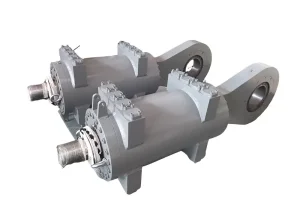
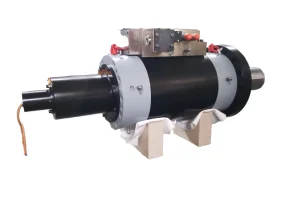
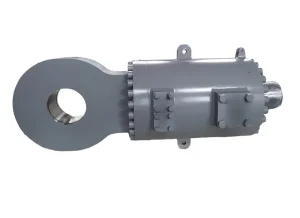
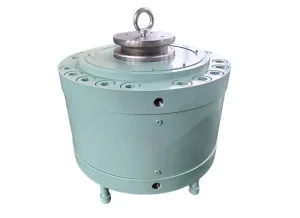
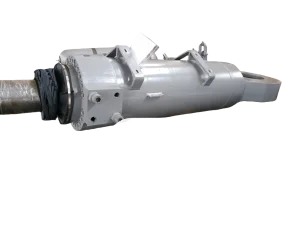
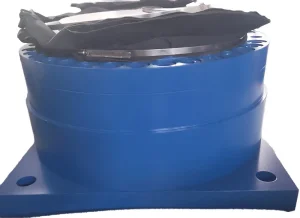
Explore our CE-marked loading cylinders and servo actuation units engineered to withstand severe fatigue, dynamic impact, and high ambient temperatures.
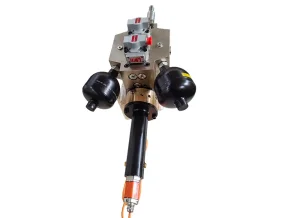
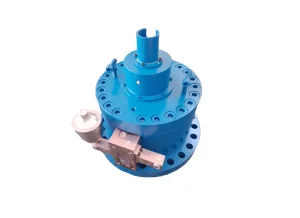
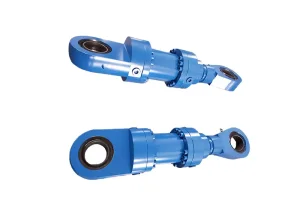
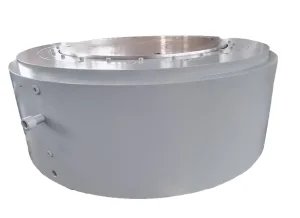
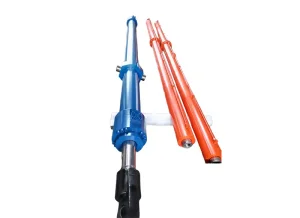
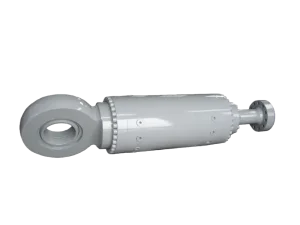
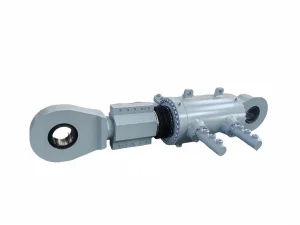
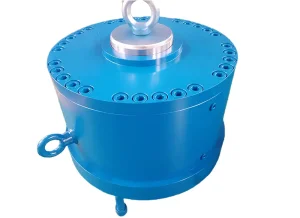
In heavy industrial manufacturing—spanning high-pressure cement grinding, continuous metallurgical casting, marine actuation, and energy generation—the hydraulic Loading Unit represents the vital mechanical interface responsible for high-tonnage force exertion, vibration damping, and dynamic position control. As an established global manufacturer and exporter operating from Changzhou, Jiangsu Province, Changzhou Xuanda Hydraulic Electromechanical Equipment Co., Ltd. designs and fabricates CE-certified hydraulic loading units that fully comply with the European Union’s Machinery Directive 2006/42/EC and the Pressure Equipment Directive (PED) 2014/68/EU.
Achieving CE certification for a high-pressure hydraulic loading unit requires far more than surface-level documentation. It demands structural finite element analysis (FEA), strict adherence to harmonized standards such as EN ISO 4413:2010 (Fluid power – General rules and safety requirements for systems and their components), and mandatory non-destructive testing (NDT). Every loading unit produced in our facility undergoes rigorous hydrostatic proof testing at 1.5 times nominal working pressure, dynamic pulse testing exceeding 10,000,000 load cycles, and thorough metallographic verification to ensure zero risk of catastrophic structural fatigue or fluid containment failure under hostile operating environments.
The mechanical reliability of a high-tonnage loading unit depends fundamentally on the tribological interaction between the rod, barrel, guide bushes, and sealing matrices. Standard off-the-shelf industrial cylinders often suffer premature seal degradation, stick-slip oscillation, and thermal breakdown under heavy continuous duty. Xuanda Hydraulic resolves these industry bottlenecks through three proprietary tribological technologies:
Utilizing ultra-precise match-machining between the piston and cylinder bore (with radial clearances controlled down to 3–5 micrometers), clearance seal loading units completely eliminate physical seal friction. This results in near-zero breakout force, ultra-high response speed, and extended service life in dynamic high-frequency servo application loops.
Incorporating PTFE-bronze matrix step-seals paired with fluorocarbon (FKM) or nitrile (NBR) energizers, our low-friction seal assemblies prevent stick-slip during micro-position adjustments. This configuration ensures smooth velocity transitions and high dynamic fidelity for hydraulic roll-gap control and continuous casting positioning.
Engineered specifically for heavy industrial applications subject to massive lateral shear forces (such as vertical roller mill roller arms), hydrostatic bearing pockets inject high-pressure oil continuously around the piston rod. This pressurized fluid film completely floats the rod, isolating metal surfaces and eliminating mechanical wear under 300 kN+ side loads.
| Tribological Technology | Friction Coefficient (μ) | Positioning Precision | Max Lateral Load Capacity | Primary Industrial Application |
|---|---|---|---|---|
| Clearance Seal Design | < 0.001 (Near Zero) | ±0.5 μm | Moderate (Requires external guides) | High-frequency test rigs & fast servo loops |
| Low-Friction PTFE Compound | 0.03 – 0.05 | ±1.0 μm | High | Roller press roll-gap & Grate cooler drives |
| Hydrostatic Oil-Film Support | 0.0005 (Fluid Shear) | ±2.0 μm | Ultra-Heavy (>300 kN side load) | Vertical Roller Mill (Loesche, UBE, ATOX, Pfeiffer) |
Located in Changzhou, Jiangsu Province—the core hub of Eastern China’s high-end equipment manufacturing belt—Xuanda Hydraulic leverages an unmatched industrial supply chain ecosystem. Our 20,000 square meter standardized production base integrates deep-hole honing, heavy CNC turning, precision grinding, cleanroom hydraulic assembly, and automated testing under one ISO 9001:2015 quality control umbrella.
We utilize premium alloy structural steels (42CrMo4, 35CrMo, 20MnV6) sourced exclusively from Tier-1 certified steel mills. Every raw forging undergoes ultrasonic flaw detection (UT) to guarantee freedom from internal voids, slag inclusions, or hydrogen flakes before machining.
Our machining complex features multi-axis CNC turning centers imported from Germany and Japan, capable of achieving bore straightness tolerances within 0.02 mm/m and surface roughness down to Ra 0.1 μm via micro-honing processes.
Piston rods are subjected to double-layer chrome plating, High-Velocity Oxygen Fuel (HVOF) thermal spraying, or laser cladding (Ni-Cr matrix). This guarantees salt spray corrosion resistance exceeding 500 hours (ISO 9227 NSS test) for harsh cement dust and marine environments.
Xuanda Hydraulic loading units are engineered to operate as seamless, drop-in replacement units or original equipment solutions across diverse global industrial machinery applications:
In cement raw grinding, clinker grinding, and slag processing plants, hydraulic loading units exert controlled force onto grinding rollers. Our compatible replacement cylinders for Loesche LM, FLSmidth ATOX, Pfeiffer MPS, UBE UM, and TCD/TRM mills absorb violent material bed shocks while maintaining consistent hydropneumatic spring stiffness via nitrogen accumulators.
In high-pressure grinding lines manufactured by CITIC Heavy Industries, Chengdu Leejun (CLF series), and HCRI, our high-tonnage loading cylinders maintain precise parallel roll gaps under crushing forces reaching tens of thousands of kilonewtons, preventing roll skewing and uneven bearing wear.
For cement pyro-processing lines, our custom hydraulic cylinders actuate grate cooler pushers under extreme ambient heat and abrasive clinker dust, while hydraulic thrust roller cylinders stabilize rotary kilns against axial sliding on live rings.
Our heavy harrow cylinders power large-capacity stacker-reclaimers in mining and port logistics, while heat-shielded servo cylinders execute continuous casting mold oscillation and automatic gauge control (AGC) in steel rolling mills.
Global heavy industries are experiencing a dual transformation driven by strict carbon reduction mandates and operational efficiency targets. Hydraulic loading units are no longer evaluated solely on force delivery, but on overall energy consumption, oil leak prevention, and system dynamic efficiency.
Conventional continuous-displacement hydraulic systems generate significant energy losses through throttling and relief valve overflow. Modern industrial plants are rapidly transitioning toward energy-saving regenerative loading circuits and digital servo-pump control. Xuanda Hydraulic collaborates with plant operators across Europe, Southeast Asia, South America, and the Middle East to integrate regenerative valve manifolds into our loading unit packages. This architectural upgrade reduces operational power loss by 24% to 38% while minimizing hydraulic fluid thermal degradation.
As smart factory automation advances globally, Xuanda Hydraulic is committed to embedding digital intelligence into heavy hydraulic actuation systems. Our engineering development roadmap outlines key milestones for the next decade:
Integration of internal absolute linear displacement transducers (LVDT/Magnetostrictive), dual-channel pressure sensors, and oil film temperature probes within the cylinder head to enable real-time operational telemetry.
Development of edge-computing diagnostics modules that analyze micro-vibrations, internal leakage rates, and seal wear coefficients. Algorithms estimate Remaining Useful Life (RUL), preventing catastrophic plant shutdown through scheduled preventative seal maintenance.
Optimization of sealing elastomeric polymers (HEES biodegradable synthetic esters and water-glycol fire-resistant fluids) combined with advanced ceramic piston coatings to eliminate environmental contamination risk in sensitive mining and marine zones.
To safeguard international engineering procurements against installation downtime, every single loading unit manufactured by Xuanda Hydraulic undergoes strict quality gate validation compliant with global regulatory frameworks:
Full compliance with CE Machinery Directive 2006/42/EC. Each unit carries a laser-engraved CE nameplate and comprehensive Declaration of Conformity (DoC).
Complete chemical analysis and mechanical testing documentation supplied for all load-bearing forging components, cylinder barrels, and rods.
Magnetic Particle Inspection (MT) for weld seams, Ultrasonic Testing (UT) for raw forging stock, and Dye Penetrant Inspection (PT) for critical thread transitions.
Find detailed engineering insights regarding CE compliance, drop-in replacement specs, and maintenance best practices for high-tonnage loading units.
CE certification under the Machinery Directive (2006/42/EC) and PED (2014/68/EU) requires documented structural calculations demonstrating safety factors under static and dynamic loading, proof pressure testing at 1.5x working pressure without permanent deformation, non-destructive testing (UT/MT) of load-bearing welds, and functional safety compliance per EN ISO 4413:2010.
Yes. We engineering-match mounting interfaces, stroke dimensions, pin diameters, port configurations, and pressure ratings for mainstream vertical roller mill designs (including Loesche LM, FLSmidth ATOX, Pfeiffer MPS, and UBE UM). Plant operators can execute direct retrofits during planned maintenance turnarounds without modifying existing steel structures or piping manifolds.
Hydrostatic support cylinders utilize dedicated high-pressure fluid pockets machined into the guide bushes. Pressurized oil is actively pumped into these pockets, creating a high-stiffness oil film that prevents direct metal-to-metal contact between the rod and bushing even when subject to severe dynamic lateral thrusts exceeding 300 kN.
Clearance seals offer virtually zero mechanical friction (μ < 0.001) and near-infinite wear life, making them ideal for high-frequency dynamic testing systems with controlled internal oil leakage collection. Low-friction PTFE compound seals are preferred where absolute zero internal leakage is required alongside smooth micro-positioning performance, such as roller press roll-gap adjustments.
Absolutely. Our engineering team can perform complete reverse-engineering using laser 3D scanning, field dimensional measurements, sample rod/seal analysis, and operating parameter assessment. We construct full 3D CAD/CAM models and provide verification approval drawings before component machining begins.
Browse our extended portfolio of customized cylinders for vertical roller mills, rotary kilns, stacker-reclaimers, and high-precision servo systems.