Engineered to exact OEM installation interfaces, rated for continuous high-pressure duty in cement, metallurgical, and heavy industrial plant environments.
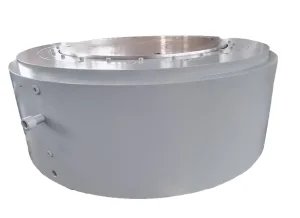
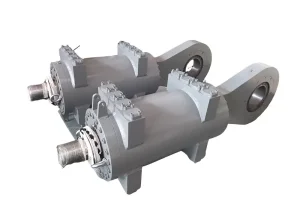
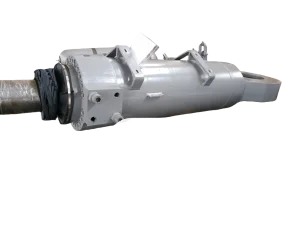
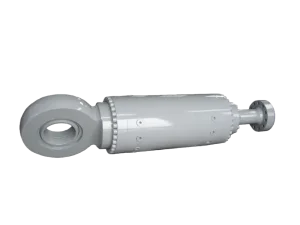
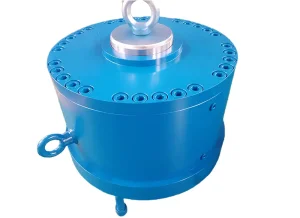
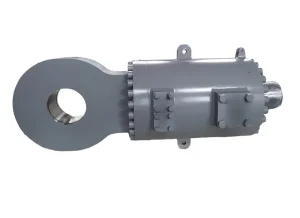
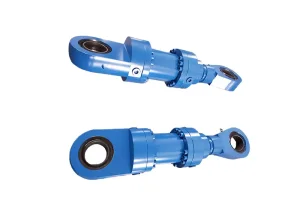
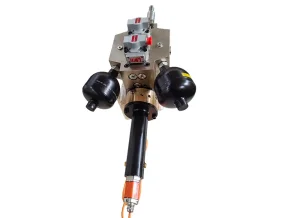
A comprehensive evaluation of single-acting hydraulic fluid power systems, structural integrity under high pressure, and compliance standards governing European and global markets.
In modern industrial mechanical engineering, the single-acting hydraulic cylinder represents a core linear actuation primitive where unidirectional force vectoring is required under intense structural loading. Unlike double-acting configurations that rely on pressurized fluid displacement for both extend and retract strokes, single-acting cylinders utilize hydraulic pressure for work execution in a single direction, relying upon external mechanical forces, heavy gravitational mass, or integrated high-tension spring arrays to effect stroke retraction. When specifying single-acting cylinders for heavy industrial deployment—such as vertical roller mills, high-pressure roller presses, metallurgical rolling stands, and bulk material handling equipment—rigorous adherence to international safety directives and manufacturing protocols is paramount.
CE Certification serves as an essential regulatory passport for industrial hydraulic components entering the European Economic Area (EEA) and global markets accepting harmonized European standards. Compliance requires strict validation under the Machinery Directive 2006/42/EC and the Pressure Equipment Directive (PED 2014/68/EU). Single-acting cylinders subject to fluid pressure times volume thresholds ($PS \cdot V > 50\text{ bar}\cdot\text{L}$) must undergo comprehensive risk assessments, non-destructive volumetric testing, and structural fatigue evaluation under EN ISO 4413:2010 standards.
The operational mechanics of a high-pressure single-acting cylinder revolve around hydrostatic fluid displacement against an internal piston or plunger area. The extension force ($F_{ext}$) generated by the cylinder is defined by the hydrostatic equilibrium equation:
$$F_{ext} = P \cdot A_p - F_{friction} - F_{return}$$
Where $P$ represents system fluid working pressure (typically operating between 21 MPa and 70 MPa in heavy-duty applications), $A_p$ is the effective piston cross-sectional area, $F_{friction}$ is the tribological resistance of the sealing stack, and $F_{return}$ is the counter-opposing spring force or gravity vector. Because fluid is introduced through a single port, the volume of hydraulic fluid required during cycle execution is substantially reduced compared to double-acting systems. This single-port design reduces systemic complex manifold piping, lowers total oil mass, and minimizes potential leak points—an intrinsic advantage for heavy industrial facilities striving to meet stringent environmental zero-leakage mandates.
From smart IoT-enabled sensor integration to ultra-low friction clearance seals, the single-acting cylinder landscape is evolving toward energy efficiency, longevity, and extreme reliability.
Integration of non-contact magnetostrictive linear position transducers and internal pressure sensors allows continuous real-time stroke monitoring, enabling predictive maintenance algorithms within Industry 4.0 factory architectures.
Application of High-Velocity Oxygen Fuel (HVOF) thermal spraying, laser cladding, and specialized PTFE-bronze composite seals eliminates stick-slip motion, providing virtually zero-friction operation and extending seal life past 10 million meters of stroke travel.
Heavy-duty single-acting cylinders deployed in harsh cement dust or marine environments feature double-layer ceramic coatings and stainless steel piston rods (17-4PH / 42CrMo4) capable of surviving 1,000+ hours of neutral salt spray testing (ISO 9227).
In high-frequency actuation scenarios, such as hydraulic pulsation dampers or precision mill loading controls, conventional elastomeric seals experience accelerated thermal degradation and wear due to friction-induced heat generation. Leading manufacturers are transitioning to clearance seal (hydrostatic gap seal) technology. By maintaining a micro-gap (typically 5 to 15 microns) between the piston and cylinder barrel, fluid leakage is controlled via laminar flow resistance while mechanical contact friction drops to virtually zero. This innovation allows single-acting cylinders to achieve response bandwidths exceeding 50 Hz with zero stick-slip behavior—ideal for closed-loop servo control systems.
How international EPC contractors, OEM equipment manufacturers, and plant maintenance directors evaluate supplier capability and mitigate operational risk.
Global procurement teams prioritize cylinders that eliminate unplanned downtime. A single hour of cement mill or continuous casting shutdown can exceed $50,000 in lost revenue. Investing in high-grade forged cylinders reduces long-term operational risk.
Every raw forged tube (42CrMo, 20MnV6, ST52.3) must be accompanied by EN 10204 3.1 chemical analysis and mechanical property inspection certificates, validating tensile strength, yield point, and impact toughness across thermal extremes.
Plant retrofits require exact dimensional alignment with legacy OEM specifications (such as Loesche LM, UBE UM, Pfeiffer MPS, FLSmidth ATOX, and CITIC). Precision machining guarantees exact mounting interface compatibility without modification.
| Evaluation Parameter | Standard Specification | Xuanda Engineering Standard | Procurement Benefit |
|---|---|---|---|
| Cylinder Barrel Forging | Seamless Steel Tube (ST52 / E355) | Forged 42CrMo4 Quenched & Tempered Heat Treatment | Superior yield strength preventing barrel dilatation under pressure spikes. |
| Internal Surface Finishing | Honed Ra 0.4 μm | Deep-hole Roller Burnished Ra ≤ 0.2 μm (Tolerance H8) | Extends seal lifetime by 300% and minimizes static break-out friction. |
| Piston Rod Plating | Hard Chrome 20–30 μm | Dual-Layer Hard Chrome 40–50 μm (Microhardness ≥ 900 HV) | Resists abrasive particulate pitting in heavy cement and mining sites. |
| Non-Destructive Testing (NDT) | Visual & Basic Pressure Test | 100% Ultrasonic (UT), Magnetic Particle (MT), Hydrostatic 1.5x Pressure | Guarantees zero internal micro-cracks or structural casting voids prior to export. |
How Changzhou Xuanda leverages advanced CNC machining hubs, vertical supply integration, and lean manufacturing to deliver world-class hydraulic cylinders globally.
The global industrial landscape demands hydraulic cylinder suppliers capable of providing technical customization, exceptional mechanical precision, and robust production capacity without exorbitant lead times. Situated in Changzhou, Jiangsu Province—China's premiere high-end equipment manufacturing corridor—Changzhou Xuanda Hydraulic Electromechanical Equipment Co., Ltd. exemplifies the transformation of Chinese manufacturing into an Industry 4.0 power center.
Our 20,000 m² state-of-the-art facility integrates raw material forging, precision CNC turning, deep-hole boring, honing, automated assembly, and dynamic high-pressure testing within a single controlled environment. Key equipment infrastructure includes:
Strategic co-location with China's top tier steel foundries and seal specialists reduces raw material procurement lead times by up to 60%, allowing rapid turnaround on custom hydraulic cylinders.
Over 400 skilled personnel and specialized fluid mechanics engineers utilize finite element analysis (FEA) software to optimize structural cylinder mass while maintaining high safety factors.
Exporting to over 30 countries with heavy-duty export seaworthy packaging, VCI anti-rust wrapping, custom wooden crating, and complete international compliance documentation.
Detailed technical specifications governing Xuanda's custom single-acting cylinder series engineered for heavy-duty industrial service.
| Technical Parameter | Spring-Return Single Acting | Load / Gravity Return Single Acting | Plunger Type Single Acting |
|---|---|---|---|
| Bore Diameter Range | 40 mm – 320 mm | 100 mm – 1,000 mm | 80 mm – 800 mm |
| Stroke Range | 50 mm – 600 mm | 100 mm – 10,000 mm | 100 mm – 6,000 mm |
| Max Nominal Pressure | 31.5 MPa (315 bar) | 70 MPa (700 bar) | 50 MPa (500 bar) |
| Return Mechanism | Heavy Coil Spring / Disc Spring Stack | External Load / Dead Weight / Gravity | System Gravity / Counter-Weight |
| Primary Application | Emergency Valves, Clamps, Brake Systems | Vertical Roller Mills, Heavy Presses, Kilns | High-Load Vertical Jacks, Ship Lifts |
| Sealing Architecture | Polyurethane / PTFE U-Cup Seals | Low-Friction Bronze PTFE + Dust Wiper | Clearance Seal / Hydrostatic Floating Ring |
| Fluid Compatibility | Mineral Oils (HLP), Water-Glycol (HFC), Synthetic Esters (HEES), Fire-Resistant Fluids | ||
| Temperature Range | -40°C to +120°C (Standard) / Up to +200°C with Viton/FKM High-Temp Seals | ||
Exploring real-world applications where single-acting hydraulic cylinders provide critical operational performance.
Single-acting cylinders serve as primary tensioning actuators for Vertical Roller Mills (Loesche, UBE, Pfeiffer, FLSmidth) and High-Pressure Roller Presses (CITIC, Leejun, HCRI). They deliver up to 5,000 kN of hydraulic pressure to grinding rollers, stabilizing grinding beds while absorbing high shock loads.
In hot and cold strip steel rolling facilities, single-acting hydraulic pushers and roll-balancing cylinders operate in high ambient temperatures. Engineered with specialized Viton seal compounds and water-cooled jackets, they guarantee rapid hydraulic roll adjustment without seal degradation.
Heavy hydraulic thrust roller cylinders maintain axial positioning of rotating kiln shells, preventing mechanical displacement. Concurrently, high-frequency single-acting cylinders power grate cooler pusher frames under intense clinker dust exposure.
Hydraulic harrow cylinders on stacker-reclaimers control the rake angle during raw material reclaim. Single-acting systems provide reliable downward force while allowing smooth upward float against material resistance.
Zero-friction clearance seal single-acting cylinders power high-frequency fatigue test platforms and seismic simulation tables, maintaining sub-micron positioning accuracy under continuous dynamic cycling.
Corrosion-resistant single-acting cylinders fitted with ceramic-coated rods are deployed in dam sluice gates, lock control systems, and offshore marine crane tensioning assemblies.
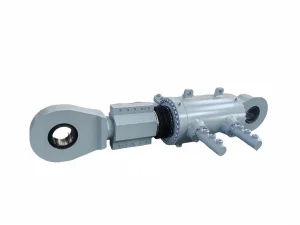
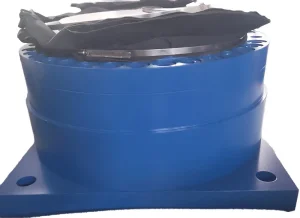
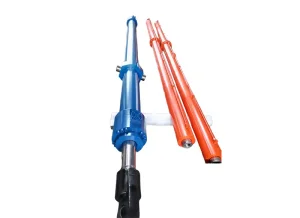
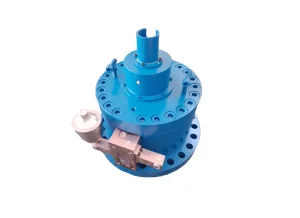
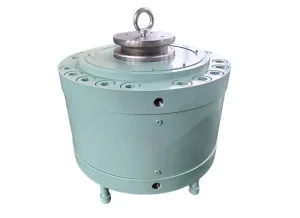
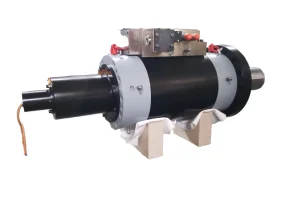
Browse our full series of CE certified, high-durability cylinders designed for vertical mills, roller presses, rotary kilns, and servo systems.
Detailed technical answers to common engineering, compliance, and procurement inquiries regarding single-acting hydraulic cylinders.
CE Certification for industrial hydraulic cylinders requires verification against the Machinery Directive 2006/42/EC and, where applicable, the Pressure Equipment Directive (PED 2014/68/EU). The technical dossier must contain complete design calculations validating cylinder barrel stress limits under Euler buckling formulas and burst safety factors ($K_s \ge 2.5$).
Mandatory testing includes: (a) Static hydrostatic proof pressure testing at 1.5 times nominal working pressure for a minimum hold time of 30 minutes; (b) Volumetric expansion testing; (c) Non-destructive testing (NDT) such as Ultrasonic (UT) of forged raw stock and Magnetic Particle Inspection (MT) on welded joints; and (d) Dynamic fatigue testing over 1,000,000 cycles. Upon completion, the manufacturer issues an EC Declaration of Conformity and affixes the CE mark with associated technical files.
The primary mechanical distinction lies in fluid routing and force generation. A single-acting cylinder utilizes hydraulic fluid pressure on only one side of the piston or plunger area to produce stroke extension. Retraction is accomplished via an external load vector (gravity, dead weight) or an internal/external mechanical spring stack. In contrast, a double-acting cylinder features ports at both cap and rod ends, utilizing pressurized fluid for both extension and retraction.
In heavy industrial applications like vertical roller mill tensioning, single-acting cylinders provide simpler manifold design, reduced fluid piping complexity, lower fluid heating, and inherently higher reliability when returning under heavy gravimetric loads.
Xuanda utilizes precision engineering and reverse-engineering protocols to manufacture replacement cylinders that adhere strictly to original OEM installation interfaces. Our engineering team verifies pin hole center-to-center distances, trunnion journal dimensions, port flange patterns (SAE / Code 61 / Code 62), and total stroke length using CMM spatial coordinate measuring tools.
Furthermore, internal sealing packages and fluid dynamics are optimized or matched to original system working parameters, ensuring that Xuanda cylinders can be installed directly during planned plant maintenance overhauls without modifying existing mounting brackets or hydraulic power units (HPUs).
For high-dust environments, such as cement grinding mills or clinker grate coolers, a multi-stage seal pack is mandatory. We employ a primary heavy-duty PTFE-bronze step-seal, supported by a secondary polyurethane lip seal and a double-lip metal-cased wiper ring that mechanically scrapes fine particulate matter off the rod.
For high-temperature applications (up to +200°C), standard polyurethane seals are replaced with Fluorocarbon (Viton / FKM) or custom PTFE composite seals with stainless steel energizer springs, ensuring long seal integrity without thermal hardening or cracking.
A clearance seal cylinder utilizes ultra-precision machining tolerances to establish a micro-gap (typically 5–15 microns) between the piston and the honed cylinder barrel, eliminating physical contact elastomeric seals. A small controlled internal bypass flow creates a fluid film that lubricates the interface.
Clearance seals are specified in high-frequency, high-speed servo testing or dynamic control loops where friction, stick-slip, or seal wear cannot be tolerated. They offer virtually infinite seal cycle life and an exceptionally fast frequency response bandwidth.
Side loads induce bending moments that can cause premature rod scoring, seal distortion, or barrel galling. Xuanda mitigates side loads by: (a) Increasing guide sleeve length and incorporating high-load capacity synthetic guide rings (such as glass-filled nylon or bronze-laminated fabric); (b) Optimizing rod diameter according to Rankine-Gordon buckling safety factors; and (c) Employing spherical plain bearings (maintenance-free GE series) at mount ends to compensate for structural misalignment during machine duty.
Every international shipment includes a complete Quality Assurance Documentation Package consisting of:
Yes. Our engineering division specializes in reverse-engineering worn, damaged, or obsolete cylinders. Field technicians or clients can provide physical samples, nameplate data, photographs, and key dimensions. Our engineering team utilizes portable 3D laser scanners and metallurgical analysis to re-create complete 2D/3D CAD models, confirming working parameters and material specifications before machining begins.
We offer both internal and external position feedback solutions. The most reliable option is an internally gun-drilled piston rod housing a Magnetostrictive Linear Transducer (such as Balluff, MTS Temposonics, or Novotechnik). This provides non-contact, absolute position feedback accurate to within ±0.01 mm, fully protected inside the heavy-duty cylinder body against dust, fluid, and mechanical impact.
Thanks to our integrated Changzhou manufacturing supply hub, standard custom single-acting cylinders (bore sizes up to 320 mm) are typically produced within 3 to 4 weeks following 2D/3D drawing approval. Large-bore (up to 1,000 mm) or specialized metallurgical cylinders requiring custom forgings are completed within 5 to 7 weeks. Accelerated emergency response services are available for unplanned plant shutdown repairs.
