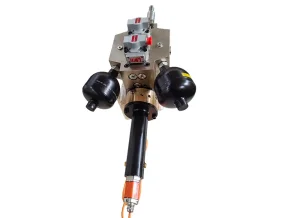
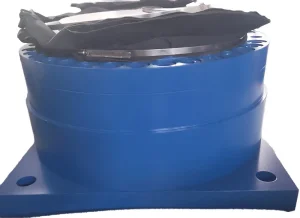
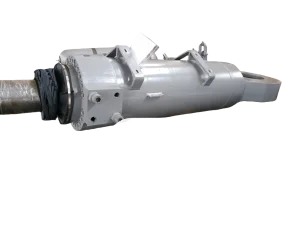
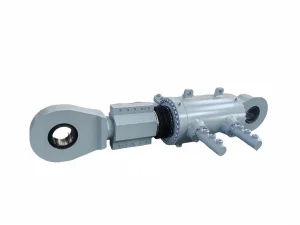
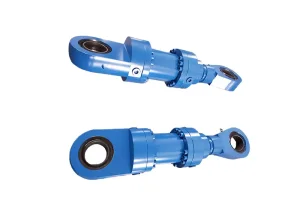
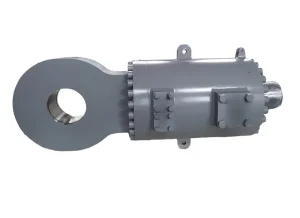
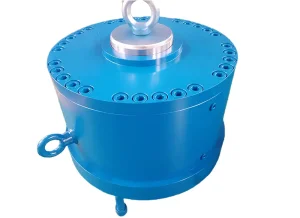
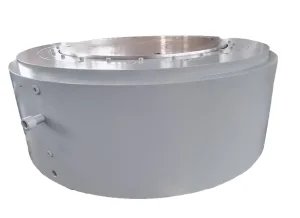
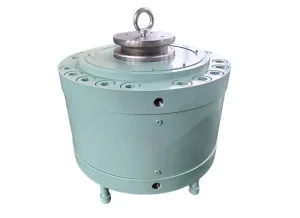
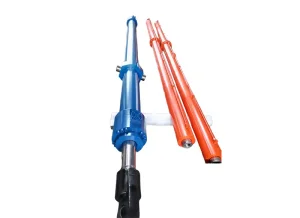
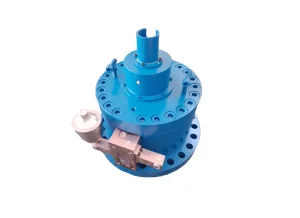
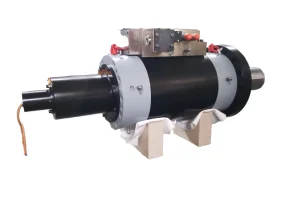
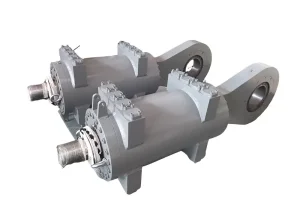
Engineered to exact OEM specifications for Vertical Roller Mills, High-Pressure Roller Presses, and Auxiliary Cement Plant Machinery.
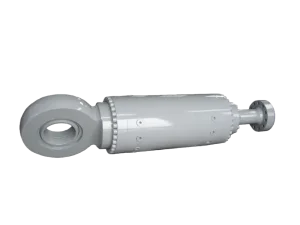
A comprehensive technical evaluation of raw material grinding efficiency, hydraulic tensioning mechanics, and global manufacturing compliance.
In modern cement manufacturing, the raw material grinding circuit represents one of the most energy-intensive operational phases, accounting for approximately 35% to 40% of a plant's total electrical power consumption. The transition from legacy ball mills to high-efficiency Vertical Roller Mills (VRM) and High-Pressure Roller Press (HPRP) systems has revolutionized raw meal preparation by dramatically reducing specific energy consumption (kWh/tonne). However, the operational availability of these advanced grinding circuits hinges directly upon the structural integrity and dynamic responsiveness of their hydraulic loading cylinders.
As a leading CE Certified Cement Raw Mill Manufacturer & Exporter based in Changzhou, China, Changzhou Xuanda Hydraulic Electromechanical Equipment Co., Ltd. delivers advanced heavy-duty hydraulic actuation solutions engineered to withstand extreme mechanical shock, continuous high-frequency vibration, and severe dust-laden operating environments. Operating from a state-of-the-art 20,000 m² facility with over 400 specialized engineers and technicians, Xuanda Hydraulic combines 22+ years of metallurgical expertise with rigorous European CE compliance standards (Machinery Directive 2006/42/EC and Pressure Equipment Directive 2014/68/EU).
Analyzing stress distribution, hydropneumatic damping, and material science in high-pressure raw grinding environments.
The primary functional objective of a raw mill hydraulic system is to transmit controlled, heavy grinding force onto the moving material bed while absorbing severe dynamic shocks resulting from non-grindable tramp metal or sudden variations in raw material feed size. Hydraulic loading cylinders act as both force applicators and critical hydro-pneumatic shock absorbers.
In vertical roller mills—such as FLSmidth ATOX, Loesche LM, UBE UM, Pfeiffer MPS, and TCD/TRM series—grinding rollers are pivotally mounted on rocker arms pulled downward by high-pressure hydraulic cylinders connected to nitrogen-filled bladder accumulators. The hydraulic cylinder must maintain a constant force profile across varying bed depths. Peak transient forces during roller bounce can exceed nominal static working pressure by 200% to 300% within milliseconds.
To resist these aggressive pressure spikes, Xuanda engineers utilize high-yield forged alloy steel (such as 42CrMo4 or 34CrNiMo6) for cylinder barrels, paired with heavy-wall seamless honed tubes subjected to ultrasonic flaw detection. The piston rod undergoes induction hardening followed by dual-layer hard chrome plating (minimum thickness 50 µm, hardness ≥850 HV) or High-Velocity Oxygen-Fuel (HVOF) thermal spray coating, delivering exceptional wear resistance against abrasive limestone and clay dust.
Roller presses, manufactured by industry leaders such as Chengdu Leejun, Hefei Cement Research Institute (HCRI), and CITIC Heavy Industries, compress raw materials between two counter-rotating rollers under extreme pressures up to 300 MPa. Hydraulic cylinders pressing against the movable roller must operate at continuous pressures up to 31.5 MPa while coping with severe radial side loads caused by skewing of the floating roller under uneven bin feeding.
Xuanda's proprietary clearance seal and hydrostatic support technology incorporates self-aligning spherical bearing mounts (GE series) combined with low-friction PTFE bronze compound seal packages. This design mitigates stick-slip phenomena, minimizes thermal dissipation, and prevents piston rod scoring during extreme lateral deflection.
| Technical Parameter | Xuanda VRM Standard Cylinder | Xuanda Roller Press Cylinder | Xuanda Hydrostatic Servo Unit |
|---|---|---|---|
| Bore Diameter Range | Ø200 mm – Ø630 mm | Ø320 mm – Ø800 mm | Ø160 mm – Ø500 mm |
| Nominal / Peak Pressure | 25 MPa / 31.5 MPa | 31.5 MPa / 40 MPa | 21 MPa / 31.5 MPa |
| Stroke Length | Up to 3,500 mm | Up to 1,200 mm | Up to 2,000 mm |
| Positioning Accuracy | ±0.5 mm | ±0.2 mm | ±0.001 mm (±1 µm) |
| Seal Configuration | Multi-stage Polyurethane / FKM | Low-Friction Bronze PTFE / FKM | Zero-Friction Hydrostatic Floating |
| Certification Standard | CE / ISO 4413 / ISO 9001 | CE / ISO 4413 / ISO 9001 | CE / ISO 4413 / ISO 9001 |
Ensuring complete regulatory alignment with European Directives, ISO Standards, and Rigorous Non-Destructive Testing Protocol.
Full compliance with mandatory health and safety requirements for heavy industrial hydraulic machinery, including risk assessment, structural integrity validation, and safety factor design.
Strict adherence to fluid power safety rules. Standardized port connections (SAE flange / BSPP / NPT), high-pressure safety margins, and burst-resistant design verification.
Factory pressure testing conducted using micro-filtered hydraulic fluid achieving ISO 4406 Class 16/14/11 cleanliness, protecting delicate servo valve manifolds and seal surfaces.
Every CE-certified raw mill hydraulic cylinder manufactured by Xuanda undergoes 100% full-factory hydrostatic testing at 1.5 times the maximum rated working pressure. Non-Destructive Testing (NDT) methodologies—including Ultrasonic Testing (UT) for raw forging inspection, Magnetic Particle Inspection (MT) for weld seams, and Dye Penetrant Testing (PT)—are systematically applied and documented with complete 3.1 material trace certificates.
Engineering targeted solutions for extreme climates, abrasive feed compositions, and challenging continuous-duty operational profiles.
Middle East, North Africa & Central Asia
Operating in desert environments with ambient temperatures exceeding 50°C and heavy ambient dust loading. Xuanda fits high-temperature Viton/FKM fluoroelastomer seals, secondary metal-backed wiper rings, and heavy-duty dust bellows to prevent silica ingress and thermal seal hardening.
Southeast Asia, LatAm & Tropical Belts
Grinding raw limestone with high moisture and high clay fraction induces severe roller bounce and dynamic pressure fluctuations. Equipped with fast-response relief valves and high-volume hydropneumatic damping blocks, Xuanda cylinders maintain stable table pressure and suppress mill vibration.
Northern Europe & High-Altitude Regions
For sub-zero operating conditions down to -40°C combined with abrasive high-silica quartz feeds (>18% SiO₂), Xuanda employs LT-NBR seals and specialty impact-resistant steel alloys with Charpy V-notch toughness testing at -40°C, ensuring structural ductility against brittle failure.
Leveraging localized metallurgical ecosystems, German-Japanese CNC machining, and streamlined international logistics.
Located in the heart of the Yangtze River Delta industrial hub in Changzhou, Jiangsu Province, Xuanda Hydraulic enjoys unparalleled supply chain integration. Within a 30-kilometer radius, our manufacturing operations seamlessly source premium forged alloy steels, specialized seal polymers, precision sensor components, and advanced surface coating treatments from certified tier-one industrial suppliers.
German & Japanese deep-hole boring machines, CNC honing equipment capable of internal bore diameters up to Ø1,000 mm and lengths up to 10,000 mm with H8 tolerance control.
Streamlined lean manufacturing workflows enable standard OEM-replacement hydraulic cylinders to be engineered, machined, tested, and dispatched in 4 to 6 weeks versus 12 to 16 weeks from European suppliers.
Direct factory-direct export delivers 30% to 45% cost savings on capital expenditure and replacement spare parts while fully maintaining dimensional interchangeability with European OEM equipment.
Pioneering IoT-enabled predictive diagnostics, zero-friction hydrostatic guidance, and eco-friendly energy-recovery actuation.
Integration of magnetostrictive linear position sensors (LVDT), internal temperature probes, dynamic pressure transducers, and micro-acoustic seal wear sensors directly into the cylinder head block. Data feeds continuously to the cement plant’s DCS or cloud-based AI maintenance platforms to predict seal degradation and prevent catastrophic unexpected downtime.
Commercial expansion of Xuanda's patented hydrostatic support servo cylinders. By floating the piston and piston rod on a continuous, pressurized oil film layer, mechanical contact friction is virtually eliminated. This enables response frequencies up to 50 Hz for closed-loop high-frequency pulse milling applications, increasing raw material fine-grinding efficiency.
Adaptation of cylinder seal metallurgy to fully synthetic biodegradable hydraulic fluids (HEES / HETG) alongside direct-drive electro-hydrostatic actuators (EHA). By replacing central hydraulic power units with localized, energy-recovering servo-pump drive units, power consumption of the hydraulic tensioning system is reduced by up to 60%.
Direct responses from Xuanda’s Senior Engineering Team regarding replacement, installation, seal life, and compliance.
Yes. Xuanda specializes in direct 1:1 dimensional drop-in replacement cylinders designed to match the original installation interface, mounting clevis dimensions, fluid port layouts, and working pressure ratings of major OEM mills (including FLSmidth ATOX, Loesche LM, UBE UM, Pfeiffer MPS, and TCD/TRM). We can reverse-engineer cylinders from physical worn units, customer drawings, or original nameplate data.
Every exported unit is accompanied by a full CE Declaration of Conformity dossier, EN 10204 3.1 Material Traceability Certificates for forged steel components, Factory Pressure & Leakage Inspection Reports, NDT Test Certificates (Ultrasonic & Magnetic Particle), and comprehensive Operation & Maintenance Manuals in English.
Standard polyurethane seals rely on physical elastomeric contact against the bore wall, which generates friction, heat, and wear under high velocity or continuous micro-oscillation. Clearance seals utilize ultra-precise machining tolerances (micrometer gap control) between a specialized piston sleeve and cylinder barrel, creating a controlled hydraulic fluid film barrier. This results in virtually zero friction, near-infinite seal mechanical life, and extreme dynamic responsiveness for high-frequency servo systems.
Piston rods are forged from high-strength alloy steel (42CrMo4), induction hardened to HRC 55-60, and finished with double-layer hard chrome plating (minimum 50 µm thickness) or HVOF (High-Velocity Oxygen-Fuel) thermal spray ceramic coatings. Rod glands feature primary bronze-filled PTFE step seals, secondary U-cups, and heavy-duty brass-cased wiper boots to seal out clinker and silica dust.
Standard custom cylinder manufacturing lead time at Xuanda is 4 to 6 weeks from final approval of production drawings. Emergency replacement cylinders for unplanned cement plant shutdowns can be expedited through our Fast-Track Production Lane in as little as 14 to 21 days, followed by air or sea freight shipping.
Complete hydraulic solution ecosystem for cement, mining, stacker-reclaimers, rotary kilns, and metallurgical plant infrastructure.