1. Executive Summary: The Critical Intersection of Hydraulic Fluids & High-Pressure Motion Control
In modern heavy industrial manufacturing, fluid power transmission is no longer viewed merely as a mechanical drive mechanism; it is the vital operational bloodline of automated infrastructure. The global demand for CE certified hydraulic fluid exporters & exporter networks has intensified as plant operators, OEM integrators, and procurement directors seek total operational reliability under severe thermal, mechanical, and environmental stress. A hydraulic fluid formulation does not operate in isolation—it acts as a dynamic tribological interface inside high-pressure hydraulic cylinders, continuous casting units, vertical roller mills, and high-precision closed-loop electro-hydraulic servo circuits.
According to the European Pressure Equipment Directive (PED 2014/68/EU) and Machinery Directive 2006/42/EC, securing genuine CE certification for hydraulic fluids and their associated hydraulic actuation systems requires rigorous verification of fluid flammability thresholds, anti-wear additive endurance (FZG gear test stage performance), oxidation resistance (ASTM D943), and material compatibility with elastomeric seals (FKM, NBR, PTFE). When combined with precision-machined heavy-duty cylinders manufactured under Industry 4.0 protocols, CE-compliant hydraulic fluids reduce micro-cavitation, eliminate stick-slip friction, and extend seal lifespans beyond 25,000 continuous duty hours.
2. Global Macro Industrial Landscape & Commercial Procurement Dynamics
The global industrial hydraulic ecosystem is undergoing a major structural evolution driven by three key factors: energy efficiency mandates, decarbonization goals, and the deployment of smart predictive maintenance networks (IoT-enabled hydraulic power units). Heavy industries such as cement production, metallurgy, rubber and plastics molding, and marine engineering require hydraulic systems that operate reliably under fluctuating ambient temperatures—from sub-zero Arctic mining operations to 80°C continuous radiant heat environments in steel rolling mills.
International buyers across Europe, North America, Southeast Asia, and the Middle East are shifting from local spot-market oil sourcing toward integrated global supply agreements with certified hydraulic fluid exporters who can guarantee strict ISO 4406 fluid cleanliness codes (e.g., ISO 16/14/11 for servo applications) right from the packaging stage. Furthermore, the global expansion of high-capacity cement grinding facilities relying on vertical roller mills (such as Loesche LM, UBE UM, Pfeiffer MPS, and FLSmidth ATOX series) requires custom hydraulic cylinders capable of handling pulse loading and intense lateral vibrations, supported by high-Viscosity Index (VI) fluids that resist shear degradation.
Biodegradable Synthetic Fluids
Rapid global adoption of HEES (synthetic ester) and HEPR (polyalphaolefin) fluids for environmentally sensitive offshore, mining, and water conservancy projects subject to strict EU Ecolabel guidelines.
Flame-Resistant Hydraulic Fluids
Mandatory implementation of HFC (water-glycol) and HFDU (synthetic ester fire-resistant) fluids in metallurgical plants, blast furnaces, and hot-strip rolling mills to prevent catastrophic workplace ignition.
Closed-Loop Precision Servo Control
Ultra-clean hydraulic oils combined with hydrostatic support cylinders achieving ±1 μm stroke positioning, transforming heavy grinding mills into micro-controllable grinding processes.
3. Tribological Dynamics, Viscosity Index, and Hydraulic Cylinder Interactions
The functional efficiency of a high-pressure hydraulic actuator is governed by fluid tribology—the study of friction, lubrication, and wear between sliding solid surfaces. In heavy-duty hydraulic cylinders operating at working pressures between 21 MPa and 35 MPa, fluid film thickness inside the piston seal cavity and rod guide sleeve determines whether the system operates under boundary lubrication, mixed lubrication, or full hydrodynamic lubrication.
Viscosity Index (VI) & Thermal Stability: Premium CE certified hydraulic oils (such as ISO VG 32, ISO VG 46, and ISO VG 68) feature a high Viscosity Index (typically VI > 150 for multi-grade fluids). High VI ensures that at high operating temperatures (70°C–85°C), the oil maintains sufficient kinematic viscosity to prevent metal-to-metal contact between the cylinder barrel bore and piston rings. Conversely, at cold engine start-up conditions (-20°C), low viscous resistance prevents pump cavitation and excessive system pressure spikes.
| Hydraulic Fluid Standard | Viscosity Grade (ISO VG) | Kinematic Viscosity @ 40°C | Minimum VI | Target Cylinder Application & Load Profile |
|---|---|---|---|---|
| DIN 51524 Part 2 (HLP) | ISO VG 32 | 28.8 – 35.2 mm²/s | ≥ 98 | High-speed electro-hydraulic servo cylinders, indoor precision test rigs. |
| DIN 51524 Part 3 (HVLP) | ISO VG 46 | 41.4 – 50.6 mm²/s | ≥ 140 | Outdoor mobile machinery, vertical roller mill loading systems, cement grate coolers. |
| ISO 11158 Category HM/HV | ISO VG 68 | 61.2 – 74.8 mm²/s | ≥ 150 | Heavy metallurgical rolling mills, high ambient heat rotary kilns, stacker-reclaimers. |
| CE Synthetic HEES Ester | ISO VG 46 / 68 | 42.0 – 68.0 mm²/s | ≥ 165 | Eco-sensitive hydro-power dam gates, marine deck winches, forestry machinery. |
Seal Material Chemistry & Hydrolytic Breakdown Considerations
Hydraulic fluids interact chemically with cylinder sealing elements. Standard Nitrile Rubber (NBR) seals exhibit excellent compatibility with mineral-based hydraulic oils up to 80°C but experience severe hardening and embrittlement when exposed to synthetic ester fluids at elevated temperatures. Fluorocarbon elastomers (FKM / Viton) offer superior heat resistance (up to 200°C) and broad chemical inertness, making them the preferred seal option for CE certified fire-resistant HFC and HFDU fluid systems in blast furnace environments.
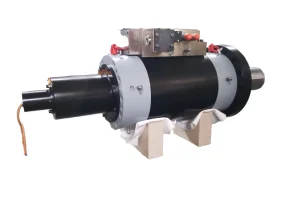
Furthermore, in clearance seal hydraulic cylinders and hydrostatic support servo cylinders, where traditional elastic seals are replaced by micro-gap oil films or hydrostatic fluid pockets, fluid oxidation stability (tested via ASTM D943 TOST) becomes paramount. Sludge or varnish formation caused by thermal breakdown of low-grade hydraulic oil can clog micro-hydrostatic orifices (0.2 mm – 0.5 mm diameter), leading to catastrophic metal scuffing and lost hydrostatic lift capacity.
4. China Industry 4.0: Supply Chain Resilience & Manufacturing Synergies
The global industrial landscape relies heavily on China's advanced manufacturing infrastructure to deliver high-performance, cost-effective hydraulic components and fluids. Over the past decade, Changzhou and the Yangtze River Delta engineering clusters have transformed into world-class epicenters for hydraulic R&D, precision machining, and fluid additive synthesis. China's Industry 4.0 transformation has integrated CAD/CAM/CAE simulation tools with imported multi-axis German and Japanese CNC honing machine tools, achieving cylinder bore tolerances down to IT6-IT7 and surface roughness of Ra 0.1–0.2 μm.
End-to-End Vertical Integration
From raw forged steel barrel selection (27SiMn, 42CrMo) to precise deep-hole boring, chrome plating, fluid filling, and pressure testing, Chinese factories eliminate third-party markup and reduce lead times by 35% compared to European OEMs.
Quality Assurance & CE Certification Integrity
100% full-load pressure testing, pulse impulse fatigue testing up to 2,000,000 cycles, and particle count verification ensure every cylinder shipped directly integrates with CE certified hydraulic oil standards without flushing delays.
By combining high-capacity hydraulic oil blending facilities with custom cylinder engineering (such as Changzhou Xuanda Hydraulic Electromechanical Equipment Co., Ltd.), international buyers gain a resilient, single-source procurement partner. This dual capability allows complete alignment between the fluid's anti-wear performance index and the cylinder's mechanical sealing architecture, minimizing warranty claims and field downtime.
5. Localized Application Scenarios & Heavy Machinery Engineering
Understanding localized application parameters is essential for selecting the correct hydraulic fluid specification and matching cylinder assembly. Below are five representative heavy industrial environments where CE certified hydraulic systems prove decisive:
5.1 Vertical Roller Mills (Cement & Raw Material Grinding)
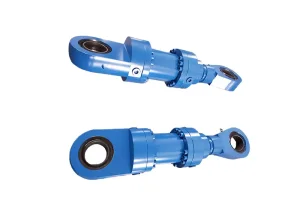
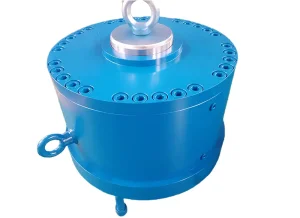
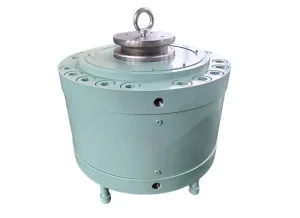
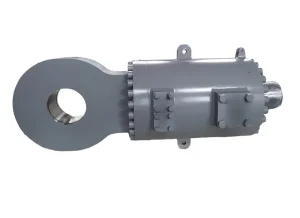
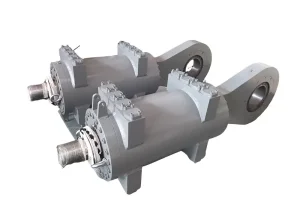
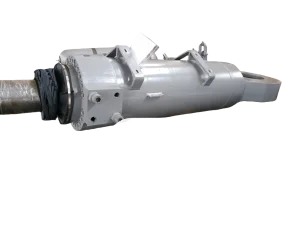
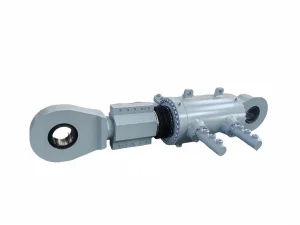
In cement raw meal and slag grinding plants, vertical roller mills (including Loesche LM, UBE UM, Pfeiffer MPS, and TCD/TRM models) rely on heavy hydraulic tensioning cylinders to apply downward force on grinding rollers. The system experiences high shock forces and persistent vibration. Using CE certified anti-wear hydraulic oil with high shear stability (ISO VG 46/68 HVLP) prevents oil film collapse under pulse peak loads (reaching up to 28 MPa). The hydraulic cylinders feature spherical bearings, low-friction seal arrangements, and custom stroke limits to survive 24/7 abrasive dust environments.
5.2 High-Pressure Roller Presses (Leejun, CITIC, HCRI Series)
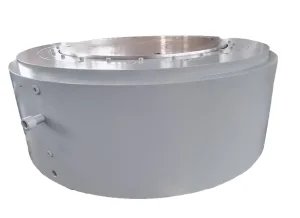
Roller presses subject clinker and ore to high pressure (up to 35 MPa working fluid pressure). The hydraulic cylinders operating moving rollers require zero stick-slip response to adjust gap widths dynamically in millisecond cycles. Low-friction servo cylinders paired with anti-foaming, rapid-air-release hydraulic fluids ensure precise pressure maintenance, eliminating clinker bypass and uneven roller surface wear.
5.3 Cement Rotary Kilns & Hydraulic Thrust Roller Assemblies
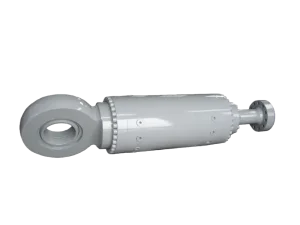
Rotary kilns operate under continuous axial slope and intense ambient thermal radiation (ambient temperatures near kiln tires exceed 70°C). Hydraulic thrust roller cylinders push the heavy rotating kiln tube axially to balance mechanical weight distribution across support rollers. Here, synthetic CE certified fire-resistant fluids (HFDU/HEES) prevent fire hazards, while high-temperature FKM sealing rings within custom thrust cylinders prevent fluid leakage.
5.4 Cement Grate Coolers & Stacker-Reclaimers
Grate cooler hydraulic push cylinders operate under high stroke frequency to convey hot clinker from kiln outlet to clinker crushers. Stacker-reclaimer harrow hydraulic cylinders control large boom structures in raw material storage yards, exposed to rain, humidity, and wide ambient temperature swings. High-viscosity index (HVLP) hydraulic fluids with rust inhibitors (ASTM D665 pass) protect internal cylinder bores against moisture condensation during shut-down periods.
5.5 High-Precision Electro-Hydraulic Servo Test Rigs & Simulators
In earthquake simulation platforms, aerospace structural test rigs, and dynamic load simulators, response time and micro-positioning accuracy are crucial. Hydrostatic support servo cylinders and clearance seal cylinders operate with virtually zero mechanical friction. Paired with ultra-clean ISO VG 32 hydraulic fluid filtered to ISO 4406 code 15/13/10, these systems provide dynamic response frequencies up to 50 Hz with zero stick-slip hysteresis.
6. Regulatory Compliance, CE Directives & Procurement Framework
To safely import, distribute, and operate hydraulic fluids and hydraulic machinery within the European Economic Area (EEA) and global markets accepting European standards, compliance with mandatory CE marking directives is required. Procurement officers must verify the following technical compliance documents:
- Pressure Equipment Directive (PED 2014/68/EU): Applies to hydraulic cylinders and accumulators with allowable pressure PS > 0.5 bar and volume thresholds requiring Module H/H1 conformity assessment.
- Machinery Directive 2006/42/EC: Guarantees that hydraulic drive systems incorporate pressure relief protection, fail-safe holding valves, and leak-retention design.
- REACH & RoHS Directives (EC 1907/2006): Verifies that hydraulic fluid formulations are free from hazardous SVHCs (Substances of Very High Concern), toxic heavy metal zinc additives (in ashless fluids), and prohibited plasticizers.
- DIN 51524 / ISO 11158 Standards: Benchmark performance standard verifying anti-wear (FZG test A/8.3/90 failure load stage > 12), demulsibility (ASTM D1401 water separation < 15 min), and foam oxidation tendency.
7. Comprehensive Technical Questions & Answers (FAQ)
Engineering and procurement queries compiled by our technical experts regarding hydraulic fluid specification, CE export compliance, and replacement cylinder integration:
Q1: Why is CE certification critical for hydraulic fluid exporters delivering to global markets?
CE certification confirms that the hydraulic fluid formulation and its containment/packaging meet European health, safety, and environmental safety regulations under directives such as REACH, CLP (Classification, Labelling and Packaging), and the Machinery Directive. For global plant buyers, CE certification serves as a baseline guarantee of chemical purity, non-toxicity, fire safety ratings (for HFC/HFDU fluids), and performance consistency across international supply chains.
Q2: Can Xuanda build direct drop-in replacement cylinders for OEM vertical mills like Loesche, UBE, or Pfeiffer?
Yes. Xuanda specializes in reverse-engineering and manufacturing custom hydraulic cylinders that precisely match original mounting interfaces, port centers, rod pin sizes, and pressure ratings for OEM mills including Loesche LM, UBE UM, Pfeiffer MPS, FLSmidth ATOX, and Tianjin Cement Design Institute (TCD/TRM) series. All replacement cylinders undergo 100% full-pressure testing before export.
Q3: What is the main difference between clearance seal, low-friction seal, and hydrostatic support cylinders?
Clearance seal cylinders rely on high-precision machining tolerances (micro-clearance fit) between piston and barrel to eliminate elastic seals, yielding ultra-low friction and high frequency sensitivity. Low-friction seal cylinders utilize specialized PTFE-filled compound seals to minimize dynamic stick-slip during servo positioning. Hydrostatic support cylinders float the piston and rod on pressurized oil pockets, carrying heavy lateral shock loads with virtually zero wear.
Q4: How does hydraulic fluid viscosity grade (ISO VG 32 vs 46 vs 68) affect cylinder seal life?
Lower viscosity fluids (ISO VG 32) flow faster and suit high-speed servo loops, but provide thinner lubricating films that can increase friction wear at high temperatures. Higher viscosity fluids (ISO VG 68) create thicker protective oil films under heavy pressure (ideal for vertical mills and roller presses), but generate higher fluid friction at cold start. Selecting the correct ISO VG based on system operating temperature maximizes seal life and pump hydraulic efficiency.
Q5: What technical details are needed to request a custom hydraulic cylinder quote?
To provide an accurate technical proposal, please share: (1) Cylinder bore diameter and piston rod diameter, (2) Effective stroke length, (3) Maximum working and peak operating pressure, (4) Mounting style (clevis, trunnion, flange, foot), (5) Fluid type (mineral HLP, HVLP, synthetic HEES, water-glycol HFC), and (6) Application equipment model or sample photos.