Explore our heavy-duty hydraulic actuator cylinders engineered for high dynamic loading, pulse mitigation, and continuous operating duty across extreme industrial applications.
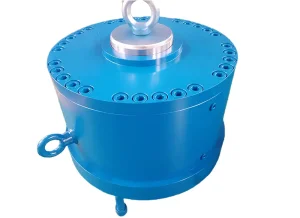
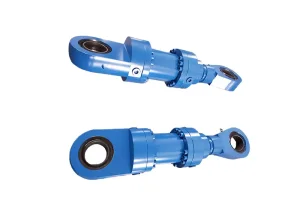
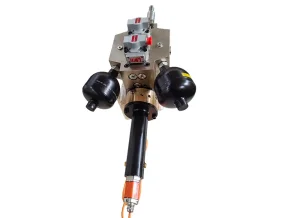
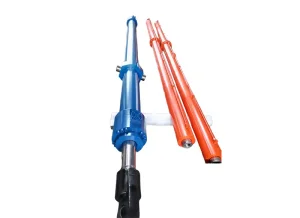
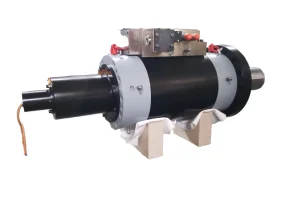
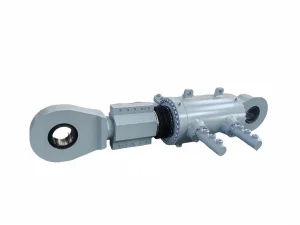
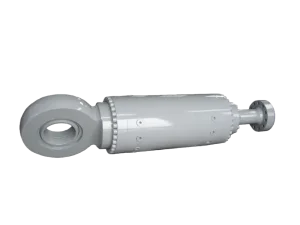
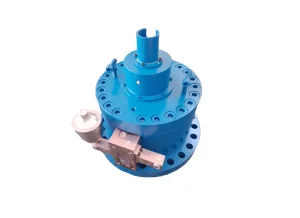
In the modern international arena of high-torque, severe-service manufacturing, mechanical drive reliability dictates commercial viability. Piston cylinder actuators represent the critical muscular core of modern process machinery.
Executive Engineering Perspective: Modern heavy industrial operations—spanning pyrometallurgical continuous casting, vertical grinding mills, and marine thruster controls—demand uncompromised force density that electromechanical drives cannot match. Operating under continuous cyclic pressures reaching 350 to 450 bar, CE-marked piston cylinder actuators are engineered to mitigate high-amplitude vibration, thermal fatigue, and destructive side loads while satisfying the strictest European Union Directives.
Industrial actuators operate in abrasive dust, thermal swings, and constant mechanical vibration. Certified engineering eliminates catastrophic seal blowouts, reduces fluid leakage risk to near zero, and extends Mean Time Between Failures (MTBF) past 30,000 continuous hours.
From cement kilns radiating 400°C ambient boundary temperatures to subsea offshore platforms exposed to salt spray, metallurgical barrel plating, nickel-chrome composite coatings, and Viton-PTFE hybrid seals prevent oxidative pitting and rod scoring.
Modern process automation requires continuous pressure, force, and stroke modulation. Hydrostatic bearings combined with integrated magnetostrictive LVDT linear transducers yield response times under 15 milliseconds with sub-micron position repeatability.
Purchasing mission-critical actuators from an overseas manufacturer requires total verification of material provenance, non-destructive testing (NDT), and structural integrity under high pressure pulsations.
| Regulatory Standard / Directive | Technical Scope & Rigorous Benchmark | Engineering Realization at Xuanda Production Site |
|---|---|---|
| EU Machinery Directive 2006/42/EC | Mechanical safety, fail-safe hydraulic locking, burst containment, and emergency relief provisions. | Integrated pilot-operated check valves, finite element verified end-cap weldments, and dual counter-balance manifold blocks. |
| Pressure Equipment Directive (PED) 2014/68/EU | Pressure vessel category compliance for cylinders above 0.5 bar containing pressurized hydraulic fluids. | Mandatory ultrasonic non-destructive testing (NDT) of forging billets, 1.5x proof pressure testing, and EN 10204 3.1 chemical & physical mill certificates. |
| ISO 4413:2010 Fluid Power Systems | General rules and safety requirements for hydraulic systems and their actuator components. | Standardized port threading (SAE, ISO 6149, or BSPP), optimized fluid velocity chambers to prevent localized cavitation erosion. |
| ISO 6020/2 Compact Series | Interchangeable mounting interface standards for industrial tie-rod and round welded cylinders. | Strict 100% drop-in dimensional compatibility with legacy Loesche, FLSmidth, UBE, Pfeiffer, and Thyssenkrupp mill frames. |
We source heavy-wall honed tubes exclusively from certified 27SiMn, 42CrMo, and ST52 forging mills with guaranteed yield strength and zero inclusion flaws.
Every welded junction and threaded cylinder head undergoes magnetic particle testing (MT) and ultrasonic inspection (UT) prior to final surface machining.
Each actuator is run through 150% maximum allowable working pressure (MAWP) with automated digital pressure sensors capturing zero pressure drop across 15 minutes.
VCI vapor corrosion inhibiting packaging, multi-layer marine-grade shrink wrap, and ISPM-15 heat-treated fumigated timber crates safeguard precision components during long ocean voyages.
A piston cylinder actuator is not an isolated component—it interacts with complex mechanical systems subjected to grinding bed collapses, thermal expansions, and continuous clinker dust.
Vertical roller mills (e.g., Loesche, Pfeiffer MPS, UBE UM, FLSmidth ATOX) experience violent material bed instability when raw feed fluctuations occur. Our custom hydraulic actuators absorb shock loads via nitrogen accumulator banks while sustaining stable crushing force up to 320 bar without seal extrusion.
Operating directly beneath pyro-processing lines, grate cooler cylinders cycle under abrasive ambient temperatures exceeding 120°C and thick atmospheric clinker dust. Our cylinders use high-temperature fluoroelastomer compounds, dual aggressive polyurethane scrapers, and ceramic rod coatings.
Automated Gauge Control (AGC) in cold and hot rolling mills demands millisecond-level step response. Our clearance-seal and hydrostatic support servo actuators eliminate stick-slip friction completely, allowing instantaneous micro-meter thickness adjustments during high-speed rolling.
Choosing the correct cylinder internal architecture is vital for minimizing total ownership cost, eliminating maintenance downtime, and preventing seal degradation.
| Actuator Sealing Architecture | Coefficient of Friction (μ) | Dynamic Frequency Response | Radial / Side Load Capacity | Target Industrial Installation |
|---|---|---|---|---|
| Standard Elastomeric & Polyurethane | 0.05 – 0.12 (Moderate Breakaway) | Up to 2 Hz (Standard Process Loops) | Standard wear bands (Moderate) | Cement grate coolers, stacker reclaimer booms, slag gate cylinders. |
| PTFE Composite Low-Friction Step Seals | 0.01 – 0.03 (Very Low Stick-Slip) | Up to 15 Hz (Fast Positioning) | High-strength bronze guide rings | Vertical roller mill loading arms, roller press pressure stabilization. |
| Hydrostatic Oil-Film Support Bearing | < 0.001 (Virtually Zero Friction) | Up to 50 Hz+ (Ultra-High Speed) | Superior (Fluid film absorbs extreme lateral thrust) | High-tonnage metallurgical rolling mills, flight simulators, test benches. |
| Micron Clearance Metallic Seal | 0.0005 (Fluid-Cushion Dependent) | Up to 100 Hz (Infinite Resolution) | Requires precise axial alignment | High-frequency fatigue test frames, nuclear valve positioning. |
As the international manufacturing sector transitions toward automated Industry 4.0 architectures, industrial piston actuators are evolving from passive hydraulic cylinders into intelligent, cyber-physical drive systems.
Integrating MEMS temperature arrays, embedded miniature strain gauges, and fiber-optic pressure sensors inside the cylinder end caps enables real-time wear prediction. Operators detect internal bypass leakage or rod misalignment weeks before unexpected failures occur.
By pairing a high-pressure piston cylinder directly with a variable-speed servomotor and a miniaturized closed hydraulic reservoir, EHA eliminates centralized hydraulic power units (HPUs) and thousands of meters of leakage-prone field piping, slashing hydraulic fluid volumes by 80%.
Stricter European environmental ESG policies mandate compatibility with rapidly biodegradable synthetic ester and polyglycol fluids (HEES / HEPG). Our cylinders use specialized seal elastomer formulations that prevent fluid hydrolysis and seal embrittlement at continuous operating temperatures.
Key technical answers addressing OEM cross-compatibility, high-pressure safety margins, sample reverse-engineering, and seal tribology.
Select your specialized industrial machinery model from our comprehensive OEM-compatible cylinder product line.
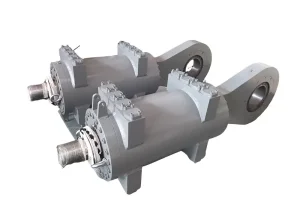
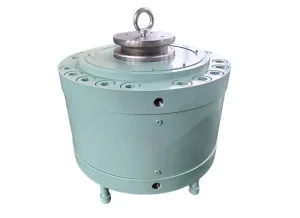
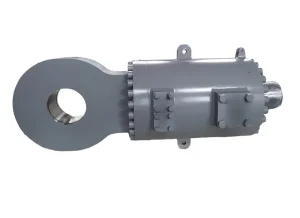
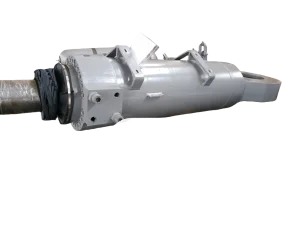
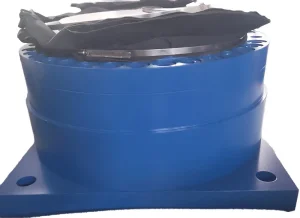
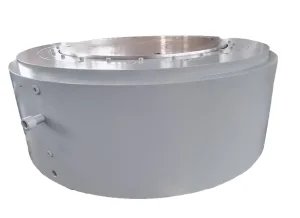
Our senior hydraulic engineers evaluate operating duty cycles, fluid kinematics, peak shock pressures, and boundary dimensions to specify the exact piston cylinder actuator solution for your facility.
