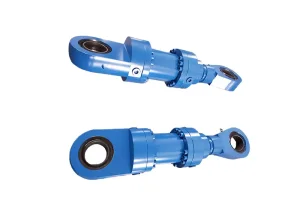
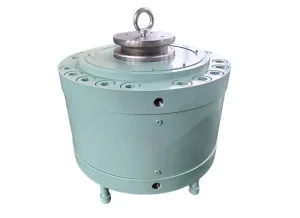
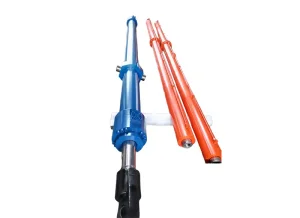
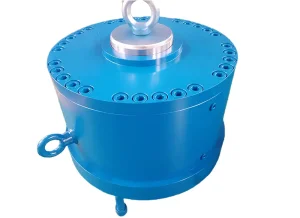
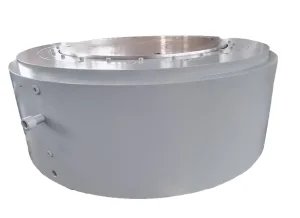
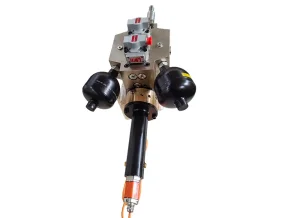
Explore heavy-duty hydraulic drive and tensioning units engineered to match the exact OEM specifications for ATOX, Loesche, Pfeiffer, Leejun, and UBE vertical grinding infrastructure.
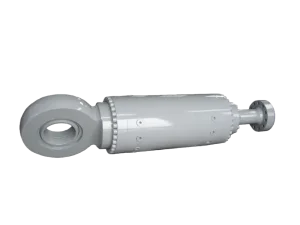
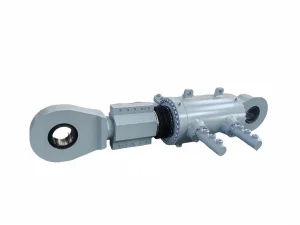
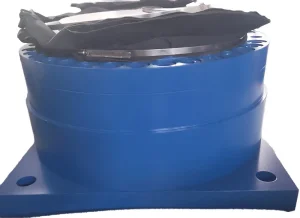
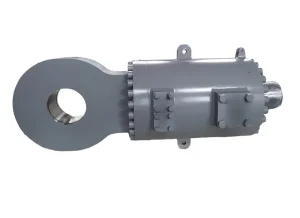
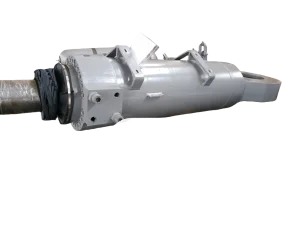
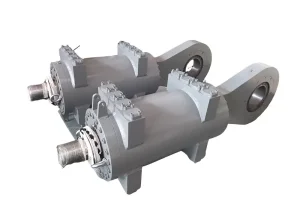
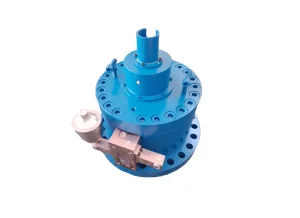
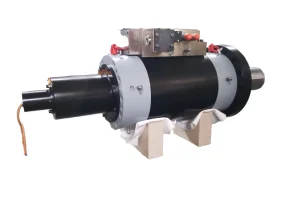
Understanding the mechanical, metallurgical, and hydraulic evolution of Vertical Roller Mills (VRM) in modern cement and raw material grinding plants.
Vertical Roller Mills, particularly the ATOX design pioneered in European engineering and widely optimized by Chinese heavy equipment manufacturers, represent the backbone of energy-efficient comminution in the global cement, power, and mining industries. The operational efficiency of an ATOX mill relies on a hydraulic loading system that forces three cylindrical rollers down onto a rotating grinding table.
Unlike legacy ball mills that consume up to 30-40 kWh per ton of ground material, modern ATOX mills achieve energy consumption reductions exceeding 35%, due in large part to the precise control of pressure applied by heavy-duty hydraulic tensioning cylinders.
The global cement and industrial mineral market demands uninterrupted continuous operation (typically exceeding 7,500 annual running hours). In an ATOX mill, hydraulic loading cylinders operate under severe conditions: intense dynamic pressure pulsations, high ambient temperatures, abrasive clinker/limestone dust, and lateral shear stresses caused by uneven bed depth or tramp metal passage.
China's specialized manufacturing ecosystem has evolved to meet these extreme engineering challenges, delivering high-durability hydraulic cylinders that match or surpass OEM standards while offering significantly reduced lead times and capital costs.
Global cement conglomerates (including Holcim, CEMEX, Heidelberg Materials, and regional giants across Asia, the Middle East, and South America) are increasingly replacing legacy OEM hydraulic units with precision-engineered components from verified Chinese manufacturers like Changzhou Xuanda Hydraulic.
By adhering to ISO 10100 pressure testing and reverse-engineering original OEM interfaces (such as FLSmidth ATOX 37.5 / 45 / 50, Loesche LM, Pfeiffer MPS, and UBE UM), Chinese manufacturers provide drop-in interchangeability that eliminates mill downtime.
Information Gain Insight: Modern ATOX mill performance is limited not by grinding table torque, but by hydraulic loading dynamic responsiveness. A hydraulic cylinder failure leads to uneven bed layer formation, mill vibration trips, and unbudgeted plant shutdowns costing upwards of $50,000 per day.
An in-depth evaluation of mechanical design, seal technology, rod metallurgy, and dynamic shock absorption in high-pressure grinding environments.
ATOX mill cylinders operate as hydropneumatic springs. Connected to nitrogen gas accumulators, they must absorb instantaneous mechanical bounce when raw feed sizing changes dramatically. Operating working pressures range from 120 bar up to 210 bar dynamic surge peak.
Standard industrial poly-urethane seals fail prematurely in vertical mill environments due to elevated temperatures (ambient 80°C to 120°C near the mill housing) and fine silica particulate ingression.
Piston rod bending and micro-pitting are primary failure modes in heavy raw grinding mills. Leading Chinese manufacturers employ advanced surface modification technologies:
| Engineering Parameter | Standard European OEM Specification | Xuanda Advanced China ATOX Spec | Operational Benefit to Plant Owner |
|---|---|---|---|
| Cylinder Barrel Forging | ST52.3 / E355 Seamless Tube | Forged 42CrMo4 Alloy Steel (Internal Honed) | 35% higher yield strength against pressure spikes |
| Rod Surface Treatment | Single Layer Chrome (25-30 μm) | Double-Layer Chrome (50+ μm) or HVOF Laser Cladding | Extends corrosion & wear resistance by 2.5x |
| Seal Friction Coefficient | f = 0.08 - 0.12 (Standard U-Cup) | f < 0.03 (PTFE Bronze Filled + Clearance System) | Prevents mill vibration & stick-slip chatter |
| Pressure Test Standard | 1.3x Working Pressure (ISO 10100) | 1.5x Peak Dynamic Pressure Hold for 30 mins | Zero leakage guarantee upon field installation |
| Manufacturing Lead Time | 16 - 24 Weeks | 4 - 6 Weeks (Standard / Custom Drop-in) | Fast recovery during emergency plant shutdowns |
Why Jiangsu and Changzhou industrial clusters lead the global market in cost-performance ratio, manufacturing velocity, and custom hydraulic engineering.
The concentration of raw forging mills, deep-hole boring machine manufacturers, chrome plating facilities, and specialized seal suppliers in Changzhou, Jiangsu Province creates an unmatched supply chain velocity. Raw steel stock (such as 35CrMo and 42CrMo) can be forged, rough-machined, heat-treated, honed, and assembled within a 30-mile radius, eliminating transport delays and supply chain friction.
Modern Chinese hydraulic factories leverage imported 5-axis CNC machining centers from Germany and Japan, paired with heavy-duty horizontal honing machines capable of processing bores up to 1000mm and lengths up to 10 meters. This precision tooling ensures bore roundness within 0.01mm and surface roughness Ra < 0.1μm, directly translating to longer seal lifespans.
By optimizing production workflows, reducing corporate overhead, and controlling raw material supply channels, Chinese ATOX cylinder manufacturers offer high-precision, heavy-duty hydraulic cylinders at 35% to 50% lower total cost of ownership compared to traditional Western European OEMs, without sacrificing metallurgical integrity or ISO compliance.
Where high-pressure hydraulic cylinders deliver maximum impact across cement, steel, power generation, and mineral dressing plants worldwide.
In cement plants, ATOX 45 and ATOX 50 mills grind raw limestone, clay, and iron ore into raw meal prior to kiln firing. Hydraulic loading cylinders must maintain constant grinding bed pressure despite fluctuations in feed moisture content and rock hardness. Chinese hydraulic cylinders provide robust damping that stabilizes mill motor current draw and optimizes Blaine fineness.
Granulated Blast Furnace Slag (GGBFS) is exceptionally abrasive and hard to grind. Hydraulic cylinders installed on slag vertical roller mills (such as UBE UM and Loesche LM series) operate at elevated pressure levels (up to 200 bar continuous). Enhanced rod coating protection prevents abrasive micro-scratching from airborne slag dust particles.
Paired alongside vertical mills, heavy roller presses (such as Chengdu Leejun CLF and CITIC Heavy Industries units) utilize high-pressure hydraulic cylinders to crush raw feed. Specialized diamond-shaped mounting profiles and hydrostatic support systems absorb violent shock loading during material nip.
Beyond grinding mills, cement production lines rely on custom hydraulic thrust roller cylinders for rotary kiln axial tracking and high-frequency hydraulic cylinders for clinker grate cooler pushers, demanding 24/7 continuous operation in elevated ambient thermal zones.
The strategic shift toward digitalized hydraulic feedback systems, eco-friendly fluids, and energy-efficient comminution technology.
Modern ATOX mill cylinders are no longer passive mechanical actuators. Advanced units integrate digital Linear Variable Differential Transformers (LVDT) or magnetostrictive stroke sensors directly inside the hollowed piston rod, offering real-time millimeter-level positioning feedback to the plant DCS (Distributed Control System).
By embedding dynamic pressure sensors, oil temperature probes, and vibration accelerometers into the cylinder end-caps, maintenance engineers can predict seal wear and oil bypass days before catastrophic failure occurs, enabling transition from scheduled maintenance to Condition-Based Maintenance (CBM).
Global net-zero targets drive cement producers toward calcined clay and low-carbon cement blends. These materials require ultra-precise grinding bed pressure control. High-sensitivity low-friction servo hydraulic cylinders allow precise pressure adjustments that reduce overall mill kilowatt-hour consumption per ton by up to 8%.
Key technical parameters and verification steps required when sourcing replacement or OEM hydraulic units from China.
Before issuing a Request for Quotation (RFQ), procurement teams should compile:
Ensure your Chinese manufacturing partner provides complete Quality Assurance Documentation Package (QADP):
Heavy-duty mill cylinders weigh between 800 kg and 4,500 kg per unit. Proper export packaging is vital to prevent transit damage:
Expert engineering answers to common procurement, operational, and maintenance inquiries regarding China-manufactured ATOX mill hydraulic cylinders.
Yes. Experienced manufacturers like Changzhou Xuanda Hydraulic can reverse-engineer worn physical samples, nameplate dimensional records, or field photos and measurements. Our engineering team builds 3D CAD/CAM models and verifies all pin sizes, port locations, stroke lengths, and dynamic pressure ratings with your plant engineering team prior to machining, guaranteeing 100% drop-in fitment.
Under standard cement mill operating conditions with proper hydraulic oil filtration (ISO 4406 cleanliness 16/14/11 or cleaner) and temperature control (below 65°C oil temp), premium bronze-filled PTFE step seal packages engineered by Xuanda routinely achieve 24 to 36 months of continuous operation before scheduled replacement.
Low-friction seal cylinders utilize specialized elastomeric and PTFE seal profiles to reduce stick-slip during micro-adjustments. Hydrostatic support cylinders elevate the piston and rod on a continuous thin film of pressurized oil fed by an auxiliary high-pressure pump. This floating hydraulic film eliminates metal-to-metal contact entirely, allowing the cylinder to handle massive side loads and high-frequency mill bounce with near-zero wear.
Chrome peeling and micro-pitting are typically caused by fine silica dust penetrating damaged dust wiper seals, combined with chemical attack from acidic raw feed moisture. Xuanda prevents this failure mode by utilizing high-frequency induction hardening beneath a thick dual-layer hard chrome plating (50+ μm) or by applying laser-cladded nickel-based superalloys (Inconel 625), creating an impermeable barrier against abrasion and corrosion.
Standard manufacturing lead time for custom ATOX or VRM hydraulic cylinders ranges between 4 to 6 weeks from technical drawing sign-off. For emergency plant outages, expedited manufacturing can produce critical cylinders in 15 to 20 days, followed by air freight or express ocean container shipping to major global industrial ports.
Grinding mills subject hydraulic tensioners to severe dynamic stress cycles. Static pressure testing alone fails to reveal internal seal bypass or micro-cracks in barrel weld joints under dynamic deflection. Full dynamic pressure testing at 1.5x working pressure guarantees seal stability, rod alignment, and internal structural integrity prior to plant installation.
Xuanda provides comprehensive technical documentation, including step-by-step installation manuals, torque tightening specs for mounting bolts, gas charging instructions for nitrogen accumulators, and video-assisted remote commissioning support with experienced hydraulic engineers.
Explore our complete range of custom engineered hydraulic cylinders for grate coolers, rotary kilns, stacker-reclaimers, roller presses, and clearance seal applications.