Direct drop-in engineering replacements manufactured to original OEM specifications for crushing, grinding, cement plants, and metallurgical processing.
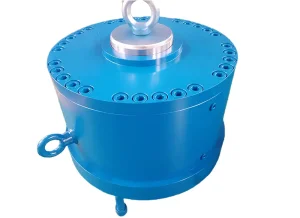
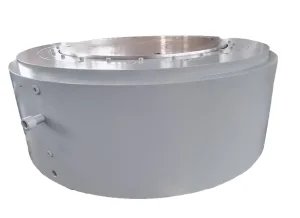
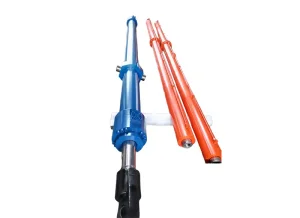
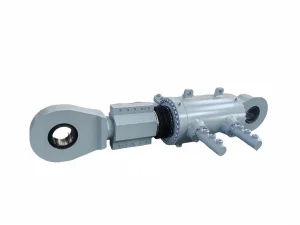
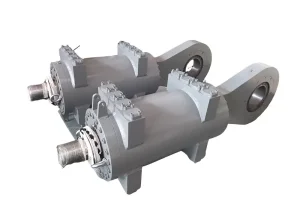
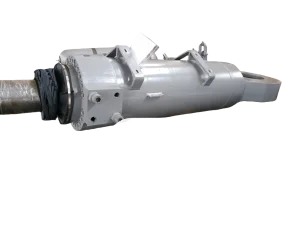
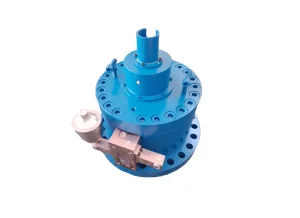
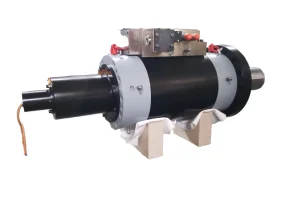
The industrial landscape is undergoing a monumental shift from conventional centralized hydraulic power units (HPUs) to self-contained, high-density Electro-Hydraulic Actuators (EHA).
For decades, heavy industrial machinery—including grinding mills, continuous casters, dam gates, and power plant control valves—relied heavily on centralized hydraulic systems. These legacy configurations required hundreds of meters of rigid steel piping, massive fluid reservoirs, complex directional valve banks, and continuous pump circulation. However, operational vulnerabilities such as environmental fluid leakages, pressure drops over long distances, high installation footprint, and severe energy inefficiency have driven global plant engineers to adopt localized Electro-Hydraulic Actuation (EHA).
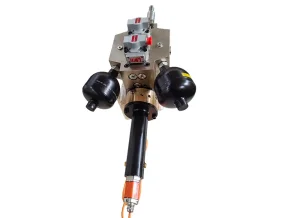
An Electro-Hydraulic Actuator combines the power density and shock absorption of traditional fluid hydraulics with the clean, precise control of electric servo drives. By integrating a variable-speed electric motor, a bi-directional micro hydraulic pump, a localized fluid manifold, and advanced position sensors into a single sealed unit, EHAs eliminate external piping entirely while achieving positioning accuracies down to the sub-millimeter level.
Analyzing total cost of ownership, operational efficiency, and risk mitigation for EPC contractors, plant operators, and industrial maintenance managers.
Traditional centralized hydraulic systems suffer from constant seal degrade along high-pressure piping networks, leading to environmental contamination, fire hazards, and costly hydraulic oil replenishment. Integrated EHAs reduce oil volume by up to 85% within a hermetically sealed loop.
Unlike standard hydraulic systems that pump fluid continuously through relief valves even when stationary, electro-hydraulic actuators consume electric power only when movement or force control is requested. This results in an energy consumption reduction between 40% and 70%.
Installing centralized hydraulics requires extensive piping fabrication, flushing routines, chemical cleaning, and civil trenching. An EHA unit arrives fully pre-filled, factory-tested, and ready for drop-in mechanical mounting and plug-and-play electrical wiring.
| Technical Parameter | Centralized Hydraulic Systems | Pure Electromechanical Actuators (EMA) | Electro-Hydraulic Actuator (EHA) |
|---|---|---|---|
| Power Density & Force Rating | Very High (Up to 100,000 kN) | Moderate to Low (Risk of Screw Binding) | Extremely High (Compact High Force) |
| Energy Consumption | High (Continuous Idle Pumping) | Very Low (Power on Demand) | Very Low (Servo Motor Duty-Cycle Controlled) |
| Shock Load & Jam Resistance | Excellent (Fluid Cushioning) | Poor (Mechanical Screw Failure under Shock) | Superior (Integrated Relief & Hydraulic Cushion) |
| Fluid Contamination Risk | High (Extensive External Piping) | None (Grease Lubricated) | Zero Environmental Leakage (Sealed Module) |
| Maintenance & Field Commissioning | Complex (Pipe Flushing, Welding, On-site Oil Fill) | Low Maintenance (Periodic Lubrication) | Minimal (Modular Drop-in Plug & Play Replacement) |
A comprehensive examination of component friction dynamics, high-frequency servo control, and material selection principles engineered at Xuanda Hydraulic.
In closed-loop electro-hydraulic servo applications, stick-slip friction in piston seals causes hysteresis, dead-band errors, and positioning jitter. Xuanda integrates proprietary tribological combinations including Clearance Seals and Low-Friction PTFE Bronze/Carbon Composite Seals.
For extreme dynamic sensitivity, clearance seal cylinders eliminate contact seals entirely between the piston and cylinder bore. By controlling honing tolerances down to 3–5 micrometers (µm) and generating a hydro-dynamic fluid film, friction drops close to zero, allowing continuous operation at frequencies up to 50 Hz without thermal degradation.
In applications like cement vertical roller mills and metallurgical rolling stands, hydraulic actuators encounter severe lateral side loads (up to 300 kN) due to unsymmetrical rock crushing or thermal expansion.
Xuanda’s hydrostatic support servo cylinders feature pressurized oil pockets machined directly into the cylinder guide bushings. High-pressure fluid is continuously injected into these pockets, creating an unbreakable oil film stiffness that prevents metal-to-metal contact between rod and guide sleeve, completely eliminating mechanical galling and catastrophic cylinder scoring.
Integration of brushless permanent magnet (RPM) motors, micro axial-piston pumps, magnetostrictive linear position sensors (LVDT), and embedded digital drivers into single-housing IP67/IP68 industrial actuators.
Implementation of embedded CANopen/IO-Link edge computing nodes within the actuator manifold. Real-time monitoring of fluid viscosity, particle contamination, vibration spectrum (FFT), and thermal degradation for predictive maintenance alerts.
Development of electro-hydrostatic actuators with kinetic energy harvesting during load retraction, feeding electrical energy back into the plant power grid, paired with eco-friendly biodegradable synthetic ester hydraulic fluids.
Providing specialized force control, vibration damping, and extreme environment resistance across key industrial infrastructure sectors.
Vertical roller mills (Loesche, UBE, FLSmidth ATOX, Pfeiffer MPS, TCD/TRM) require continuous high-pressure grinding force under violent vibration. Xuanda actuators provide:
In high-pressure grinding roll (HPGR) circuits (Chengdu Leejun, CITIC, HCRI), actuators operate under immense hydraulic loads up to 35 MPa. Solutions include:
Steel mills require continuous heat-resistant actuation for automatic gauge control (AGC) and mold oscillation. Features include:
Ensuring absolute compliance with international pressure vessel, safety, and electrical directives for smooth global deployment.
Every actuator undergoes full ultrasonic material flaw detection, CMM dimensional verification, and dynamic pressure testing up to 1.5 times nominal rating.
Compliant with European Pressure Equipment Directives (PED) and CE machinery safety regulations, enabling hassle-free import into European Union markets.
Optional hazardous area enclosures (Ex d IIB/IIC T4) for electric motors, solenoid valves, and position sensors operating in coal mills or chemical processing zones.
Engineered for emergency shutdown (ESD) systems and critical dam/turbine control, featuring redundant hydraulic valve circuits rated up to SIL 3.
In-depth technical answers addressing user search intent, OEM compatibility, engineering specifications, and field logistics.
Xuanda manufactures compatible replacement cylinders and electro-hydraulic actuators that conform precisely to original mounting dimensions, stroke lengths, pressure levels, and interface ports of OEM equipment (including Loesche LM, Pfeiffer MPS, FLSmidth ATOX, UBE UM, and TCD/TRM mills). Our engineering team can reverse-engineer worn units directly from field measurements or original drawings, offering equivalent or superior sealing technology (e.g., low-friction PTFE and hydrostatic supports) at significantly reduced lead times and cost.
A standard hydraulic cylinder is simply an execution component that requires external hydraulic power units (HPUs), directional valves, and long piping networks. An Electro-Hydraulic Actuator (EHA) is a completely self-contained, closed-loop actuation system integrating an electric servo motor, bi-directional hydraulic pump, compact fluid manifold reservoir, feedback sensors, and hydraulic cylinder into a single localized assembly. It requires only electrical power and signal connections.
Clearance Seals: Ideal for ultra-high frequency positioning or test rigs requiring near-zero friction and micro-meter sensitivity where minor internal bypass is acceptable.
Low-Friction Seals: Recommended for precision closed-loop servo control applications where zero internal leakage is mandated without suffering from traditional rubber stick-slip.
Hydrostatic Supports: Essential for heavy industrial machines subject to severe side loads (e.g., roller presses, vertical mills) where pressurized fluid films prevent rod-to-bushing metal galling.
Yes. Our engineering division in Changzhou, China utilizes high-precision portable coordinate measuring machines (CMM) and 3D laser scanners to reverse-engineer physical cylinder samples. We analyze material hardness, chemical composition, seal profiles, and surface finish to generate full 3D CAD models for customer engineering approval before production.
All actuators and cylinders undergo anti-corrosion oil spraying, rod protective wrapping, and robust IPPC ISPM-15 compliant fumigated wooden crate packing. We provide full export documentation including CO, Form E, CE compliance certificates, hydrostatic test reports, and material inspection certs (EN 10204 3.1) for sea, air, or multimodal logistics worldwide.
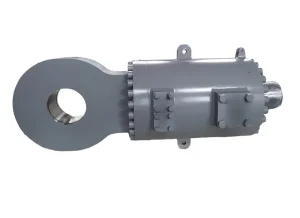
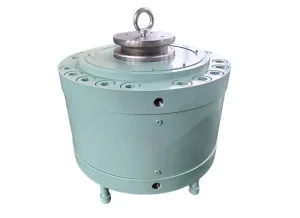
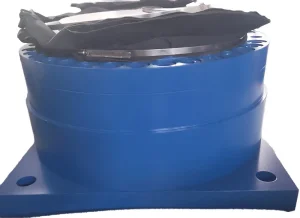
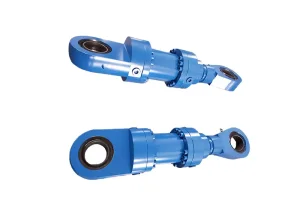
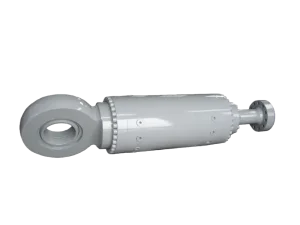
Explore our extended catalog of specialized high-pressure, clearance seal, and cement plant hydraulic drive cylinders.
Need a specialized electro-hydraulic actuator drawing review?
Consult Engineering100% factory hydrostatic and servo-loop response testing.
Request Catalog