Explore our high-performance heavy-duty actuators, servo cylinders, and vertical roller mill hydraulic solutions exported worldwide.
Understanding Thermodynamic Gas Behavior, Volumetric Efficiency, and Hydraulic Shock Absorption in Modern Fluid Power Systems.
In high-pressure hydraulic circuits, nitrogen gas ($N_2$) acts as a compressible spring. Operating under Boyle’s Law ($P_0 V_0^n = P_1 V_1^n = P_2 V_2^n$), the polytropic exponent $n$ ranges from n = 1.0 (Isothermal slow charge) to n = 1.4 (Adiabatic rapid discharge). Sizing a China hyd accumulator requires precise thermodynamic modeling to ensure sufficient emergency fluid reserve without thermal energy dissipation losses.
Positive displacement pumps (plunger, piston, gear) introduce high-frequency pressure ripples that cause pipe fatigue, sensor failure, and acoustic noise. Integrating a properly calibrated hydro-pneumatic accumulator near the pump outlet attenuates up to 95% of hydraulic shock waves (water hammer), extending system component lifespans across heavy industrial plants.
During high-velocity actuator strokes (such as injection molding injection phases or heavy metal shearing), pump displacement alone may fall short. Accumulators act as auxiliary fluid batteries, discharging stored hydraulic energy instantaneously to allow 50% smaller primary electric motor installation and reducing plant HVAC and electrical infrastructure costs.
Achieving maximum volumetric output from a hyd accumulator requires strict adherence to pre-charge pressure ratios. As a manufacturer standard at Changzhou Xuanda Hydraulic, our engineering team enforces the following critical operational thresholds:
Combining Advanced Metallurgical Engineering, Deep Supply Chain Integration, and Rigorous Pressure Vessel Quality Standards.
Chinese manufacturers utilize high-grade seamless alloy steel tubes (such as 34CrMo4, 4130, and 35CrMo). Advanced hot-spinning technology creates monolithic accumulator shells with zero welds, providing burst-pressure safety factors exceeding 4:1 under extreme cyclic fatigue tests up to 350 bar (5000 PSI).
Accumulator bladders and piston seals are molded using specialized elastomer compounds (NBR, Low-Temp Nitrile, HNBR, Viton/FKM, and EPDM). These bladders resist chemical degradation in mineral oils, water-glycol fluids, and synthetic esters, remaining flexible from -40°C up to +150°C.
Leading Chinese suppliers hold ASME Section VIII Div 1 U-stamp, CE Pressure Equipment Directive (PED 2014/68/EU), SELO Special Equipment License, ABS, DNV, and ISO9001 certifications, enabling seamless integration into global machinery export flows without regulatory hurdles.
Selecting the Right Accumulator Construction for Specific Pressure, Fluid Medium, and Response Time Requirements.
| Accumulator Type | Structural Construction | Working Pressure Range | Volumetric Capacity | Response Velocity | Ideal Application Scenario |
|---|---|---|---|---|---|
| Bladder Accumulator | Seamless forged steel shell with flexible NBR/Viton rubber bag separation. | Up to 350 - 550 Bar | 0.5L to 200L | Ultra-Fast (< 25 ms) | High-frequency shock absorption, energy storage in mill loading systems, rapid valve actuators. |
| Piston Accumulator | Precision honed steel cylinder bore with lightened aluminum or stainless piston seal separator. | Up to 1000 Bar | Up to 3,000L+ (with gas bottles) | Medium (< 100 ms) | Ultra-high pressure systems, heavy metallurgical forging presses, subsea energy storage banks. |
| Diaphragm Accumulator | Two welded or screwed spherical shells with flexible diaphragm separation membrane. | Up to 250 - 350 Bar | 0.07L to 5L | Instantaneous (< 10 ms) | Compact mobile hydraulics, steering dampening, micro-pulsation elimination in metering pumps. |
| Transfer/Pulsation Accumulator | Specialized flow-through design with inline elastomeric sleeve or bladder separator. | Up to 315 Bar | 1L to 50L | Continuous Dynamic | Direct pump output line mounting, noise reduction in high-speed hydraulic power units (HPUs). |
Bladder accumulators excel in dynamic fluid power systems due to the low inertia of the flexible rubber gas separator. When system pressure drops, nitrogen gas instantly forces hydraulic fluid out through the high-flow poppet valve without mechanical friction inertia.
Piston accumulators offer linear volumetric performance and allow fluid-to-gas ratio monitoring via electronic linear position sensors. They support high flow rates, extreme temperatures, and large fluid volumes by connecting additional N2 gas bottle racks.
At Changzhou Xuanda Hydraulic, we manufacture complete hydraulic control manifolds that combine hyd accumulators, safety shut-off blocks, pressure relief valves, and electro-hydraulic servo cylinders into single plug-and-play modules.
Engineered for Continuous, 24/7 Operations Under Extreme Thermal, Mechanical, and Dust Stress.
In Vertical Roller Mills (Loesche, Pfeiffer, UBE, TCD/TRM) and Roller Presses (HCRI, CITIC, Leejun), hyd accumulators absorb violent bounce shocks caused by ungrindable tramp iron, protecting hydraulic cylinders and mechanical mill frames from structural cracking.
During high-speed steel rolling and continuous casting, piston and bladder accumulators supply instant hydraulic burst force to roll-gap adjustment cylinders and flying shear systems, maintaining metal gauge tolerances within micron limits.
Accumulators deployed on deck cranes, winches, and subsea Blowout Preventers (BOPs) use specialized marine-grade nickel-plated bores or stainless steel constructions to prevent salt spray corrosion and ensure failsafe emergency valve closure during power loss.
Hydraulic pitch control systems in offshore wind turbines rely on compact diaphragm accumulators located inside rotor hubs. They maintain constant pitch cylinder clamping force and execute fast emergency feathering strokes under sudden storm gusts.
Key Technical Specifications and Testing Procedures International Procurement Teams Must Verify.
Ensure your Chinese supplier performs 100% hydrostatic proof testing at 1.5 times the maximum allowable working pressure (MAWP). Verify non-destructive testing (NDT) report documentation including ultrasonic shell inspection and magnetic particle testing for raw steel forgings.
High-quality bladders must exhibit micro-permeation rates below 0.05% gas loss per year under full operating pressure. Advanced testing using helium mass spectrometer leak detectors ensures long-term nitrogen retention without frequent maintenance refills.
Because pre-charged accumulators are classified as Class 2.2 Compressed Gas under UN dangerous goods transportation codes, international shipments must either ship depressurized (with dry N2 blanket at 1-2 bar) or carry dangerous goods UN certification for sea/air freight.
The Next Generation of Hydro-Pneumatic Power Systems and Predictive Maintenance Telemetry.
Modern smart accumulators incorporate wireless internal pressure transducers and temperature sensors. By analyzing real-time gas pressure degradation curves against ambient temperature changes via AI algorithms, plant engineers receive automated alerts before pre-charge pressure drops below critical levels.
Replacing heavy steel vessels with Type 3 and Type 4 carbon-fiber overwrapped aluminum or polymer liners reduces structural mass by up to 70%. These lightweight accumulators are revolutionizing mobile construction machinery, heavy hydraulic excavators, and aerospace hydraulic units.
As global environmental regulations tighten, fluid power systems are transitioning to bio-synthetic esters and water-glycol media. Modern elastomer bladders formulated with fluorocarbon (FKM) and peroxide-cured HNBR prevent polymer swelling and chemical hydrolysis.
Expert Engineering Answers to Common Questions Regarding Sourcing, Sizing, Maintenance, and Global Certifications.
Nitrogen is an inert, dry gas that does not contain moisture or free oxygen. Compressed atmospheric air or oxygen must NEVER be used inside hydro-pneumatic accumulators because mixing high-pressure oxygen with flammable mineral hydraulic oil under dynamic compression causes thermal ignition or catastrophic explosive diesel ignition (the Diesel Effect). Dry nitrogen also prevents internal steel oxidation and elastomer degradation.
Selection depends on three primary variables: Response Speed, Fluid Volume, and Pressure Ratio. Use a Bladder Accumulator for fast response times (< 25 ms) and medium fluid volumes in industrial machinery. Use a Piston Accumulator for ultra-high pressures (> 350 bar), large fluid volumes (> 100 liters), or high pressure ratios where bladders would crush. Use a Diaphragm Accumulator for compact mobile equipment or micro-pulsation dampening below 5 liters capacity.
Yes. We engineer replacement bladder, piston, and diaphragm accumulators that duplicate the mounting interfaces, port connections (BSP, NPT, SAE Flange), working pressure ratings, and volumetric dimensions of major global brands. Our engineering team can reverse-engineer worn sample units or work directly from plant schematic drawings.
We recommend checking the N2 pre-charge pressure weekly during the first month of installation. If pre-charge pressure remains stable, checks can be performed quarterly or semi-annually using a standard N2 Charging & Testing Kit (NCG Kit). A sudden drop in pre-charge pressure indicates bladder damage or valve seal leakage requiring immediate servicing.
Depending on your destination region, we provide ASME U-stamp certification (USA & North America), CE/PED certification (European Union), SELO Special Equipment Manufacturing License (China), and marine classification certificates (ABS, DNV, BV, LR) upon request.
Browse additional custom hydraulic cylinders engineered for heavy crushing, rolling, and high-precision servo systems.
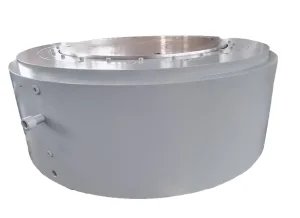
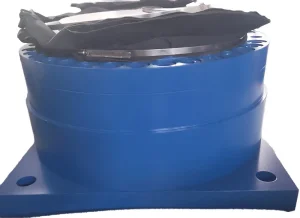
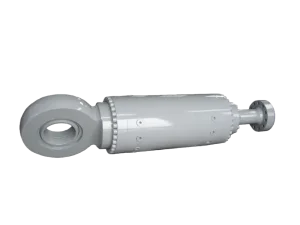
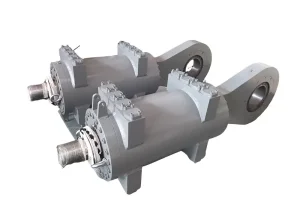
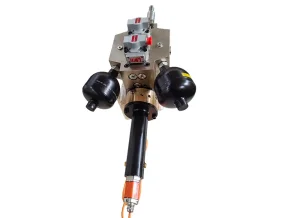
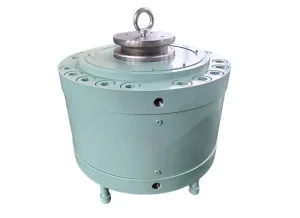
Whether you need custom bladder accumulators, high-pressure piston accumulator banks, or replacement loading cylinders for vertical roller mills, our engineering center in Changzhou is ready to review your parameters.
Request Technical Proposal & Pricing