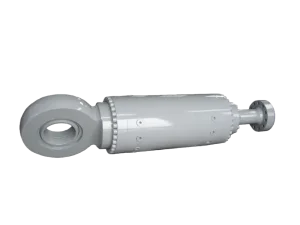
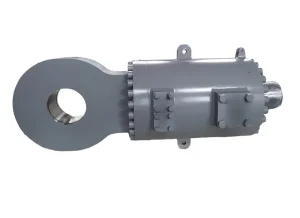
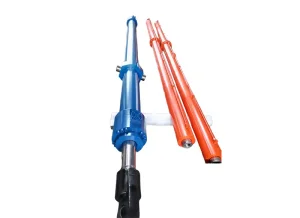
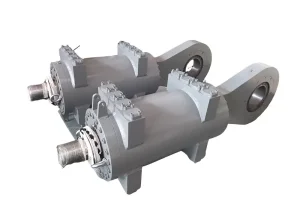
High-pressure, low-friction, and custom hydraulic tie rod cylinders manufactured to international OEM replacement specifications.
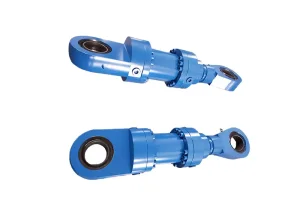
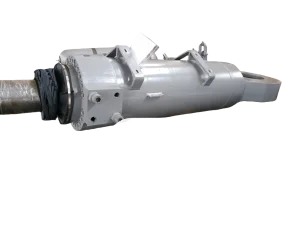
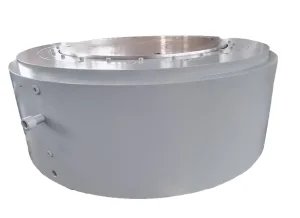
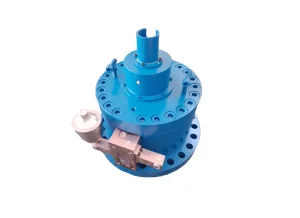
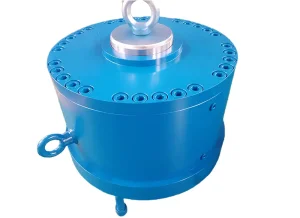
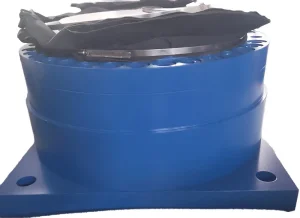
An engineering analysis of tie rod construction, structural force dynamics, and international procurement standards for heavy industrial automation.
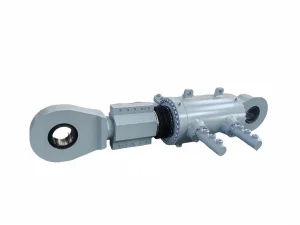
A hydraulic tie rod cylinder is defined by high-tensile threaded steel rods that hold the two end caps to the main cylinder barrel. This classic construction—standardized under NFPA T3.6.7 R2-2012 and ISO 6020-2 / ISO 6022—provides exceptional fatigue strength, straightforward field serviceability, and versatile mounting configurations.
When evaluated by industrial procurement managers, China hydraulic tie rod cylinder exporters stand out for delivering high-precision linear actuators capable of continuous working pressures ranging from 16 MPa (2300 PSI) to 35 MPa (5000 PSI) under brutal environmental duty cycles.
Modern fluid power engineering has shifted beyond basic dimension matching. Global original equipment manufacturers (OEMs) demand zero stick-slip motion, extended seal lifetimes exceed 10,000 km cumulative travel, and dynamic stress dissipation during shock loads.
Tier-1 Chinese factories now integrate fully automated robotic welding, deep-hole honing with real-time laser gauging, and stress-relieved high-grade alloy tie rods. This level of vertical integration guarantees that high-pressure hydraulic cylinders meet or exceed European and American OEM quality benchmarks at significantly optimized total cost of ownership (TCO).
Inside the material standards, honing technologies, and seal dynamics that drive China's top export-grade hydraulic cylinders.
Export cylinders utilize seamless cold-drawn tubes made of ST52.3, E355, or 27SiMn alloy steel. Bores undergo precision honing and roller burnishing to achieve an ISO H8/H9 tolerance class. Internal micro-finish guarantees minimal friction coefficient ($\mu < 0.05$) and preserves sealing lip integrity during heavy shock loads.
Piston rods are crafted from high-yield strength steel (42CrMo4 / AISI 4140 / C45E), precision ground, and medium-frequency induction hardened to HRC 52–58 up to a depth of 1.5–2.5 mm. A hard chrome plating layer of 25–50 microns delivers superior wear resistance and corrosion defense in abrasive plant settings.
Tie rods are manufactured using heat-treated ASTM A193 B7 / 40Cr steel. Torqued with calibrated hydraulic tensioners to pre-calculated preload levels, these tie rods resist cyclic tension fatigue and prevent end-cap gap opening under pressure spikes up to 1.5 times nominal rating.
| Cylinder Subsystem | Material / Grade Standard | Manufacturing & Surface Finish | Engineering Benefit |
|---|---|---|---|
| Cylinder Tube | ST52.3 / E355 / 27SiMn (EN 10083) | Honed & Burnished, Ra < 0.2 µm, H8/H9 | Prevents bypass leakage, maximizes seal longevity |
| Piston Rod | 42CrMo4 / AISI 4140 / C45E | Induction Hardened HRC 55+, Chrome 30µm | Resists side-load bending, pitting, and scratch wear |
| Tie Rods | ASTM A193 Grade B7 / 40Cr | Precision Threaded, Anti-corrosion Coated | Absorbs cyclic pressure shock without stretching |
| Sealing Package | PTFE + Bronze / FKM / PU U-Cups | Multi-stage lip arrangement with wipers | Zero external leakage, thermal resistance up to 200°C |
| End Caps / Head | QT450-10 Ductile Iron / Forged S355 | 3D FEA Optimized Stress Relief Machining | Eliminates fatigue cracking around fluid port bosses |
Analyzing global procurement trends, total cost of ownership (TCO), and why international buyers partner with top Chinese exporters.
Procurement departments in North America, Europe, Southeast Asia, and the Middle East are re-evaluating their heavy component supply chains. By establishing direct contracts with specialized China hydraulic tie rod cylinder exporters, industrial enterprises achieve capital savings of 35% to 50% compared to traditional Western distributors, while maintaining complete interchangeability with existing equipment fleets.
Modern industrial automation relies on universal interchangeability. Leading Chinese exporters engineer tie rod cylinders directly aligned with NFPA standards (e.g., NFPA 1.5" to 8" bore sizes) and ISO 6020-2 mounting dimensions (including Clevis MP1/MP2, Trunnion MT4, Flange MF1/MF2, and Foot MS2 mountings), guaranteeing smooth drop-in field installation during planned shutdowns.
Reliability is non-negotiable in 24/7 continuous process industries. Certified export factories test 100% of finished assemblies against ISO 10100 hydraulic cylinder testing procedures. Every unit undergoes static proof testing at 150% of maximum working pressure, followed by dynamic stroke checks and particle cleanliness logging per ISO 4406 (Class 16/14/11).
From raw material processing plants to high-precision heavy machinery, see where tie rod hydraulic cylinders deliver reliable force.
Heavy-duty hydraulic tie rod cylinders drive loading arms and suspension mechanisms in vertical roller mills (e.g., Loesche LM, UBE UM, Pfeiffer MPS) and high-pressure roller presses (CITIC, HCRI, Leejun). Operating in dust-heavy, high-vibration settings, these cylinders use double-lipped scraper seals and reinforced bronze wear rings to absorb extreme radial forces.
Continuous casting machines, blast furnace charging gates, and strip tensioning reels demand hydraulic actuators that withstand radiant temperatures above 150°C. Chinese exporters supply specialized tie rod cylinders fitted with Viton/FKM fluoroelastomer seals, internal water-cooling jackets, and stainless steel tie rod sleeves.
High-speed clamping tie rod cylinders are critical for plastic injection molding machines and metal die-casting units. Low-friction PTFE step seals prevent stick-slip during micro-positioning, allowing multi-cavity molds to close smoothly without flashing or mechanical misalignment.
Hydraulic tie rod actuators operating in marine environments (deck cranes, ship steering gear, stacker-reclaimers) encounter relentless saltwater exposure. Exporters utilize nickel-chrome electroplating or HVOF laser cladding, paired with C5-M marine-grade polyurethane epoxy paint finishes.
Forming presses, scrap balers, and hydraulic shears require tie rod cylinders designed for severe impulse pressure loading. Extra-thick forged steel end caps and prestressed tie rods eliminate body deflection, keeping ram positioning precise during heavy blanking operations.
How smart sensing, electro-hydraulic integration, and green surface treatments are redefining Chinese tie rod cylinder engineering.
The future of fluid power lies in digital feedback systems. Next-generation hydraulic tie rod cylinders incorporate embedded magnetostrictive linear position sensors (such as MTS Temposonics or Balluff LVDTs) directly inside gun-drilled piston rods.
These smart actuators output real-time stroke position data via IO-Link, CANopen, or Profinet protocols with repeatable accuracy down to ±0.01 mm, supporting predictive maintenance algorithms and automated digital twin platforms.
Environmental standards are driving a shift away from traditional hexavalent hard chrome plating. Chinese R&D centers are expanding the production of HVOF (High-Velocity Oxygen Fuel) laser cladding using iron-chromium and cobalt-base alloys, delivering zero porosity and extreme saltwater splash protection.
Additionally, compact Electro-Hydraulic Actuators (EHA)—combining a tie rod cylinder, mini variable-speed motor pump, and localized fluid reservoir into a self-contained unit—cut overall power usage by up to 40%.
Discover how regional industrial clusters, vertically integrated machining, and lean quality controls keep delivery times predictable.
Located in key industrial hubs such as Changzhou, Jiangsu Province, export manufacturers sit at the center of the world's most concentrated hydraulic supply chain ecosystem. Raw steel forging, seamless tube drawing, heat treatment, seal formulation, and CNC tooling suppliers operate within a 50 km radius, drastically cutting material lead times.
Facilities feature imported multi-axis CNC turning centers, deep-hole skiving and honing machines up to 12 meters in stroke length, robotic MIG/TIG welding cells, and automated washing systems. In-house machining guarantees strict concentricity between the piston guide assembly and barrel bore.
Streamlined ERP-driven production allows custom tie rod cylinder engineering drawings to be completed within 48 hours. Sample prototypes ship in under 15 days, while containerized production batches average 25 to 30 days—ensuring industrial maintenance teams meet tight scheduled shutdown windows.
From engineering documentation to specialized export packaging, explore the full post-purchase support infrastructure.
Long-distance ocean freight exposes metal components to severe humidity and salt haze. Professional Chinese exporters apply multi-layer preservation protocols:
Working with experienced export teams provides access to full engineering design services:
Expert answers regarding tie rod cylinder specifications, customization, quality verification, and export logistics.
Top Chinese exporters combine extensive raw material access, advanced CNC honing machinery, and complete compliance with international standards (such as NFPA and ISO 6020-2). This vertical integration enables global buyers to procure heavy-duty industrial cylinders with verified material quality (EN 10204 3.1 certificates), pressure testing, and short lead times—all at significant total cost savings.
Tie rod cylinders utilize external high-tensile steel rods to clamp the barrel between two end caps, allowing for easy disassembly, seal replacement, and maintenance on-site. Welded cylinders feature heavy barrels welded directly to end caps, making them more compact for mobile equipment but harder to service in the field. Tie rod designs are favored in factory automation, plastic molding, steel mills, and industrial machinery where fast maintenance is vital.
For standard industrial applications (-20°C to +80°C), polyurethane (PU) and NBR seals deliver high wear resistance. For high-temperature duty cycles up to 200°C (such as metallurgical continuous casting), fluoroelastomer (FKM / Viton) seals are specified. For high-speed or dynamic servo loops requiring minimal friction, bronze-filled PTFE step seals paired with clearance seal configurations are deployed to eliminate stick-slip motion.
Yes. Specialized exporters engineer loading and suspension tie rod cylinders that align with the exact stroke length, mounting interfaces, port connections, and working pressure ratings of major original equipment manufacturer (OEM) grinding mills and roller presses. Original OEM names are referenced purely for compatibility identification.
You can provide physical sample measurements, equipment nameplate photographs, bore/rod dimensions, stroke length, and mounting pin sizes. Engineering teams use 3D CAD modeling software to recreate production drawings, confirming technical details with your maintenance team prior to machining.
Explore our extended series of hydraulic tie rod cylinders, vertical roller mill actuators, and clearance seal servo systems.