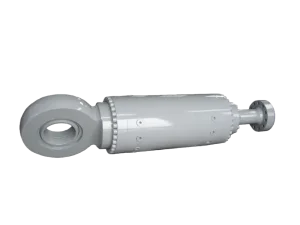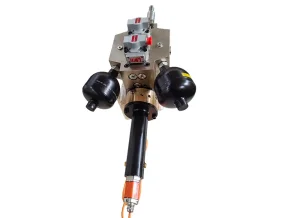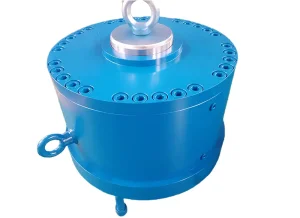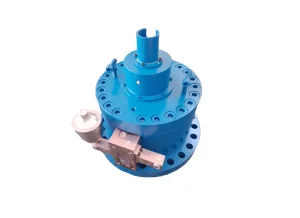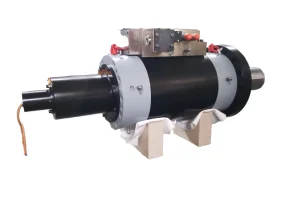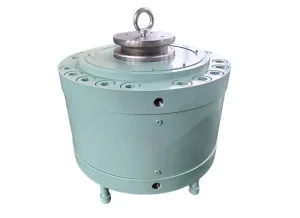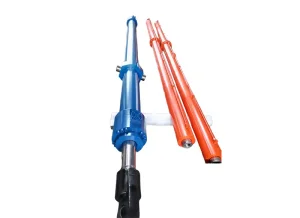
Precision-engineered oil control cylinders built for high dynamic shock, continuous pressure regulation, and drop-in OEM replacements.
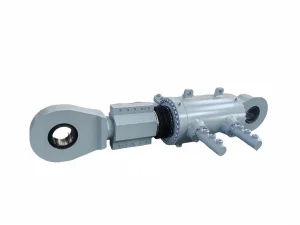
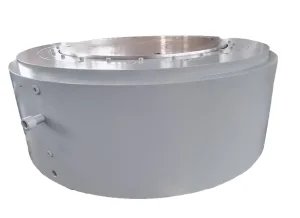
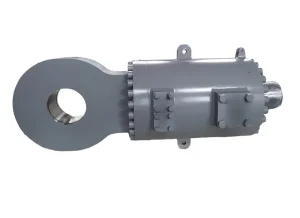
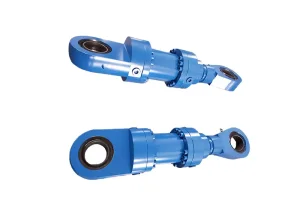
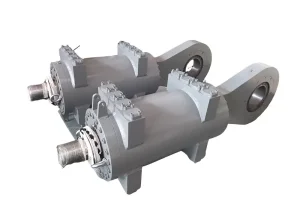
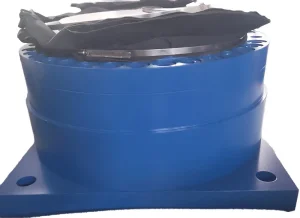
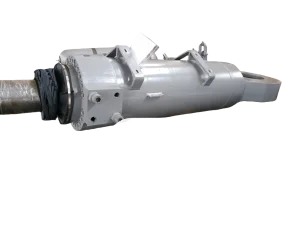
The global fluid power industry has transitioned into a pivotal era where basic mechanical actuation is no longer sufficient. Modern heavy industries—ranging from cement manufacturing and metallurgical rolling to marine engineering and mining operations—demand hyper-precise, highly responsive oil control hydraulics. Fluid control systems are the operational backbone of high-tonnage machinery, regulating volumetric flow rate, system pressure, dynamic shock absorption, and closed-loop position stability under extreme thermal and mechanical fatigue.
Historically concentrated in Western Europe and Japan, the global supply chain for high-pressure oil control valves and heavy-duty hydraulic cylinders has undergone a major structural migration toward China. Chinese manufacturers have advanced from basic casting and assembly to sophisticated, computer-controlled precision machining, ultra-low-friction seal synthesis, and complex electro-hydraulic proportional integration. Today, top-tier Chinese manufacturers operate advanced CNC machining centers imported from Germany and Japan, utilizing state-of-the-art CAD/CAM/CAE design software to engineer oil control systems that meet or exceed rigorous international standards such as ISO 4401, DIN 24340, and SAE J514.
Modern industrial buyers are shifting focus from initial unit cost to Total Cost of Ownership (TCO). High-performance oil control hydraulics manufactured in China reduce micro-leakage risks, mitigate stick-slip phenomena in servo loops, and offer an average operational life enhancement of 35% under continuous 25 MPa+ working pressures compared to standard legacy actuators.
This economic transformation is driven by China’s integrated industrial ecosystem. Key production centers, such as Changzhou in Jiangsu Province, house complete supply chains—from forged alloy steel tubes and hard-chrome plated piston rods to specialized seal compound molders and computerized hydrostatic hydraulic test stands. Global Original Equipment Manufacturers (OEMs) and engineering procurement leaders increasingly rely on Chinese exporters to secure reliable, drop-in replacement cylinders and fluid manifolds that align precisely with original mounting interfaces while optimizing thermal dissipation and energy consumption.
Integrated sourcing of high-purity forged steel (42CrMo), micro-alloyed honing tubes, and international seal kits reduces manufacturing lead times by up to 45% compared to Western suppliers.
Advanced oil flow control manifold designs ensure uniform fluid distribution, preventing pressure spikes during rapid reversing duty cycles in mill loading applications.
Full spectrum non-destructive testing (NDT), ultrasonic flaw detection, and 100% hydrostatic pressure testing at 1.5x nominal working pressure prior to global export.
The fluid power sector is undergoing a massive transformation driven by digitalization, strict environmental regulations, and demand for sub-micron precision. China's leading oil control hydraulic manufacturers are pioneering four foundational technology trends:
Traditional passive hydraulic systems are being replaced by smart hydraulic actuators equipped with integrated digital position feedback transducers, pressure sensors, and oil temperature monitors. By embedding IO-Link or CANopen interfaces directly into the valve body and cylinder end-caps, modern Chinese oil control systems transmit real-time telemetry to central SCADA systems. This enables predictive maintenance, early detection of seal wear, fluid contamination monitoring, and dynamic pressure throttling.
Energy efficiency has become a critical key performance indicator (KPI) for heavy plant operations. Servo-driven variable-speed pumps combined with precision proportional oil control manifolds allow hydraulic systems to draw power strictly on demand. By modulating hydraulic oil flow rate electronically rather than dumping excess pressurized oil across throttling relief valves, energy losses are reduced by 30% to 60%, drastically decreasing heat generation and fluid degradation.
For high-frequency oscillatory applications—such as continuous casting mold oscillators and servo-controlled testing rigs—stick-slip behavior caused by dynamic sealing friction destroys positioning accuracy. Chinese manufacturers have pioneered hydrostatic support systems that float the piston rod on a thin, continuously pressurized oil film. Combined with composite PTFE clearance seals, internal friction is virtually eliminated, allowing positioning resolutions within ±1 μm under heavy lateral side loads.
With increasing fire safety requirements in steel plants and deep underground mining, hydraulic oil control systems must handle synthetic ester (HFD-U) and water-glycol (HFC) fluids. Leading Chinese manufacturers design specialized oil control manifolds and internal cylinder bores utilizing duplex stainless steel coatings, Viton/FKM fluoroelastomers, and chemically resistant surface treatments to prevent fluid degradation and seal swelling.
| Performance Parameter | Conventional Hydraulic Actuation | Advanced Chinese Oil Control System | Engineering Gain / Impact |
|---|---|---|---|
| Positioning Accuracy | ±0.5 mm to ±1.0 mm | ±0.001 mm (±1 μm) | Sub-micron precision for servo applications |
| Energy Efficiency | Baseline (40% Heat Dissipation Loss) | 30% - 60% Energy Reduction | Variable-speed servo pump integration |
| Sealing Friction Coefficient | μ = 0.05 - 0.12 (Standard Polyurethane) | μ < 0.005 (Hydrostatic / PTFE Clearance) | Eliminates stick-slip effect completely |
| Mean Time Between Failures (MTBF) | 12,000 Operating Hours | 35,000+ Operating Hours | Optimized fluid dynamics & chrome-nickel coating |
| Dynamic Shock Resistance | Up to 25 MPa Peak Shock | Up to 50 MPa Transient Shock | Integrated dampening & fast-acting relief valves |
Over two decades of dedicated R&D in heavy-duty oil control cylinders, high-pressure hydraulic valve manifolds, and specialized industrial actuators.
Oil control hydraulics must be tailored precisely to the thermal, mechanical, and environmental demands of specific operating machinery. Below is an in-depth operational analysis of four critical application domains:
In raw meal, clinker, and coal grinding plants (utilizing equipment from Loesche, UBE, Pfeiffer MPS, FLSmidth ATOX, and CITIC Heavy Industries), hydraulic loading cylinders apply tens of meganewtons of force onto grinding rollers. The hydraulic oil control system must maintain constant hydraulic pressure despite abrasive clinker beds causing violent, high-frequency mechanical vibrations. Specialized oil control manifolds incorporate rapid-response hydraulic accumulators and proportional directional valves to dampen vibration energy, protecting mechanical frames from structural fatigue and maintaining optimum fineness output.
Hot-strip mills, cold rolling mills, and continuous casting lines demand extreme thermal resilience and millisecond response times. Oil control hydraulics manage roll gap adjustments (Automatic Gauge Control - AGC systems), continuous casting mold oscillation, and heavy ladle tilting mechanisms. These systems utilize fire-resistant fluids, high-temperature Viton seals, and water-cooled hydraulic manifolds capable of continuous operation in ambient temperatures exceeding 120°C.
Cement stacker-reclaimers, port cranes, and marine steering gear rely on hydraulic harrow cylinders and winch drive motors operating in severe outdoor environments. Exposed to salt spray, humidity, and abrasive dust, these oil control assemblies feature heavy ceramic-plated piston rods (such as Laser Cladding or HVOF coatings) and IP68-rated proportional solenoid valves to eliminate salt-water ingress and rod corrosion.
Precision rubber vulcanization and plastic injection molding require fast-approach, high-pressure clamping, and precise pressure-hold duty cycles. Multi-stage oil control valves regulate differential flow rates, allowing rapid cylinder extension without high-impact end-of-stroke contact, followed by seamless transition to high-pressure holding with minimal electrical power consumption.
Tuned hydraulic oil control systems for Loesche, UBE UM, and Pfeiffer MPS mills providing stable grinding pressure and active dampening against clinker surges.
Diamond-profile and standard heavy-duty cylinders for CITIC, Leejun, and HCRI roller presses, engineered to withstand dynamic force reversals up to 35 MPa.
Corrosion-proof marine steering cylinders and deck machinery oil control valves equipped with marine-certified coatings and weather-sealed valve enclosures.
How Chinese engineering institutes and manufacturers are shaping the future of high-pressure fluid control technology.
Direct mounting of magnetostrictive linear position sensors and optical oil cleanliness monitors inside hydraulic manifolds.
Commercial deployment of hydrostatic support cylinders handling heavy lateral loads with zero mechanical contact friction.
Development of bio-degradable fluid manifolds and energy-recovery hydraulic circuits that recapture braking energy.
Closed-loop algorithms that automatically adjust proportional valve opening profiles to compensate for fluid viscosity changes.
Achieving longevity in oil control hydraulics requires strict adherence to raw material selection and heat treatment protocols. Leading Chinese exporters utilize:
Expert answers to common engineering, procurement, and maintenance questions regarding Chinese hydraulic manufacturing and global compatibility.
Modern Chinese oil control hydraulics are engineered to match exact international mounting interfaces (ISO, DIN, SAE) and performance metrics. Leading Chinese manufacturers utilize imported CNC machine tools (such as DMG Mori, Mazak), high-accuracy honing equipment, and premium international seal brands (Nok, Parker, Trelleborg). This ensures drop-in compatibility, identical pressure ratings (up to 40 MPa nominal), and reliable performance at a significantly reduced procurement cost and lead time.
Clearance Seal Cylinders: Rely on a micro-gap precision fit between the piston and cylinder bore without elastic seals, offering virtually zero friction and extreme thermal resistance, though with minor internal bypass.
Low-Friction Seal Cylinders: Utilize specialized PTFE bronze-filled ring profiles to minimize dynamic friction while maintaining zero leakage for servo motion.
Hydrostatic Support Cylinders: Float the piston rod on an actively pressurized fluid film, handling extreme side loads with zero metallic contact and zero stick-slip effect.
Yes. Experienced Chinese hydraulic manufacturers, such as Xuanda Hydraulic, specialize in reverse engineering. By providing nameplate data, critical installation dimensions, stroke lengths, photos, or physical samples of worn cylinders, engineers can reconstruct 3D CAD models, verify stress calculations, and produce fully compatible replacement cylinders tailored to your equipment.
Hydraulic shock is mitigated by integrating proportional directional valves with adjustable acceleration/deceleration ramps, anti-cavitation check valves, and fast-acting bladder accumulators into the cylinder valve block. This combination absorbs kinetic energy during sudden roller movements caused by ungrindable tramp iron in raw material feeds.
Export-grade hydraulic cylinders undergo stringent quality assurance steps: ultrasonic raw material inspection, dimensional laser measurement, chrome plating thickness testing, full-stroke low-pressure friction testing, and 100% high-pressure internal/external leakage tests at 1.5 times nominal operating pressure for a minimum hold time of 30 minutes.
Cylinders are thoroughly flushed with rust-inhibiting hydraulic fluid, all oil ports are sealed with heavy-duty metal plugs, exposed piston rods are wrapped with volatile corrosion inhibitor (VCI) protective film, and units are secured inside ISPM-15 compliant fumigated wooden crates with reinforced steel framing.
Discover high-performance hydraulic cylinders engineered for extreme industrial applications worldwide.