1. Executive Summary & Tribological Fundamentals of Plunger Hydraulics
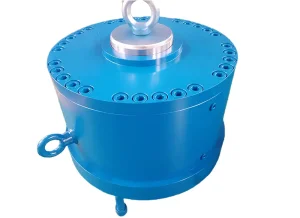
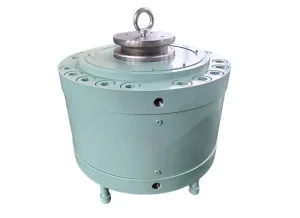
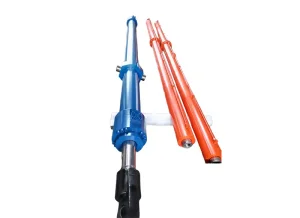
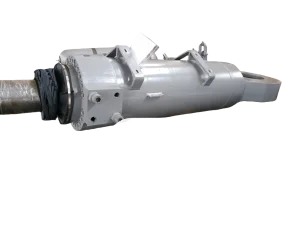
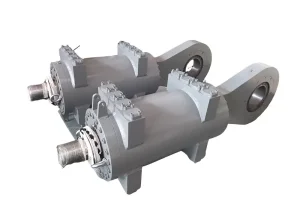
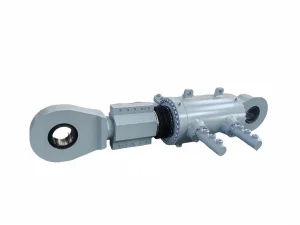
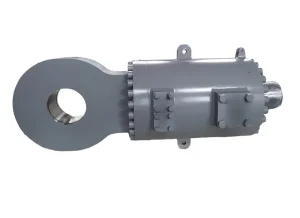
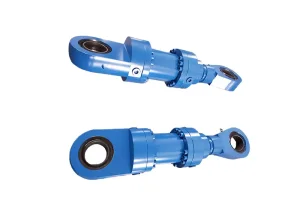
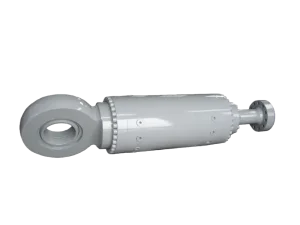
In modern high-tonnage industrial machinery, the hydraulic plunger cylinder (frequently designated as a single-acting hydraulic ram) represents the pinnacle of linear fluid power thrust generation. Unlike conventional double-acting differential piston cylinders that rely on internal piston seals separating cap-end and rod-end chambers, a plunger cylinder features a smooth, thick-walled cylindrical rod (the plunger) whose outer diameter dominates the displacement mechanics. Pressure applied to the fluid enclosure acts directly upon the cross-sectional area of the plunger rod itself, producing massive unidirectional linear force while eliminating the primary structural vulnerability of internal piston seals under extreme shock pressures.
From an engineering perspective, plunger hydraulic designs excel in long-stroke, vertical heavy-lift, and ultra-high-pressure pressing operations exceeding 350 bar to 700 bar (35 to 70 MPa). The absence of internal piston rings or dynamic seals inside the pressurized cylinder barrel eliminates seal blow-by risks under cyclic load reversals. Furthermore, because the plunger rod functions simultaneously as the hydraulic displacement element and the structural column carrying compressive loads, its cross-sectional moment of inertia ($I = \frac{\pi d^4}{64}$) provides vastly superior resistance against Euler column buckling compared to thin-rod piston actuators of equivalent stroke length.
Technical Gain Insight: In continuous duty applications such as heavy forging presses, cement vertical roller mills (VRM), and hydraulic rotary kiln thrust positioning, plunger cylinders dramatically decrease mean time between failures (MTBF). By transferring the dynamic sealing boundary entirely to the external cylinder gland housing, maintenance teams can replace primary rod seals, dirt wipers, and guide bushings without dismantling the cylinder barrel or extracting the heavy ram shaft.
2. Advanced Material Engineering, Surface Tribology & Manufacturing Roadmap
Selecting and processing raw materials for high-pressure hydraulic plunger cylinders manufactured in China requires rigorous metallurgical standards to withstand abrasive environments, micro-vibration stick-slip, and corrosive process fluids. As leading Chinese manufacturers based in key industrial hubs like Changzhou, Jiangsu, advanced manufacturing processes integrate European and Japanese high-precision CNC machining tools to maintain geometric tolerances within micron-level thresholds.
Metallurgical Substrates
Precision forged alloy steel bars including 42CrMo4, 35CrMo, and 20MnV6, quenched and tempered to yield tensile strengths exceeding 950 MPa with deep core toughness.
HVOF & Hard Chrome Coating
Dual-layer micro-crack hard chrome plating (40–60 µm, 850–1000 HV) or High-Velocity Oxygen-Fuel (HVOF) thermal spray tungsten carbide for harsh abrasive wear prevention.
Sealing System Innovation
Hydrostatic clearance sealing and bronze-filled PTFE chevron packing modules engineered for low friction coefficient ($\mu \le 0.03$) and zero stick-slip response.
Cross-Sectional Hydraulic Mechanics & Euler Buckling Prevention
Plunger cylinders subjected to heavy compressive thrust must be evaluated against the Euler buckling critical force condition. The maximum allowable working load $P_{allow}$ is governed by the structural end-fixity factor $K$ and material elasticity:
$P_{cr} = \frac{\pi^2 E I}{(K \cdot L)^2} \quad \implies \quad P_{allow} = \frac{P_{cr}}{S_f}$
Where $E$ is Young's Modulus of steel ($210 \text{ GPa}$), $I$ is column area moment of inertia, $L$ is stroke length, and $S_f \ge 3.5$ safety factor against dynamic buckling.
By utilizing thick-walled seamless forged barrels honed to internal surface micro-roughness $R_a \le 0.1 \mu\text{m}$, Chinese plunger manufacturers guarantee minimal seal friction while maintaining maximum structural stability during rapid pressure rise cycles.
3. Localized Industrial Application Scenarios & Operational Field Data
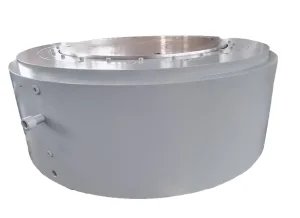
China's rapid industrialization and global export capabilities have pushed hydraulic plunger manufacturing into extremely demanding application niches. Plunger hydraulic cylinders engineered by Changzhou Xuanda Hydraulic Electromechanical Equipment Co., Ltd. are extensively installed in five primary heavy-industrial domains:
A. Cement & Mineral Grinding Machinery: In Vertical Roller Mills (VRM) such as Loesche LM, UBE UM, Pfeiffer MPS, and Tianjin Cement Design Institute (TCD/TRM) series, heavy plunger and loading cylinders supply the grinding tension required to crush raw clinker and slag. Operating in ambient environments laden with abrasive silica dust, these cylinders utilize special scraper rings and double-lip Viton seals that operate reliably under continuous vibration frequency up to 15 Hz.
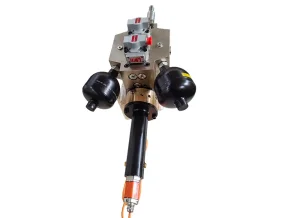
B. High-Pressure Roller Presses & Clinker Coolers: Hydraulic cylinders for Chengdu Leejun CLF, Hefei Cement Research Institute (HCRI), and CITIC Heavy Industries roller presses require instant pressure adjustment when ungrindable tramp iron passes through the rollers. Plunger systems equipped with high-flow accumulator accumulator relief manifolds retract instantly to prevent mechanical frame fractures.
C. Metallurgical & Heavy Forging Machinery: In multi-thousand-ton open-die forging presses and continuous casting lines, single-acting hydraulic rams deliver thousands of kilonewtons of pressing force under severe radiant heat ($>200^\circ\text{C}$). Specialized synthetic fire-resistant fluids (HFC/HFD-U) are paired with custom fluorocarbon and metallic spring-energized seal matrices.
D. Cement Rotary Kilns & Stacker-Reclaimers: Custom hydraulic thrust roller cylinders absorb axial thrust loads generated by sloped rotating kilns, preventing damage to support roller bearings. Simultaneously, heavy-duty hydraulic harrow cylinders power stacker-reclaimers handling bulk materials in maritime ports and mining storage facilities.
4. China Supply Chain Resilience, Machining Precision & Lead-Time Optimization
The global industrial fluid power landscape has undergone a major structural realignment. China's hydraulic manufacturing ecosystem—centered in Jiangsu and Zhejiang provinces—offers global buyers an unbeatable combination of technical precision, raw material availability, and rapid production agility.
Changzhou Xuanda Hydraulic operates a 20,000 square meter state-of-the-art facility staffed by over 400 specialized engineers, machinists, and quality control specialists. By maintaining an end-to-end supply chain within a 50-kilometer radius—including raw steel procurement, deep-hole honing, heat treatment nitriding, chrome plating, dynamic testing, and export packaging—production lead times are reduced by 35% to 50% compared to traditional European suppliers.
Quality Control & Traceability Protocols: Every single plunger hydraulic cylinder exported undergoes 100% full-pressure hydrostatic testing up to 1.5 times working pressure, ultrasonic flaw detection on raw forgings, coordinate measuring machine (CMM) dimensional verification, and complete Mill Test Certificate (MTC 3.1) documentation in compliance with EN 10204 standards.
5. Technical Roadmap, Smart Hydraulics & Future Outlook
The next decade of industrial plunger hydraulics will be defined by smart sensing integration and energy-efficient electro-hydraulic actuation (EHA). Xuanda Hydraulic's R&D team is actively driving innovation across three key vectors:
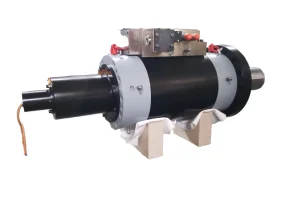
- Integrated Linear Displacement Transducers (LVDT / Magnetostrictive Sensors): Embedding absolute position sensing inside the high-pressure cylinder body to provide sub-micron feedback for closed-loop servo positioning.
- Condition Monitoring & IoT Sensor Arrays: Incorporating real-time wireless oil temperature, pressure transient, and seal wear vibration sensors to enable predictive maintenance alerts before unplanned shutdown events.
- Sustainable Tribological Coatings: Transitioning from traditional hexavalent chromium plating to eco-friendly high-velocity laser cladding (HVLC) and diamond-like carbon (DLC) surface treatments for zero-environmental-impact manufacturing.
6. Frequently Asked Questions (FAQ) & Technical Consultation
Q1: What are the main mechanical advantages of a plunger cylinder over a standard double-acting cylinder?
Plunger cylinders operate on single-acting fluid displacement, eliminating internal piston head seals. This removes internal seal friction, avoids seal degradation under extreme shock loads, allows for much thicker ram shafts that resist Euler column buckling, and permits all seal maintenance to be conducted externally at the cylinder gland cap.
Q2: Can Xuanda Hydraulic manufacture drop-in replacements for European or Japanese OEM mill cylinders?
Yes. We specialize in engineering exact form-fit-function replacement cylinders matching the mounting interfaces, port dimensions, working pressure ratings, and oil flow dynamics of major OEM vertical mills and presses, including Loesche LM, UBE UM, Pfeiffer MPS, FLSmidth ATOX, and Leejun CLF systems.
Q3: How do you handle custom hydraulic cylinder engineering without original manufacturer drawings?
Our engineering team performs reverse-engineering using 3D laser scanning, field measurement datasheets, worn physical samples, or OEM nameplate specifications. We produce complete 3D CAD models and approval drawings for customer verification prior to machining.
Q4: What surface treatment is recommended for plunger rods operating in high-corrosion or abrasive environments?
For abrasive dust (such as cement or mining plants), we recommend high-velocity oxygen-fuel (HVOF) tungsten carbide coating or dual-layer micro-crack chrome plating (minimum 50 µm thickness, 950 HV hardness). For marine environments, nickel-chrome or stainless steel cladding is applied.
Q5: What quality certifications and export testing standards do Xuanda products adhere to?
Our facility operates under ISO 9001:2015 quality management system guidelines. Every export cylinder undergoes full hydraulic holding tests, pressure pulse cycling, dimensional inspection, and structural weld non-destructive testing (NDT/UT) accompanied by EN 10204 3.1 material test certificates.