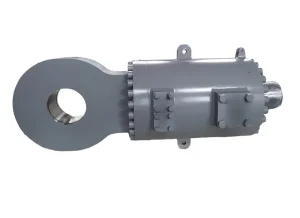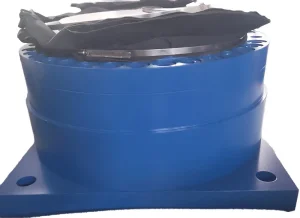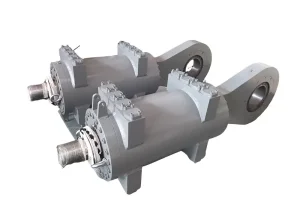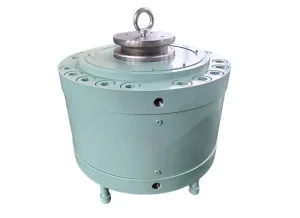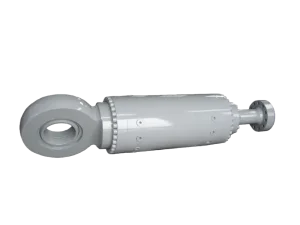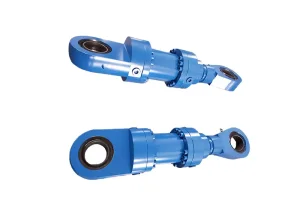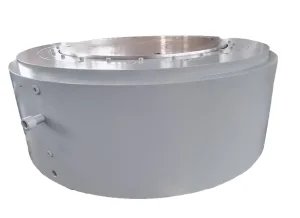
Explore our core engineering series engineered for cement grinding mills, metallurgical rolling lines, roller presses, and closed-loop servo control systems.
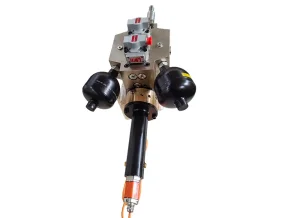
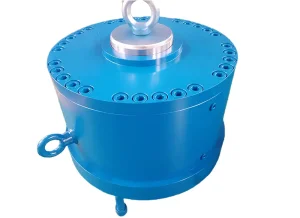
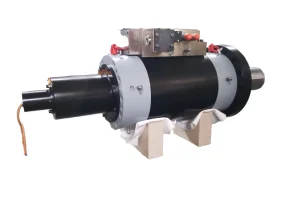
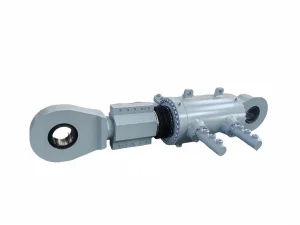
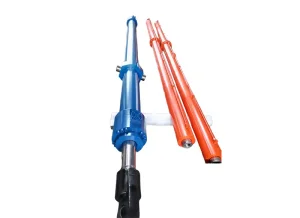
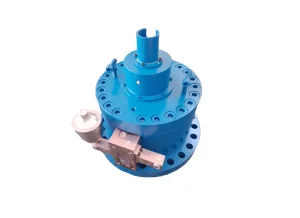
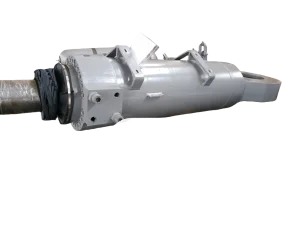
In modern industrial fluid power, the double rod hydraulic cylinder (frequently designated as a through-rod or double-ended actuator) occupies a foundational position across high-demand heavy machinery, metallurgy, automated manufacturing, and high-frequency servo testing systems. Unlike conventional single-rod differential cylinders, a double rod cylinder features a piston rod extending outward through both end-caps of the cylinder barrel. This geometric configurations establishes mathematical symmetry in fluid displacement, force transmission, and kinematic response across both stroke vectors.
According to global industrial fluid power market surveys, the global demand for custom double rod actuators and specialized servo hydraulic cylinders is accelerating at a CAGR of 6.2%, driven by the electrification of heavy equipment, automated cement production lines, and high-accuracy roll-gap adjustments in steel casting mills. Plant managers and OEM procurement executives face continuous pressure to balance initial capital expenditures with long-term reliability—a paradigm where sourcing from a dedicated Cost-Effective Cylinder Double Rod Manufacturer like Changzhou Xuanda Hydraulic Electromechanical Equipment Co., Ltd. delivers a measurable strategic advantage.
Core Kinematic Truth: Equal cross-sectional working area on both sides of the piston ($A_{cap} = A_{head} = A_{piston} - A_{rod}$) eliminates the force and velocity differential inherent in standard cylinders. This enables linear actuators to push and pull with identical force vectors and velocity profiles at equal volumetric flow rates ($Q$).
Historically, Western OEMs dominated high-spec double rod cylinder manufacturing. However, Chinese engineering powerhouses—specifically situated in Changzhou's heavy manufacturing cluster—have bridged the technology gap. By combining imported German and Japanese CNC machine tools, advanced deep-hole honing lines, micro-alloy metallurgical heat treatment, and stringent ultrasonic testing protocols, Changzhou Xuanda Hydraulic delivers drop-in OEM replacement and custom double rod cylinders at 30% to 45% lower total acquisition costs while maintaining operational lifespans exceeding 20,000 continuous work cycles.
Double rod cylinders eliminate hydraulic oil compression variance when switching directional control valves. Equal volumetric fluid requirements on extension and retraction ensure smooth closed-loop servo control without erratic pressure surges.
Supported by double guide bushings on both end-caps, double rod cylinders exhibit vastly superior resistance to side loads, rod bending, and structural buckling under heavy compression forces compared to single-rod variants.
The hollowed secondary rod end provides an ideal protective channel for magnetostrictive linear position sensors (LVDT / Temposonics), protecting electronics from high-pressure fluid environments and external abrasive dust.
The primary point of failure in industrial hydraulic cylinders resides at the dynamic seal interface. Under high pressure (25 MPa – 45 MPa) and elevated operating temperatures, dynamic friction induces seal extrusion, thermal degradation, and stick-slip chatter. Xuanda Hydraulic integrates proprietary seal configurations engineered for extreme duty cycles:
| Performance Characteristic | Single Rod Cylinder | Double Rod Cylinder (Xuanda Standard) | Engineering Benefit |
|---|---|---|---|
| Force Vector Ratio (Push/Pull) | Unequal ($F_1 > F_2$ due to rod area) | Symmetrical 1:1 ($F_1 = F_2$) | Identical power in bidirectional operation |
| Velocity Ratio at Constant Flow | Asymmetrical ($v_{retract} > v_{extend}$) | Symmetrical ($v_{retract} = v_{extend}$) | Simplified PLC programming & servo feedback |
| Bending Load Resistance | Moderate (Single rod bearing guide) | Exceptional (Dual end-cap guide bushings) | Prevents uneven bore wear & seal failure |
| Sensor Integration | Requires external bracket or internal stroke | Hollow secondary rod thru-mount | Protected, high-precision position feedback |
| Oil Reservoir Volumetric Shift | Varies during extension/retraction | Zero volumetric fluid shift | Reduces oil tank size requirements by up to 35% |
In cement clinker grinding, equipment such as Vertical Roller Mills (Loesche LM, UBE UM, FLSmidth ATOX, Pfeiffer MPS, Tianjin Cement TCD/TRM) and High-Pressure Roller Presses (CITIC Heavy Industries, Chengdu Leejun, Hefei Cement Research Institute HCRI) subject cylinders to fierce shock loads, abrasive dust, and 24/7 continuous duty cycles.
Xuanda Solution: Heavy-duty forged alloy double rod loading cylinders with specialized dust wiper systems, induction-hardened chrome rods, and integrated hydraulic damping cushions.
Steel plants require sub-millimeter dynamic roll-gap control and heavy slab pushing mechanism actuators. High radiant heat (ambient temperatures exceeding 120°C) and water-glycol fire-resistant hydraulic fluids severely degrade standard seals.
Xuanda Solution: Viton/FKM high-temperature dual-rod cylinders featuring water-cooled jacketing options, hard chrome plating up to 50 microns, and hydrostatic fluid bearings.
Structural test benches, dynamic automotive vibration rigs, and aerospace motion platforms demand continuous sinusoidal linear movement at high speeds without thermal runaway or hysteresis.
Xuanda Solution: Hydrostatic support servo cylinders and clearance seal double rod units guaranteeing zero stick-slip and sub-micron positioning accuracy ($\pm 1 \mu m$).
Stacker reclaimers, cement rotary kilns, grate coolers, and maritime sluice gates require actuators impervious to salt spray, humidity, and chemical exposure.
Xuanda Solution: Nickel-Chromium thermal spray coating, 316 stainless steel rod glands, and DNV/ABS classification society compliance certification.
As industrial automation transitions toward Industry 4.0 and autonomous manufacturing ecosystems, the humble hydraulic cylinder is undergoing a digital transformation. Changzhou Xuanda's R&D division focuses on three main technological vectors over the coming decade:
Direct integration of MEMS pressure micro-sensors, temperature probes, and accelerometers embedded within the cylinder end-caps, broadcasting real-time health data via IO-Link to central predictive maintenance (PdM) platforms.
Utilizing 3D metal laser powder bed fusion (LPBF) to manufacture cylinder heads with conformal cooling micro-channels and optimized internal fluid ports, reducing flow turbulence by 40% and cutting power loss.
Advancing diamond-like carbon (DLC) coatings combined with bio-degradable synthetic ester hydraulic oils, eliminating metallic wear particles and achieving lifetime fluid sealing maintenance intervals.
Expert answers to critical engineering, OEM replacement, seal selection, and custom fabrication inquiries.
The primary mechanical advantage of a double rod hydraulic cylinder is equal fluid displacement and equal working surface area on both extension and retraction strokes. This results in identical force output ($F = P \times A$) and identical linear speed ($v = Q / A$) in both directional vectors under a constant pump flow rate. Furthermore, having dual rod bearings at both cylinder end-caps dramatically enhances mechanical stability, bending resistance, and side-load capability.
Leading Chinese manufacturers like Changzhou Xuanda leverage complete localized industrial supply chains, advanced CNC machining technology (imported from Germany and Japan), and lower overhead costs to produce cylinders that strictly conform to ISO 6020/2, ISO 6022, and DIN standards. Global procurement managers achieve up to 45% cost savings on capital equipment while obtaining equal or superior metallurgical quality, 100% factory hydrostatic pressure testing, and direct drop-in dimensions for major European and American machinery brand replacements.
Yes. Xuanda specializes in reverse-engineering and direct custom fabrication of replacement cylinders for global cement and mineral processing machinery including Loesche LM, UBE UM, FLSmidth ATOX, Pfeiffer MPS, Tianjin Cement Design Institute (TCD/TRM), CITIC Heavy Industries, Chengdu Leejun (CLF series), and Hefei Cement Research Institute (HCRI). All mounting clevises, trunnions, port layouts, and pressure parameters match the original plant specifications exactly.
Clearance Seal Cylinders utilize sub-micron precision machining tolerances between piston and bore without rubber or PTFE seals, resulting in practically zero friction for high-frequency servo testing. Low-Friction Seal Cylinders employ specialized bronze-filled PTFE Glyd rings with elastomer expanders to minimize stick-slip behavior in slow-moving closed-loop positioning. Hydrostatic Support Cylinders inject high-pressure oil directly into journal pockets surrounding the piston rod, allowing the rod to float on a liquid oil film to withstand heavy side loads without metal-to-metal contact.
To provide an accurate engineering quote, our engineering team requires: (1) Cylinder Bore diameter and Piston Rod diameter, (2) Total Working Stroke length, (3) Nominal Operating Pressure and Peak System Pressure, (4) Mounting style (e.g., intermediate trunnion, front/rear flange, spherical clevis), (5) Fluid medium (mineral oil, water-glycol, synthetic), (6) Operating temperature range, and (7) Required linear position feedback or valve manifold integration.
In single rod cylinders, installing internal position transducers (like magnetostrictive Temposonics probe sensors) requires drilling through the main pressurized rod. In double rod cylinders, the sensor probe can be inserted through the un-loaded or secondary hollowed rod end. This separates sensor wiring from high-stress hydraulic working ports, facilitating easier maintenance and replacement without draining the main hydraulic system.
Xuanda provides multiple rod surface finishing choices based on site severity: Standard Hard Chrome Plating ($25\mu m - 50\mu m$), Double Chrome Plating, Induction Hardened Chrome ($45 - 55 HRC$), Nickel-Chrome Electroplating (for high salt spray resistance exceeding 500 hours salt spray test ISO 9227), and advanced High-Velocity Oxy-Fuel (HVOF) thermal spray ceramic coatings for subsea applications.
Every manufactured cylinder undergoes rigorous quality control under ISO 9001 certified management: ultrasonic flaw detection of forged steel raw materials, coordinate measuring machine (CMM) inspection of seal grooves, surface roughness testing ($Ra < 0.1 \mu m$ bore honing), full-stroke hydrostatic proof testing at 1.5x nominal working pressure, internal fluid leakage hold testing, and micro-particle contamination analysis of flushing fluid.
Browse our extended product lines specialized for cement kilns, grate coolers, stacker-reclaimers, and vertical roller mill systems.