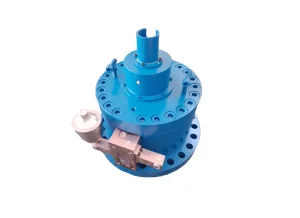
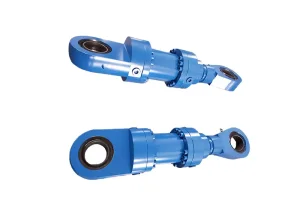
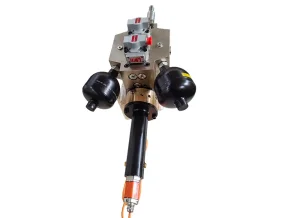
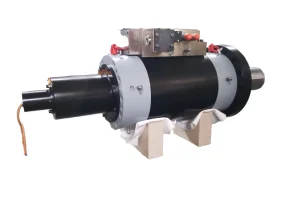
Engineered to OEM dimensions and severe-duty fluid parameters, our actuators deliver reliable push-pull force vectors for grinding mills, roller presses, stacker-reclaimers, and closed-loop servo systems.
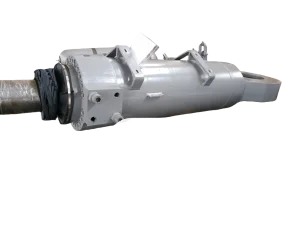
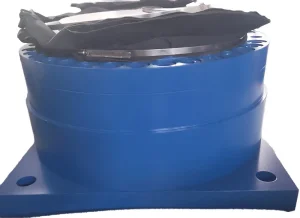
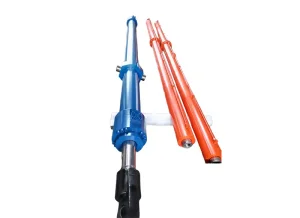
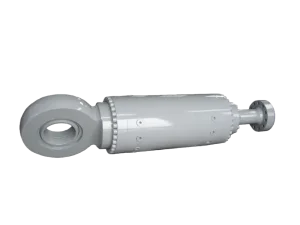
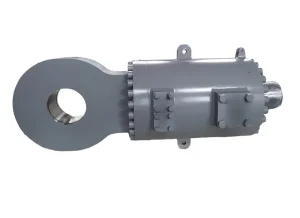
In the domain of heavy industrial fluid power and precision linear actuation, the Double Acting Cylinder Actuator represents the primary workhorse for bidirectional force generation. Unlike single-acting systems that rely on mechanical return springs or external gravitational loads, a double-acting actuator utilizes pressurized hydraulic oil or pneumatic media supplied alternately to both sides of the internal piston (the cap end and the rod end). This fundamental configuration guarantees precise control, symmetrical dynamic response, and continuous hydraulic force vectoring across both extension and retraction strokes.
For procurement specialists, plant directors, and original equipment manufacturers (OEMs), sourcing "cost-effective" double acting cylinders requires looking beyond initial capital expenditure (CAPEX). True cost-effectiveness is governed by total operational availability, mean time between failures (MTBF), resistance to side-load binding under thermal expansion, zero-leakage sealing geometry, and direct interchangeability with legacy OEM equipment footprints.
The industrial actuation sector is undergoing a rapid technological evolution driven by industry 4.0 digitization, strict energy efficiency regulations, and the demanding operating regimes of modern heavy machinery. Key development vectors include:
Modern double-acting actuators are no longer isolated mechanical components. Leading manufacturers integrate non-contact magnetostrictive linear position sensors, internal pressure transducers, and micro-temperature arrays directly into the cylinder head and piston rod. This enables real-time telemetry, predictive maintenance alerts, and closed-loop position feedback down to sub-micron tolerances.
To mitigate stick-slip phenomena, seal degradation, and high breakaway friction, advanced double-acting cylinders utilize hydrostatic fluid support pockets and clearance seal designs. By maintaining a micro-meter thick oil film between the piston and cylinder barrel, dynamic friction drops to near zero, granting smooth motion at speeds as low as 0.1 mm/s and under severe radial loads.
Environmental regulations and aggressive plant environments (dust, clinker, moisture, chemical vapors) are replacing traditional hard chrome plating. Modern double acting cylinder exporters deploy HVOF thermal spray coatings (such as Cr3C2-NiCr or WC-Co-Cr matrixes) to deliver exceptional micro-hardness (>1000 HV), zero micro-cracking, and superior salt-spray corrosion protection.
International procurement leaders across Europe, North America, Southeast Asia, and the Middle East face complex structural risks when sourcing heavy industrial actuators. Achieving a cost-effective purchase requires validating several strict technical criteria:
Plant shutdowns costs tens of thousands of dollars per hour. Sourced double acting cylinder actuators must align exactly with original mounting flanges, trunnions, spherical rod eyes, and port configurations (e.g., DIN, SAE, ISO 6020/2, ISO 6022). Manufacturers must offer precise drop-in compatibility for global grinding mill brands like Loesche, Pfeiffer MPS, UBE UM, FLSmidth ATOX, and Leejun roller presses.
Substandard steel alloys lead to catastrophic cylinder barrel swelling or piston rod buckling under extreme peak shock loads. Global enterprise buyers demand certified seamless honed tubes (such as ST52.3, E355, 42CrMo4) backed by EN 10204 3.1 chemical and mechanical test certificates, ultrasonic non-destructive testing (NDT), and strict heat-treatment validation.
| Evaluation Parameter | Standard Market Supplier | Xuanda Premium Engineering Standard | Operational Impact |
|---|---|---|---|
| Barrel Surface Roughness | Ra 0.4 - 0.8 μm | Ra < 0.15 μm (Precision Deep Honing) | Extends seal lifetime by 300%; reduces friction loss. |
| Piston Rod Hardness & Layer | Chrome 20-30 μm / 750 HV | Hard Chrome / HVOF 40-50 μm (≥1050 HV) | Prevents scoring from abrasive cement/clinker dust. |
| Pressure Testing Standard | 1.25x Working Pressure (Static) | 1.5x Peak Working Pressure + Dynamic Pulsation | Guarantees safety under heavy hydraulic shock loads. |
| Sealing Configuration | Standard NBR/PU U-Cups | PTFE Low-Friction / Clearance / Hydrostatic | Eliminates stick-slip; handles temperature up to 200°C. |
Double acting cylinder actuators serve as the vital mechanical power interface across diverse heavy industrial verticals. Tailoring the actuator geometry and seal tribology to the micro-environment of each sector is critical to achieving uninterrupted operation.
In vertical roller mills (VRMs) and high-pressure roller presses (HPRPs), double acting cylinders exert immense continuous loading forces to crush raw material, clinker, and slag. Actuators engineered for these environments incorporate heavy accumulators, dust-exclusion wiper systems, and reinforced guide rings to withstand dynamic bounce forces and thermal spikes.
Continuous casting plants and hot/cold rolling mills require double acting cylinders capable of functioning under intense ambient temperatures, radiant thermal energy, and water-glycol (HFC) fire-resistant fluids. Specialty Viton (FKM) or PTFE seal matrices combined with water-cooled jacket housings ensure steady push-pull forces without thermal seal degradation.
For high-frequency test benches, flight simulators, and automated production machinery, double-acting servo cylinders operate with low-friction clearance seals or hydrostatic pads. Integrated LVDT or magnetostrictive feedback loops allow sub-millimeter dynamic tracking, eliminating stick-slip during micro-stepping motions.
As a major China-based global exporter, bridging technical support across international borders is paramount. Reliable manufacturers implement strict quality management frameworks alongside comprehensive localized documentation to ensure seamless installation and long-term serviceability.
Every double acting cylinder actuator undergoes 100% Factory Acceptance Testing (FAT) on high-pressure test stands before export packaging. Quality control includes:
To support overseas equipment upgrades where technical drawings are unavailable or legacy manufacturers have discontinued support, specialized engineering teams provide full digital reverse engineering. Utilizing 3D laser scanners and metallurgical analyzers, worn field samples are translated into precise 3D CAD/CAM models for exact manufacturing compliance with CE, ISO 9001:2015, and ATEX safety directives.
The future of double acting cylinder actuation lies in the synthesis of advanced material science, smart digital hydraulics, and eco-friendly tribology. Over the next decade, key technological developments will reshape fluid power expectations:
Transitioning away from massive centralized hydraulic power units (HPUs), future double-acting actuators will feature compact, localized servo-pumps mounted directly onto the cylinder body. This hybrid design combines the massive force density of hydraulics with the clean, plug-and-play simplicity of electric drives.
Next-generation piston rods will utilize plasma-deposited oxide ceramic matrices and diamond-like carbon (DLC) nano-coatings. These advanced surfaces deliver extreme micro-hardness (>2000 HV), near-zero friction, and total immunity to saltwater and acidic industrial environments.
Embedded micro-chips running edge AI algorithms will continuous track pressure harmonics, internal fluid bypass rates, and structural vibrations. By identifying micro-cavitation or seal wear weeks before functional failure, plant managers can eliminate unplanned downtime entirely.
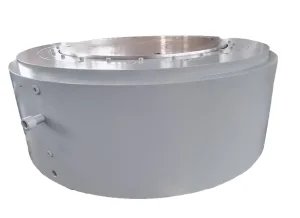
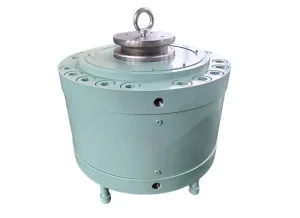
Explore our specialized double acting hydraulic cylinder series engineered for severe duty applications, vertical mills, roller presses, and precision control loops.
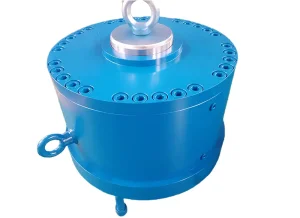
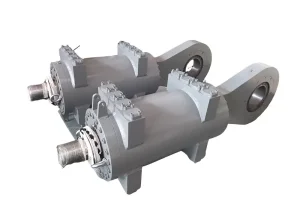
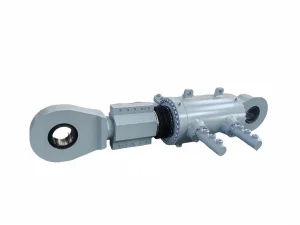
Engineering guidance, selection advice, and troubleshooting answers from our senior fluid power engineering team.
A single-acting cylinder applies fluid power in only one direction (usually extension) and relies on internal springs, gravity, or external mechanical loads to retract the piston rod. In contrast, a Double Acting Cylinder Actuator features fluid ports at both the cap end and the rod end. Pressurized hydraulic fluid or air is actively supplied to extend or retract the piston, offering equal operational control, high stiffness, and precise force vectoring in both directions of travel.
Stick-slip occurs when static friction significantly exceeds dynamic friction, causing jerky, irregular micro-motions. In high-precision double acting servo cylinders, we mitigate stick-slip through three advanced design routes: 1) Deploying specialized PTFE Bronze/Carbon step-seals with engineered elastomeric energizers, 2) Precision deep honing of the barrel bore to a surface finish of Ra < 0.15 μm, and 3) Utilizing hydrostatic support technology, where pressurized oil pockets float the piston rod, eliminating metal-to-metal contact completely.
Yes. Our engineering division specializes in digital reverse engineering for major international equipment brands (such as Loesche, Pfeiffer MPS, UBE UM, FLSmidth ATOX, and Leejun). By utilizing portable 3D laser scanners, ultrasonic wall thickness gauges, and physical site measurements from worn or failed cylinders, we create complete 3D CAD/CAM models. We verify all envelope mounting dimensions, rod threads, oil port locations, and pressure ratings with your plant team prior to machining.
Piston rod buckling is a structural instability failure that occurs when compressive push loads exceed the material's critical Euler buckling limit. The risk increases with stroke length, operating pressure, and eccentric side loading. During the design phase, our engineers calculate the critical buckling load using Euler's formula and Rankine-Gordon empirical equations based on the specific mounting style (e.g., fixed-guided, trunnion-mounted, clevis-hinged). If necessary, we increase rod diameter, select higher yield-strength alloy steel (such as 42CrMo4), or integrate internal guide rings.
For abrasive and corrosive environments (cement dust, clinker fine particles, high humidity, outdoor weather exposure), standard chrome plating is often insufficient. We provide advanced surface protective solutions, including: 1) Hard Chrome Plating (thickness 30–50 μm, micro-hardness ≥ 950 HV), 2) Double Layer Chrome-Nickel Plating for marine/corrosive duty, and 3) HVOF (High-Velocity Oxygen Fuel) Thermal Spray Ceramic Coatings (WC-Co-Cr matrix), delivering exceptional micro-hardness (> 1150 HV) and zero porosity.
Hydraulic fluid contamination is the leading cause of premature seal failure and servo valve sticking. Following precision machining, honing, and assembly, every cylinder undergoes automatic high-velocity oil flushing on a dedicated oil-cleanliness test rig. Internal fluid cleanliness is sampled and verified via laser particle counters to meet ISO 4406 Cleanliness Code 16/14/11 (or NAS Class 7). Prior to shipment, ports are plugged with metal caps, and cylinders are sealed in vapor-corrosion inhibitor (VCI) vacuum packaging for long-distance ocean transport.