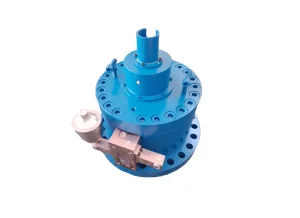
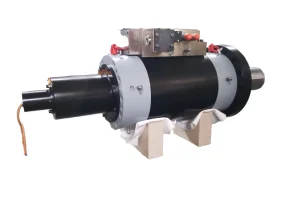
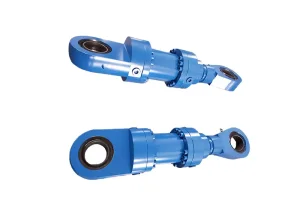
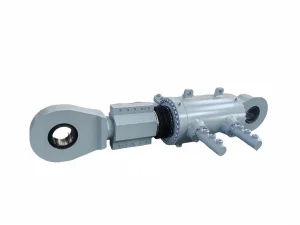
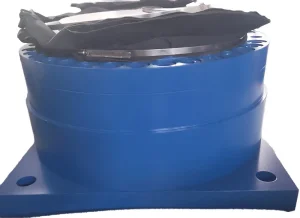
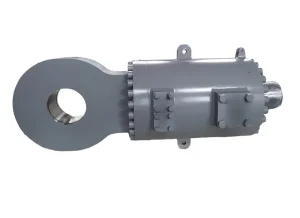
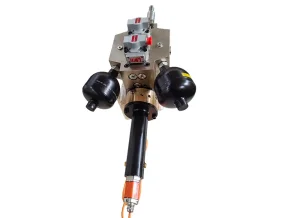
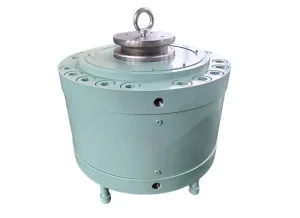
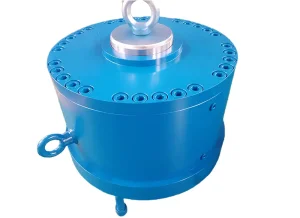
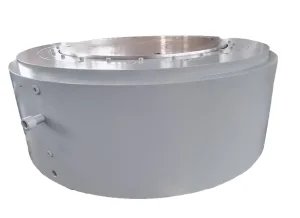
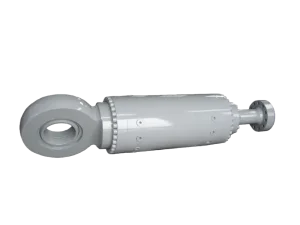
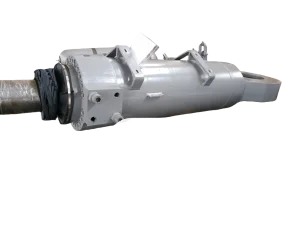
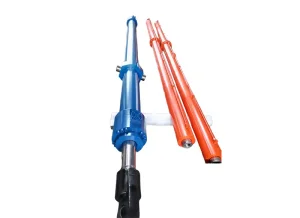
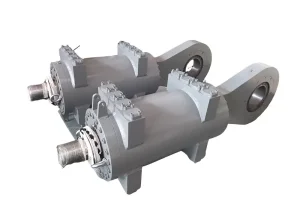
Explore our top-tier export hydraulic cylinder and clamping assemblies, precision-engineered in Changzhou to provide unmatched force holding, zero-stick-slip sliding, and dynamic operational reliability.
Hydraulic clamping systems represent the critical mechanical-hydraulic interface in modern automated manufacturing, heavy industrial machinery, and high-precision metalworking platforms worldwide.
In modern industrial manufacturing, hydraulic clamps stand out due to their exceptional force-to-size ratio. Unlike pneumatic clamps that suffer from air compressibility or mechanical clamps limited by manual leverage and fatigue, hydraulic clamping units deliver consistent holding pressures ranging from 7 MPa to upwards of 70 MPa (1,000 PSI to 10,000 PSI). This capability is indispensable for heavy-duty milling, automated welding cells, mold locking in injection molding, and mill roller loading in cement production.
The global demand for reliable, cost-effective hydraulic clamp solutions is accelerating across Europe, North America, Southeast Asia, and South America. Industry 4.0 automation demands smart clamping circuits equipped with pressure transducers, position feedback sensors, and zero-leakage seal technologies. Plant managers are increasingly evaluating hydraulic suppliers not just on initial purchase price, but on Total Cost of Ownership (TCO), continuous duty cycle rating, and drop-in OEM dimensional compatibility.
Understanding the core metallurgical, fluid dynamics, and sealing innovations behind high-reliability hydraulic clamping hardware.
Traditional clamps often suffer from stick-slip phenomenon, causing micro-vibrations and erratic clamping forces. By integrating PTFE-based low-friction sealing element packages and dynamic step-seals, our hydraulic clamp cylinders maintain zero stick-slip motion, enabling precise micro-adjustment under extreme hydraulic pressure.
For applications experiencing heavy lateral thrust forces—such as vertical roller mill loading mechanisms or high-impact press clamping—hydrostatic oil-film float technology prevents direct metal-to-metal contact between piston rod and gland, extending service life by over 300% in harsh duty cycles.
Every clamp barrel is deep-hole bored and internal mirror-honed to a surface roughness of Ra < 0.1 μm. Piston rods undergo induction hardening followed by hard chrome plating (25–50 microns) or HVOF thermal spraying, ensuring maximum protection against abrasive dust, moisture, and chemical corrosion.
How Changzhou Xuanda Hydraulic delivers European-grade performance and durability at an optimized total procurement cost.
Sourcing hydraulic clamping devices from premier Chinese OEMs like Changzhou Xuanda Hydraulic Electromechanical Equipment Co., Ltd. offers substantial operational and strategic financial advantages for international procurement teams and equipment designers.
| Evaluation Parameter | Western OEM Brands | Xuanda Hydraulic (China Factory Advantage) |
|---|---|---|
| Direct Unit Purchasing Cost | High premium due to European/US overheads | 35% – 50% Savings via integrated supply chain and optimized manufacturing cost structure |
| Machining Infrastructure | Standard multi-axis CNC shop floor | Imported German & Japanese High-Precision CNCs, deep-hole boring machines & automated honing lines |
| Lead Times (Custom Units) | 16 to 24 Weeks | 6 to 10 Weeks with agile manufacturing scheduling and stock standard forgings |
| OEM Customization Flexibility | Strict standard catalogs, costly engineering changes | Full 100% Reverse Engineering & Custom Tailoring to fit drop-in mounting dimensions |
| Quality Assurance & Testing | Standard batch testing | 100% Individual Hydraulic Pressure & Leak Testing with full inspection certificates |
Situated in Changzhou, Jiangsu Province—the heart of China's high-end equipment manufacturing hub—Xuanda leverages immediate proximity to premier steel mills, precision heat treatment facilities, and specialized plating vendors. This localized ecosystem eliminates supply chain bottlenecks, ensuring raw materials such as 42CrMo, 20CrNiMo, and ST52 steel tubes are sourced and verified within hours, passing direct savings to our global buyers.
With over 400 skilled personnel, 20,000 square meters of modern manufacturing space, and a dedicated team of fluid power research engineers, Xuanda adheres strictly to ISO9001 quality management principles. Every clamp cylinder leaves our facility fully tested under peak static overload and dynamic pressure conditions to guarantee zero failure upon jobsite installation.
From harsh, abrasive cement plants to micro-precision automated machining, see how our hydraulic clamps and cylinders perform under continuous duty cycles.
In vertical roller mills (such as Loesche, UBE, Pfeiffer, FLSmidth ATOX, and TCD/TRM series), hydraulic loading clamps exert multi-ton pressure on grinding rollers to crush raw meal, clinker, and slag. Operating in ambient temperatures exceeding 120°C and thick airborne dust, our heavy-duty cylinders feature dust-proof scraper rings and heat-resistant fluoroelastomer (FKM) seals to prevent oil contamination and pressure loss.
For high-pressure grinding roll (HPGR) units like Chengdu Leejun CLF, HCRI, and CITIC Heavy Industries equipment, our diamond-shaped and block-profile hydraulic cylinders provide massive clamping and gap control forces. Built to endure constant shock loads, these cylinders safeguard grinding rollers from uncrushable tramp metal ingress via rapid pressure relief interfaces.
In high-speed CNC machining centers, hydraulic swing clamps, work supports, and block clamps securely lock complex castings, forging billets, and automotive components. Rapid clamping speeds coupled with controlled pressure distribution prevent part deformation, ensuring flawless tolerance adherence across long batch runs.
Emerging technological shifts shaping the next decade of heavy industrial actuation and smart hydraulic workholding.
The modern manufacturing plant demands real-time diagnostic visibility. Next-generation hydraulic clamps are integrating embedded magnetostrictive position sensors, pressure transducers, and thermal probes directly into the cylinder head. These sensors communicate via IO-Link or CANopen protocols to digital control networks, enabling predictive maintenance algorithms to flag seal wear or pressure degradation weeks before a unplanned plant shutdown occurs.
With global mandates driving industrial sustainability, hydraulic clamping systems are transitioning to biodegradable synthetic ester fluids and eco-friendly water-glycol mediums. Additionally, pairing hydraulic clamp cylinders with variable-speed servo-pump drives allows pressure to be held continuously with near-zero power consumption, cutting hydraulic power unit electrical demand by up to 70% compared to traditional fixed-displacement valve systems.
Key parameters and technical checklists for supply chain managers, technical buyers, and plant maintenance directors when sourcing hydraulic clamps from overseas manufacturers.
Ensure the manufacturer can conform precisely to your existing mounting footprint—including pinhole centers, flange bolt patterns, port positions (SAE, BSPP, or NPT), and rod thread dimensions. A supplier capable of providing 3D CAD step files before production mitigates installation risk.
Never accept generic off-the-shelf rubber seals for heavy duty clamps. Demand specialized seal configurations based on fluid medium (mineral oil, water-glycol, bio-hydraulic), working speed (low speed stick-slip protection vs high speed response), and peak ambient temperature envelope.
Require vendor submission of material test certificates (MTCs) for forged cylinder barrels and piston rods, heat-treatment logs, hard chrome thickness verification, and hydrostatic pressure testing at 1.5x working pressure with zero pressure drop over timed holding periods.
Direct technical answers to common queries regarding custom hydraulic clamp design, OEM replacement compatibility, and international order fulfillment.
Yes. Our engineering department can reverse-engineer replacement cylinders and clamping assemblies using physical worn samples, equipment nameplate data, structural photographs, and field dimensions. We deliver complete 2D/3D fabrication drawings for customer approval prior to starting raw material forging and CNC machining.
Clearance seal cylinders rely on ultra-precise micro-gap machining tolerances between the piston and cylinder bore to achieve virtually friction-free motion without elastomeric seal drag. Low-friction seal cylinders utilize engineered PTFE compounds and metallic spring energizers to minimize stick-slip in servo feedback loops. Hydrostatic support cylinders float the internal moving components on a pressurized thin oil film, allowing the actuator to withstand massive lateral shock loads without mechanical scoring.
Vertical roller mills impose severe combined mechanical stresses: high continuous pressure, heavy vibration, dust exposure, and high thermal radiation. We incorporate heavy-wall forged alloy steel barrels (e.g., 42CrMo), induction-hardened chrome-plated rods, multi-stage heavy-duty wiper seal packages, and spherical bearing mounts to absorb structural deflection without loading the internal seals eccentrically.
All internal oil chambers are flushed, filled with rust-inhibitor fluid, and sealed with heavy-duty metal plugs. Piston rods are coated with anti-corrosion grease and wrapped in heavy VCI protective tape. The entire assembly is enclosed in heat-sealed vacuum vapor-barrier foil and packed into custom-built, ISPM-15 compliant fumigated wooden crates with internal timber cradling.
Standard custom engineering models typically require 4 to 6 weeks for production following final drawing sign-off. For emergency factory shutdown replacements, expedited production channels can shorten manufacturing timelines to under 3 weeks depending on raw material forging availability.
Select from our specialized line of OEM hydraulic cylinder solutions engineered for crushing mills, roller presses, stackers, and heavy industrial plant equipment.