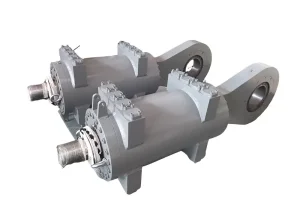
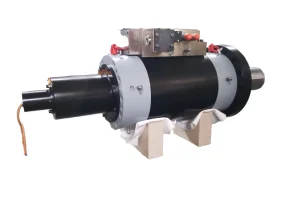
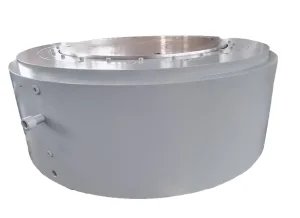
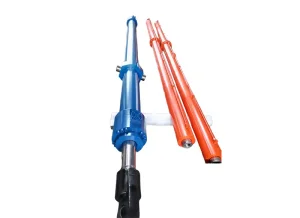
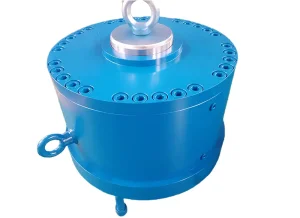
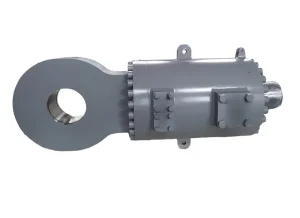
Heavy-duty hydraulic drive units engineered with low-friction rod sealing systems for continuous operating environments.
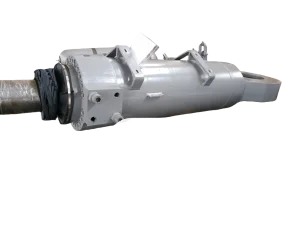
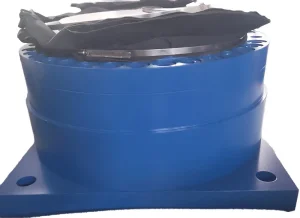
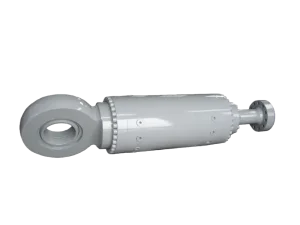
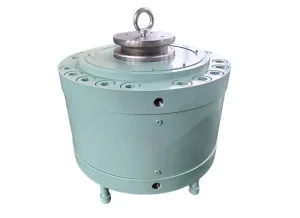
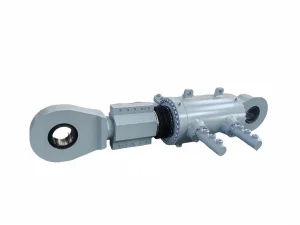
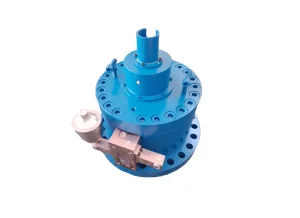
Analyzing fluid dynamics, seal kinematics, and material longevity under extreme industrial pressure regimes.
In high-duty fluid power transmission, hydraulic rod seals represent the primary barrier preventing pressuring media from leaking into ambient environments while protecting the cylinder assembly from environmental ingress. Navigating the delicate balance between zero-leakage fluid retention and minimal dynamic friction is the single most critical challenge for original equipment manufacturers (OEMs), plant engineers, and maintenance directors worldwide.
Modern industrial equipment—ranging from cement vertical roller mills (Loesche, UBE, Pfeiffer, FLSmidth ATOX) to high-speed hydraulic servo systems—demands rod sealing solutions capable of tolerating extreme impulse spikes, severe lateral side loads, aggressive abrasive particulates, and high temperature fluctuations. Partnering with a premier hydraulic rod seal manufacturer & exporter allows global procurement managers to dramatically lower Total Cost of Ownership (TCO) without sacrificing machine availability or system safety.
Information Gain Principle: True cost-efficiency in hydraulic sealing is not merely measured by the purchase price of an elastomeric or PTFE ring. It is determined by the total mechanical efficiency gained over millions of operating cycles, zero unscheduled downtime, and the prevention of catastrophic hydraulic oil pollution.
Comprehensive breakdown of specialized compounds, energizers, and geometric profiles designed for heavy dynamic duty.
Utilizing bronze-filled, carbon-filled, or MoS2-fortified PTFE profiles energized by elastomeric O-Rings. Designed for high linear speeds (up to 15 m/s) with near-zero stick-slip motion, eliminating dynamic chatter in precision servo cylinders.
Formulated with ultra-high modulus polyurethane (95 Shore A / 57 Shore D) featuring superior compression set resistance, tear strength, and anti-extrusion capabilities under pressure impulses reaching 40 MPa without secondary back-up rings.
Engineered for high-frequency vibration and zero-contact servo actuation. Utilizes a controlled oil film barrier ($2\mu m - 5\mu m$) to float the piston rod, completely removing mechanical friction while allowing micro-inch positioning accuracy.
| Seal Material Type | Working Pressure (MPa) | Temp Range (°C) | Max Velocity (m/s) | Friction Coefficient (μ) | Primary Application |
|---|---|---|---|---|---|
| Bronze-Filled PTFE + FKM | 0 – 60 MPa | -20 to +200 °C | 15.0 m/s | 0.03 – 0.05 | Servo Cylinders, High-Speed Actuators |
| Cast Polyurethane (CPU 95A) | 0 – 40 MPa | -35 to +110 °C | 0.8 m/s | 0.12 – 0.20 | Heavy Mobile Hydraulics, Mining Cylinders |
| NBR + Fabric Reinforcement | 0 – 50 MPa | -30 to +120 °C | 0.5 m/s | 0.15 – 0.25 | Roller Press, Vertical Roller Mill Loading |
| PEEK Anti-Extrusion Rings | Up to 70 MPa | -50 to +260 °C | 2.0 m/s | 0.08 – 0.12 | Ultra-High Pressure Metallurgical Equipment |
Combining complete supply chain integration, state-of-the-art CNC precision honing, and rigorous quality inspection protocols.
Over the past two decades, Changzhou (Jiangsu Province) has established itself as China’s premier engineering and manufacturing cluster for high-precision hydraulic cylinders, heavy transmission components, and dynamic sealing technologies. Global buyers searching for cost-effective hydraulic rod seal manufacturers and exporters benefit from an exceptionally mature industrial ecosystem that seamlessly integrates raw material casting, high-precision machining, custom elastomer compounding, and international export logistics.
By housing raw tube cold-drawing, precision rod induction hardening, micro-finish chrome plating, and seal groove machining within unified local supply chains, production lead times are reduced by up to 40% compared to Western counterparts.
State-of-the-art CNC machine tools ensure rod seal gland tolerances conform strictly to ISO 7425-2 and ISO 5597 standards. Precise dimensional control ($Ra < 0.2\mu m$ rod surface finish) prevents early seal lip wear and seal extrusion.
Exported sealing systems and hydraulic cylinders provide identical engineering performance and dimensional interchangeability to Tier-1 European OEMs at a 30% to 50% lower capital outlay, maximizing procurement efficiency.
Engineered to withstand heavy shock loads, dust contamination, continuous operation, and harsh environmental exposure.
Operating Conditions: Severe abrasive clinker dust, extreme vibration spikes, high ambient heat.
Sealing Architecture: Heavy-duty tandem PTFE step rod seals backed by multi-lip polyurethane wipers and metallic scrapers. Ensures complete protection against particle ingress and internal oil bypass during high-tonnage roller loading on Loesche LM, UBE UM, and FLSmidth ATOX mills.
Operating Conditions: Continuous high static pressure (up to 35 MPa), lateral misalignment, pulse shocks.
Sealing Architecture: Fabric-reinforced nitrile elastomer U-cups combined with high-modulus PEEK anti-extrusion rings. Eliminates seal gap nibbling and extrusion failure in heavy grinding circuits (Chengdu Leejun CLF, CITIC Heavy Industries).
Operating Conditions: Radiated thermal energy, water-glycol fire-resistant fluids (HFC), high stroke frequency.
Sealing Architecture: High-temperature Viton (FKM) energized PTFE rod seals engineered for chemical compatibility with synthetic esters and HFC fluids, preserving elasticity and friction stability under constant $180^\circ\text{C}$ radiant heating.
How procurement managers and technical auditors evaluate hydraulic seal reliability and manufacturer authenticity.
When procuring hydraulic rod seals or completely assembled hydraulic cylinders from international exporters, technical buyers must look beyond initial unit pricing. The failure of a single $15 rod seal can halt a 5,000-ton-per-day cement production line, resulting in operational losses exceeding $50,000 per hour. Therefore, enterprise procurement strategies should evaluate manufacturers against five core competencies:
How digital monitoring, eco-friendly polymers, and zero-emission designs are reshaping the hydraulic fluid power industry.
Integration of micro-thin piezoelectric sensors within the seal gland to monitor real-time lip temperature, wear rate, and hydraulic fluid breakdown. Predictive algorithms alert maintenance managers weeks before micro-leakage occurs.
Development of specialized fluoropolymer compounds and hydrolysis-resistant polyurethanes designed specifically to resist chemical breakdown when operating with HEES (Synthetic Ester) and HETG (Vegetable Oil) environmentally acceptable hydraulic fluids (EAF).
Expert answers to common engineering questions regarding seal failure modes, fluid compatibility, and custom manufacturing.
Premature rod seal failure typically stems from four key factors: (1) Fluid Contamination: Abrasive airborne dust or metal wear debris scoring the seal lip; (2) Thermal Degradation: Fluid temperatures exceeding the polymer limit, causing lip hardening and cracking; (3) Extrusion Nibbling: Excessive extrusion gaps or pressure spikes pushing the seal heel into the clearance space; and (4) Incorrect Surface Finish: Piston rod roughness ($Ra > 0.4\mu m$) causing rapid wear, or an overly smooth finish ($Ra < 0.05\mu m$) preventing the necessary microscopic fluid film layer.
A traditional U-cup relies on lip deformation and hydraulic pressure activation to create a tight seal, offering excellent static sealing but higher dynamic friction. A PTFE step-seal (Glide Ring) features an asymmetrical bronze- or carbon-filled PTFE ring energized by an elastomer O-Ring. This configuration offers extremely low dynamic friction, zero stick-slip behavior at low velocities, and superior high-speed performance ($>15\text{ m/s}$), making it ideal for servo-actuators and fast-cycling machinery.
Yes. Our engineering team specializes in reverse-engineering hydraulic cylinders and sealing systems from physical samples, worn seal glands, or equipment nameplates. Utilizing 3D laser scanning, coordinate measuring machines (CMM), and material spectro-analysis, we recreate precise production drawings guaranteed to match original mounting interfaces and working parameters for brands like Loesche, UBE, FLSmidth, Pfeiffer, and Leejun.
For optimal elastomeric and PTFE seal longevity, the dynamic rod surface should be plunge-ground or super-finished to an $Ra$ between $0.1\mu m$ and $0.3\mu m$ ($4 - 12\text{ micro-inches}$), with a surface material ratio ($Mr$) exceeding 70% at a depth of $C = 0.25 Rz$. The surface texture must be non-directional to retain a lubricating fluid micro-film without cutting the seal lip.
When system pressures exceed 25–30 MPa, soft elastomeric materials (such as NBR or standard polyurethanes) tend to deform and squeeze into the radial clearance gap between the rod and gland head. An anti-extrusion back-up ring—manufactured from rigid materials such as PTFE, PEEK, or POM—is placed on the unpressurized side of the seal. It closes the extrusion gap, preventing heel damage and extending seal operating pressure limits up to 70 MPa.
All exported hydraulic cylinders and sealing systems undergo rigorous quality assurance. Standard documentation includes ISO 9001:2015 inspection certificates, EN 10204 3.1 Material Test Reports, full-pressure hydrostatic holding test logs, dimensional inspection sheets, Certificate of Origin (CO), and commercial shipping documents formatted for smooth customs clearance worldwide.
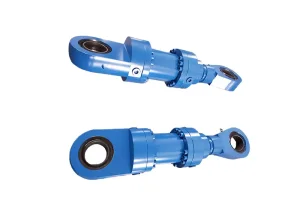
Explore our complete range of custom hydraulic cylinders engineered for extreme grinding, pressing, and motion control applications.