Engineered for extreme operating environments in cement plants, vertical grinding mills, roller presses, stacker-reclaimers, and precision closed-loop servo systems.
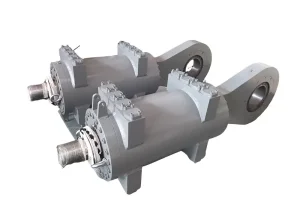
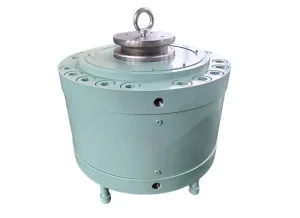
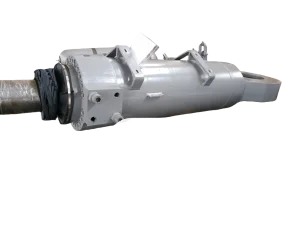
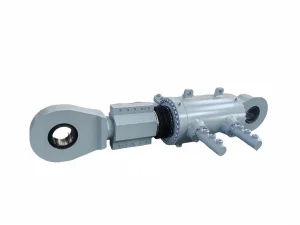
An authoritative evaluation of fluid sealing dynamics, polymer material science, and global procurement strategies for heavy-duty industrial machinery.
In modern heavy industrial manufacturing, heavy civil engineering, metallurgical rolling, and high-frequency servo-controlled automation, the reliability of hydraulic transmission systems hinges fundamentally on fluid containment efficiency. The global market for high-pressure hydraulic sealing kits has transitioned from standard off-the-shelf elastomer rings toward highly engineered, multi-material tribological sealing architectures. As operational pressures routinely exceed 35 MPa to 70 MPa (350 to 700 bar) in equipment such as cement vertical roller mills, metallurgical press lines, and hydrostatic support cylinders, selecting cost-effective hydraulic seal kit manufacturers and exporters has become a strategic procurement metric directly influencing plant uptime, overall equipment effectiveness (OEE), and Total Cost of Ownership (TCO).
The operational physics of modern fluid power demand seals capable of resisting extrusion, micro-cavitation, chemical degradation from synthetic ester hydraulic fluids (HEES/HFDU), and extreme stick-slip phenomena at low linear velocities. Failure of a secondary rod seal or primary step seal in a 300-ton grinding mill cylinder does not merely cause minor oil leakage; it leads to pressure drop-offs, unbalanced roll loading, localized clinker build-up, and catastrophic unplanned shutdowns costing plant operators upwards of $50,000 per hour in lost throughput.
Traditional nitrile butadiene rubber (NBR) seals, while adequate for light industrial applications, fail rapidly under the harsh duty cycles of heavy machinery. Under high dynamic sliding velocities coupled with side-loads, frictional heating elevates localized sealing lip temperatures well beyond 120°C, precipitating cross-link thermal degradation, elasticity loss, and premature hardening. Furthermore, high-pressure spike events trigger micro-extrusion into the radial clearance gap between the rod gland and piston assembly.
Formulated with specialized polyether and polyester backbones, H-PU compounds offer tensile strengths exceeding 45 MPa, exceptional abrasion resistance, and outstanding resistance to water-based fluids and bio-degradable hydraulic oils up to 90°C.
Polytetrafluoroethylene modified with 40% bronze particles or 15% carbon-graphite delivers an exceptionally low dynamic coefficient of friction (µ = 0.04 to 0.08), virtually eliminating stick-slip during micro-positioning in closed-loop servo cylinders.
Polyether ether ketone (PEEK) anti-extrusion rings engineered for extreme pressure peaks up to 700 bar prevent gap migration, while high-fluorine Viton (FKM) ensures seal integrity up to 220°C in metallurgical continuous casters.
Detailed technical benchmarking comparing material formulations, PV limits, fluid resistance, and recommended industrial machinery applications.
| Material Designation | Hardness (Shore/Rockwell) | Temp Range (°C) | Max Pressure (MPa) | Sliding Speed (m/s) | Compatible Mediums | Primary Industrial Use |
|---|---|---|---|---|---|---|
| H-PU (Hydrolysis Polyurethane) | 95 Shore A | -35°C to +110°C | 40 MPa | ≤ 0.8 m/s | Mineral Oils, Water-Glycol, HFA/HFB | Vertical Roller Mills, Heavy Excavators |
| PTFE + 40% Bronze | 65 Shore D | -60°C to +200°C | 50 MPa (with Back-up) | ≤ 15.0 m/s | All Mineral Oils, Synthetic Esters, Bio-oils | Closed-Loop Servo Cylinders, Test Rigs |
| PTFE + 15% Carbon / Graphite | 60 Shore D | -50°C to +220°C | 45 MPa | ≤ 12.0 m/s | Corrosive Media, Water Hydraulics, HFC | Marine Steering, Chemical Actuators |
| FKM (Viton) Fluoroelastomer | 80-90 Shore A | -20°C to +210°C | 25 MPa | ≤ 0.5 m/s | Aromatic Hydrocarbons, Phosphate Esters | Metallurgical Continuous Casting Mills |
| Virgin & Modified PEEK | M100 Rockwell | -70°C to +260°C | > 70 MPa | Static / Dynamic Back-up | Universal Chemical & Fluid Resistance | Ultra-High Pressure Hydraulic Jacks & Kilns |
A cost-effective, heavy-duty hydraulic seal kit engineered by premier manufacturers like Changzhou Xuanda Hydraulic is not a single ring; it is a synergistic system of carefully matched dynamic and static sealing elements:
Designed as asymmetric U-cups or step seal profiles with pressure-relief channels. The primary seal absorbs systemic shock loads and high pressures, while the secondary H-PU seal maintains zero drop-leakage under low-pressure standby modes.
Utilizing an elastomer energizer ring overlaid with a low-friction PTFE cap, these seals maintain dual-directional sealing integrity without stick-slip, ensuring smooth cylinder reversal under heavy tonnage.
Prevents foreign particle ingress (clinker dust, sand, scale) from destroying internal gland packings. The internal secondary lip scrapes residual oil back into the gland, maintaining a dry rod interface.
High-load bearing guide rings absorb heavy side forces, preventing metal-to-metal contact between rod, piston, and cylinder bore. This preserves bore micro-finish and extends overall seal kit service life up to 300%.
Direct dimensional drop-in replacement seal kits and heavy cylinders compatible with original equipment manufacturers across cement, mining, and metallurgy.
Vertical mills manufactured by Loesche (LM Series), FLSmidth (ATOX Series), Pfeiffer (MPS Series), UBE (UM Series), and TCD/TRM (Tianjin Cement Design Institute) operate under severe vibration spectra and heavy cyclical hydraulic loading. Xuanda manufactures custom hydraulic seal kits engineered with multi-lip wipers and high-modulus polyurethane step seals. These assemblies eliminate fluid contamination from abrasive clinker dust, guaranteeing stable loading force on grinding rollers.
High-pressure roller presses engineered by Chengdu Leejun (CLF Series), Hefei Cement Research Institute (HCRI), and CITIC Heavy Industries subject hydraulic cylinders to constant high-tonnage pressure spikes (up to 350 bar). Our cost-effective seal replacement kits utilize PEEK anti-extrusion rings combined with bronze-filled PTFE seals to cushion shock forces and maintain precise roll-gap alignment.
For electro-hydraulic servo actuators requiring micrometer-level positioning accuracy (±1 μm) and response bandwidths exceeding 30 Hz, standard rubber seals introduce excessive break-away friction. Xuanda's low-friction seal kits and hydrostatic support seal designs achieve near-zero static friction, ensuring instant servo response in testing machinery and structural fatigue rigs.
Tailoring seal compound chemistry and lip geometries to withstand region-specific environmental and regulatory conditions worldwide.
Primary Focus: Strict Environmental Regulations & Bio-degradable Fluid Compatibility (HEES/HETG).
Plant operators require seal compounds compliant with EU REACH and US EPA standards. Xuanda supplies specialized fluorocarbon (FKM) and hydrolysis-stable polyurethane kits that resist chemical breakdown when operated with fire-resistant or bio-based synthetic hydraulic esters, maintaining long-term zero-leakage compliance.
Primary Focus: Extreme Ambient Heat (up to 55°C) & Heavy Silica Dust Contamination.
In desert cement installations across Saudi Arabia, UAE, and Egypt, hydraulic oil temperatures frequently spike above 90°C, accelerating thermal aging. Our high-temperature FKM wiper systems and dual-metal reinforced guide bands prevent sand micro-abrasion from scoring chrome cylinder rods.
Primary Focus: High Tropical Humidity, Heavy Mining Loads, & Total Cost Sourcing.
Mining and cement operations in Indonesia, Brazil, and Vietnam require cost-effective replacement seal kits that maximize Mean Time Between Failures (MTBF) under high-humidity environments. Factory-direct procurement from Changzhou Xuanda reduces procurement lead times by up to 50% compared to OEM markups.
Pioneering smart condition-monitoring seal architectures, self-lubricating nano-matrices, and zero-emission hydrostatic fluid barriers.
Integrating micro-thin film piezoelectric sensors directly within the seal gland to continuously measure localized temperature, lip pressure, dynamic wear depth, and fluid breakdown, sending real-time IoT alerts to plant SCADA systems prior to leakage.
Infusing polymer matrices with monolayer graphene nanoplatelets to reduce thermal expansion coefficients by 40% and increase tensile wear resistance, extending seal service lifetimes beyond 30,000 continuous operating hours.
Replacing conventional rubbing seals in high-speed servo actuators with active hydrostatic oil film pockets. Pressurized oil film supports the rod, yielding absolute zero mechanical friction and infinite seal life cycles.
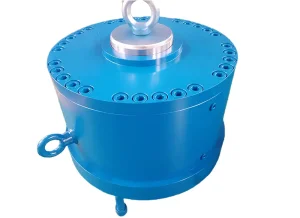
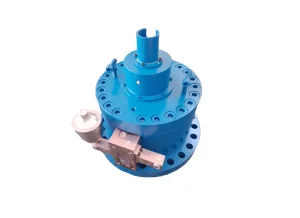
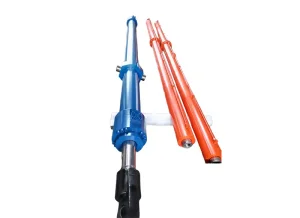
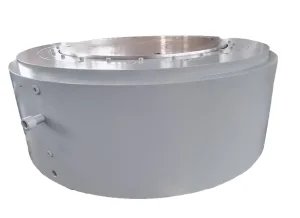
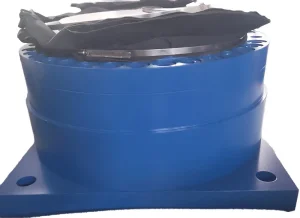
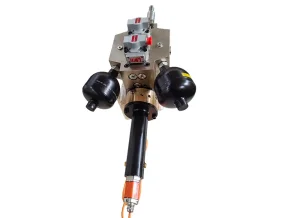
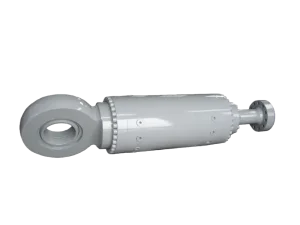
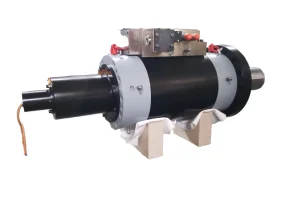
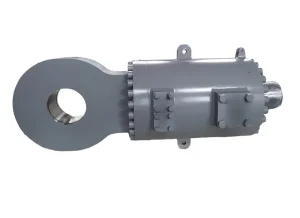
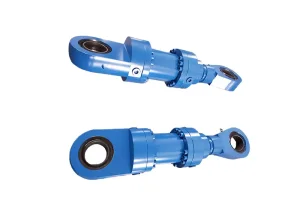
Browse our full range of heavy-duty hydraulic cylinders, clearance seal assemblies, and OEM replacement kits engineered in Changzhou, China.
Expert responses from Changzhou Xuanda's senior tribology engineers regarding seal material selection, OEM cross-referencing, and maintenance protocols.
Selection depends on three core parameters: operating temperature, fluid medium, and dynamic sliding velocity. Standard mineral oil systems operating under 90°C with high pressures (up to 40 MPa) benefit most from Hydrolysis-Resistant Polyurethane (H-PU). High-frequency servo loops require Bronze-filled PTFE step seals due to low friction coefficient (μ = 0.04-0.08). For continuous elevated temperatures above 150°C or synthetic phosphate-ester fluids, Fluoroelastomer (FKM/Viton) with PEEK back-up rings is mandatory.
Yes. Xuanda maintains an extensive engineering database of OEM seal dimensions, lip geometries, and material hardness profiles for major equipment manufacturers including Loesche (LM), FLSmidth (ATOX), Pfeiffer (MPS), UBE (UM), Leejun (CLF), and CITIC Heavy Industries. We provide 100% direct drop-in dimensional compatibility with enhanced polymer durability.
Stick-slip occurs when static friction significantly exceeds dynamic friction, causing intermittent jerking during low-speed stroke motion. This is eliminated by specifying dynamic PTFE seal caps energized by NBR/FKM quad rings, combined with hydrostatic oil support films or micro-textured rod surfaces, ensuring seamless transition between static and kinetic states.
Our engineering team performs reverse-engineering using physical samples, worn seal profiles, gland housing dimensions, and operating parameters (pressure, medium, speed). We generate new 3D CAD drawings for customer sign-off prior to CNC precision machining of the seal kit assembly.
Seals should be stored in hermetically sealed UV-shielded polybags at temperatures between 10°C and 25°C, with relative humidity below 65%. Direct exposure to sunlight, ozone-generating electric motors, and radioactive sources must be avoided to prevent polymer chain scission and premature embrittlement.
Factory-direct procurement bypasses intermediary distribution markups (which often add 200%-400% overhead). Located in Changzhou's high-tech industrial hub, Xuanda integrates raw material polymer synthesis, precision CNC machining, and automated pressure testing under one roof, delivering OEM-grade quality at competitive export pricing.
