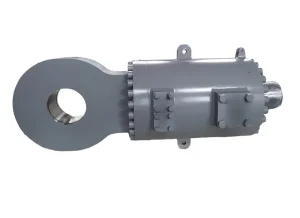
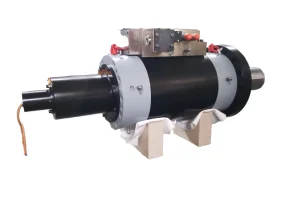
OEM-Compatible Hydraulic Cylinders & Diagnostics Built for Cement Grinding, Vertical Roller Mills & High-Pressure Systems
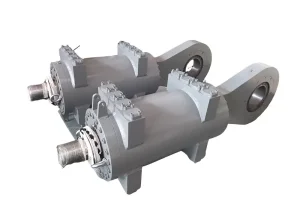
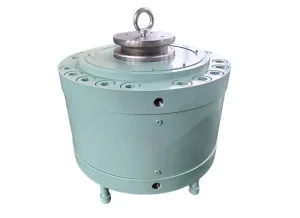
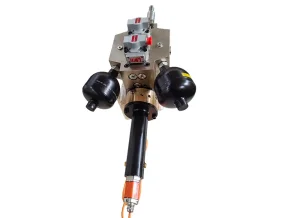
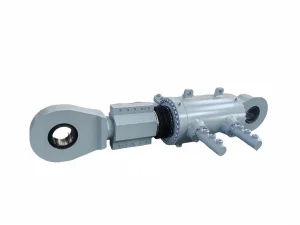
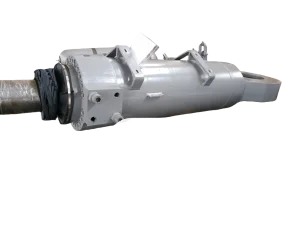
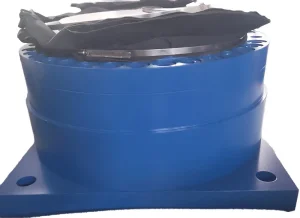
An Engineering & Operational Whitepaper on Cost-Effective Manufacturing, Quality Verification, and High-Precision Hydraulic Systems
In high-stakes industrial environments—spanning heavy metallurgy, cement clinker grinding, marine engineering, and precision automated manufacturing—hydraulic actuators and test systems constitute the absolute backbone of operational reliability. As global industries accelerate toward higher energy efficiency, reduced carbon footprints, and continuous 24/7 uptime, selecting a cost-effective hydraulic testing equipment manufacturer has evolved from a simple procurement exercise into a strategic engineering decision.
The global industrial hydraulic market, currently valued at over $42 Billion USD, is experiencing a profound paradigm shift. Industrial operators are moving away from traditional scheduled maintenance toward real-time diagnostic testing, dynamic impulse pressure verification, and zero-fault tolerance testing. Hydraulic testing equipment—ranging from automated component test benches (ACTB) to dynamic fatigue testing rigs operating at pressures up to 70 MPa—serves as the critical gatekeeper ensuring structural integrity, volumetric efficiency, and seal longevity before heavy equipment enters the field.
True cost-effectiveness in hydraulic testing and heavy cylinder manufacturing is not defined by the lowest initial purchase price. Rather, it represents the optimization of total cost of ownership (TCO)—achieved through low seal friction, extended fatigue lifecycle (exceeding 2,000,000 continuous impulse cycles), precision CNC machining with micron-level tolerances, and modular drop-in compatibility with original equipment manufacturer (OEM) standards like Loesche, Pfeiffer, UBE, Leejun, and FLSmidth.
Next-Generation Test Architecture, Smart Diagnostic Instrumentation & Advanced Hydrostatic Guidance
Modern hydraulic testing rigs now embed real-time sensor matrices measuring fluid temperature, particle contamination (ISO 4406), flow ripple frequency, and high-frequency dynamic pressure transients. Data is mirrored in digital twins to predict seal wear prior to catastrophic blowouts.
To eliminate stick-slip phenomenon in dynamic testing and closed-loop servo positioning, advanced manufacturers employ hydrostatic oil-pocket lubrication and sub-micron clearance seals. This allows servo cylinders to operate with near-zero friction and micro-inch sensitivity.
Testing equipment designed for high-stress applications subjects heavy hydraulic cylinders to simulated pulse loads up to 1.5x working pressure at frequencies up to 10 Hz, validating rod plating adherence, barrel expansion parameters, and seal thermal tolerance.
The demand for rigorous hydraulic testing equipment and heavy-duty actuators is tightly coupled with global infrastructure expansion, cement production modernization, and green mining initiatives. Regionally, the market presents distinct dynamics:
The following engineering matrix outlines the technical parameters enforced by top-tier manufacturers when building diagnostic testing rigs and heavy industrial hydraulic cylinders:
| System Parameter | Standard Testing Bench Specs | Advanced Servo/Hydrostatic Bench | Industrial Field Application |
|---|---|---|---|
| Operating Test Pressure | 0 – 35 MPa (350 Bar) | 0 – 70 MPa (700 Bar) ultra-high | 21 – 31.5 MPa continuous duty |
| Flow Rate Capacity | 50 – 400 L/min | Up to 1200 L/min variable flow | Dependent on system pump displacement |
| Fluid Cleanliness Class | ISO 4406 Grade 16/13/10 | ISO 4406 Grade 14/11/8 (Laser counting) | NAS 7 to NAS 9 typical operational range |
| Positioning Accuracy | ± 0.1 mm optical encoder | ± 1 μm laser/LVDT closed-loop | ± 0.05 mm grinding roller gap control |
| Sealing System Friction | Standard Polyurethane / NBR | Low-Friction PTFE / Hydrostatic Oil Film | High-Temp Viton / Clearance Sealing |
| Data Acquisition Sampling | 100 Hz multi-channel PLC | 10 kHz dynamic high-speed DAQ | Real-time CANbus / Profinet telemetry |
Deep-Dive Technical Integration into Critical Industrial Plant Equipment
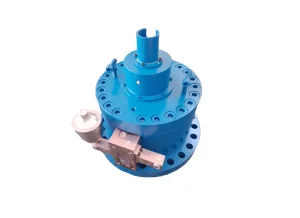
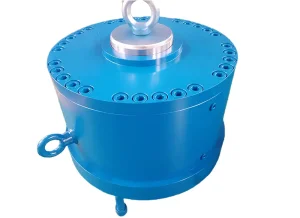
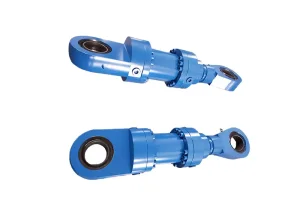
In vertical roller mills used for cement raw meal, coal, and slag grinding, hydraulic cylinders exert immense force on the grinding rollers. These cylinders must endure severe shock loads caused by ungrindable tramp iron and uneven bed depth. Manufacturers must subject these loading cylinders to dynamic fatigue pulse testing to ensure the accumulator cushion and clearance seal hold pressure without oil cavitation or seal extrusion.
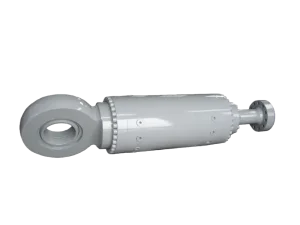
Roller presses operate under extreme continuous crushing forces (up to 31.5 MPa). Cylinders designed for Leejun CLF or HCRI roller presses often utilize specialized diamond-shaped flange profiles and ultra-thick wall forged barrels. Testing rigs must verify zero internal leakage under 1.5x proof pressure to guarantee identical gap control across both sides of the pressing roller.
Rotary kilns rely on hydraulic thrust rollers to control axial movement across thermal expansion cycles. Hydraulic test procedures require thermal simulation up to 120°C fluid temperature to ensure seals retain elasticity and guided rings do not swell or seize under sustained mechanical load.
For research labs, aerospace testing, and precision metallurgy, servo cylinders with low-friction seals or hydrostatic support are mandatory. Test rigs for these components perform frequency response analysis (0.1–50 Hz), friction hysteresis mapping, and step-response verification down to 1 μm steps.
As industrial automation shifts toward Industry 4.0 and smart physical assets, the architecture of hydraulic testing equipment and heavy-duty actuators is evolving rapidly. Key technological milestones on the 5-year horizon include:
Future heavy cylinders will feature fully integrated sensor blocks embedded directly into the cylinder cap and rod end. Micro-transducers for pressure, linear position (magnetostrictive), oil temperature, and oil degradation will transmit real-time telemetry over wireless industrial protocols (IO-Link, WirelessHART), eliminating external plumbing and cable clutter.
With worldwide environmental regulations restricting mineral oil leakages in forestry, water conservancy, and marine applications, testing equipment must be dual-rated for biodegradable synthetic esters (HEES) and water-glycol fluids (HFC). Manufacturers are re-engineering seal geometries and nickel-chrome rod plating techniques to resist chemical degradation and cavitation erosion caused by bio-based fluids.
Next-generation test benches will utilize machine learning models trained on millions of historical pressure-time waveforms. During a standard 15-minute factory acceptance test (FAT), the AI system can detect micro-cavitation, internal piston bypass leakages as low as 0.01 L/min, and minute rod misalignment invisible to human inspectors.
3D metal printing (Direct Metal Laser Sintering) is revolutionizing hydraulic valve blocks and cylinder head manifolds. By printing curved, optimized internal fluid channels, pressure drops through valve bodies are reduced by up to 30%, suppressing fluid turbulence and improving total energy efficiency.
How Changzhou Xuanda Hydraulic Guarantees Zero-Defect Performance Across 30+ Export Destinations
Located in Changzhou, Jiangsu, Changzhou Xuanda Hydraulic Electromechanical Equipment Co., Ltd. brings over 22 years of heavy-duty hydraulic engineering expertise. Operating across a modern 20,000 m² facility staffed by 400+ technical personnel, our production process enforces strict ISO quality management protocols at every stage:
Forged seamless steel tubes (27SiMn, 42CrMo, ST52) undergo ultrasonic flaw detection and stress-relief heat treatment prior to precision deep-hole boring and diamond honing (roughness Ra < 0.2 μm).
Critical mounting clevises, trunnions, and piston valve pockets are turned on German and Japanese multi-axis CNC machining centers, maintaining dimensional tolerances within ±0.01 mm.
Every completed cylinder undergoes a multi-stage automated test: 1.5x proof static pressure hold, low-pressure seal breakaway check, and full stroke internal bypass measurement.
Expert Engineering Answers to Common Technical and Procurement Inquiries
Specialized Servo Cylinders, Hydrostatic Support Systems & Heavy Industrial Actuators