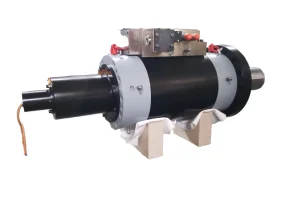
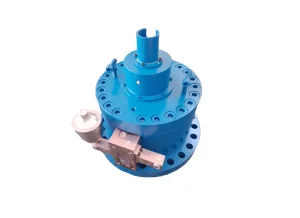
Explore our top-tier hydraulic cylinders engineered specifically for high-stress grinding mill suspension, roller press pressure control, and high-frequency servo applications.
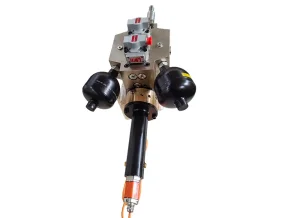
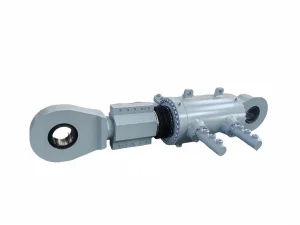
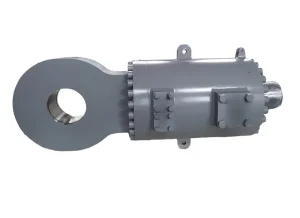
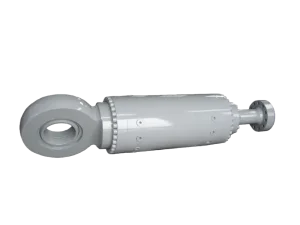
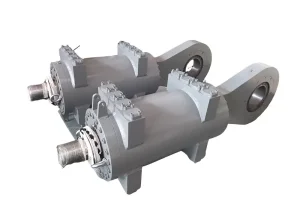
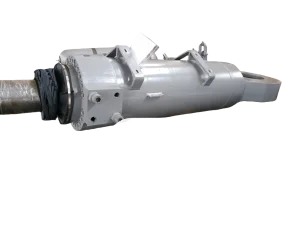
In modern industrial mineral processing, Vertical Roller Mills (VRMs) have definitively replaced traditional horizontal ball mills as the preferred standard for raw meal, cement clinker, granulated blast furnace slag (GBFS), and pulverized coal grinding. The fundamental advantage of VRM technology lies in its mechanical comminution efficiency: material is crushed on a rotating grinding table under immense hydraulic roller pressure rather than through random impact media inside a tumbling drum.
This structural paradigm shift delivers up to 30% to 45% reductions in specific power consumption (kWh/ton) while simultaneously offering integrated flash-drying capabilities and real-time particle size classification. However, the operational reliability of a VRM hinges entirely upon its hydraulic tensioning and loading system, which must continuously exert uniform, ultra-high forces while dampening severe dynamic shock loads caused by ungrindable material feed.
Across Europe, the Americas, Asia-Pacific, and the Middle East, cement manufacturers and heavy metallurgy enterprises face dual pressures: stringent decarbonization mandates (Net-Zero targets) and soaring electrical grid tariffs. Maintaining maximum mill uptime with zero unplanned shutdowns has become an absolute necessity for profitability.
As global OEM equipment ages, heavy industrial plants increasingly seek cost-effective vertical grinding mill manufacturers and custom hydraulic cylinder exporters capable of engineering drop-in replacements for legacy systems like Loesche LM, Pfeiffer MPS, FLSmidth ATOX, and UBE UM mills without paying exorbitant OEM markup prices or suffering 6-month factory lead times.
The operational lifespan of VRM loading cylinders is governed by seal friction dynamics, lateral force dissipation, and fluid cleanliness integration.
Clearance seal hydraulic cylinders utilize ultra-precise geometric tolerance matching between the piston and cylinder bore (clearance gap measured in microns). This design eliminates metallic contact and conventional elastomer seal friction, achieving near-zero stick-slip effects and ultra-high dynamic response for fast-moving servo loops.
Under heavy lateral loads caused by uneven material beds on the grinding table, standard guide rings experience severe edge loading and scoring. Hydrostatic support cylinders introduce a continuous pressurized oil pocket that floats the piston rod, allowing it to withstand extreme lateral dynamic forces without metal-to-metal wear.
Utilizing bronze-filled PTFE step seals, specialized U-cups, and double-acting wiper systems, low-friction servo cylinders operate reliably under high continuous working pressures (up to 31.5 MPa) while preventing thermal degradation when exposed to radiant heat in cement grinding environments.
Why leading international EPC contractors and plant owners choose Changzhou, China as their primary manufacturing hub for heavy industrial hydraulic drive systems.
Located in Jiangsu's heavy industrial equipment belt, Changzhou Xuanda leverages immediate access to specialized forged steel tube suppliers (42CrMo4, 30CrMnSiA alloy steels), advanced heat treatment facilities (quenching, tempering, nitriding), and local precision chrome-plating plants. This localized cluster minimizes raw material lead times and logistical overheads.
Equipped with heavy German and Japanese CNC deep-hole boring machines, vertical honing lathes, and digital surface roughness measuring tools, every cylinder bore achieves H8/H9 tolerance fits with surface finish Ra < 0.1 µm. Every unit undergoes 1.5x pressure hold testing and dynamic leak validation prior to export packaging.
Versatile engineering adaptations customized for harsh operating environments worldwide.
Custom loading cylinders built for Loesche, Pfeiffer, UBE, and TCD/TRM mills operating in high-dust, elevated-temperature environments where continuous 25 MPa working pressure must be sustained without seal extrusion.
Heavy-duty hydraulic cylinders designed for Hefei Cement Research Institute (HCRI), Chengdu Leejun (CLF series), and CITIC Heavy Industries roller presses, delivering up to 6,000 kN crushing forces.
Precision tensioning cylinders equipped with fire-resistant fluid seals (FKM/Viton) and integrated LVDT displacement sensors for automated fuel bed depth control in coal-fired power boilers.
Specialized hydraulic thrust roller cylinders for rotary kilns, grate coolers, and hydraulic harrow cylinders for cement stacker-reclaimers operating in remote quarry sites.
Comprehensive engineering specifications comparing core VRM and Roller Press cylinder compatibility.
| Target Equipment / OEM Standard | Cylinder Application Type | Bore Range (mm) | Working Pressure | Seal Technology | Special Surface Treatment |
|---|---|---|---|---|---|
| Loesche LM Series (LM 41.4 to 63.4) | Roller Loading / Suspension Cylinder | Ø 220 - Ø 450 | 21.0 - 28.0 MPa | PTFE Low-Friction Step Seal | HV900 Hard Chrome Plating |
| Pfeiffer MPS Series | Tensioning / Rocking Arm Cylinder | Ø 250 - Ø 480 | 25.0 - 31.5 MPa | Clearance Seal / Hydrostatic | Laser Cladded Stainless Layer |
| FLSmidth ATOX Mills | Hydraulic Pull-Rod Cylinder | Ø 200 - Ø 400 | 20.0 - 25.0 MPa | Multi-Lip Polyurethane Seals | Double-Layer Nickel-Chrome |
| UBE UM Vertical Mills | Hydraulic Thrust & Roller Loading | Ø 240 - Ø 500 | 21.0 - 27.5 MPa | Hydrostatic Support Seal | Induction Hardened Chrome |
| Chengdu Leejun CLF Roller Press | High-Pressure Diamond Profile Pressing | Ø 360 - Ø 630 | 25.0 - 31.5 MPa | Heavy Duty Compact Servo Seal | High-Velocity Oxygen Fuel (HVOF) |
| TCD / TRM Tianjin Institute | Raw Meal & Slag Mill Cylinder | Ø 200 - Ø 420 | 21.0 - 26.0 MPa | Low-Friction Chevron Packing | Micro-Cracked Chrome Finish |
The global heavy machinery sector is rapidly adopting Smart Hydraulic Systems. Modern vertical roller mill cylinders are no longer passive mechanical actuators; they are integrated digital nodes within plant-wide SCADA architecture.
When procuring heavy replacement hydraulic cylinders or sourcing customized vertical grinding mill components, international buyers should verify the following technical parameters:
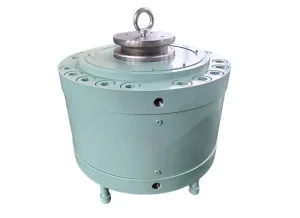
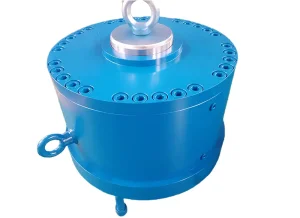
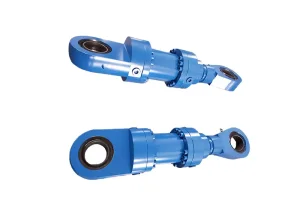
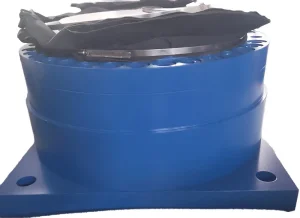
Discover our fully customized hydraulic cylinder line designed for cement plants, stacker reclaimers, rotary kilns, and metallurgical roller presses.
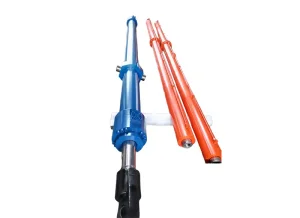
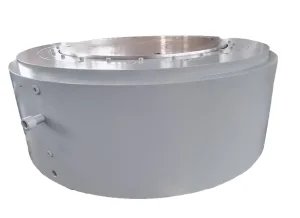
Expert responses to critical engineering, manufacturing, and procurement inquiries regarding vertical grinding mills and hydraulic cylinder systems.
VRM loading cylinders operate under severe dynamic conditions characterized by constant high pressure (20 to 31.5 MPa) and continuous vibration caused by uneven grinding beds. Unlike general hydraulic cylinders, VRM units feature specialized heavy-duty guide rings, reinforced forged alloy barrels (e.g., 42CrMo4), low-friction seal arrangements, and integrated accumulator damping systems designed to withstand extreme lateral shock loads without experiencing seal failure, rod buckling, or hydraulic fluid overheating.
Yes. Xuanda specializes in reverse-engineering and custom manufacturing compatible replacement cylinders for major OEM vertical roller mills (including Loesche LM, Pfeiffer MPS, FLSmidth ATOX, UBE UM, and TCD/TRM series). We match exact mounting centerlines, pin diameters, port configurations, and working stroke parameters. All brand names are trademarks of their respective owners; Xuanda provides high-performance compatible replacement units.
Clearance Seal Cylinders seal through a ultra-precise micron-level tolerance fit between piston and bore, producing near-zero friction for dynamic high-frequency servo applications.
Low-Friction Seal Cylinders utilize composite PTFE/bronze seals to prevent stick-slip motion during steady force application under high working pressures.
Hydrostatic Support Cylinders float the piston and rod on a pressurized oil film, completely neutralizing heavy lateral dynamic forces and preventing metal-to-metal contact wear during extreme mill vibration.
China's industrial ecosystem—specifically in manufacturing hubs like Changzhou, Jiangsu—combines deep raw material supply chains, localized heat treatment facilities, advanced CNC machine tool clusters, and skilled engineering talent. This concentration allows manufacturers like Changzhou Xuanda to reduce total production costs by 35% to 50% compared to Western OEMs while adhering strictly to international ISO 6020/6022, DIN 24333, and EN standards.
Absolutely. Our engineering team can work from physical worn samples, equipment nameplate data, field measurement photography, or site dimensional sketches. We generate 3D CAD models, conduct finite element analysis (FEA) to verify structural integrity, and send 2D manufacturing approval drawings to your engineering team before machining commences.
For standard industrial applications, double-layer hard chrome plating (thickness 40-50 µm, micro-hardness HV900+) provides excellent wear resistance. In highly corrosive or marine environments, we offer double-layer Nickel-Chrome plating, Laser Cladding stainless steel alloys, or High-Velocity Oxygen Fuel (HVOF) thermal spray coatings to resist pitting corrosion and chemical attack.
Hydropneumatic accumulators charged with dry Nitrogen (N2) are directly linked to the hydraulic cylinder oil chambers. When tramp metal or large ungrindable rock enters the grinding bed, the rollers lift suddenly. The hydraulic cylinder displaces oil into the accumulators, compressing the nitrogen gas. This acts as an instant shock absorber, preventing dynamic pressure spikes from bursting hydraulic lines or destroying internal cylinder seals.
Every Xuanda hydraulic cylinder undergoes rigorous quality gate inspections: Ultrasonic Testing (UT) of raw steel forgings, Magnetic Particle Inspection (MPI) of welds, CMM dimensional checks, full-stroke smooth motion testing, and static hydraulic pressure hold testing at 1.5x working pressure for a minimum of 30 minutes to ensure zero external or internal bypass leakage.
Standard lead time for engineered replacement cylinders ranges from 4 to 6 weeks, compared to 20 to 30 weeks typical of traditional Western OEMs. Emergency replacement programs can be accelerated for critical plant shutdown situations.
Plant engineers and procurement officers can submit technical requirements (mill brand, cylinder bore, rod diameter, stroke, operating pressure, and mounting style) via our official website contact form or directly through email. Our senior hydraulic engineering team will evaluate your RFQ and deliver detailed 2D/3D CAD drawings and competitive pricing within 24 to 48 hours.