Precision-engineered actuators, servo cylinders, and hydraulic assemblies manufactured for extreme operational stability and continuous power delivery.
A comprehensive engineering analysis of market dynamics, electrification shifts, and high-pressure actuation demands across global transportation and mobile equipment manufacturing sectors.
As commercial transportation shifts toward hybrid and battery-electric vehicle (BEV) platforms, traditional engine-driven hydraulic pumps are replaced by compact Electro-Hydraulic Power Units (E-HPUs). Custom manufacturers design variable-speed electric motor drives paired with high-efficiency axial piston pumps, offering power-on-demand control that reduces parasitic energy loss by up to 45%.
Heavy-duty commercial vehicles, articulated dumpers, off-highway haulers, and specialized trailers demand robust hydraulic actuation capable of surviving shock loads up to 10G. Custom hydraulic cylinder exporters supply double-acting telescopic cylinders, hydro-pneumatic suspension struts, and active anti-roll actuators engineered with induction-hardened chrome rods and polyurethane seal matrices.
Automotive hydraulics operating in global logistics face salt spray, chemical de-icers, dust, and dynamic thermal swings (-40°C to +120°C). Advanced manufacturing plants utilize High-Velocity Oxygen Fuel (HVOF) thermal spray coatings, nickel-chrome dual plating, and laser-cladded rod surfaces to guarantee 960+ hours of neutral salt spray (NSS) corrosion resistance under ASTM B117 testing standards.
| System Parameter | Standard Mobile Hydraulics | Tier-1 Heavy Commercial OEM Specs | Xuanda Precision Custom Benchmark |
|---|---|---|---|
| Rated Working Pressure | 160 – 210 Bar | 250 – 350 Bar | Up to 450 Bar (Peak Pulsation 700 Bar) |
| Bore Diameter Range | 40mm – 200mm | 50mm – 400mm | 40mm – 1,000mm (Custom Bore Stroke) |
| Stroke Velocity Capability | 0.1 – 0.5 m/s | 0.5 – 1.2 m/s | 0.001 – 3.0 m/s (Low Friction Servo) |
| Piston Rod Surface Plating | Single Chrome (20-30 µm) | Double Chrome (40-50 µm) | HVOF Laser Cladded / Ni-Cr Dual Plating |
| Positioning Accuracy | ± 2.0 mm | ± 0.5 mm | Up to ± 0.001 mm (Closed-Loop Servo) |
| Operating Temperature | -20°C to +80°C | -30°C to +100°C | -45°C to +150°C (Fluorocarbon Seals) |
Understanding how friction mitigation, precision clearance sealing, hydrostatic bearing support, and structural finite element analysis (FEA) eliminate cylinder failure modes.
In severe automotive applications subjected to high side loads (such as tilt cabs, mobile crane booms, and heavy steering linkages), metal-to-metal contact can score cylinder walls. Hydrostatic support cylinders float the piston rod on a high-pressure oil film pocket. This completely removes physical contact, reducing mechanical wear to near zero and granting infinite service fatigue life.
High-frequency servo-hydraulic systems in automotive dynamic testing rigs and active suspension dampers require ultra-low breakaway friction. Micron-level clearance seal engineering utilizes micro-gap hydrodynamic oil film lubrication instead of heavy elastomeric friction seals. This yields virtually zero stick-slip effect and micro-second response rates during fast transient inputs.
Every custom hydraulic design undergoes rigorous CAD/CAM 3D modeling and ANSYS Finite Element Analysis (FEA). Engineering simulations calculate rod buckling limits under max extension, fluid velocity cavitation risks inside valve manifolds, and stress concentrations on mountings (clevis, flange, trunnion), guaranteeing a minimum structural safety factor of 2.5X.
Strategic evolutionary phases defining smart digital hydraulics, sensor integration, bio-fluid compatibility, and electro-hydrostatic actuation.
Direct embedding of magnetostrictive absolute linear position sensors, pressure transducers, and temperature thermistors into the cylinder cap. Real-time condition monitoring feeds edge-computing AI units to forecast seal wear, detect fluid contamination, and trigger predictive maintenance long before structural breakdown occurs.
Elimination of centralized hydraulic oil reservoirs, long external hose lines, and directional control valves. EHA units integrate a servomotor, bi-directional pump, hydraulic cylinder, and localized fluid reservoir into a self-contained, leak-free plug-and-play actuator optimized for automotive steering and heavy suspension.
Transitioning cylinder barrels from steel alloys to carbon-fiber-reinforced polymer (CFRP) sleeves reduces component mass by up to 60%. Combined with bio-degradable synthetic ester hydraulic oils and eco-friendly seal materials (HEES/HEPG compatible), future automotive hydraulics achieve zero carbon footprint operations.
Deploying custom automotive and heavy machinery hydraulic cylinders across demanding sectors worldwide.
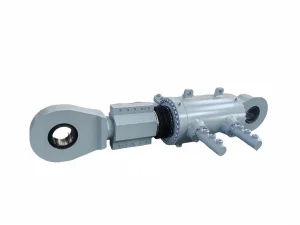
Multi-stage heavy-duty tipping cylinders engineered for mining trucks and construction dumpers, featuring hard-chromed telescopic stages and high-pressure cushion stops.
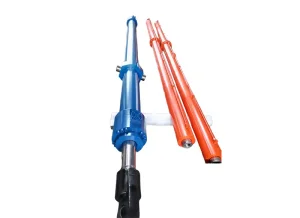
High-response servo-hydraulic cylinders installed on vehicle chassis fatigue testing benches, road simulators, and shock absorber test systems.
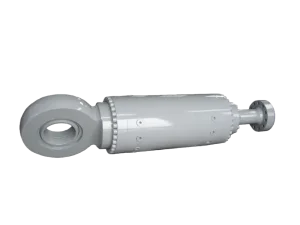
Precision boom elevation, outrigger extension, and steering cylinders built with integrated pilot-operated check valves and counterbalance safety cartridges.
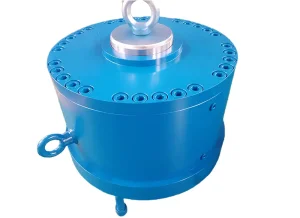
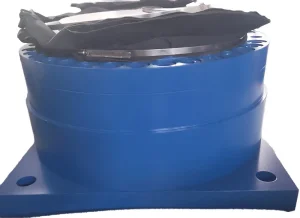
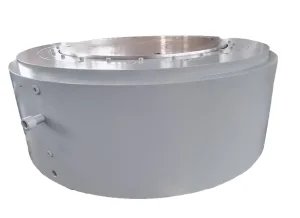
Heavy vertical roller mill loading cylinders, roller press pressure actuators, and rotary kiln hydraulic thrust rollers working under dusty 24/7 continuous duty.
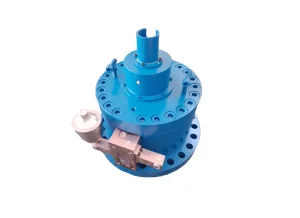
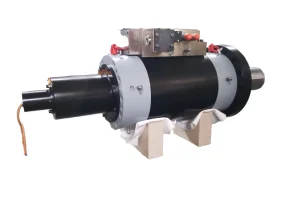
Browse our full range of custom hydraulic cylinders designed for heavy industry, grinding mills, dynamic testing, and mobile vehicle chassis.
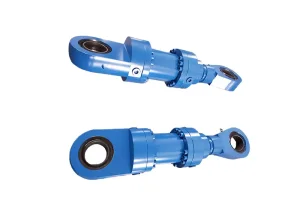
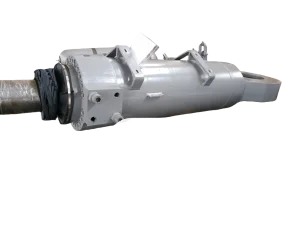
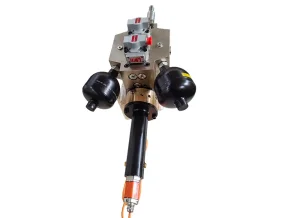
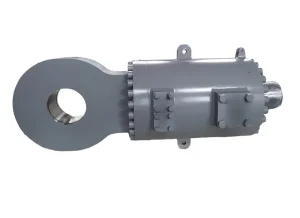
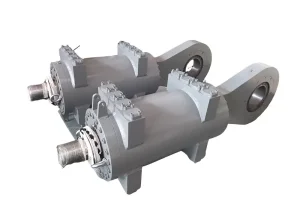
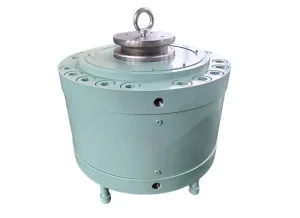
Direct engineering answers regarding custom hydraulic manufacturing, OEM replacements, seal selections, and global export procedures.
To design and manufacture a custom cylinder, our engineering team requires: (1) Maximum working pressure and peak surge pressure (Bar/PSI), (2) Bore diameter, rod diameter, and stroke length (mm), (3) Mounting configuration (clevis, spherical bearing, head flange, trunnion, or foot mount), (4) Operating medium and fluid temperature range, (5) Desired stroke velocity and cycle frequency, and (6) External side-load envelope and ambient environmental exposure conditions.
Our engineering center utilizes precise 3D reverse-engineering techniques combined with strict alignment to original OEM installation blueprints. We mirror pin-to-pin retracted dimensions, port thread standards (SAE, BSPP, ISO 6149), sensor cavity depths, and loading stroke curves while enhancing internal seal metallurgy and surface hardening to match or exceed original factory performance.
A clearance seal cylinder relies on micro-inch precision machining between the piston and cylinder bore to form a hydrodynamic fluid barrier without rubber contact, minimizing friction for high-speed dynamic testing. A hydrostatic support cylinder forces pressurized oil through pocket orifices to suspend the rod during heavy lateral side-loads, preventing metal-to-metal galling under extreme structural bending forces.
We provide hard chrome plating (20–50 µm thickness), double layer Nickel-Chrome plating, laser cladding, and HVOF thermal ceramic spraying. All export cylinders undergo protective anti-corrosion oil flushing, VCI vapor corrosion inhibitor packaging, custom wooden crate sealing, and certified salt spray testing (up to 1,000 hours NSS ASTM B117 compliant) before ocean transport.
Every single manufactured cylinder undergoes a 100% full-spectrum hydrostatic testing regimen, including: (1) High-pressure proof testing at 1.5X rated pressure, (2) Internal bypass leakage testing across piston seals, (3) Low-pressure friction breakaway checks, (4) Transducer calibration and stroke verification, and (5) Oil cleanliness particle counting to ISO 4406 standards.
