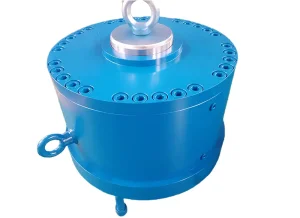
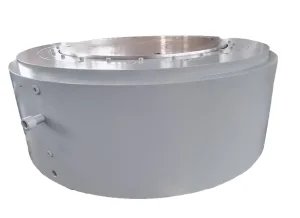
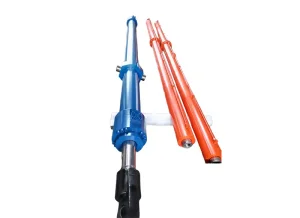
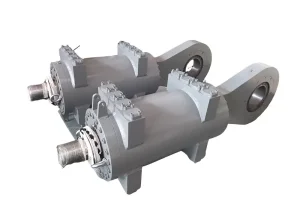
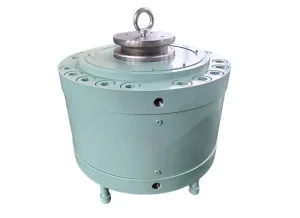
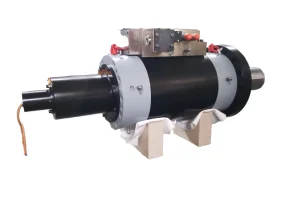
Explore our custom hydraulic cylinders and piston rod assemblies engineered for extreme pressure, abrasive dust environments, and high-frequency servo motion control.
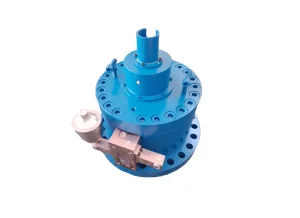
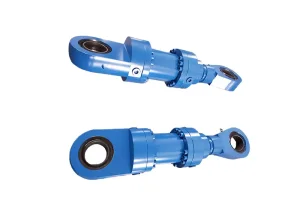
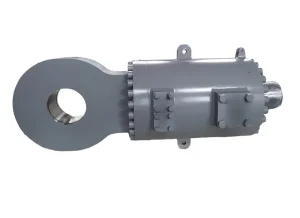
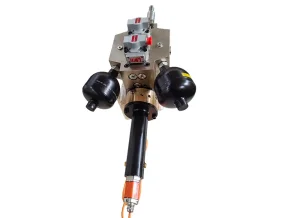
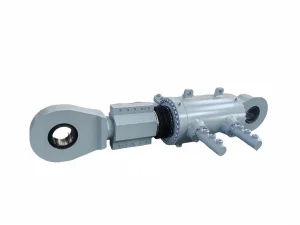
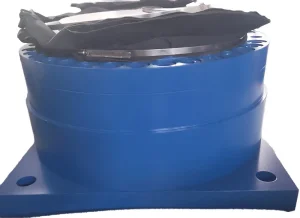
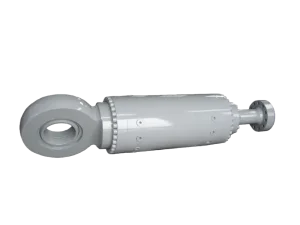
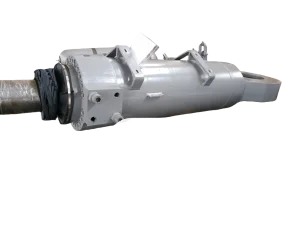
In modern fluid power systems, hydraulic cylinder piston rods serve as the primary mechanical link transmitting high fluid pressure into linear force under severe dynamic loading, thermal gradient exposure, and harsh airborne particulates. For heavy equipment operating in cement processing plants, metallurgical rolling mills, marine cranes, and precision servo loops, a failure in the piston rod directly triggers unplanned factory downtime, severe oil contamination, and massive financial losses.
As premier custom cylinder piston rod manufacturers & exporter, Changzhou Xuanda Hydraulic Electromechanical Equipment Co., Ltd. combines over 22 years of metallurgical expertise with German and Japanese precision CNC grinding infrastructure. Piston rods are not merely machined steel bars; they are complex tribological components engineered to survive millions of pressure cycles while preserving fluid seals and resisting mechanical deformation.
Every custom piston rod engineered by Xuanda is verified against Euler Column Buckling and Johnson's Parabolic Criteria, ensuring structural integrity under peak pressure surges up to 45 MPa.
Surface micro-geometry ($R_a$, $R_z$, $R_{pk}$, $R_{vk}$) is fine-tuned to establish a microscopic oil film that lubricates dynamic seals without provoking fluid migration or seal erosion.
From marine salt fog exposure to clinker dust abrasion in cement vertical mills, our proprietary multi-layer plating and laser cladding guarantee zero corrosion pitting.
Global original equipment manufacturers (OEMs) and heavy manufacturing facilities are shifting away from off-the-shelf, standardized piston rods toward highly specialized custom geometries. Industry 4.0 automation demands continuous real-time stroke position monitoring, higher power density, and reduced maintenance overhead. Consequently, international buyers require custom piston rod manufacturers capable of executing gun-drilled sensor cavities, specialized heat-treatment depths, and verifiable metallurgical certification (EN 10204 3.1/3.2).
Standard chrome plating often fails under impact loading due to macro-cracks extending directly to the steel substrate. Xuanda employs a specialized electro-chemical bath control process yielding a controlled micro-crack density of 400 to 1,000 cracks per linear centimeter. This structure relieves internal stress while creating microscopic oil reservoirs that drastically improve salt-spray longevity and seal friction characteristics.
Selecting the optimal core material is the foundational step in engineering a reliable hydraulic piston rod. Mechanical properties such as yield strength, tensile toughness, impact resistance at sub-zero temperatures, and weldability dictate material performance across diverse application domains.
| Steel Grade Standard | Yield Strength (MPa) | Tensile Strength (MPa) | Core Hardness | Primary Application Environment |
|---|---|---|---|---|
| 42CrMo4 / AISI 4140 | ≥ 650 - 750 | 900 - 1100 | 240 - 280 HBW | Heavy-duty vertical roller mills, metallurgical rolls, high-shock cylinders |
| 20MnV6 / ISO 683-10 | ≥ 450 - 520 | 650 - 800 | 180 - 230 HBW | Standard mobile hydraulics, construction machinery, excellent weldability |
| C45E / CK45 / AISI 1045 | ≥ 350 - 460 | 600 - 750 | 170 - 210 HBW | Medium-duty industrial cylinders, agricultural stroke devices |
| 17-4PH / AISI 630 | ≥ 850 - 1000 | 1000 - 1250 | 330 - 380 HBW | Offshore platforms, subsea actuators, highly corrosive chemical plants |
| AISI 316L Stainless Steel | ≥ 220 - 300 | 520 - 680 | 160 - 200 HBW | Food grade machinery, pharmaceutical equipment, marine environments |
For application environments subject to mechanical impact—such as cement grate coolers, excavator boom actuators, and roller presses—surface hardness prevents denting and gouging from flying debris. Xuanda utilizes high-frequency medium-wave induction hardening technology to create a hardened surface casing while preserving a ductile, tough steel core.
Environmental regulations and extreme working conditions have accelerated the development of surface protection techniques. Below is an engineering comparison matrix executed by Xuanda's surface coating laboratory to guide OEM procurement decisions.
| Coating Technology | Typical Thickness | Micro-Hardness (HV) | Salt Spray Rating (ISO 9227 NSS) | Primary Engineering Advantage |
|---|---|---|---|---|
| Standard Hard Chrome | 20 - 30 µm | 850 - 1000 HV0.1 | 120 - 500 Hours | Cost-effective, excellent wear resistance in clean industrial environments |
| Double-Layer Chrome | 40 - 60 µm | 900 - 1100 HV0.1 | 500 - 1000 Hours | Enhanced barrier layer, optimal protection against atmospheric humidity |
| HVOF (WC-10Co-4Cr) | 100 - 250 µm | 1150 - 1400 HV0.1 | 1000 - 1500 Hours | Exceptional resistance to abrasive slurry, sand, and heavy mechanical wear |
| Laser Cladding (Inconel 625 / Stellite) | 500 - 2000 µm | 450 - 800 HV0.1 | > 2000 Hours | True metallurgical bond, zero porosity, extreme subsea & acid resistance |
A shiny surface does not necessarily equate to a high-performance piston rod. Dynamic seals require controlled microscopic valley depths to hold oil lubricant film while preventing fluid migration. Xuanda utilizes centerless grinding machines followed by multi-pass CNC tape superfinishing to guarantee precise tribological parameters:
Maintained tightly between 0.05 µm and 0.10 µm. Values below 0.02 µm dry out seals leading to stick-slip friction, while values above 0.20 µm cause rapid seal abrasive wear.
Controlled strictly to $R_z \le 0.50 \mu\text{m}$, preventing microscopic peak asperities from cutting through polyurethane or PTFE seal lips under high hydraulic pressure.
Precision centerless grinding yields outer diameter tolerances of ISO f7, f8, or h8, with total straightness guaranteed within 0.05 mm per 1000 mm of length.
In cement manufacturing, hydraulic cylinders operating on Loesche LM, UBE UM, FLSmidth ATOX, and Pfeiffer MPS vertical roller mills are subjected to severe vibrations, fine mineral dust, and high lateral force components. Piston rods engineered for roller presses (such as Chengdu Leejun CLF or HCRI series) feature heavy-wall alloy steel construction, deep induction hardening to withstand crushed limestone impact, and custom wiper ring grooves designed to reject fine abrasive particulate matter.
Steel plant hydraulic cylinders operate directly adjacent to molten steel and hot slabs where ambient temperatures exceed 200°C. Xuanda supplies heavy-duty chrome-plated and laser-clad piston rods featuring internal cooling passages, heat-resistant seal grooves, and 42CrMo4 forged rod eyes built to endure continuous shock loads in Automatic Gauge Control (AGC) servo actuators.
High-precision electro-hydraulic servo cylinders require absolute position feedback. Xuanda manufactures custom piston rods featuring deep-hole axial gun drilling up to 3,000 mm in length. These internal bores accommodate magnetostrictive linear displacement transducers (e.g., MTS Temposonics, Balluff) with zero runout and concentricity tolerances maintained within 0.1 mm, enabling sub-micron positioning accuracy.
Exporting custom hydraulic piston rods requires more than precision machining; it demands rigorous non-destructive testing (NDT), international material traceability, and protective seaworthy packaging to ensure products arrive in zero-defect condition.
100% of raw steel bars undergo Ultrasonic Testing (UT) per SEP 1921 Class 3C/e to detect internal inclusions, micro-voids, or cracks prior to machining.
Every plating batch undergoes random sample testing in our automated ISO 9227 Salt Spray Test chamber, verifying corrosion resistance up to 1,000 hours.
Finished rods are thoroughly coated with synthetic anti-rust fluid, encased in heavy-duty spiral cardboard tubes, wrapped in VCI film, and secured in ISPM-15 compliant wooden cases.
As industrial sustainability guidelines tighten globally, traditional hexavalent chrome electroplating processes face increasing regulatory pressure. Xuanda's R&D team is driving technological innovation across three key pillars:
Detailed technical answers regarding material specification, reverse engineering, custom manufacturing, and global export lead times.
Yes. Our senior engineering team utilizes portable 3D laser scanners, optical spectrometers, and digital hardness testers to fully reverse-engineer physical piston rod samples. We recreate 3D CAD models, confirm mechanical tolerances, select equivalent or superior steel alloys, and issue formal engineering drawings for customer approval prior to production.
Xuanda operates heavy CNC lathes, deep-hole honing machines, and vertical chrome plating tanks capable of manufacturing custom piston rods up to outer diameter 500 mm (20 inches) and single-piece continuous lengths up to 6,000 mm (236 inches), maintaining strict concentricity and straightness tolerances throughout.
Induction hardening creates a compressive residual stress zone on the outer layer, which arrests surface micro-crack initiation caused by cyclic bending stresses. However, if case depth is too deep, core ductility is sacrificed; if too shallow, crushing under heavy lateral load occurs. Xuanda optimizes case depth precisely to 10% - 15% of rod radius to balance core toughness and outer wear resistance.
For dynamic servo cylinders running at speeds exceeding 0.5 m/s, we recommend a target surface roughness of $R_a = 0.05 - 0.08 \mu\text{m}$ combined with a reduced peak height ($R_{pk} \le 0.15 \mu\text{m}$). This prevents stick-slip oscillation, lowers seal friction heat generation, and ensures predictable frequency response curves.
Every export shipment includes a comprehensive Quality Inspection Dossier containing: EN 10204 3.1 Material Test Certificate, Heat Treatment Hardness & Depth Profile Graphs, Ultrasonic NDT Test Certificate, Plating Thickness Measurement Report (X-ray gauge verified), Surface Roughness Profile Trace, and Final CMM Dimensional Inspection Sheets.
High-strength steels (tensile strength ≥ 1000 MPa such as 42CrMo4) absorb atomic hydrogen during acid pickling and electroplating. To prevent catastrophic brittle fracture, Xuanda enforces mandatory post-plating de-embrittlement baking at 190°C - 210°C for a minimum of 4 to 8 hours immediately following the plating cycle, driving out entrapped hydrogen gas.
Browse our complete series of replacement hydraulic cylinders designed for heavy industry, grinding mills, stacker reclaimers, and high-load kilns.