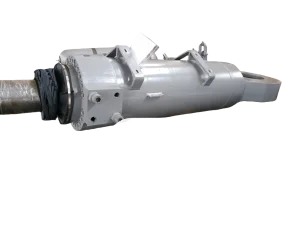
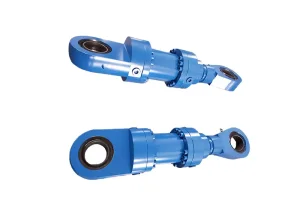
Custom Double Rod End Hydraulic Cylinder Manufacturers & Exporter

High-Precision Equal-Area Actuator Solutions Engineered for Continuous Steel Casting, Heavy Metallurgical Mills, Marine Steering, and High-Frequency Closed-Loop Automation.

Featured Heavy-Duty Hydraulic Actuators

Precision Engineered Industrial Hydraulic Cylinders

Explore our robust selection of custom hydraulic cylinders designed for heavy industry, grinding mills, roller presses, and precision servo loops.
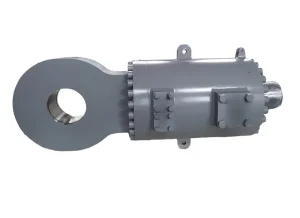
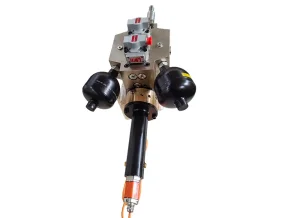
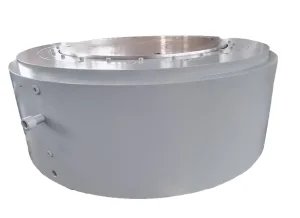
Durable Hydraulic Cylinder for UBE UM Vertical Roller Mill
View Specifications
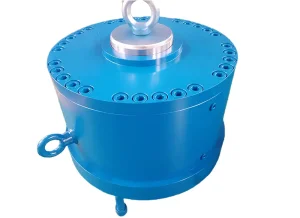
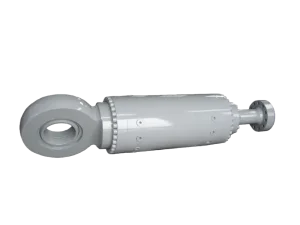
Cost-Effective Clearance Seal Hydraulic Cylinder
Cost-Effective Clearance Seal Hydraulic Cylinder Manufacturer, Exporters
View Specifications
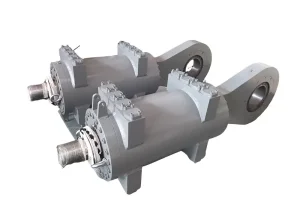
China Hydraulic Cylinder for CITIC Heavy Industries Roller Press
China Hydraulic Cylinder for CITIC Heavy Industries Roller Press Manufacturers, Exporters
View Specifications
Custom Hydraulic Cylinder for HCRI Roller Press
Custom Hydraulic Cylinder for Hefei Cement Research Institute (HCRI) Roller Press Manufacturer
View Specifications
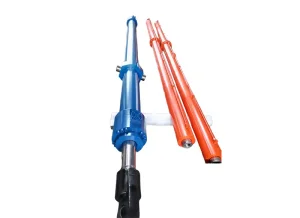
China Hydraulic Harrow Cylinder for Cement Stacker
China Hydraulic Harrow Cylinder for Cement Stacker & Reclaimer Manufacturer, Exporter
View Specifications
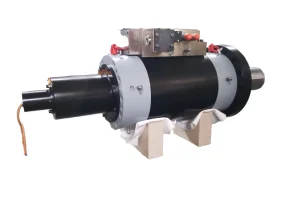
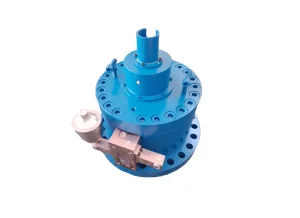
High-Quality Hydrostatic Support Servo Cylinder
High-Quality Hydrostatic Support Servo Cylinder Exporters
View Specifications
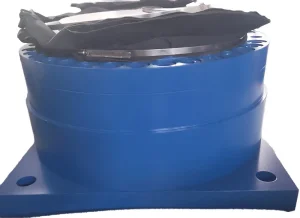
High-Quality Low-Friction Seal Servo Cylinder
High-Quality Low-Friction Seal Servo Cylinder Exporters
View Specifications
Custom Hydraulic Cylinder for Chengdu Leejun Roller Press
Custom Hydraulic Cylinder for Chengdu Leejun Roller Press Manufacturers
View Specifications
22+
Years R&D Mastery
±1 μm
Servo Control Accuracy
35 MPa
Max Operating Pressure
30+
Global Export Countries
Engineering Whitepaper & Technical Analysis

1. Fundamentals of Double Rod End Hydraulic Cylinders: Kinetic Symmetry & Fluid Mechanics

In the realm of heavy hydraulic actuation and precision motion control, the double rod end hydraulic cylinder (frequently designated as an equal-area, dual-rod, or through-rod cylinder) represents a specialized mechanical configuration engineered to overcome the fundamental fluid dynamic limitations inherent in conventional single-rod actuators. Unlike standard single-rod cylinders where the effective piston area differs between the extension stroke ($A_{cap} = \frac{\pi}{4} D^2$) and retraction stroke ($A_{annular} = \frac{\pi}{4}(D^2 - d^2)$), a custom double rod end hydraulic cylinder features piston rods extending through both end caps.

By establishing matching rod diameters ($d_1 = d_2$) on opposing sides of the central piston, the effective working area remains completely symmetrical regardless of actuation direction ($A_{net} = \frac{\pi}{4}(D^2 - d^2)$). This equal displacement geometry yields profound operational advantages across closed-loop electro-hydraulic systems, continuous industrial processes, and high-load mechanical linkages:

Identical Force & Velocity Ratio

Because oil displacement volume per millimeter of stroke is identical for both chambers, hydraulic fluid input at flow rate $Q$ yields equal linear velocities ($v_{ext} = v_{ret}$) and force outputs ($F_{ext} = F_{ret} = P \cdot A_{net}$), eliminating non-linear controller gain compensation.

Elimination of Hydraulic Surge

In closed-loop hydraulic circuits equipped with proportional or servo valves, unequal oil return volumes from single-rod cylinders cause reservoir surge and cavitation risks. Through-rod architecture maintains equal fluid exchange volume ($\Delta V_{in} = \Delta V_{out}$).

Dual Mechanical Support & Rigidity

Supported by double guide bushings housed in opposing gland heads, the piston rod assembly demonstrates superior bending resistance, drastically lowering deflection under heavy transverse or side loads.

E-E-A-T Technical Insight: When operating high-frequency servo-hydraulic systems (such as mould oscillators in continuous casting lines or material testing test benches running at 5–30 Hz), double rod end cylinders prevent asymmetric pressure spikes. This stability doubles seal service life and allows sub-millimeter positioning repeatable to ±1 μm when paired with integrated linear variable differential transformers (LVDT).

2. Global Market Landscape & Purchasing Intent Trends for Heavy-Duty Actuators

The global industrial market for custom hydraulic cylinders is experiencing a structural pivot. Procurement managers, plant directors, and original equipment manufacturers (OEMs) across North America, Europe, Asia-Pacific, and the Middle East are no longer seeking commodity off-the-shelf actuators. Instead, purchasing intent has gravitated heavily toward highly customized, application-tailored hydraulic solutions that promise total cost of ownership (TCO) optimization, extreme reliability in dusty/corrosive environments, and direct drop-in dimensional compatibility.

Key industrial sectors driving the worldwide demand for double rod end hydraulic cylinders include:

  • Continuous Steel Casting & Metallurgical Rolling Mills: Hydraulic oscillators demand ultra-low friction clearance seals or hydrostatic bearings combined with double rod symmetrical dynamics to maintain high-frequency oscillation of liquid steel molds without thermal distortion.
  • Marine & Offshore Steering Systems: Hydro-mechanical dual-actuator steering gears utilize double rod end cylinders to maintain balanced torque and instantaneous rudder response under harsh marine splash conditions.
  • Cement Grinding Mills & High-Pressure Roller Presses: Equipment such as Loesche LM, UBE UM, FLSmidth ATOX, and Leejun CLF roller presses require robust hydraulic loading and suspension cylinders capable of sustaining cyclic shock loads up to 35 MPa without fatigue failure.
  • High-Precision Machine Tool Slides & Hydrostatic Test Benches: Machine tool feeds demand zero stick-slip motion at micro-feed velocities ($< 0.1 \text{ mm/sec}$), achieved only via precision ground double rod actuators paired with low-friction PTFE composite seals.

3. Customization Capability Matrix: Double Rod End Cylinder Engineering Parameters

As a specialized engineering manufacturer based in Changzhou, China, Changzhou Xuanda Hydraulic Electromechanical Equipment Co., Ltd. manufactures heavy-duty and precision servo double rod end hydraulic cylinders tailored to exacting customer blueprints and operational specifications.

Design Parameter Standard Industrial Range Custom Heavy-Duty / Servo Capability
Bore Diameter ($D$) Ø 40 mm – Ø 320 mm Up to Ø 800 mm (Custom Machined Forging)
Rod Diameter ($d_1 = d_2$) Ø 25 mm – Ø 220 mm Up to Ø 560 mm (Induction Hardened / HVOF Coated)
Stroke Length 50 mm – 2,000 mm Up to 8,000 mm (Laser-Aligned Precision Honing)
Nominal Pressure 16 MPa – 25 MPa (160 – 250 Bar) Heavy Duty 35 MPa – 50 MPa (350 – 500 Bar)
Temperature Range -20°C to +80°C (Standard NBR) -40°C to +220°C (Viton / PTFE / Special FKM)
Sealing Configurations Polyurethane / U-cup seals Clearance Seals / Low-Friction PTFE / Hydrostatic Oil Film
Sensor Integration External Switch Mountings Internal Magnetostrictive LVDT / SSI / Digital Encoders
Mounting Styles ISO 6020/2, ISO 6022 Standard Custom Trunnion, Spherical Clevis, Intermediate Flange

4. China Manufacturing Advantage: High-Efficiency Production & Material Excellence

Global procurement executives seeking high-performance double rod end hydraulic cylinders often face a tough trade-off: western OEMs charge exorbitant premiums with 24 to 36-week lead times, while generic low-cost workshops lack the precision grinding, thermal treatment, and quality control systems required for zero-leakage continuous service.

Changzhou Xuanda Hydraulic bridge this gap by offering high-precision manufacturing rooted in the Yangtze River Delta industrial ecosystem:

Imported Multi-Axis CNC Honing & Turning

Our Changzhou plant operates precision deep-hole honing machines and CNC turning centers imported from Germany and Japan. Cylinder bores are honed to a surface finish of $Ra < 0.2 \ \mu\text{m}$, guaranteeing seal integrity and minimal friction loss.

Advanced Metallurgy & Surface Metallurgy

We source raw seamless tubes forged from 42CrMo4, 20MnV6, and ST52.3 steel. Piston rods undergo high-frequency induction hardening ($HRC \ 55\text{--}60$) followed by 30–50 $\mu\text{m}$ hard chrome plating or HVOF (High-Velocity Oxygen-Fuel) thermal spray coatings.

Unrivaled Cost Efficiency & Fast Delivery

Vertically integrated production—from raw material cutting and deep-hole drilling to automated orbital welding, assembly, and 100% hydrostatic testing—delivers 30% to 45% cost savings with standard lead times under 4 to 6 weeks.

5. Failure Mode Analysis & Maintenance Protocols for Double Rod Actuators

Preventative maintenance and tribological awareness are essential to maximizing the life cycle of double rod end cylinders. Because through-rod designs feature two gland sealing zones (one at each cylinder head), maintenance engineers must monitor concentricity and thermal dissipation closely:

A. Preventing Rod Misalignment & Binding

Due to dual support points, any external angular misalignment between the front and rear rod mounting points will cause binding, severe bushing wear, and premature seal blowouts. We strongly recommend using spherical rod eye bearings (DIN ISO 12240-4) or floating clevis mounts whenever structural flex is present in the machine frame.

B. Thermal Expansion in Long-Stroke Applications

Continuous high-speed reciprocation generates heat in the oil film beneath gland packings. In double rod cylinders operating at high temperatures (>100°C), thermal expansion of the long single-piece piston rod can decrease internal guide clearances. Xuanda engineers calculate precise thermal expansion allowances ($\Delta L = \alpha \cdot L \cdot \Delta T$) during CAD/CAE modeling to ensure free movement under peak operating temperatures.

C. Contamination Control & Wiper Protection

Both exposed rod ends are subjected to environmental debris, clinker dust, or scale. Installing heavy-duty double-lip polyurethane wipers combined with metallic scrapers or protective vulcanized bellows prevents particulate entry, maintaining hydraulic oil cleanliness within ISO 4406 16/14/11 standards.

Complete Industrial Hydraulic Product Portfolio

Specialized Cement Mill & Metallurgical Actuators

Browse our broader range of OEM replacement cylinders, clearance seal servo actuators, and heavy-duty industrial cylinders.
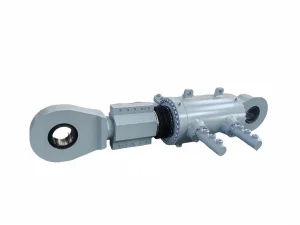
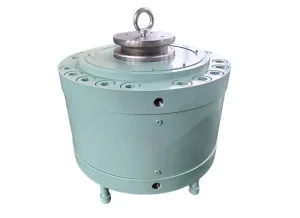
High-Quality Low-Friction Seal Servo Cylinder Exporters
View Specifications
Custom Hydraulic Cylinder for Chengdu Leejun Roller Press
Custom Hydraulic Cylinder for Chengdu Leejun Roller Press Manufacturers
View Specifications
Cost-Effective Hydraulic Cylinder for TCD TRM Mill
Cost-Effective Hydraulic Cylinder for Tianjin Cement Design Institute (TCD/TRM) Mill
View Specifications
Custom Hydraulic Thrust Roller Cylinder for Cement Rotary Kiln
Custom Hydraulic Thrust Roller Cylinder for Cement Rotary Kiln Exporters
View Specifications
Cost-Effective Hydraulic Cylinder for FLSmidth ATOX Mill
Cost-Effective Hydraulic Cylinder for FLSmidth ATOX Vertical Roller Mill Exporters
View Specifications
Budget Friendly Hydraulic Cylinder for Loesche Mill
Budget Friendly Hydraulic Cylinder for Loesche Vertical Roller Mill Manufacturer
View Specifications
China Hydraulic Cylinder for Pfeiffer MPS Mill
China Hydraulic Cylinder for Pfeiffer MPS Vertical Roller Mill Exporters
View Specifications
Custom Hydraulic Cylinder for Cement Grate Cooler
Custom Hydraulic Cylinder for Cement Grate Cooler Manufacturer
View Specifications
Expert Technical Q&A

Frequently Asked Questions: Double Rod End Hydraulic Cylinders

Detailed technical answers to common procurement, design, and operational questions from plant engineers and international buyers.

What are the primary operational advantages of a double rod end hydraulic cylinder over a single rod cylinder?
The primary advantage is complete kinetic and volumetric symmetry. Because both piston rods share identical cross-sectional areas ($d_1 = d_2$), oil volume displaced per millimeter of stroke is identical for extension and retraction. This yields equal force output ($F_{ext} = F_{ret}$) and identical velocity ($v_{ext} = v_{ret}$) at a given pump flow rate. Furthermore, double rod cylinders provide dual-gland mechanical support, minimizing rod deflection under heavy lateral loads.
Can Changzhou Xuanda manufacture replacement double rod cylinders for original OEM machinery without original CAD drawings?
Yes. Our senior engineering team specializes in reverse-engineering. By inspecting a worn sample cylinder, nameplate photographs, installation envelope measurements, or field mounting dimensions, we generate complete 3D CAD/CAM models and 2D engineering drawings for client approval before machining begins. We ensure 100% mounting interface compatibility with major global machinery brands.
How does linear position feedback (LVDT / Magnetostrictive Sensors) integrate into a double rod cylinder?
In a double rod cylinder, one of the piston rods can be gun-drilled through its central axis to accommodate an internal magnetostrictive position sensor probe (e.g., MTS Temposonics, Balluff). The position magnet is mounted inside the main piston head. Because the rod extends through the rear head cap, sensor cabling exits cleanly without interfering with the primary front working rod linkage.
What sealing systems are recommended for high-frequency servo applications vs. high-pressure heavy industrial duty?
For high-frequency servo applications (mould oscillation, vibration test rigs), we utilize low-friction bronze-filled PTFE step seals or non-contact clearance seals/hydrostatic bearings to eliminate stick-slip friction and achieve micro-positioning accuracy (±1 μm). For high-pressure heavy industrial duty (roller presses, vertical grinding mills up to 35 MPa), we employ multi-stage polyurethane U-cups paired with fabric-reinforced chevron seal packings and heavy-duty guide rings to withstand severe pressure spikes.
What quality testing procedures are conducted before export shipment?
Every cylinder manufactured by Xuanda undergoes 100% factory testing on our automated test benches. Inspection protocols include proof pressure testing (up to 1.5x working pressure), internal bypass leakage verification, friction drag-force measurement, full-stroke velocity validation, and cleanliness testing according to ISO 4406 standards. Detailed test certificates and material mill test reports (MTR) are provided with all export documentation.
What export packaging standards are used for long-distance maritime transport?
To prevent rust and transit damage during ocean freight, all machined bright surfaces are coated with VCI rust-inhibitor oil and sealed in heavy-duty vacuum plastic wrapping. Port connections are plugged with steel shipping caps. Cylinders are securely bolted inside fumigated solid wooden cases (ISPM 15 compliant) with internal foam bracing, designed for overhead crane and forklift unloading.