Engineered to original equipment parameters with enhanced tribological durability and zero stick-slip precision.
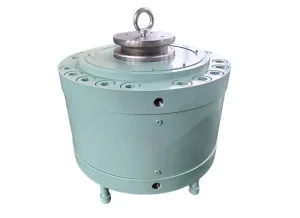
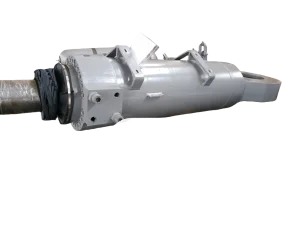
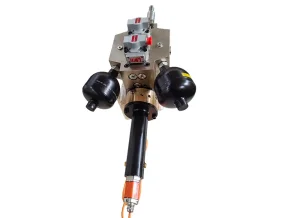
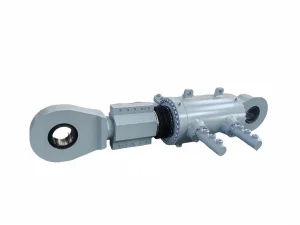
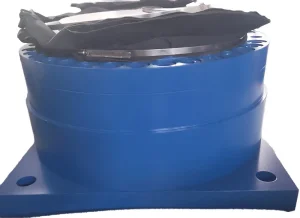
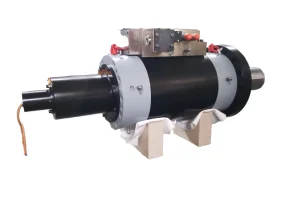
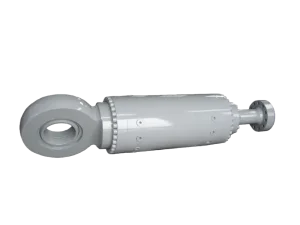
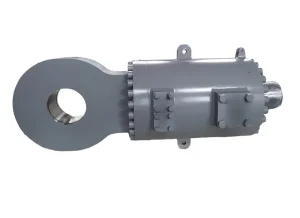
Overcoming the structural limits of contact seals through pressurized fluid-film suspension in high-frequency, heavy dynamic load applications.
In high-performance industrial motion control, traditional hydraulic cylinders rely on elastomeric, PTFE, or polyurethane contact seals to maintain pressure isolation between cylinder chambers. However, under high-velocity actuation, high ambient temperatures, or severe lateral (eccentric) loading conditions, contact-sealed cylinders encounter unavoidable physical bottlenecks: high breakout friction, stick-slip oscillation, heat generation, rapid seal degradation, and restricted dynamic frequency response.
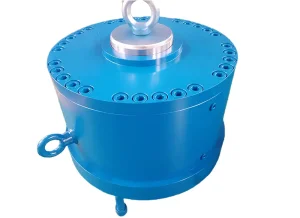
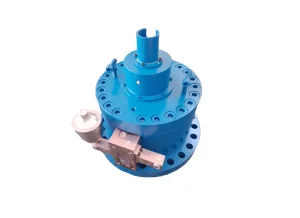
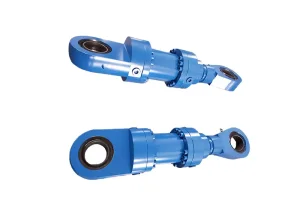
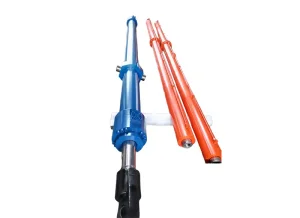
A Hydrostatic Support Servo Cylinder eliminates mechanical contact between sliding surfaces by floating both the piston and the piston rod on a continuous, ultra-thin, highly pressurized oil film. Driven by dedicated auxiliary hydrostatic pressure ports and integrated capillary or orifice metering circuits, fluid is supplied directly into micro-machined pockets along the cylinder guide sleeves and piston bearing journals. This creates an active hydrostatic bearing clearance that supports massive transverse forces while maintaining near-zero friction dynamics.
The load-bearing capacity of a hydrostatic support pocket ($F_h$) is directly proportional to the supply pressure ($P_s$), the effective pocket surface area ($A_p$), and the pressure ratio coefficient ($a_p$) governed by fluid viscosity ($\eta$) and clearance gap height ($h$):
When an asymmetric lateral force is applied to the piston rod during operation (such as during uneven material feed in a vertical roller mill or continuous casting mold oscillation), the clearance gap $h$ decreases on the loaded side and increases on the opposite side. This eccentricity immediately triggers a self-regulating pressure differential: fluid pressure inside the compressed pocket rises toward full supply pressure ($P_s$), while pressure in the expanding pocket drops. This instant restoring force counteracts the external lateral load, preventing metal-to-metal contact, scoring, or mechanical binding.
Unlike hydrodynamic lubrication—which relies on relative sliding velocity to build a wedge of pressurized oil—hydrostatic support provides full load capacity and zero metallic friction even at zero sliding velocity (zero speed). This makes hydrostatic support servo cylinders the gold standard for high-force static load holding, micro-stepping positioning, and low-speed continuous modulation without stick-slip vibration.
Evaluating mechanical trade-offs across high-end industrial servo applications.
| Performance Parameter | Hydrostatic Support Servo Cylinder | Clearance Seal Servo Cylinder | Low-Friction Contact Seal Cylinder | Standard Heavy-Duty Industrial Cylinder |
|---|---|---|---|---|
| Primary Sealing Principle | Pressurized Fluid Film Pocket | Precision Annular Gap (μm fit) | PTFE Step Seal + O-Ring Energizer | NBR / Polyurethane Lip Seals |
| Friction Coefficient (μ) | 0.0001 – 0.0005 (Frictionless) | 0.001 – 0.005 (Ultra-low) | 0.03 – 0.08 (Low) | 0.10 – 0.25 (High) |
| Stick-Slip Susceptibility | Zero (Completely Absent) | Negligible | Moderate at Low Speed | High (Severe Breakout) |
| Side Load Handling Capacity | Extremely High (Active Hydrostatic) | Low (Risk of Galling) | Moderate (Guide Ring Dependent) | High (Wear Band Limited) |
| Max Dynamic Frequency | > 50 Hz – 100 Hz | Up to 30 Hz – 50 Hz | Up to 10 Hz – 15 Hz | < 3 Hz – 5 Hz |
| Positional Repeatability | ±0.1 μm (Sub-micron) | ±1.0 μm | ±10.0 μm | ±0.5 mm |
| Operational Seal Wear | Infinite (No Physical Contact) | Near Zero | Gradual Mechanical Friction | High / Periodic Replacement |
| Oil Cleanliness Requirement | ISO 4406 14/12/9 (NAS 6) | ISO 4406 15/13/10 (NAS 7) | ISO 4406 17/15/12 (NAS 8) | ISO 4406 19/17/14 (NAS 10) |
How modern heavy process industries and precision engineering sectors are transitioning to hydrostatic servo actuation.
The global demand for high-end servo hydraulic cylinders is undergoing a structural shift. Heavy processing industries—such as cement production, steel manufacturing, mining, aerospace structural testing, and marine propulsion—are pushing machinery beyond traditional operational limits. Energy efficiency mandates, combined with the adoption of Industry 4.0 digital twin control loops, demand hydraulic actuators that deliver zero mechanical hysteresis and ultra-long operational longevity between planned overhaul cycles.
Strict focus on carbon footprint reduction and energy losses. Plants are replacing high-friction contact actuators with hydrostatic support units to cut hydraulic pump motor parasitic draws by up to 18%.
Rapid expansion of mega-scale cement lines (5,000 to 10,000 t/d) and ultra-wide hot strip rolling mills in China, Southeast Asia, and India requiring heavy side-load resistant grinding and positioning cylinders.
Integration of embedded LVDT position sensors, internal pressure micro-transducers, and oil film temperature monitors connected directly to plant-wide SCADA and AI predictive maintenance engines.
Tailored hydraulic support servo solutions for continuous, high-severity heavy plant machinery.
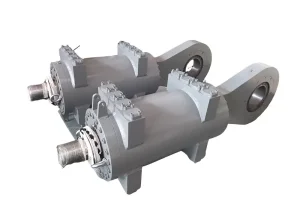
In grinding machinery—such as FLSmidth ATOX, Pfeiffer MPS, Loesche LM, TCD/TRM vertical mills and Chengdu Leejun, HCRI, CITIC Heavy Industries roller presses—hydraulic cylinders apply tens of Megapascals of grinding force against a shifting bed of raw materials, clinker, or slag. Material fluctuations induce extreme high-frequency dynamic shock waves and heavy asymmetrical side loads on the cylinder rod.
Automatic Gauge Control (AGC) cylinders in strip mill stands and mold oscillation cylinders in continuous steel casting machines demand ultra-fast dynamic responses (up to 40 Hz) and sub-micron positioning accuracy under radiant ambient heat exceeding 200°C.
In seismic simulators, aircraft wing fatigue test benches, and automotive suspension endurance test rigs, actuators operate continuously at dynamic frequencies between 10 Hz and 100 Hz. Conventional contact seals melt or burn out within hours under these conditions. Hydrostatic support servo cylinders provide 24/7 continuous operation with virtually unlimited service life.
22+ Years of Advanced Hydraulic Cylinder Design, Precision CNC Fabrication, and Rigorous Testing in Changzhou, China.
At Changzhou Xuanda Hydraulic Electromechanical Equipment Co., Ltd., engineering integrity is embedded into every stage of the manufacturing cycle. From finite element analysis (FEA) of cylinder barrel stress to sub-micron honing of internal bore surfaces, our process ensures every hydrostatic support servo cylinder meets global heavy industrial requirements.
Forged alloy barrels made from 42CrMo4 / 34CrNiMo6 steel, subjected to 100% ultrasonic non-destructive testing (NDT) per EN 10228-3 Class 4 to eliminate internal void defects.
Imported German and Japanese CNC honing machinery achieves internal bore roundness within 0.003 mm and surface roughness $R_a < 0.05\,\mu\text{m}$. Piston rods receive HVOF (High-Velocity Oxygen Fuel) Cr3C2-NiCr coatings or double-layer hard chrome plating exceeding 950 HV hardness.
Every unit undergoes 1.5x working pressure static holding tests, dynamic hydrostatic oil pocket stiffness calibration, frequency response spectral analysis, and zero-leakage verification prior to international export packaging.
Expert guidance from our technical team for procurement directors, plant engineers, and OEM designers.
Explore our full lineup of custom metallurgical, cement machinery, and ultra-low-friction servo cylinders.
Need custom hydrostatic support cylinder CAD drawings, FEA calculations, or drop-in OEM replacements? Contact Changzhou Xuanda Hydraulic today for direct engineering support.
Request Technical Proposal