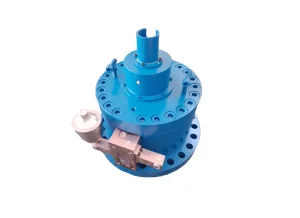
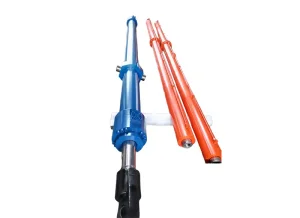
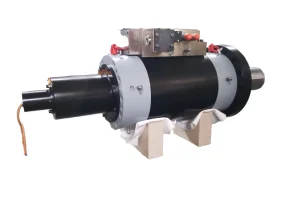
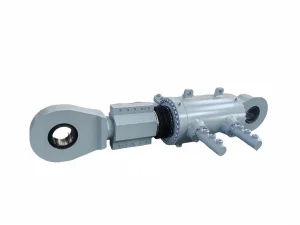
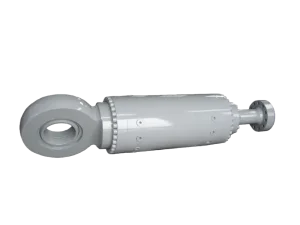
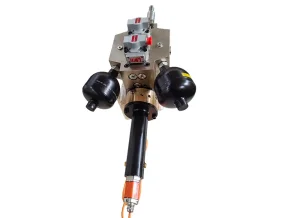
Engineered to exact OEM specifications, featuring advanced clearance seals, low-friction elastomeric packs, and hydrostatic support configurations.
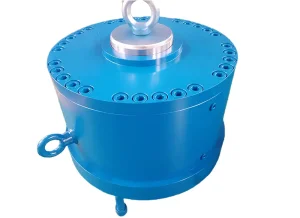
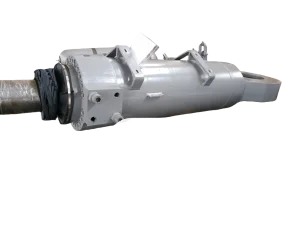
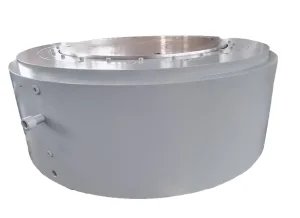
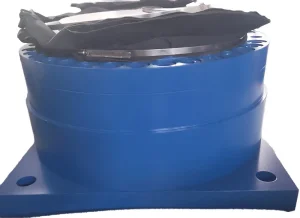
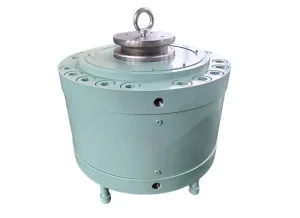
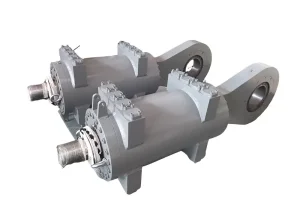
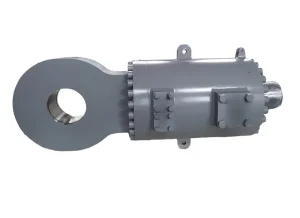
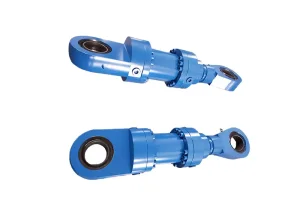
Analyzing the essential role of specialized hydraulic cylinder piston seals in modern heavy industrial machinery, high-frequency servo drives, and continuous mineral processing plants.
Modern heavy industries operate under zero-unplanned-downtime mandates. In vertical roller mills (Loesche, UBE, FLSmidth) and high-pressure grinding rolls (HPGR), piston seals endure continuous dynamic loading up to 35 MPa, high frequency vibration (5-25 Hz), and aggressive temperature spikes exceeding 120°C.
Global enterprise procurement is shifting focus from initial component procurement cost to life-cycle cost mitigation. Seal failure accounts for over 45% of fluid power system downtime. Premium elastomer compounds and precision clearance seals drastically extend Mean Time Between Failures (MTBF).
Manufacturers exporting heavy hydraulic systems across Europe, the Americas, and Southeast Asia require strict adherence to international standard interfaces (ISO 6020/2, ISO 3320) and stringent environmental compliance regulations, including REACH, RoHS, and TSCA seal compound validation.
Understanding film thickness, extrusion dynamics, stick-slip phenomena, and friction optimization in high-pressure hydraulic sealing elements.
The fundamental objective of a hydraulic cylinder piston seal is to maintain hermetic dynamic isolation between the cap-end and rod-end pressurized chambers while minimizing parasitic mechanical friction and wear. In high-demand application environments—such as continuous casting machinery, heavy roller presses, and precision hydraulic test benches—sealing performance is dictated by fluid mechanics, surface topography, and polymer physics.
In high-speed dynamic strokes, a microscopic fluid film is developed under the sealing lip governed by the Reynolds Equation for hydrodynamic lubrication. The film thickness h is a function of fluid viscosity (η), stroke velocity (v), and the contact pressure gradient (dp/dx):
If velocity drops below a critical threshold (as in precision servo micro-stepping), the film collapses, driving the sealing contact from elastohydrodynamic (EHD) lubrication into boundary lubrication. This transition triggers "stick-slip" behavior. To eliminate stick-slip in servo applications, Xuanda Hydraulic incorporates PTFE bronze-filled step-seals and precision metal-to-metal clearance seals, guaranteeing static-to-dynamic friction ratios (µs/µd) approaching 1.0.
| Seal Configuration | Material Matrix | Pressure Limit | Friction Coeff. (µ) | Temp. Range | Primary Industrial Application |
|---|---|---|---|---|---|
| Polyurethane U-Cup (PU) | Hydrolysis-Resistant TPU / CPU | Up to 40 MPa | 0.12 - 0.20 | -35°C to +115°C | Standard Industrial & Mobile Cylinders |
| PTFE Step-Seal Pack | Bronze / Carbon-Filled PTFE + NBR Ener. | Up to 50 MPa | 0.04 - 0.08 | -40°C to +200°C | High-Frequency Vertical Mill Tensioning |
| Fluoroelastomer Chevron | FKM / Viton® Reinforced Fabric | Up to 31.5 MPa | 0.15 - 0.25 | -20°C to +220°C | Metallurgical Continuous Casting & Kilns |
| Precision Clearance Seal | Hardened Alloy Steel / Nitrided Bore | Up to 21 MPa | < 0.001 (Floating) | -50°C to +300°C | Ultra-Precision High-Frequency Servo Actuators |
| Hydrostatic Support Float | Orifice-Fed Pressurized Film | Up to 35 MPa | ~ 0.0005 | -20°C to +150°C | Heavy Lateral Load Hydraulic Test Rigs |
Under extreme peak impulse pressures (e.g., mineral crushers or shock loading in roller presses), elastomeric seals tend to migrate into the clearance gap between the piston head and cylinder wall. Xuanda utilizes engineered virgin PEEK (Polyether ether ketone) and hard POM anti-extrusion back-up rings to prevent lip nibbling and catastrophic shear rupture up to 70 MPa shock spikes.
High velocity movement generates frictional heat at the contact point. If heat dissipation is insufficient, thermal degradation leads to elastomer hardening, compression set, and fluid leakage. Our material selection matrix accounts for fluid chemistry—including standard mineral oils, synthetic ester fluids (HEES), fire-resistant water-glycol (HFC), and eco-friendly bio-hydraulics.
Custom hydraulic cylinders engineered with specialized piston seal architectures to match global OEM equipment requirements across cement, metallurgical, and marine engineering sectors.
Used in Loesche LM, UBE UM, Pfeiffer MPS, and FLSmidth ATOX mills. Tensioning cylinders experience severe structural vibration and dust contamination. Piston sealing assemblies feature heavy-duty dual-acting PTFE step seals backed by high-density fluoroelastomer rings and double-lip metal-cased scraper units.
For Hefei Cement Research Institute (HCRI), CITIC Heavy Industries, and Chengdu Leejun CLF roller presses. High operating pressures (25-35 MPa) demand high-modulus polyurethane seals with diamond-profile wear rings capable of enduring heavy asymmetrical side-loads during non-uniform feed distribution.
In steel mill continuous casting lines and hot rolling stands, hydraulic cylinders operate directly adjacent to molten metal heat sources. Piston sealing arrays utilize specialized Kevlar-reinforced fabric-nested FKM chevron packings designed to resist thermal radiation up to 220°C without loss of sealing force.
Structural test benches require high-frequency oscillation (>30 Hz) with sub-micron positioning repeatability. Xuanda supplies hydrostatic support and clearance seal servo cylinders featuring zero physical seal contact, eliminating dynamic friction and guaranteeing an infinite seal lifespan under clean oil filtration conditions.
High ambient temperature, high abrasive clinker dust environments. Cylinders for grate coolers and kiln thrust rollers incorporate external secondary wiper seal boots combined with heavy bronze guide rings to absorb misalignment and block particulates from entering the seal cavity.
Heavy lifting and harrow cylinders for stacker-reclaimers exposed to aggressive ambient weather, salt fog, and continuous structural flexing. Customized multi-lip sealing systems maintain fluid tightness across wide thermal swings (-30°C to +60°C).
Strategic guidelines for OEM buyers, EPC contractors, and maintenance teams to streamline hydraulic cylinder sourcing, reverse engineering, and lifecycle management.
When OEM documentation is unavailable during emergency maintenance overhauls, Changzhou Xuanda provides a rapid reverse-engineering protocol. Utilizing 3D laser coordinate measuring machines (CMM) and spectrometer material analysis, our engineers digitize worn piston seal grooves, analyze failure root causes (e.g., micro-pitting, hydrolysis, heat hardening), and re-engineer optimized seal geometry within 48 hours.
To ensure perfect drop-in compatibility, piston seal grooves are machined strictly to ISO 7425/1 (hydraulic cylinder seal housings) and ISO 6195 standards. Bore honing is held to N5 roughness limits (Ra < 0.2 µm), preventing premature abrasion of soft elastomeric lips while retaining an optimum microscopic lubrication reservoir.
For large-scale processing plants operating 24/7, seal aging during prolonged shelf storage can impair performance. We supply vacuum-packed, nitrogen-flushed seal repair kits compliant with DIN 7716 storage standards, extending shelf viability up to 10 years without polymer cross-link degradation.
With an operational footprint spanning over 30 countries, Xuanda Hydraulic offers turnkey export packaging, including seaworthy VCI anti-corrosion barrier wrapping, custom wooden crating compliant with ISPM 15, and expedited air transport options for emergency shutdown situations.
Exploring next-generation innovations in hydraulic sealing technology, real-time condition monitoring, and sustainable green fluid power systems.
Incorporating flexible conductive nano-films within the seal heel to measure real-time lip wear, contact pressure, and fluid temperature. Data is transmitted directly to plant SCADA systems, enabling true Predictive Maintenance (PdM) before leaks occur.
Integrating functionalized graphene oxide (GO) nanosheets into polyurethane and PTFE matrices. Nano-reinforcement increases mechanical tensile strength by 35%, reduces wear rates by 50%, and improves thermal dissipation away from the sealing edge.
As environmental mandates enforce the adoption of biodegradable bio-oils (HEES, HETG) and water-based hydraulics, seal materials must withstand chemical breakdown from ester hydrolysis. Xuanda’s advanced polymer formulations ensure 100% fluid stability across green hydraulic media.
Every hydraulic cylinder and seal assembly manufactured at Changzhou Xuanda undergoes strict multi-stage quality verification prior to global export.
Ultrasonic flaw detection on raw steel tubes (35CrMo, 42CrMo, 20# steel). Spectrographic verification of chemical composition and mechanical hardness testing.
Machined on German and Japanese high-precision CNC lathes. Bore honing achieves dimensional tolerances down to H8/H9 with surface finish Ra < 0.2 µm.
Every assembled cylinder undergoes proof pressure testing at 1.5× maximum working pressure, holding pressure for a minimum of 30 minutes to verify zero internal/external leakage.
Servo cylinders are tested on computerized test benches measuring break-out friction, dynamic drag force, and positioning resolution down to sub-micron accuracy levels.
Expert engineering answers to complex technical questions regarding hydraulic cylinder piston seal selection, maintenance, and failure troubleshooting.
Stick-slip occurs when static friction (µs) is significantly higher than dynamic friction (µd). At low speeds or high pressures, the dynamic lubrication film breaks down, causing the seal lip to grab the cylinder wall (stick) until pressure builds sufficiently to release it (slip). This creates severe vibration and positioning errors in servo loops.
To eliminate stick-slip, Xuanda utilizes PTFE step-seals infused with bronze or carbon fillers or zero-contact clearance seal designs. These materials maintain a virtually constant friction coefficient across velocity spectrums, ensuring smooth, vibration-free movement.
Temperatures exceeding 80°C accelerate polymer oxidation and thermal degradation in standard Nitrile (NBR) and conventional Polyurethane (PU) seals, leading to hardening, loss of elasticity, and compression set failure. In hot-rolling mills and kiln thrust systems, Xuanda specifies high-temperature Fluoroelastomers (FKM / Viton®) reinforced with Aramid/Kevlar fabrics, capable of continuous operation at 200°C with short excursions up to 230°C.
Yes. Our engineering department specializes in reverse engineering. If original CAD drawings are unavailable, clients can provide physical samples, field measurements, equipment nameplate data, or dimensional photos. We digitize the geometry, reconstruct complete engineering models, optimize seal groove specifications to modern standards, and issue manufacturing drawings for client approval before production begins.
Clearance Seals: Rely on a micron-level precision tolerance fit between the piston and honed bore without elastomeric elements, offering extremely low friction and high temperature resistance, but with controlled micro-leakage bypass.
Low-Friction Seals: Use specialized PTFE step-seals energised by elastomer O-rings, achieving zero internal leakage with extremely low drag for standard closed-loop servo positioning.
Hydrostatic Support: Floats the piston and piston rod on a pressurized hydraulic oil film fed through internal orifices, enabling the cylinder to carry massive lateral loads without metal-to-metal contact or seal wear.
Standard lead times range from 3 to 5 weeks for custom heavy-duty cylinders, with expedited emergency options for shutdown repairs. All products are delivered with comprehensive Quality Inspection Reports (QC), Pressure Test Certificates, Material Mill Test Reports (MTR), and ISO 9001 quality management documentation for seamless international compliance.
Selecting the ideal fluid power actuation system engineered for continuous reliability and maximum structural durability.