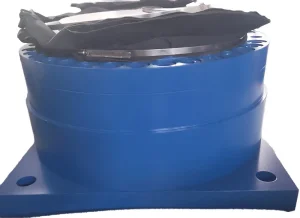
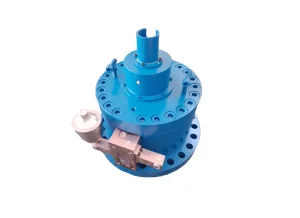
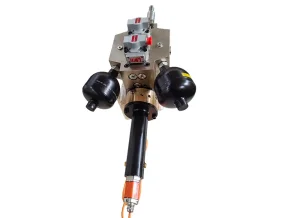
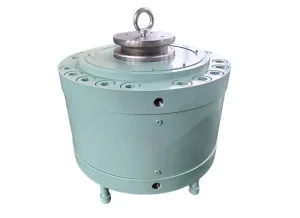
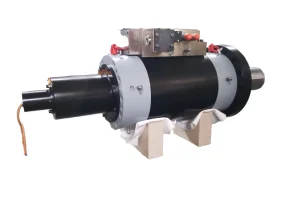
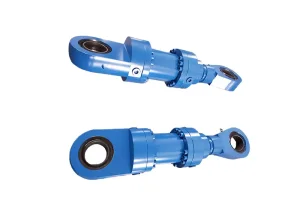
Heavy-duty hydraulic actuators engineered for severe grinding mills, roller presses, and precision testing loops. Built to OEM drop-in replacement specifications.
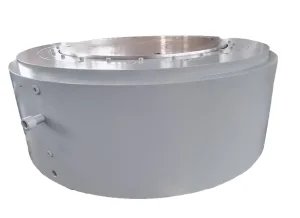
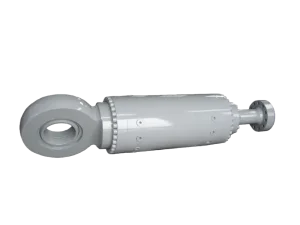
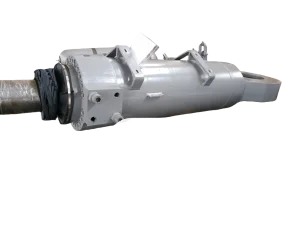
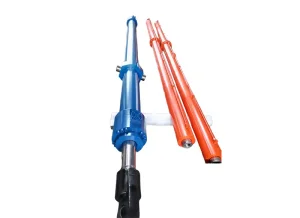
Why rigorous hydraulic fluid cleanliness testing and dynamic pressure impulse validation are vital for preventing premature component failure in heavy industrial systems.
In high-load hydraulic systems—such as cement vertical roller mill loading mechanisms, metallurgical rolling mills, and high-frequency servo testing rigs—hydraulic oil is exposed to severe thermal stress, mechanical shearing, and particulate ingress. More than 80% of hydraulic system breakdowns are directly attributable to fluid contamination and oil degradation.
As a premier Durable Hydraulic Fluid Testing Manufacturer, our engineering field evaluations demonstrate five primary degradation vectors that impair fluid power reliability:
Fluid cleanliness is quantified via the ISO 4406:1999 standard, which classifies particle concentrations per milliliter of fluid across three reference size thresholds: >4 µm(c) / >6 µm(c) / >14 µm(c).
Lowering fluid contamination by even a single ISO cleanliness code level can extend the operational life of heavy hydraulic cylinders and servo valves by up to 250%. The correlation between target cleanliness levels, operating pressure ranges, and typical application boundaries is detailed in the technical baseline table below.
Maintaining target oil cleanliness prevents spool binding in closed-loop servo cylinders, seal extrusion in high-pressure mill actuators, and micro-pitting in hydrostatic bearings.
| System Type & Operating Pressure | Target ISO 4406 Code | NAS 1638 Class | Primary Fluid Risk Factor | Expected Cylinder Seal Life |
|---|---|---|---|---|
| High-Precision Servo Loops (>31.5 MPa) | 14/12/9 | Class 3 - 4 | Servo spool silt binding & hysteresis | > 25,000 Operating Hours |
| Vertical Roller Mill Loading (>25 MPa) | 16/14/11 | Class 5 - 6 | Particulate seal abrasion & rod pitting | > 18,000 Operating Hours |
| Heavy Metallurgical Cylinders (16-25 MPa) | 17/15/12 | Class 7 | Thermal oxidation & varnish sludge | > 15,000 Operating Hours |
| General Industrial Hydraulics (<16 MPa) | 19/17/14 | Class 8 - 9 | Fluid shear & water hydrolysis | > 12,000 Operating Hours |
An inside look at OEM test bench architecture, high-velocity oil flushing systems, and automated fluid condition analysis protocols.
Online optical laser sensors pass monochromatic light beams through a narrow fluid flow cell. Light blockage proportional to particle shadow area measures precise count distribution across 4µm, 6µm, 14µm, and 21µm thresholds in real time under dynamic fluid pressures.
Prior to factory dispatch, hydraulic cylinder manifolds and testing circuits undergo turbulent flushing at Reynolds numbers exceeding Re > 4,000. High turbulent kinetic energy strips micro-burrs, welding scale, and residual machining particles from internal fluid channels.
Coulometric Karl Fischer titration (ISO 12937) measures trace moisture down to 1 ppm accuracy. Quantifying dissolved water prevents seal hydrolysis in synthetic fluids (HEES/HETG) and protects heavy cylinders operating in humid cement or marine environments.
How Changzhou’s specialized hydraulic manufacturing cluster delivers cost efficiency, rapid engineering iteration, and certified quality to international OEM buyers.
Located in Changzhou, Jiangsu Province, our production facility sits at the heart of China’s premier heavy equipment manufacturing corridor. This strategic positioning provides direct access to high-grade steel mills (27SiMn, 42CrMo4, ST52.3), specialized hard-chrome plating facilities, precision deep-hole honing mills, and international seal manufacturers (Trelleborg, Parker, Hallite).
By controlling the complete supply chain from raw forging inspection to final hydraulic fluid testing, we reduce manufacturing lead times by 35% to 50% compared to European counterparts while maintaining strict compliance with DIN EN 10204 3.1 material traceability standards.
For international cement plant operators, metallurgical engineering contractors, and OEM distributors, procurement costs extend beyond initial unit price. Our integrated engineering approach reduces Total Cost of Ownership through three distinct mechanisms:
The evolution of hydraulic testing from offline lab sampling to continuous edge-AI sensor arrays and virtual digital twin models.
Modern fluid testing integrates inline sensors directly into cylinder port manifolds. Sensors continuously stream oil dielectric constant, relative humidity (% water saturation), kinematic viscosity index, and particle count data directly to plant SCADA systems via Industrial Ethernet or Modbus TCP.
By simulating temperature, velocity gradient, and fluid shear stress inside a virtual cylinder model, AI algorithms predict oil oxidation rates and varnish deposition risks months before physical symptom manifestation, transforming reactive maintenance into proactive asset health management.
CBM replaces rigid time-based oil change schedules with dynamic fluid condition metrics. Plants optimize oil life span, eliminate unnecessary fluid discharge, reduce hazardous waste disposal, and protect sensitive hydrostatic servo cylinders from unexpected particle spikes.
Tailored hydraulic cylinder designs paired with fluid testing compliance across high-demand industrial application operating environments.
Vertical roller mills (Loesche LM, UBE UM, Pfeiffer MPS, FLSmidth ATOX) operate under intense shock loads and airborne dust contamination. Our heavy-duty hydraulic cylinders feature multi-stage wiper rings, hard-chromed dual-seal glands, and external fluid sample ports for rapid fluid cleanliness sampling during operation.
In steel and non-ferrous metallurgy plants, cylinders face extreme radiant temperatures up to 200°C and synthetic fire-resistant fluids (HFC/HFDU). Custom hydraulic fluid testing protocols confirm fluid water-glycol concentration levels and additive stability under thermal stress.
Structural test rigs require zero-stick-slip performance and ultra-low friction motion. Our clearance-seal and hydrostatic support cylinders undergo static/dynamic fluid testing to ensure oil film thickness remains stable under micro-meter level stroke oscillations.
Expert answers from our senior hydraulic design team regarding fluid cleanliness standards, OEM replacement specifications, and custom manufacturing.
For standard heavy-duty industrial cylinders (such as mill loading or rotary kiln thrust cylinders), the minimum recommended fluid cleanliness level is ISO 17/15/12 (NAS Class 7). For high-performance closed-loop servo cylinders or clearance seal cylinders, the required fluid cleanliness level increases to ISO 14/12/9 (NAS Class 4) to prevent spool silt binding and premature seal erosion.
Yes. We specialize in designing and manufacturing dimensional drop-in replacement hydraulic cylinders for major vertical roller mill OEMs (including Loesche LM, UBE UM, Pfeiffer MPS, FLSmidth ATOX, and Leejun CLF roller presses). Every unit matches original mounting pin centers, hydraulic port interfaces, stroke parameters, and working pressure ratings.
Every hydraulic cylinder undergoes a comprehensive Factory Acceptance Test (FAT) on our automated hydraulic test bench. Testing includes full-stroke proof pressure testing (up to 1.5x working pressure), internal and external seal leakage measurement, dynamic friction testing, and high-velocity fluid flushing. Final oil samples are verified with an online laser particle counter to guarantee compliance with specified ISO cleanliness codes.
We engineer seals according to your specific fluid medium and temperature envelope. Options include Fluorocarbon (FKM/Viton) for high thermal environments up to 200°C, Nitrile (NBR) for mineral oils, Polyurethane (AU/EU) for high abrasion resistance, and PTFE bronze-filled slide rings for low-friction servo loops. Specialized compounds are available for fire-resistant water-glycol (HFC) and ester fluids (HFDU).
For continuous-duty heavy industrial plants (such as cement or steel manufacturing), online sensor monitoring is recommended. For offline testing, laboratory sample analysis should be conducted monthly or every 500 operating hours. Additional fluid testing is mandatory following any major component replacement, seal change, or line breach to detect ingress contaminants before restarting systems.
All exported cylinders include a comprehensive technical documentation package: EN 10204 3.1 Material Test Certificates for cylinder barrels and rods, Factory Pressure Inspection & Leakage Test Reports, ISO 4406 Oil Cleanliness Verification Certificates, 2D/3D General Assembly Drawings, and Installation/Maintenance Manuals.
Complete OEM product lineup engineered for mill loading, hydrostatic support, grate cooling, and vertical roller mill systems.
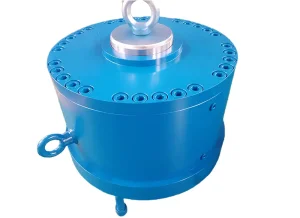
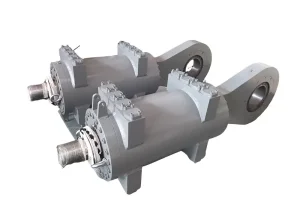
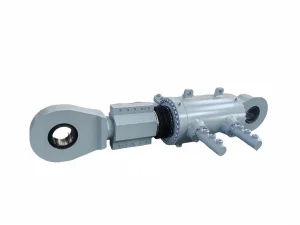
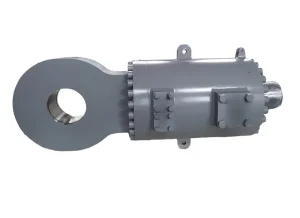
Whether you require a custom hydraulic fluid testing bench, complete cylinder technical drawings, or direct replacement cylinders for Loesche, UBE, or Pfeiffer vertical mills, Changzhou Xuanda provides full technical support from application engineering through international dispatch.
Request Engineering Specs & Technical Quote