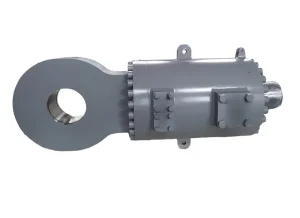
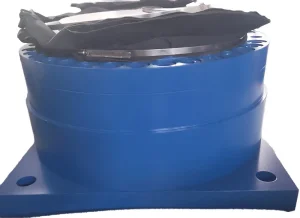
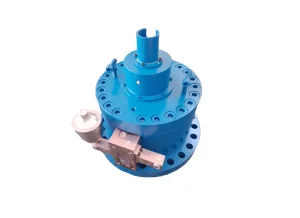
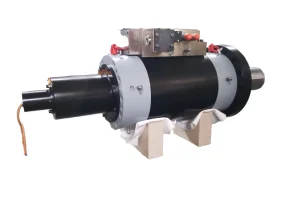
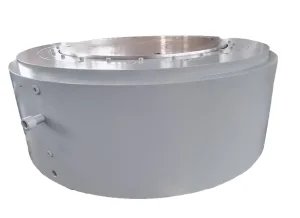
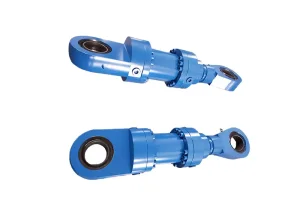
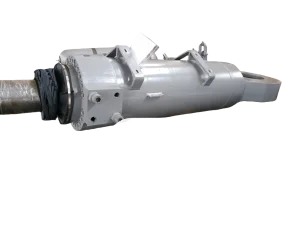
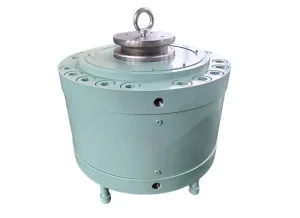
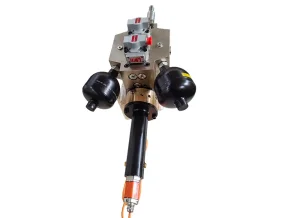
Precision-machined hydraulic solutions engineered for vertical roller mills, roller presses, and servo machinery.
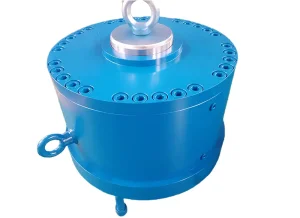
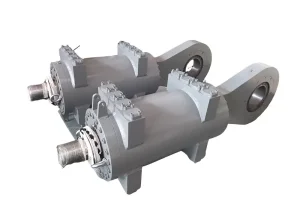
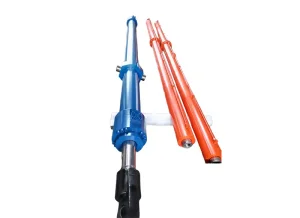
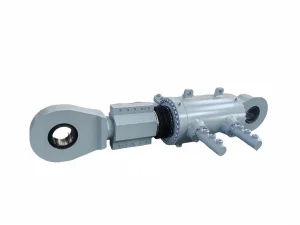
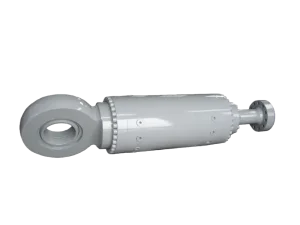
An in-depth evaluation of fluid mechanics, structural rigidity, and performance dynamics in heavy industrial actuation systems.
In modern heavy mechanical engineering, the single cylinder double acting hydraulic system serves as the fundamental backbone for controlled linear force generation. Unlike single-acting actuators that rely on gravity, external counterweights, or mechanical spring returns to retract the piston, double-acting cylinders utilize hydraulic fluid under pressure applied alternately to both sides of the internal piston head. This bidirectional hydraulic force configuration delivers complete dynamic control during both the extending (push) and retracting (pull) strokes, establishing unparalleled operational stability across severe industrial duty cycles.
"The core advantage of high-durability double-acting hydraulic cylinders lies in their ability to maintain exact position retention, withstand intense dynamic pressure spikes up to 700 bar, and resist severe lateral side-loads without micro-fretting or seal extrusion."
To evaluate the mechanical advantages of a durable single-cylinder double-acting configuration, engineering teams must evaluate the differential effective surface areas between the cap end (full bore area $A_1$) and the rod end (annular ring area $A_2$). The output force generated during extension and retraction is calculated via the fundamental hydrostatic pressure equations:
When selecting premier manufacturers and exporters of heavy-duty double-acting cylinders, industrial buyers must look beyond basic dimensional interchangeability. Critical durability metrics encompass the fatigue limit of steel barrel materials, the precision of internal micro-honing finishes ($Ra < 0.15\,\mu\text{m}$), and the tribological interaction between high-speed polyurethane rod seals and hard chrome-plated piston rods.
Rigid metallurgical choices and micro-precision machining engineered to prevent structural fatigue, fluid bypass, and rod deflection under multi-ton dynamic loading.
Utilizing high-tensile seamless cold-drawn tubes made of 27SiMn, ST52.3, or 42CrMo4 alloy steel. Skived and roller-burnished to achieve mirror finishes, enhancing seal life up to 300% compared to standard honed tubing.
Precision-ground 40Cr / 42CrMo piston rods subjected to high-frequency induction hardening (HRC 55–60), plated with a minimum 30–50 $\mu\text{m}$ micro-crack hard chrome layer or laser-cladded Ni-Cr overlay for extreme marine and abrasive dust resistance.
Integrated low-friction PTFE step-seals, primary polyurethane U-cups, and heavy-duty double-lip Viton wiper seals engineered to withstand temperatures up to 200°C and fluid pressures exceeding 35–70 MPa without thermal degradation.
| Engineering Parameter | Standard Commercial Grade | Xuanda Heavy-Duty Industrial Standard | Impact on Equipment Performance |
|---|---|---|---|
| Bore Diameter Range | $\varnothing 40\text{mm} - \varnothing 200\text{mm}$ | $\varnothing 80\text{mm} - \varnothing 1200\text{mm}$ Custom | Handles massive vertical crushing force up to 15,000 kN. |
| Operating Pressure Limit | 16 - 21 MPa (160-210 Bar) | 31.5 - 70 MPa (315-700 Bar) Continuous | Eliminates dynamic surge failures under violent material impact. |
| Barrel Inner Roughness | $Ra\ 0.4\ \mu\text{m} - 0.8\ \mu\text{m}$ | $Ra < 0.10\ \mu\text{m}$ (Skived & Burnished) | Reduces static breakaway friction & eliminates stick-slip motion. |
| Chrome Plating Hardness | HV 600 - 750 | HV 850 - 1050 (Induction Hardened) | Prevents abrasive scratching from raw cement dust & slag particles. |
| Target Fatigue Lifecycle | 500,000 Cycles | > 2,500,000 Full Load Cycles | Extends continuous operation intervals between plant turnarounds. |
Tailored hydraulic engineering deployed in the world's most demanding raw material grinding, steel rolling, and heavy bulk material handling plants.
In Loesche LM, UBE UM, Pfeiffer MPS, and FLSmidth ATOX vertical roller mills, single double-acting hydraulic cylinders maintain precise grinding roll pressure against raw clinker or slag while dampening intense operational vibration.
Engineered for high-pressure grinding rolls (HPGR) built by HCRI, CITIC Heavy Industries, and Chengdu Leejun. Double-acting cylinders deliver instant high-tonnage pressure adjustability and quick retraction to pass uncrushable tramp metal safely.
Positioned on heavy cement rotary kilns, custom double-acting hydraulic thrust roller cylinders continuously adjust the axial position of the spinning kiln shell, maintaining balanced wear on support rollers and tires under thermal expansion.
One of the largest hurdles for plant maintenance managers when sourcing replacement cylinders from overseas exporters is dimensional misfits or fluid port mismatching. Leading Chinese manufacturers like Changzhou Xuanda Hydraulic utilize reverse-engineering methodologies, laser 3D scan verification, and precision CAD layout mapping to ensure 100% mechanical compatibility with legacy European and Japanese machinery interfaces.
Whether servicing a 4-roller cement mill or a high-frequency hydraulic servo simulator, exact alignment of clevis pin centers, trunnion mountings, spherical rod eye bearings, and SAE/BSP flange ports is verified prior to machining, preventing costly installation delays during scheduled plant shutdown windows.
How Changzhou's specialized industrial hydraulic hub delivers world-class manufacturing precision, cost efficiency, and raw material security.
China has evolved into the world's primary manufacturing powerhouse for high-pressure hydraulic components. At the epicenter of this specialized industry lies Changzhou City in Jiangsu Province — a world-renowned hydraulic machinery cluster featuring an end-to-end supply ecosystem spanning raw steel forging, precision tube skiving, chrome plating, seal synthesis, and high-pressure automated testing infrastructure.
With localized access to China's top steel mills (such as Baosteel and TPCO) and specialized heat treatment facilities within a 30-mile radius, raw material lead times are reduced by up to 50%, enabling rapid prototype and volume production cycles.
Utilizing imported multi-axis CNC machining centers, deep-hole boring machines, and automated honing cells capable of maintaining micro-tolerances within $\pm 0.005\text{ mm}$ across multi-meter cylinder lengths.
By pairing high-throughput production efficiency with lower engineering overhead, Chinese exporters supply top-tier cylinders at a 30% to 45% competitive cost advantage compared to Western European OEM suppliers, without compromising quality.
Key criteria for procurement directors and technical buyers evaluating Chinese hydraulic cylinder manufacturers for long-term contract supply.
For multinational cement producers, metallurgy OEMs, and mining conglomerates, establishing a resilient international hydraulic supply line requires rigorous risk management and quality audit protocols. When procuring heavy-duty single-cylinder double-acting actuators, technical sourcing teams should mandate the following key quality criteria:
Adhering to global pressure vessel directives and establishing local technical responsiveness across overseas market hubs.
Manufactured in full alignment with international pressure equipment directives including CE PED 2014/68/EU, ISO 6020/2 mounting dimensions, and ASME Section VIII design concepts upon customer specification.
Export packages can be customized to include pre-configured seal replacement kits, rod wipers, and bearing bushings, ensuring plant maintenance crews can perform routine overhauls without extended downtime.
Dedicated technical support teams offering video-guided installation assistance, hydraulic circuit debugging, and performance diagnostic consultations to global plant sites 24/7.
The transformation of traditional hydraulic cylinders into intelligent, eco-friendly, zero-friction smart mechatronic actuators.
Modern double-acting cylinders feature embedded magnetostrictive linear position transducers and pressure sensors. This allows continuous real-time stroke feedback ($\pm 0.01\text{ mm}$) and remote condition monitoring via IIoT networks.
High-end servo applications are shifting toward hydrostatic oil-film floating supports and clearance seals. By eliminating physical elastomer contact, friction is reduced to near-zero, enabling dynamic response frequencies up to 50 Hz.
In response to global decarbonization and environmental regulations, cylinder seals and internal coatings are optimized to operate seamlessly with bio-degradable synthetic ester fluids (HEES) and water-glycol fire-resistant hydraulic media.
Direct answers from our senior hydraulic engineering team covering design selection, OEM interchangeability, maintenance, and ordering.
Explore specialized hydraulic cylinders designed for heavy equipment, rotary kilns, stackers, and precision servo loops.