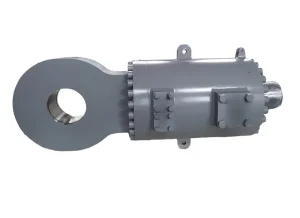
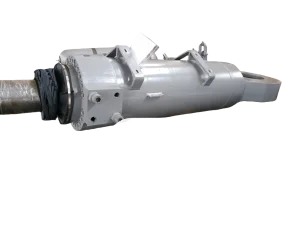
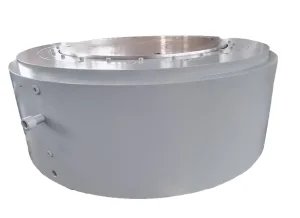
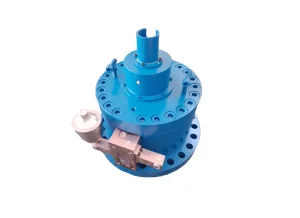
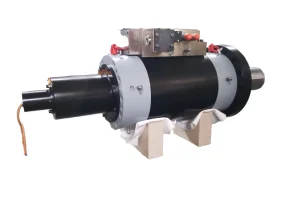
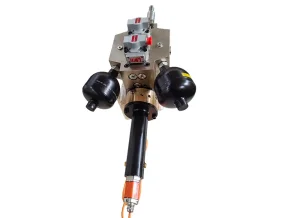
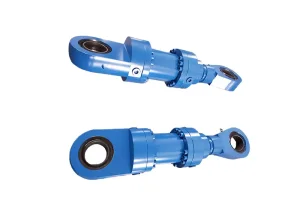
Precision-machined cylinders matched to original installation dimensions and working parameters for cement mills, roller presses, and continuous process lines.
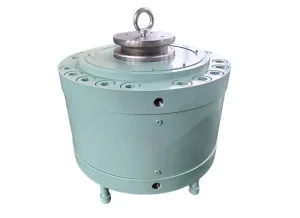
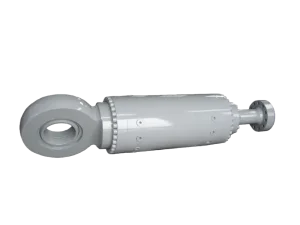
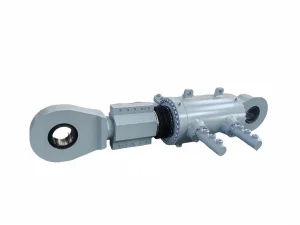
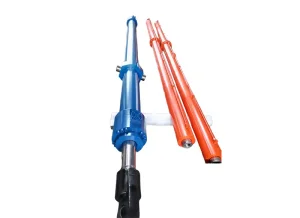
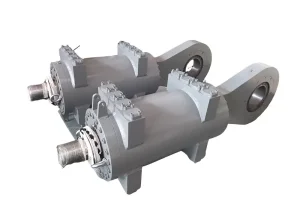
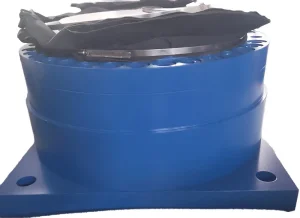
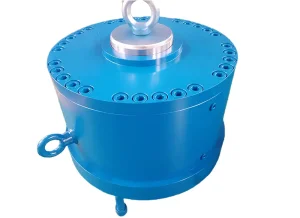
An engineering analysis of transient shock loads, pressure spikes, and tribological seal degradation in heavy-duty grinding applications.
In modern industrial comminution—spanning cement clinker grinding, slag processing, raw meal preparation, and pulverized coal generation—the Vertical Roller Mill (VRM) stands as the core mechanical asset. Operating continuously under extreme mechanical duress, the performance and reliability of a VRM depend directly on its hydro-pneumatic tensioning system. At the center of this tensioning architecture are specialized hydraulic cylinders tasked with delivering continuous, regulated crushing force ranging from 120 bar to over 250 bar system pressures.
Unlike standard industrial hydraulic actuators that perform predictable linear motions, vertical mill tensioning cylinders operate under dynamic stress conditions characterized by high-frequency vibration, micro-motion fretting, intense lateral shear forces, and severe thermal radiation from hot process gas streams (often exceeding 90°C to 150°C in raw grinding circuits). Furthermore, transient shock loads resulting from ungrindable tramp iron or sudden feed bed collapse generate rapid hydraulic pressure spikes that exceed nominal working pressures by up to 180% within milliseconds.
As leading **vertical mill hydraulic cylinder exporters**, Changzhou Xuanda Hydraulic Electromechanical Equipment Co., Ltd. addresses these operational challenges by re-engineering conventional actuation designs. Through decades of field forensic research and finite element stress modeling (FEA), we have perfected cylinder geometries, surface coating chemistries, and dynamic seal profiles that counteract stick-slip degradation, seal extrusion, and rod buckling.
How advanced material science and sub-micron machining tolerances extend component life under harsh grinding conditions.
Cylinder barrels are forged from premium 25Mn or alloyed 42CrMo4 structural steel, seamless-bored and cold-drawn to eliminate internal stress concentrations. Piston rods undergo high-frequency induction hardening (surface hardness 55–60 HRC to a depth of ≥1.5mm) and dual-layer hard chrome plating (≥50 μm total thickness), preventing gouging from abrasive clinker dust.
Utilizing proprietary low-friction PTFE/PEEK dynamic seals combined with bronze-filled guide belts, our actuators eliminate the stick-slip effect during low-velocity high-pressure stroke adjustments. For critical servo applications, our clearance seal and hydrostatic oil-film levitation technologies provide zero-contact sliding with near-zero frictional hysteresis.
To shield the mechanical grinding roller assembly and hydraulic power unit (HPU) from structural fatigue, our vertical mill hydraulic cylinders are tuned to work in tandem with high-response bladder accumulators. Internal cushioning manifolds absorb high-amplitude velocity spikes during material bed fluctuations.
| Sealing System Type | Friction Coefficient (μ) | Pressure Rating | Side-Load Capability | Primary Industrial Application |
|---|---|---|---|---|
| Standard Polyurethane Seals | 0.08 – 0.15 | Up to 31.5 MPa | Moderate | General industrial cylinders, stacker-reclaimers |
| Low-Friction PTFE/Bronze Seals | 0.02 – 0.05 | Up to 40.0 MPa | High | Vertical roller mill loading, roller press actuation |
| Precision Clearance Seals | < 0.005 | Up to 21.0 MPa | Low (Requires alignment) | High-frequency test rigs, high-speed servo actuators |
| Hydrostatic Support Oil-Film Levitation | ≈ 0 (Viscous fluid only) | Up to 35.0 MPa | Ultra-High (Self-centering) | Heavy lateral-load VRM, extreme duty metallurgical mills |
Combining 22+ years of specialized hydraulic R&D with modern CNC automation, lean assembly, and global delivery reliability.
Located in Changzhou's industrial engineering corridor, Changzhou Xuanda operates a 20,000m² manufacturing plant equipped with imported German and Japanese multi-axis CNC machining centers, deep-hole boring systems, and precision vertical honing units capable of achieving cylinder bore surface roughness down to Ra 0.1–0.2 μm.
Every vertical mill loading cylinder and high-precision servo cylinder undergoes 100% full-scale hydraulic testing on automated test stands. Testing protocols include step-response pressure testing, internal leakage verification under maximum holding pressure, and dynamic stroke frequency validation prior to export clearance.
Our integrated ecosystem delivers OEM-compatible replacement cylinders at competitive cost points while dramatically shortening delivery lead times—allowing international procurement teams to maintain lean spare parts inventories without risking mill availability.
Drop-in engineering designs tailored for international vertical roller mills, roller presses, rotary kilns, and material handling systems.
Plant retrofits and emergency maintenance demands demand zero margin for dimensional error. Xuanda Hydraulic specializes in reverse-engineering and original design manufacturing (ODM) of replacement hydraulic cylinders compatible with major global OEM specifications, including Loesche (LM Series), FLSmidth (ATOX Series), Pfeiffer (MPS Series), UBE (UM Series), Tianjin Cement Design Institute (TCD/TRM), Chengdu Leejun (CLF Series), Hefei Cement Research Institute (HCRI), and CITIC Heavy Industries.
Replacement hydraulic tensioning and rocker arm positioning cylinders engineered to match original Loesche mounting geometry, pin center distances, and working stroke parameters for coal, cement, and mineral mills.
Heavy-duty pull rod loading cylinders designed for ATOX 27.5 through ATOX 50+ mills, featuring specialized wiper seals resistant to highly abrasive cement raw meal particles.
Engineered hydraulic tensioning units matching MPS roll guide structures and UBE UM mill suspension systems, engineered to maintain constant grinding pressure across varying feed moisture levels.
Built for Leejun CLF, HCRI, and CITIC Heavy Industries roller presses, these cylinders incorporate diamond profile options and high-tonnage thrust capabilities for interparticle crushing.
Hydraulic thrust roller cylinders engineered to continuously control the axial movement of massive rotating kilns, regulating tire-to-trunnion wear with precision pressure feedback.
Reliable hydraulic cylinders tailored for clinker cooler reciprocating grates and raw material stacker & reclaimer harrow systems operating under extreme outdoor ambient temperatures.
Key engineering criteria procurement managers must evaluate to ensure dynamic fit, fluid compatibility, and ocean shipping integrity.
Verify bore size, piston rod diameter, stroke length, retracted/extended pin-to-pin distances, and mounting configurations (clevis, sphere bearing, trunnion, or flange mount). Provide existing OEM drawings or physical measurements of worn samples.
Define hydraulic fluid media (mineral oil HLP, synthetic ester HEES, water-glycol HFC fire-resistant fluid) and operating temperature range. Specify ambient dust levels to select optimal rod wiper seals and protective bellows.
Determine position feedback requirements. Options include integrated magnetostrictive linear position transducers (e.g., MTS Temposonics, Balluff), inductive proximity switches, or pressure transducer ports for closed-loop automation.
Pioneering smart IIoT diagnostics, friction-free hydrostatic levitation, and eco-friendly actuation solutions for next-generation industrial plants.
Integrating wireless vibration micro-sensors, temperature thermocouples, and continuous seal wear telemetry into the cylinder head cap. Real-time diagnostic data feeds directly into plant SCADA/Predictive Maintenance software to prevent unscheduled downtime.
Expanding our 300 kN hydrostatic support servo cylinder technology. By floating the piston and rod assembly on an active pressurized oil film, mechanical metal-to-metal contact is entirely eliminated, extending service lifespans under high lateral loads indefinitely.
Optimizing dynamic polymer seals for biodegradable synthetic esters and low-viscosity eco-friendly hydraulic fluids. This supports global cement manufacturers in reducing their environmental footprint while complying with stringent carbon-neutral directives.
Certified manufacturing processes backed by reverse-engineering assistance and responsive international field engineering services.
At Changzhou Xuanda Hydraulic, quality is not merely a final inspection step—it is embedded into every stage of production. Operating under certified ISO 9001:2015 Quality Management Systems, ISO 14001:2015 Environmental Systems, and ISO 45001:2018 Occupational Health Systems, our plant adheres to strict European DIN and American SAE fluid power standards.
Our engineering support services extend far beyond manufacturing export products. We offer international clients:
Engineering answers to critical questions regarding replacement compatibility, seal wear, maintenance intervals, and technical options.
Yes. Xuanda Hydraulic specializes in manufacturing direct drop-in replacement cylinders that match the exact installation dimensions, pin center distances, stroke lengths, mounting interfaces, and pressure parameters of major vertical roller mill OEMs including Loesche (LM series), FLSmidth (ATOX series), Pfeiffer (MPS series), UBE (UM series), TCD/TRM, as well as roller press cylinders for Chengdu Leejun CLF series and HCRI mills. Brand names are registered trademarks of their respective owners; Xuanda supplies fully compatible replacement cylinders engineered to match or exceed original operational life.
Premature seal failure in VRM cylinders is typically driven by three factors: high-frequency micro-vibration leading to stick-slip friction, thermal degradation from hot process gas streams, and dynamic side-loads caused by uneven grinding bed depth. Xuanda addresses this by employing specialized low-friction PTFE/PEEK seal compounds with bronze-filled guide bands, micro-honed barrel bores (Ra 0.1–0.2 μm), and heavy-duty wiper seals that block fine abrasive dust entry. For extreme lateral load conditions, we recommend our hydrostatic support cylinders.
Clearance seal cylinders rely on high-precision machining tolerances between the piston and bore (without soft elastomer contact), providing almost zero friction and high frequency response for test rigs and servo loops. Low-friction seal cylinders utilize specialized polymer seal geometries to minimize stick-slip while maintaining zero static leakage under high pressure. Hydrostatic support cylinders float the piston and rod on a pressurized fluid cushion, completely eliminating metal contact to absorb extreme side-loads and mixed high/low speed duty without mechanical wear.
Yes. Our engineering team routinely performs reverse-engineering on worn or failed field cylinders. You can send us the physical unit, or provide key dimensional measurements, photos, and nameplate data. We perform 3D CAD modeling, re-calculate structural safety margins, generate complete production drawings for client sign-off, and proceed with precision manufacturing.
To provide a rapid technical proposal and quote, please supply: (1) Equipment brand, mill model, and position of the cylinder; (2) Cylinder bore, rod diameter, and stroke length; (3) Retracted and extended pin-to-pin distance; (4) Operating and peak hydraulic pressure ratings; (5) Mounting style (clevis, trunnion, spherical bearings); (6) Fluid type and ambient operating temperatures; and (7) Photos or drawings if available.
Every Xuanda cylinder undergoes rigorous factory acceptance testing (FAT), including hydrostatic proof pressure testing at 1.5x working pressure, internal bypass/leakage testing under static load, low-pressure start-up friction testing, full stroke displacement verification, and cleanliness testing according to ISO 4406 standards. Inspection certificates, NDT material reports, and paint thickness test logs are provided with export documentation.
Explore our complete range of vertical roller mill actuators, servo cylinders, hydrostatic supports, and heavy plant equipment cylinders.