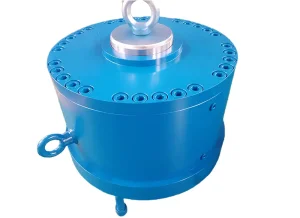
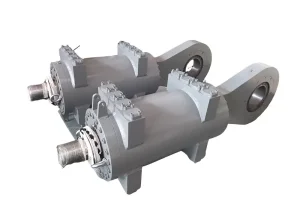
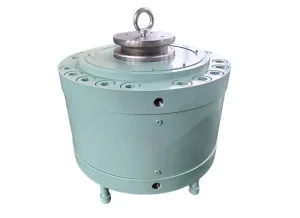
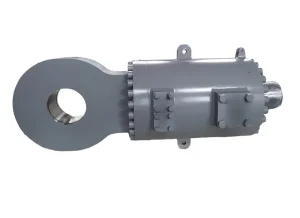
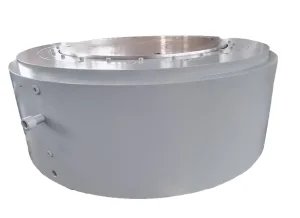
Explore our heavy-duty hydraulic drive units custom-engineered for cement vertical mills, roller presses, and high-frequency servo applications.
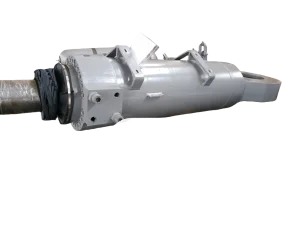
In heavy industrial mechanical engineering, stroke length constraints vs. collapsed envelope dimensions represent a classic kinematic design challenge. Standard single-stage hydraulic actuators require an installation space proportional to their total stroke length. When spatial restrictions dictate a compact retracted footprint combined with an exceptionally long operational reach—such as in heavy mining dump trucks, mobile harbor cranes, specialized steel plant furnaces, and heavy material handling platforms—telescopic multi-stage cylinders represent the definitive structural engineering solution.
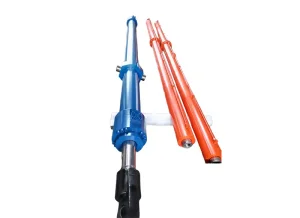
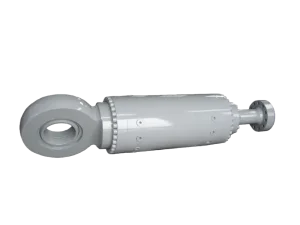
However, unlike single-acting telescopic cylinders that rely entirely on gravity or external mechanical loads for stage retraction, a Double Acting Telescopic Hydraulic Cylinder utilizes pressurized hydraulic fluid to actively power both extension and retraction strokes. This dual-directional force control provides crucial operational stability, high-precision position holding, controlled linear velocity under negative loads, and rapid cycle times regardless of gravity vector orientation or external resistance forces.
Single-acting units often experience erratic, stuck, or slow retraction under zero-load conditions. Double-acting designs feature internal fluid passages and concentric oil transfer channels that direct high-pressure oil to the annular rod side of each nested stage, forcing positive, synchronized stage retraction regardless of angle or payload.
As a telescopic cylinder extends stage by stage, the effective piston area decreases, resulting in an incremental step reduction in thrust force at constant input pressure, accompanied by an increase in linear speed. Advanced fluid manifolding and proportional valving balance hydraulic pressure across stages to smooth force transitions.
Double-acting telescopic cylinders demand specialized multi-stage sealing arrays. Each moving sleeve acts simultaneously as a piston barrel for the subsequent smaller stage and a piston rod relative to the larger outer barrel, requiring dual-purpose high-pressure seals, step-cut wear rings, and anti-extrusion back-up rings.
Decades of manufacturing rigor and technical innovation reflected through global industry footprint metrics.
Global OEM buyers and equipment plant managers increasingly turn to specialized Chinese hydraulic manufacturers for critical double-acting telescopic actuators. Changzhou, Jiangsu serves as a world-leading hub for heavy machinery engineering, providing an unmatched industrial ecosystem that combines raw metallurgical sourcing, precision CNC machining, advanced electroplating, and strict quality compliance.
We utilize heavy-wall cold-drawn seamless honed tubes crafted from premium structural alloy steels including 27SiMn, 42CrMo, and ST52.3. Raw materials undergo rigorous ultrasonic flaw detection (UT) and normalized heat treatment, ensuring high yield strength (>650 MPa) and tensile toughness required to resist buckling forces under full telescopic extension.
Machining multi-stage sleeve concentricity requires sub-micron machine precision. Our facility utilizes imported German and Japanese deep-hole drilling (BTA method), skiving, and roller burnishing equipment. Internal bore roughness is maintained at Ra < 0.1 µm, reducing seal friction drag and dramatically extending seal life under continuous duty.
Telescopic sleeves exposed to aggressive outdoor, marine, or chemical dust environments feature multi-layer micro-cracked hard chrome plating with a minimum thickness of 30–50 microns per side, achieving NSS (Neutral Salt Spray) corrosion resistance exceeding 96 hours to 500 hours depending on custom requirements (HV900+ hardness).
With localized raw material suppliers, forging plants, seal compound molders, and heat treatment facilities within a 30-mile radius, production lead times are shortened by 40% compared to Western European counterparts, while delivering total cost savings of 25%–35% without compromising mechanical integrity.
Custom hydraulic cylinder engineering tailored to demanding operational environments in global infrastructure and heavy processing plants.
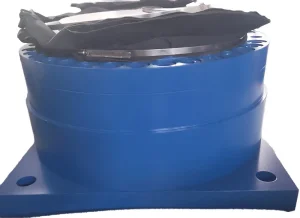
Deploying heavy-duty hydraulic tensioning and loading cylinders for grinding mills (compatible with OEM designs such as Loesche LM, UBE UM, Pfeiffer MPS, and FLSmidth ATOX). Our double-acting telescopic units drive cement grate cooler clinker pushers where thermal radiation and fine clinker dust demand heat-resistant fluorocarbon (FKM) seals and robust rod scrapers.
In metallurgical plants, continuous casting lines, and cement rotary kilns, custom hydraulic thrust roller cylinders absorb tremendous axial heat expansion loads. Double-acting multi-stage actuators facilitate precise furnace tilting, ladle positioning, and slag door handling under extreme thermal radiation and shock vibration.
Underground mining trucks operating in tight tunnels require compact double-acting telescopic hoist cylinders capable of raising multi-ton body beds rapidly while guaranteeing powered pull-down retraction when working on steep gradient ramps or inclined shafts.
Hydraulic harrow cylinders and boom luffing telescopic actuators applied in bulk material stacker-reclaimers and port container handling equipment. Enhanced with marine-grade ceramic surface treatments and integrated check valves to prevent accidental load dropping during hydraulic line pressure loss.
The industrial automation dynamic is shifting rapidly towards digital integration, energy conservation, and predictive maintenance. Modern double-acting telescopic cylinders are no longer passive mechanical actuators; they are evolving into intelligent cyber-physical motion components.
| Trend Area | Legacy Technology | Next-Gen Innovation (Xuanda Hydraulic) | Operational Value Gain |
|---|---|---|---|
| Position Sensing | External limit switches / Cable sensors | Embedded magnetostrictive linear transducers within telescopic stages | Sub-millimeter real-time stroke feedback, zero external cable damage risk. |
| Sealing Engineering | Standard NBR seals with high stick-slip friction | Low-friction PTFE clearance seals & hydrostatic support bearings | Elimination of stick-slip motion at low speeds (<1 mm/s); 50% friction loss reduction. |
| Surface Coatings | Single-layer industrial hard chrome plating | Laser cladding stainless steel / HVOF thermal sprayed metallic matrix | Extreme seawater and acid mist resistance; zero micro-crack corrosion pathways. |
| Condition Monitoring | Periodic manual pressure/leakage inspection | Integrated IoT pressure, temperature, and vibration sensor manifolds | Predictive seal wear failure alerts, reducing unscheduled plant downtime by up to 70%. |
A rigorous technical auditing framework for overseas procurement directors, plant engineers, and OEM project buyers.
Browse additional technical models custom-manufactured for heavy industrial, cement grinding, and high-precision machinery replacement.
Expert engineering answers to critical questions regarding design, fluid control, customization, and factory procurement.
A single-acting telescopic cylinder uses hydraulic pressure to extend its multi-stage sleeves, but relies entirely on external forces—such as gravity from a heavy dump truck bed or payload weight—to push the fluid back into the reservoir and retract the cylinder. Conversely, a double-acting telescopic hydraulic cylinder features dual hydraulic oil ports and internal fluid passageways that direct fluid pressure to both sides of the internal pistons. This enables powered hydraulic extension AND powered hydraulic retraction. Double-acting designs are mandatory in applications operating horizontally, at overhead angles, or where precise dynamic pull-back force and controlled speed are required regardless of gravity.
During extension, fluid enters the largest stage first (the main barrel). Because pressure equals Force divided by Area ($P = F / A$), the largest stage generates the highest force output at the lowest linear speed. Once the largest stage reaches its full stroke stop, oil pressure automatically shifts to extend the second-largest stage. Because the effective piston area decreases with each subsequent smaller stage, the cylinder's force capability decreases incrementally, while linear extension speed increases proportionally at constant pump flow rate. Our design engineers calculate these dynamic step changes to ensure your system pressure and pump displacement match total operational load curves throughout the entire stroke.
Yes. Our engineering team specializes in reverse-engineering specialized replacement cylinders for major OEM plant equipment (including vertical roller mills, roller presses, grate coolers, and heavy mining haulers). If original engineering drawings are unavailable, you can provide us with nameplate photographs, physical equipment model numbers, worn sample cylinders, or key dimensional field measurements (pin-to-pin distance, bore diameter, rod diameter, port configuration, and mounting style). Our CAD/CAM engineering team creates complete 3D models and manufacturing blueprints for client approval prior to production.
Because each intermediate sleeve in a telescopic cylinder functions as both an outer piston rod and an inner cylinder barrel, sealing requirements are highly demanding. We utilize multi-stage seal packages comprising premium Polyurethane (PU), PTFE step seals, NBR energizers, and fabric-reinforced wear rings. For high-temperature steel plant or furnace environments, we integrate Viton (FKM) fluorocarbon seals rated up to 200°C. For high-frequency dynamic positioning, we incorporate low-friction clearance seals or hydrostatic support oil film bearings to eliminate stick-slip friction and seal degradation.
Telescopic cylinders under full extension are susceptible to column buckling and side-load bending moments. We mitigate these mechanical risks through strict engineering design: 1) Utilizing high-yield strength structural alloy steel tubing (27SiMn or 42CrMo); 2) Increasing stage overlap length (the guide distance retained inside each barrel when fully extended); 3) Integrating heavy-duty bronze-impregnated or composite wear rings with high side-load bearing capacity; and 4) Conducting FEA (Finite Element Analysis) stress simulations during design to ensure safety factors exceed 2.5× under maximum extended working loads.
Every single cylinder manufactured at our Changzhou facility undergoes 100% full hydraulic testing on automated test benches. Test protocols include: 1) High-pressure static proof testing at 1.5 times nominal design pressure; 2) Internal bypass leakage testing across piston seals; 3) Low-pressure stick-slip smooth motion testing; 4) Stroke accuracy and pressure-drop holding verification; and 5) Fluid particle cleanliness analysis according to ISO 4406. Complete inspection certificates and material traceability reports (EN 10204 3.1) are dispatched alongside the shipping documentation.
We provide full export-oriented logistics and service support. Cylinders are treated with heavy internal anti-rust oil, wrapped in VCI corrosion-inhibiting film, and packed into fumigated wooden crates tailored for long-distance ocean container shipping. We supply comprehensive maintenance manuals and recommended 2-year spare seal kits with every order. In the event of field installation inquiries, our technical support engineers provide 24/7 video consultation, dimensional verification, and rapid replacement component dispatch via express air freight.