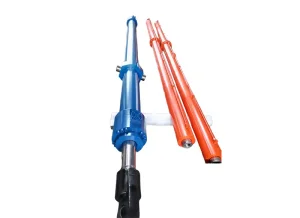
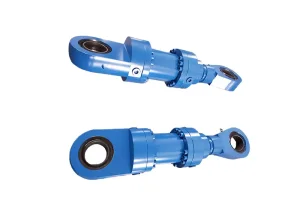
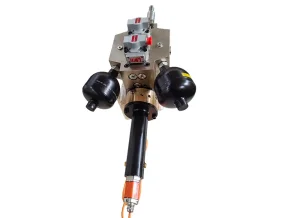
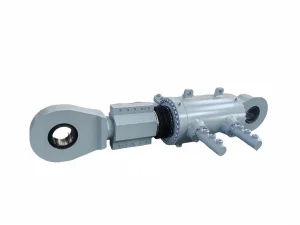
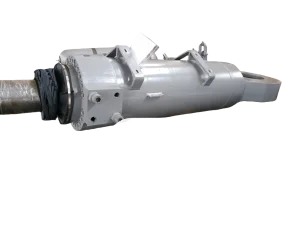
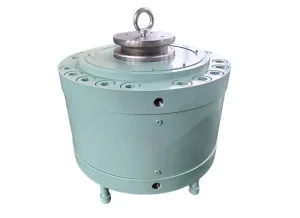
Custom Engineering Dual-Action Actuators, Equal-Force Hydrostatic Systems, and Heavy-Duty Mill Loading Cylinders Built for Maximum Uptime and Zero Unplanned Downtime.
Engineered to original OEM interface dimensions with advanced low-friction sealing, high thermal tolerance, and extreme pressure ratings.
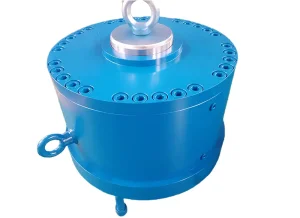
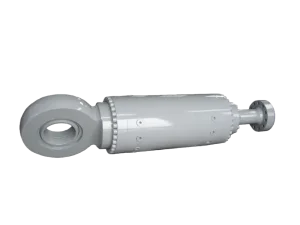
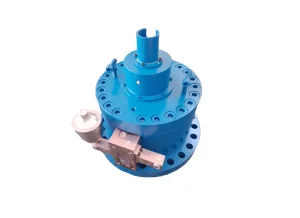
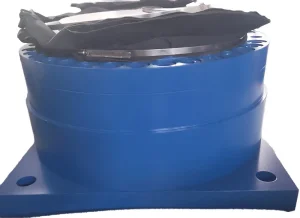
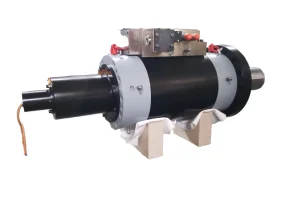
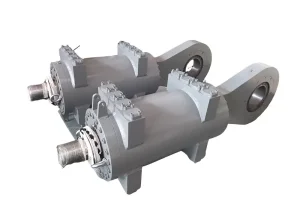
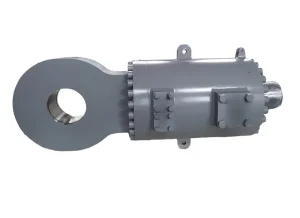
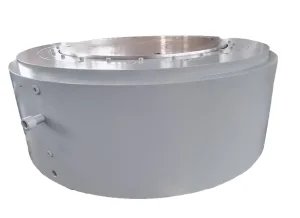
In modern industrial linear actuation, selecting the correct mechanical configuration dictates system reliability, energy efficiency, and operational safety. A Double Piston Hydraulic Cylinder (frequently engineered as a double-rod or dual-piston tandem actuator) represents a critical sub-category of fluid power systems designed to overcome the kinematic and fluidic limitations of standard single-rod single-piston actuators. As a premier Double Piston Hydraulic Cylinder manufacturer, Changzhou Xuanda Hydraulic Electromechanical Equipment Co., Ltd. integrates advanced tribology, precision honing, and FEA-validated metallurgical structures to yield actuators capable of continuous 30+ MPa operation under abrasive, high-shock industrial environments.
Information Gain Insight: Unlike standard differential cylinders where the extension force exceeds retraction force due to the rod area differential (A1 > A2), double-rod double-piston cylinders maintain strictly equal effective surface areas on both opposing fluid chambers. This yields identical force generation, equal volumetric fluid displacement, and symmetrical dynamic velocity profiles in both push and pull strokes—an essential parameter for high-frequency servo testing rigs, cement grinding stabilization, and synchronized steering systems.
Understanding fluid power mechanics requires evaluating the pressure-area equations governing hydraulic motion. In standard single-rod designs, hydraulic fluid filling the full bore (cap end) acts upon area $A_1 = \frac{\pi}{4} D^2$. During retraction, fluid acts upon the annular area $A_2 = \frac{\pi}{4} (D^2 - d^2)$. This disparity introduces fluid imbalance: for a constant pump flow rate $Q$, the extension velocity $v_{ext} = \frac{Q}{A_1}$ is inherently slower than retraction velocity $v_{ret} = \frac{Q}{A_2}$, while extension force $F_{ext} = P \cdot A_1$ exceeds retraction force $F_{ret} = P \cdot A_2$.
By contrast, a precision-engineered double piston hydraulic cylinder balances these vector dynamics:
Symmetrical displacement ensures equal fluid return flow rates, avoiding oil tank aeration and pressure spikes across servo valves.
Finite Element Analysis ensures cylinder barrels and rod end mountings withstand intense cyclic stress without fatigue fracturing.
Custom PTFE-bronze and clearance seal options eliminate stick-slip friction, enabling response times below 10 milliseconds.
Analysis of global procurement shifts, heavy machinery modernization, and regional demand drivers for custom double piston actuators.
The global heavy-duty hydraulic cylinder market is experiencing a profound technological shift. Projected to expand at a CAGR of 5.8% through 2032, growth is heavily dominated by demand in automated cement clinker grinding lines, high-efficiency metallurgical plants, and precision electro-hydraulic subsea actuators. Global original equipment manufacturers (OEMs) and plant maintenance managers are increasingly bypassing generic off-the-shelf catalog cylinders in favor of direct manufacturer partnerships capable of producing custom drop-in replacement units.
Rigorous metallurgical selection, precise honing tolerances, and cutting-edge surface plating techniques form the backbone of Xuanda's engineering authority.
A high-quality double piston hydraulic cylinder must perform reliably under severe pressure pulses, thermal fluctuations (-20°C to +180°C), and airborne abrasive particulate contamination (such as clinker dust, iron ore powder, or silica sand). Below is the engineered technical specification matrix applied by Changzhou Xuanda Hydraulic across custom project builds.
| Technical Parameter | Standard Industrial Spec | Xuanda Heavy-Duty / Servo Grade | Engineering Advantage |
|---|---|---|---|
| Bore Diameter Range | Ø 40 mm – Ø 400 mm | Ø 50 mm – Ø 1,200 mm (Custom) | Accommodates immense tonnage for roller presses and giant gate dams. |
| Stroke Capability | Up to 3,000 mm | Up to 10,000 mm precision stroke | Deep-hole boring and honing ensure straightness without center sag. |
| Working Pressure | 16 MPa – 25 MPa | 31.5 MPa – 70 MPa (High Pressure) | Thick-walled alloy tubes prevent radial expansion during pressure spikes. |
| Cylinder Tube Material | ST52 / E355 seamless tube | 20MnV6 / 42CrMo4 Forged Alloy | High tensile yield strength (>800 MPa) resisting fatigue micro-cracks. |
| Piston Rod Metallurgy | C45E Hard Chrome Plated | 42CrMo4 / 17-4PH Stainless + HVOF | HVOF laser cladding/chrome-nickel plating provides 1000+ hrs salt spray rating. |
| Bore Inner Honing Finish | Ra 0.4 μm | Ra 0.05 μm – Ra 0.1 μm (Mirror Finish) | Drastically reduces wear on piston seal lips and extends fluid purity. |
| Sealing Architecture | Standard NBR U-Cups | PTFE Bronze / Clearance Seal / Hydrostatic | Zero stick-slip, low friction coefficient (μ < 0.03), high temperature endurance. |
| Position Sensing | External Limit Switches | Integrated LVDT / Magnetostrictive Probe | Protected inside hollow rod; digital feedback directly into PLC/DCS. |
The longevity of a double piston cylinder operating under 24/7 continuous duty cycle depends on two critical surface interfaces: the cylinder bore internal wall and the piston rod external sliding zone.
Xuanda utilizes deep-hole boring and CNC honing machines imported from Germany. By controlling the cross-hatch angle (typically 40° to 60°) during honing, a microscopic oil-retention film is maintained on the bore wall. This lubrication micro-geometry prevents dry contact during cold starts while maintaining an H7/H8 dimensional tolerance standard.
In corrosive or highly abrasive environments (such as cement grate coolers or marine stacker-reclaimers), conventional hard chrome plating can develop micro-fissures under heavy bending stresses. We offer High-Velocity Oxygen-Fuel (HVOF) thermal spray coating of Nickel-Chromium-Carbide. This creates a dense, non-porous layer with surface hardness reaching HV1100, extending rod life by 4x in ambient clinker dust environments.
Discover how custom double piston and specialized cement machinery hydraulic cylinders deliver continuous performance across major industrial sectors.
Matched to OEM replacement standards for Loesche LM, UBE UM, Pfeiffer MPS, and FLSmidth ATOX mills. Delivers constant downward thrust to grinding rollers with dynamic cushion absorption during tramp metal passage.
High-pressure cylinders designed for Chengdu Leejun CLF, HCRI, and CITIC Heavy Industries roller presses. Manages extreme operational nip forces up to 35 MPa with integrated diamond-profile mountings.
High-frequency double piston servo cylinders with clearance seal technology operating in closed-loop AGC systems, maintaining strip thickness tolerances within ±2 microns under intense thermal radiant heat.
Durable hydraulic harrow drive cylinders and thrust roller cylinders for rotary kilns. Features corrosion-resistant rod coatings and heavy-duty dust scrapers designed for outdoors operations.
Adapting hydraulic cylinder design parameters to match regional environmental extremes, local fluid standards, and international compliance codes.
Operating Demands: Strict environmental containment laws, synthetic ester bio-degradable fluid compatibility (HEES/HETG), and compliance with NFPA/ISO mounting dimensions.
Xuanda Engineering Adaptation: We configure cylinders with customized Fluorocarbon (FKM/Viton) and Polyurethane seal packages that resist chemical breakdown from fire-resistant or bio-degradable hydraulic fluids, maintaining zero external leakage.
Operating Demands: Ambient temperatures exceeding 50°C, direct sunlight exposure generating cylinder skin temperatures above 110°C, and fine silica dust ingress.
Xuanda Engineering Adaptation: Integrated metal-cased brass wiper seals combined with multi-stage secondary tandem rod seals. Double piston rods receive ceramic HVOF coatings to resist scoring from abrasive dust particles.
Operating Demands: High relative humidity (>95%), corrosive mine water exposure, and heavy shock loading in raw mineral crushing plants.
Xuanda Engineering Adaptation: Stainless steel rod ends, heavy wall forged steel cylinders with epoxy-polyamide marine grade protective paint systems tested for 1,500 hours of continuous salt spray corrosion resistance.
Pioneering the transition toward digital smart actuators, zero-friction hydrostatic levitation, and electro-hydrostatic autonomous drives.
The industrial fluid power domain is entering a decade of smart electro-hydraulic convergence. Changzhou Xuanda Hydraulic is leading R&D efforts across three major technological frontiers:
Future double piston hydraulic cylinders are no longer passive mechanical components; they function as intelligent edge nodes. Xuanda's next-generation smart cylinder series integrates micro-embedded sensors directly into the cylinder gland cap and piston body:
To eliminate seal friction completely in dynamic testing and ultra-high-speed positioning, Xuanda has developed Hydrostatic Support Servo Cylinders. External high-pressure oil is fed through micro-metering orifices into pocket recesses along the bearing land. This creates a thin, pressurized oil film (15 to 25 microns) that floats the piston rod. The result is zero physical metal-to-seal contact, zero stick-slip friction, and infinite mechanical seal wear life under dynamic high-frequency oscillation.
Transitioning away from central hydraulic power units (HPUs) with hundreds of meters of fluid piping, Xuanda is engineering self-contained Electro-Hydrostatic Double Piston Actuators. Integrating a bi-directional servo motor, variable displacement pump, miniature fluid reservoir, and double piston cylinder into a single sealed assembly, EHA systems reduce plant energy usage by up to 40% while eliminating external pipe leakage risks.
22+ years of specialized engineering focus, rigorous quality testing protocols, and complete dedicated manufacturing infrastructure.
Every manufactured cylinder undergoes rigorous pressure proof testing up to 1.5x working pressure, volumetric bypass leakage testing, and friction resistance testing prior to export packaging.
Our 20,000m² Changzhou production facility is equipped with multi-axis CNC turning centers, deep-hole honing machines, and automated robotic welding stations ensuring micron-level machining repeatability.
We build replacement cylinders matching original mounting interfaces, port connections, and pin-to-pin dimensions for major global brands including Loesche, UBE, FLSmidth, Pfeiffer, and Leejun.
Expert insights regarding double piston cylinder selection, troubleshooting, maintenance, and custom OEM replacement ordering.
A double piston (double-rod) hydraulic cylinder provides equal surface area on both sides of the piston. This results in identical push and pull force capabilities, equal extension and retraction speeds for a given pump flow rate, and balanced hydraulic fluid displacement. Additionally, having rod support bearings on both cylinder end caps provides superior mechanical resistance against bending moments caused by heavy lateral side loads.
Yes. Changzhou Xuanda specializes in reverse-engineering and custom manufacturing drop-in replacement cylinders for major global OEM equipment, including Loesche LM, UBE UM, FLSmidth ATOX, Pfeiffer MPS vertical roller mills, and Chengdu Leejun CLF roller presses. Our replacement cylinders match original mounting dimensions, fluid port configurations, and pressure ratings while offering upgraded seal and coating options.
Clearance seal cylinders rely on high-precision machining tolerances (gap < 5 microns) with zero elastomeric contact, making them ideal for high-frequency servo testing loops with negligible friction. Low-friction seal cylinders use specialized PTFE-bronze compounds to minimize stick-slip in standard industrial servo systems. Hydrostatic support cylinders float the piston rod on a pressurized oil film, engineered specifically for extreme lateral side loads and mixed high/low-speed heavy industrial duty cycles.
To provide an accurate technical proposal and quote, our engineering team requires: (1) Cylinder bore size, rod diameter, and stroke length; (2) Operating pressure (working and maximum peak pressure); (3) Mounting configuration (clevis, flange, trunnion, foot); (4) Operating medium and temperature range; and (5) Equipment application details or OEM part drawings/photos.
Rod seal failure in cement plants is primarily caused by airborne clinker dust settling on the exposed rod, which is drawn past the wiper during retraction, scoring the seal lips. Xuanda prevents this by employing heavy-duty metallic scrapers, secondary dust protection boots, and HVOF thermal spray coatings (hardness > HV1000) that prevent micro-scratching on the rod surface.
From cement stacker-reclaimers to rotary kiln thrust rollers—engineered for maximum durability in harsh environments.