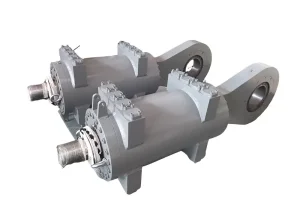
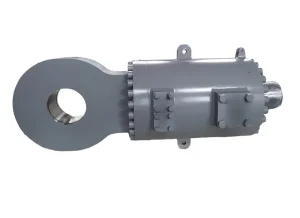
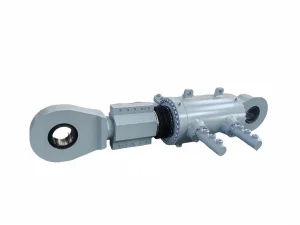
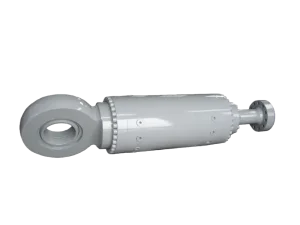
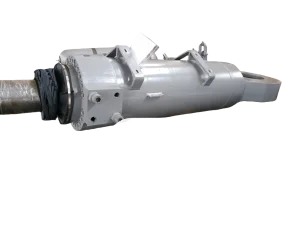
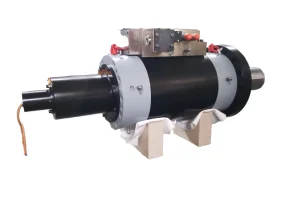
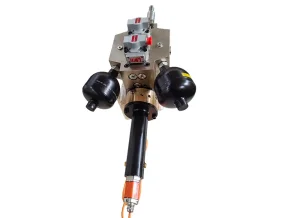
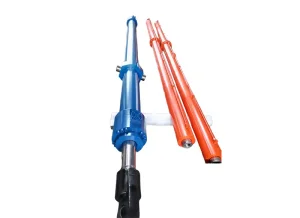
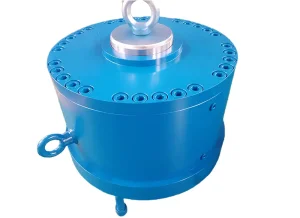
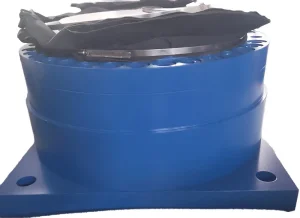
Precision-engineered replacement & OEM hydraulic cylinders built for extreme grinding loads.
Vertical Raw Mills (VRMs) represent the technological backbone of modern industrial comminution, serving as indispensable capital equipment across cement manufacturing, power generation (pulverized coal grinding), slag beneficiation, and metallurgical extraction. Over the past two decades, the global heavy machinery landscape has experienced a paradigm shift. Plant operators are transitioning away from traditional ball mills toward advanced vertical roller mill systems due to their 30% to 40% higher electrical efficiency, integrated drying capabilities, and smaller physical footprint.
As global infrastructure demand accelerates—driven by rapid urbanization across Southeast Asia, South Asia, the Middle East, and Latin America—cement producers face relentless pressure to optimize Total Cost of Ownership (TCO), minimize un-scheduled downtime, and meet stringent carbon neutrality targets. In a VRM, the hydraulic loading system is responsible for generating and regulating the massive mechanical forces (often exceeding 25 MPa) required to crush raw materials between rotating grinding rollers and a horizontal table.
Consequently, procurement managers, plant engineering heads, and technical buyers are demanding higher technical compliance, operational longevity, and supply chain transparency from vertical raw mill manufacturers & exporters. Procuring premium hydraulic drive components is no longer merely a purchasing routine; it is a strategic investment in mill stability, throughput optimization, and energy preservation.
The operating environment inside a vertical raw mill is brutal. Heavy abrasive dust, high ambient process temperatures (frequently exceeding 90°C to 150°C during raw material drying), and extreme dynamic vibration create a hostile operational setting. The hydraulic cylinder acts as both force actuator and dynamic damper within this system.
Vertical roller mills rely on hydro-pneumatic suspension systems where double-acting hydraulic cylinders are coupled with high-pressure nitrogen bladder accumulators. The hydraulic cylinder transfers down-force through the rocker arm onto the grinding rollers. When non-grindable tramp metal or oversized rocks enter the grinding zone, the hydraulic fluid must instantly compress the nitrogen bladders, allowing the roller to lift without catastrophic mechanical breakage.
During continuous operation, VRM hydraulic cylinders experience low-amplitude, high-frequency micro-strokings (1-5 Hz). Standard industrial U-cup seals generate significant stick-slip behavior under high static force, causing pressure hysteresis and excessive heat build-up. Engineering specialized low-friction PTFE-bronze compound step seals with dual elastomer energizers eliminates stick-slip, ensuring smooth servo response and extending seal life beyond 30,000 operational hours.
Because raw mill environments contain airborne clinker, limestone, and silica particulates, piston rod coating technology is paramount to preventing seal failure. Leading manufacturers utilize high-velocity oxygen-fuel (HVOF) thermal spraying of Chrome-Carbide or double-layer hard chrome plating with micro-cracking density engineered to 30-50 cracks/mm. This structure retains lubricating oil micro-films while protecting against abrasive wear and chemical corrosion from hot acidic gases.
Super-alloy coating layers yielding surface hardness exceeding HV1000, offering zero porosity and 5x corrosion protection over conventional plating.
Forged alloy steel cylinder heads, caps, and barrels (42CrMo4 / 35CrMo) heat-treated for superior tensile strength against cyclic pressure spikes.
Eliminates bronze bushing galling during heavy lateral thrust forces caused by irregular bed depth or uneven feed distribution across mill tables.
Global cement engineering groups rely on standardized dimensional interfaces and specific mechanical load profiles across different vertical mill brands. High-quality manufacturers produce exact drop-in hydraulic cylinders engineered to match or exceed original factory parameters for the industry's major OEM designs, including Loesche LM, FLSmidth ATOX, Pfeiffer MPS, UBE UM, and TCD/TRM series.
| Mill OEM / Model Family | Nominal Bore / Rod (mm) | Working Pressure (Bar) | Key Sealing Architecture | Critical Engineering Focus |
|---|---|---|---|---|
| Loesche LM Series (LM 41.4 to LM 63.3+) | Ø280/180 – Ø450/280 | 210 – 260 Bar | Low-Friction PTFE Tandem Seals | High-frequency shock absorption, spherical trunnion alignment |
| FLSmidth ATOX (ATOX 37.5 to 52.5) | Ø300/200 – Ø480/300 | 230 – 280 Bar | Polyurethane Wear-Rings + FKM Wiper | Resistance to high-temperature dust ingestion, rapid retraction speed |
| Pfeiffer MPS (MPS 3350 to 6000) | Ø250/160 – Ø420/260 | 200 – 250 Bar | Hydrostatic Oil-Film Support Seals | Offsetting severe asymmetrical side-loads during roller tilt |
| UBE UM Series (UM 32.4 to 50.4) | Ø320/220 – Ø500/320 | 220 – 270 Bar | Clearance Metal Seals + Servo Valves | Ultra-precise closed-loop positioning control (±0.5mm) |
| TCD / TRM Mills (Tianjin Design Inst.) | Ø280/180 – Ø460/290 | 210 – 250 Bar | Multi-Lip Heavy Industrial Packs | Cost-effective ruggedized construction, field serviceability |
*Note: All manufacturer names, trademarks, and model numbers are referenced solely for cross-compatibility engineering analysis. Replacement cylinders are designed according to international ISO/DIN standards.*
The transition toward Smart Factories (Industry 4.0) is redefining the expectations for hydraulic actuation in heavy grinding equipment. Future-proof vertical raw mill hydraulic cylinders are evolving from passive mechanical actuators into intelligent, sensor-integrated cyber-physical assets.
Integration of internal linear position sensors (LVDT / SSI) providing real-time micron-level feedback on roller elevation and bed thickness to optimize energy input dynamically.
Smart cylinder heads fitted with tri-axial vibration sensors and acoustic emission transducers to detect seal degradation and internal fluid bypass before catastrophic mill trip events occur.
Re-engineering seal elastomers (HNBR and specialized Fluorocarbon compounds) capable of operating with synthetic ester bio-degradable fluids (HEES) without hardening or volume swelling.
When selecting a reliable vertical raw mill manufacturer & exporter, international procurement teams must execute thorough technical audits. Quality assurance in high-pressure hydraulic manufacturing demands strict adherence to international metallurgical, dimensional, and testing standards.
Explore our full portfolio of heavy equipment hydraulic cylinders for global export.