Engineered for seamless integration into mainstream European cement grinding and crushing infrastructure with complete CE certification compliance.
An Engineering & Procurement Analysis on Hydraulic Actuator Modernization, Compliance Standards, and Direct Sourcing Synergy for Central European Cement Plants.
The Czech Republic stands as one of Central Europe’s most robust industrial powerhouses. With historical engineering centers anchored in regions such as Moravia-Silesia, Ústí nad Labem, and Central Bohemia, the nation maintains a deeply rooted tradition in heavy mechanical manufacturing, mining equipment fabrication, and mineral processing. Modern Czech cement works—such as those operating in Mokrá, Čížkovice, and Radotín—serve as critical supply pillars for domestic civil infrastructure projects and neighboring European Union construction demands.
However, operating heavy industrial machinery within the Czech Republic requires strict compliance with European Union regulations. The enforcement of European Union CE Marking directives (specifically the Pressure Equipment Directive (PED) 2014/68/EU and the Machinery Directive 2006/42/EC) has set unprecedented benchmarks for hydraulic component reliability. Cement machinery hydraulic cylinders—responsible for driving high-pressure vertical roller mills (VRMs), hydraulic thrust rollers on rotary kilns, clinker grate coolers, and heavy-duty roller presses—operate under extreme working pressures (frequently exceeding 25 MPa to 35 MPa) amidst heavy dust contamination and continuous 24/7 shock-loading conditions.
The global cement sector is experiencing a monumental transformation driven by decarbonization targets, energy efficiency initiatives, and digital transformation under the Industry 4.0 framework. Traditional mechanical drive setups and low-pressure hydraulic systems are rapidly being replaced by high-force density, high-precision hydraulic cylinders featuring low-friction sealing matrixes and embedded position feedback sensors.
Modern cement plants in Europe and across global markets are transitioning from traditional ball mills to high-efficiency Vertical Roller Mills (VRMs) and High-Pressure Roller Presses (HPRPs). This shift demands hydraulic cylinders that do not merely generate pushing force, but actively modulate dynamic pressure profiles. Hydraulic tensioning cylinders must adjust grinding pressure dynamically based on raw material hardness, feed size, and moisture variation. Consequently, modern hydraulic actuators must incorporate:
Low-friction PTFE compound dynamic seals paired with bronze-filled guide rings eliminate stick-slip phenomena during micro-motion sub-millimeter stroke adjustments.
Integrated high-frequency response ports designed to link directly with diaphragm accumulators to absorb high-amplitude shock pulses from tramp metal or ungrindables.
Laser-cluttered stainless steel or heavy double-chrome plated piston rods ($30\text{--}50\,\mu\text{m}$) capable of resisting abrasive cement clinker dust and aggressive ambient humidity.
Historically, European cement equipment operators relied exclusively on local OEM components. However, supply chain disruptions, extended lead times (often exceeding 36 to 48 weeks), and escalating component costs have compelled Czech plant managers, maintenance engineers, and machinery rebuilders to evaluate tier-one global suppliers.
China’s advanced hydraulic manufacturing sector—exemplified by enterprise leaders like Changzhou Xuanda Hydraulic Electromechanical Equipment Co., Ltd.—has bridged the gap between premium European technical standards and cost-efficient manufacturing agility.
Delivering high-reliability hydraulic actuators globally under strict quality control standards.
Selecting the correct hydraulic cylinder for cement machinery requires analyzing specific operating parameters, mechanical loads, fluid media compatibility, and environmental factors. Below is the technical specification framework engineered into our CE-certified cement machinery cylinders:
| Engineering Parameter | Standard Heavy-Duty Specification | High-Performance Servo / Customized Specification |
|---|---|---|
| Cylinder Bore Diameter Range | Ø 100 mm to Ø 630 mm | Custom engineered up to Ø 1000 mm |
| Piston Rod Diameter Range | Ø 70 mm to Ø 450 mm | Solid or hollow forged alloy steel up to Ø 700 mm |
| Maximum Working Pressure | 25 MPa (250 Bar) | 35 MPa to 42 MPa (350–420 Bar continuous duty) |
| Stroke Length Range | 100 mm to 3000 mm | Extended stroke up to 6000 mm with anti-buckling design |
| Barrel Material Grade | Seamless forged 27SiMn / Q345D / ST52.3 | High-tensile alloy 42CrMo4 forged / honed execution |
| Piston Rod Plating & Finishing | Hard Chrome ($30\text{--}50\,\mu\text{m}$ thickness, micro-hardness $\ge 850\,\text{HV}$) | Laser Cladding Nickel-Chrome / Ceramic coating ($Ra \le 0.1\,\mu\text{m}$) |
| Primary Sealing Systems | Step-seals, U-cups, heavy Polyurethane & NBR wiper combinations | Low-friction PTFE compound, clearance seals, or hydrostatic support systems |
| Working Medium Compatibility | HLP Mineral Oils (ISO VG 32 / 46 / 68) | Fire-resistant fluids (HFD-U, HFDU) & eco-friendly synthetic esters |
| Operating Temperature Range | -20°C to +80°C | -40°C to +200°C (with specialized Viton/FKM high-temp seal matrices) |
| Sensor Integration Capabilities | Standard end-of-stroke proximity switches | Magnetostrictive LVDT linear position sensors & embedded pressure transducers |
Hydraulic actuators perform distinct, high-stress roles across various stages of the cement manufacturing process. Understanding these specific application scenarios enables tailored engineering design:
In vertical mill grinding systems (raw meal, coal, or slag grinding lines), hydraulic tensioning cylinders supply the immense downward pressure required for the grinding rollers to crush rock against the rotating grinding table. These cylinders face severe dynamic vibration pulses caused by irregular material bed depth. Our tensioning cylinders feature heavy-duty spherical rod eye bearings and multi-layered seal stacks that withstand intense high-frequency oscillations without fluid fatigue or rod seal bypass.
Roller presses perform interparticle crushing under extreme specific pressures. The hydraulic cylinders holding the movable roller must maintain consistent parallelism while responding instantaneously to ungrindable tramp iron. Specialized diamond-shaped mounting profiles, dual-acting high-pressure seals, and ultra-fast relief valve integration ensure that our cylinders protect the mill structure while optimizing grinding output.
Operating adjacent to the rotary kiln exit, grate cooler hydraulic cylinders push hot clinker ($> 1000^\circ\text{C}$) along heat-resistant grate plates. These actuators operate in extreme ambient thermal environments laden with highly abrasive clinker dust. We equip these cylinders with high-temperature Viton seal arrangements, metallic scraper rings, and optional water-cooled outer jackets to prevent thermal degradation.
To prevent kiln tyres and riding rings from wearing unevenly on support rollers, hydraulic thrust rollers push the massive rotating kiln body axially upstream in a controlled, continuous motion cycle. Our thrust roller cylinders incorporate low-friction servo seal technology and micro-throttling hydraulic circuits to deliver steady, ultra-precise linear movement under thousands of kilonewtons of axial load.
As European cement producers align with EU Green Deal targets, energy reduction and predictive maintenance have become essential operational criteria. Modern hydraulic cylinders are no longer passive mechanical components; they are key data nodes within the plant’s digital ecosystem.
Xuanda Hydraulic integrates digital linear transducers directly inside the hollow-bored piston rod. This allows real-time position reporting to the plant’s central PLC system with sub-millimeter precision. Furthermore, smart pressure sensors mounted directly on the cylinder ports monitor instantaneous pressure spikes, enabling condition monitoring algorithms to predict seal wear, oil degradation, or mechanical misalignment long before an unexpected breakdown occurs.
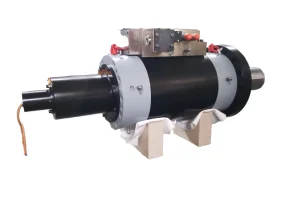
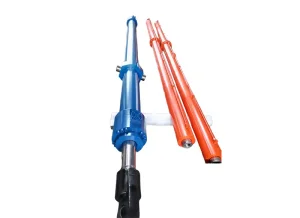
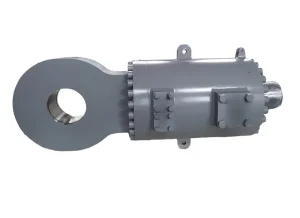
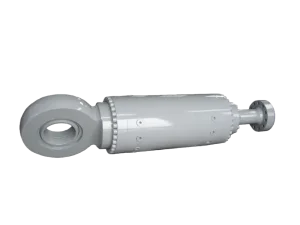
Explore our wide selection of customized hydraulic actuators engineered for cement grinding, kiln operation, material handling, and high-precision servo control.
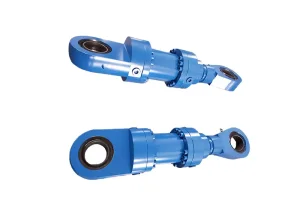
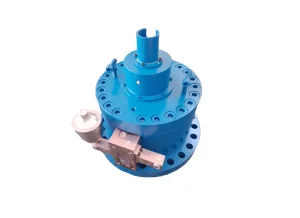
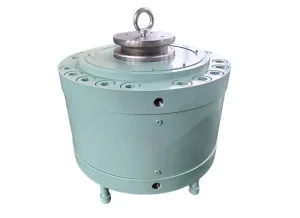
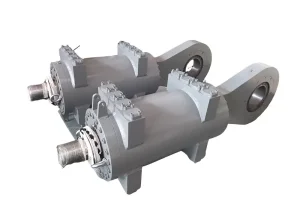
Expert answers addressing compliance, customization, lead times, and quality assurance for Czech cement plants and machinery exporters.
Our cement machinery hydraulic cylinders are manufactured strictly in accordance with the European Union Pressure Equipment Directive (PED 2014/68/EU) and Machinery Directive 2006/42/EC. Every cylinder design undergoes Finite Element Analysis (FEA) to verify burst pressure and fatigue strength limits under cyclic working loads. We provide comprehensive documentation packages, including EN 10204 3.1 material test certificates, hydrostatic test reports, NDT weld inspection results, and official CE conformity declarations required for smooth importing and plant operation in the Czech Republic and across the EU.
Yes. We specialize in engineering 100% drop-in replacement cylinders that mirror original installation dimensions, port orientations, mounting pin sizes, and working pressure ratings. If original technical drawings are unavailable, our engineering team can reverse-engineer worn samples from physical measurements, photos, nameplate data, and site parameters. We confirm 3D CAD models with your technical team before starting production to guarantee precise fitment.
For extreme cement mill environments, we utilize composite sealing systems sourced from premier international seal manufacturers (such as Hallite, Parker, and Busak+Shamban). Primary rod sealing typically consists of a high-grade polyurethane or PTFE step-seal paired with a heavy-duty double-lip metal-cased wiper ring. This design actively prevents fine abrasive clinker dust from intruding into the cylinder bore while maintaining low friction coefficient and micro-motion sensitivity during high-frequency mill vibration.
Quality assurance is integral to our manufacturing process. Every cylinder barrel undergo ultrasonic testing (UT) and magnetic particle inspection (MPI) to detect internal material flaws or weld anomalies. Prior to packaging, 100% of cylinders undergo rigorous hydrostatic pressure testing at 1.5 times the rated working pressure, holding pressure for extended durations to confirm zero internal or external leakage. Dimensional checks, rod plating thickness verification, and surface roughness measurements ($Ra$) are recorded in the final Quality Inspection Certificate.
Standard custom hydraulic cylinder manufacturing timelines typically range from 4 to 6 weeks, depending on cylinder bore size and material forging availability. For urgent plant breakdown scenarios, expedited production schedules are available. Shipments are packed in export-standard IPPC heat-treated wooden crates and dispatched via direct sea freight to major North European ports (such as Hamburg or Koper) followed by rail/truck transit to industrial destinations across the Czech Republic (Brno, Ostrava, Prague). Air freight options are also supported for emergency spare parts.
Hydrostatic support cylinders introduce a pressurized oil film between moving surfaces (piston/guide sleeve and barrel bore), floating the piston continuously without direct metal-to-metal or elastomer-to-metal contact. This eliminates dynamic friction几乎 completely, allowing the cylinder to handle massive side/lateral loads without scoring the bore. Hydrostatic servo cylinders are ideally suited for ultra-high-frequency test rigs, high-precision roll positioning, and applications where conventional elastomer seals wear out rapidly.
Consult with our senior fluid power engineers today. We provide free engineering drawing reviews, technical evaluations, and competitive quotes for export to the Czech Republic and worldwide.
Send Inquiry Now