Designed to meet international CE specifications and customized for heavy cement, mining, and industrial mills throughout New Zealand (including Whangarei, Waikato, and Canterbury industrial zones), our precision hydraulic actuators deliver continuous reliable operation under severe structural dynamic stresses.
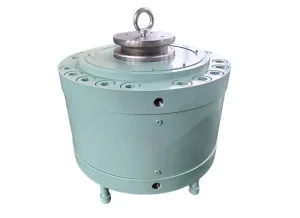
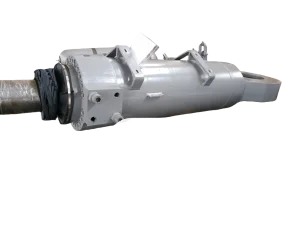
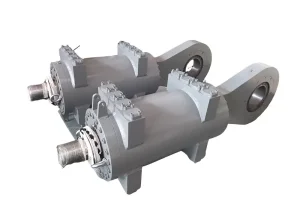
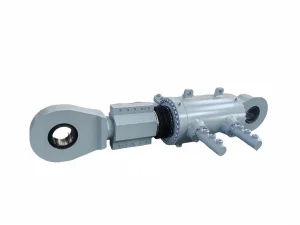
New Zealand’s industrial landscape presents a unique, demanding operational environment for heavy processing infrastructure. From the large-scale cement manufacturing facilities located near Whangarei and distribution hubs across North and South Islands (such as Auckland, Tauranga, Christchurch, and Dunedin) to heavy pulp, paper, lime, and minerals processing plants (such as Glenbrook steel operations and central North Island forestry processing sites), the continuous reliability of thermal processing kilns is paramount to domestic infrastructure resilience.
Rotary kilns in New Zealand operate under stringent environmental, safety, and energy efficiency constraints enforced by local regulatory frameworks, including compliance with WorkSafe New Zealand, the Resource Management Act (RMA), and regional environmental councils. Because New Zealand relies heavily on sea transport and specialized regional road freight networks for raw materials like limestone, clinker, aggregate, and silica, an unplanned breakdown of a primary rotary kiln thrust hydraulic mechanism can result in catastrophic financial losses exceeding $150,000 NZD per day in idle operation, imported clinker replacement costs, and lost productivity.
Specifically built to handle continuous axial thrust loads up to 6,500 kN, counteracting the natural downward gravitational slip of tilted rotary kiln shells (angled at 3.5% to 5.0%).
Engineered hydraulic dampening loops automatically adjust for shell elongation and thermal distortion caused by internal kiln operating temperatures exceeding 1,450°C.
Manufactured strictly under ISO 9001:2015 quality regimes, conforming to European CE directives (PED 2014/68/EU) and compatible with New Zealand AS/NZS heavy mechanical codes.
A rotary kiln represents one of the largest single dynamic rotating mechanical structures in modern industry. Weighing anywhere from 300 to over 2,500 metric tons when fully loaded with refractories and raw meal feed, the entire shell assembly rests on ride rings (tires) supported by support rollers. Because the kiln is inclined toward the discharge end, gravity exerts a persistent downward axial force.
Modern cement and pyro-processing plant design relies on Hydraulic Thrust Roller (HTR) systems to actively control the vertical movement of the kiln shell along its longitudinal axis. Rather than allowing the kiln to sit statically on its support rollers or relying solely on mechanical skewing (which causes catastrophic tire and roller surface wear), the hydraulic thrust roller cylinder gently pushes the entire kiln shell upstream by a controlled distance—typically between 10 mm and 30 mm—over a set period (e.g., 4 to 8 hours), before permitting a controlled hydraulic bleed-back down to the lower limit switch.
Operating in close proximity to the kiln shell exposes hydraulic cylinders to intense radiant heat (ambient temperatures fluctuating between -5°C in southern NZ winters to +70°C near the kiln skirt), airborne abrasives (clinker dust, lime particulate, quartz dust), and intense hydraulic pressure spikes up to 31.5 MPa. To ensure zero seal breakdown under continuous duty, our CE-certified cylinders incorporate:
| Parameter / Metric | Standard Kiln Thrust Spec | Heavy Industrial / High-Tonnage Spec | NZ Localized Compliance Option |
|---|---|---|---|
| Nominal Pressure | 16 MPa - 25 MPa | 31.5 MPa (315 Bar) | ISO 6020/2 & AS 2593 Compliant |
| Cylinder Bore Diameter | Ø180 mm – Ø360 mm | Ø400 mm – Ø630 mm | Customized Metric/Imperial Bores |
| Piston Rod Coating | HVOF Chrome Carbide (50 µm) | Laser Cladded Inconel 625 / Ceramic | Salt Spray Tested > 1,000 Hours |
| Stroke Length | 50 mm – 200 mm | Up to 500 mm | Integrated Displacement Sensor (LVDT) |
| Fluid Compatibility | Mineral Oils (HLP / HM) | Fire-Resistant Synthetics (HFD-U / HEES) | Biodegradable Eco-Hydraulic Fluids |
| CE Certification Standards | PED 2014/68/EU Article 4 § 3 | Machinery Directive 2006/42/EC Annex II | Full EN 10204 3.1 Material Traceability |
Procurement directors and chief engineers face immense challenges when sourcing replacement hydraulic cylinders for European, Asian, or American original equipment manufacturer (OEM) cement lines (e.g., FLSmidth, ThyssenKrupp Polysius, KHD Humboldt Wedag, Sinoma, CITIC). Original replacement parts often come with lead times of 26 to 40 weeks, excessive cost markups, and complicated cross-border logistics.
As a specialized manufacturer, Changzhou Xuanda Hydraulic Electromechanical Equipment Co., Ltd. bridges this gap by offering precision drop-in replacement cylinders and engineered upgrades. Our engineering team conducts full dimensional cross-referencing, material stress analysis, and hydraulic flow calculation to ensure every cylinder delivered to New Zealand matches or exceeds the original OEM structural strength and service life.
The cement and mining industries are undergoing a massive digital transformation aimed at achieving zero unplanned downtime and lower carbon footprints. Hydraulic actuators are no longer passive mechanical components; they are critical sensors and smart actuators embedded in plant-wide IoT architecture.
Magnetostrictive sensors embedded within the hollow-bored piston rod provide continuous, sub-millimeter position feedback back to the main DCS (Distributed Control System) via Profinet, Ethernet/IP, or 4-20mA signals.
Internal pressure transducers and temperature sensors monitor oil degradation, bypass leakage, and friction anomalies, predicting seal replacement intervals weeks before failure occurs.
Clearance-seal technology and hydrostatic oil pockets eliminate stick-slip phenomena, allowing smooth, micro-stepping movement that prevents dynamic impulse shocks to kiln refractory linings.
Explore our full line of heavy machinery hydraulic cylinders designed for vertical roller mills, roller presses, stacker-reclaimers, and servo control systems. All models are available for export directly to New Zealand ports with full international warranty and technical documentation.
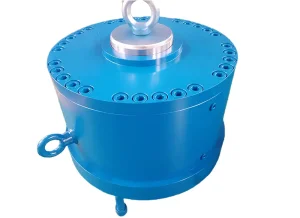
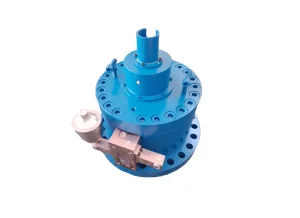
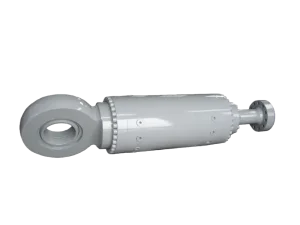
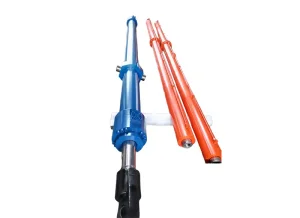
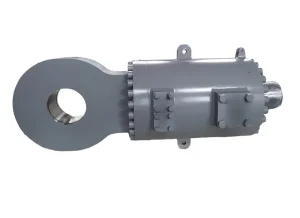
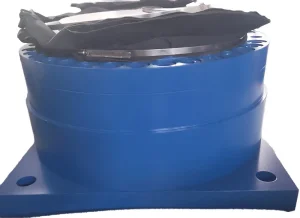
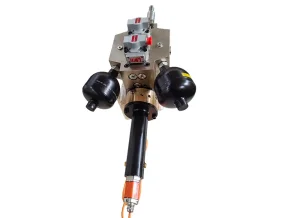
Shipping heavy machinery components to Oceania demands impeccable packaging, corrosion control, and clear customs documentation. Every hydraulic cylinder manufactured at our Changzhou plant undergoes a 7-stage quality verification protocol before export:
Forged cylinder barrels (42CrMo4 / 35CrMo steel) and end flanges undergo ultrasonic flaw detection to guarantee internal homogeneity free of micro-cracks or inclusions.
Each cylinder is pressure-tested on automated test benches at 150% of rated working pressure (e.g., tested to 47.2 MPa for a 31.5 MPa rating) with zero pressure drop over 30 minutes.
Internal ports are flushed with preservative oil and sealed with metal plugs; external surfaces receive anti-corrosion grease and Vapor Corrosion Inhibitor (VCI) shrink wrap inside wooden seaworthy cases.
We maintain regular container shipping routes to major New Zealand commercial ports including Port of Auckland, Lyttelton Port (Christchurch), Port of Tauranga, and Marsden Point, providing complete documentation including EN 10204 3.1 material certificates, CE declarations of conformity, pressure test reports, and dimensional inspection sheets.
Addressing core technical queries for maintenance engineering leads, plant managers, and procurement specialists in New Zealand and worldwide.
CE Certification ensures that the hydraulic cylinder complies with fundamental European health, safety, and environmental protection directives—specifically the Pressure Equipment Directive (PED 2014/68/EU) and Machinery Directive (2006/42/EC). For New Zealand plant managers, sourcing CE-certified hydraulic components guarantees that the cylinder design has passed rigorous finite element analysis (FEA), pressure fatigue testing, and material traceability audits, minimizing workplace safety hazards and regulatory compliance risks.
Without a controlled hydraulic thrust roller, a rotating kiln shell will drift downward under gravity, causing uneven, localized pressure on support roller faces, mechanical beveling, and accelerated fatigue of the internal refractory bricks. The hydraulic thrust roller cylinder exerts a smooth, continuous upward force that shifts the kiln upstream by 10 mm to 30 mm over several hours. This controlled axial oscillation ensures uniform surface wear across the full face of all tires and rollers, preventing refractory spalling and shell distortion.
Yes. Our engineering team routinely reverse-engineers legacy or obsolete hydraulic cylinders. Plant engineers can supply physical measurements, nameplate data, high-resolution photographs, or worn samples. We generate complete 3D CAD models and detailed manufacturing drawings for technical approval before production begins, guaranteeing drop-in installation fitment.
Standard manufacturing timelines for custom heavy-duty kiln cylinders range from 4 to 6 weeks depending on raw material forging requirements. Sea freight from Shanghai/Ningbo ports to Auckland or Tauranga typically takes 14 to 21 days. For urgent plant breakdown scenarios, rapid air-freight options are available for critical components and seal replacement kits.
Kiln cylinders operate in intense radiant heat zones. We utilize premium seal packages comprising fluorocarbon elastomer (FKM/Viton) energizers combined with bronze-filled or carbon-filled PTFE glide rings rated for continuous operation up to 200°C. For extreme dust environments, secondary stainless steel wiper scrapers are integrated to protect primary sealing lips.
Contact our senior hydraulic application engineers today for detailed technical drawings, competitive quotation pricing, or custom engineered upgrades tailored to your facility in New Zealand or global operation sites.
Send Inquiry Now