Top-tier engineering solutions designed for immediate drop-in replacement and custom OEM integration across Japanese industrial sites.
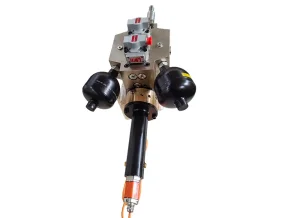
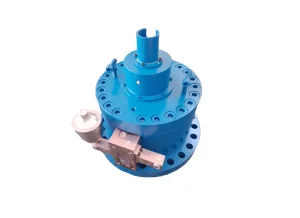
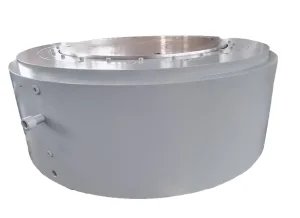
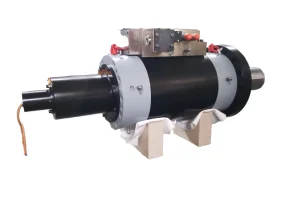
Analyzing the operational requirements of Japan’s manufacturing ecosystem, from Tokyo and Osaka industrial corridors to Kitakyushu heavy steel networks.
Japanese industrial manufacturing is rooted in Monozukuri—the relentless pursuit of engineering perfection, structural durability, and absolute operational reliability. Plant directors across Japan’s primary industrial prefectures (Aichi, Kanagawa, Osaka, Fukuoka) require fluid power components that adhere strictly to Japanese Industrial Standards (JIS B 8354 for hydraulic cylinders). Unplanned equipment downtime in Japanese steel mills, cement plants, or automated assembly lines costs tens of thousands of dollars per hour. Consequently, custom hot products exported into Japan must feature proven seal chemistry, precision-ground piston rods, and high fatigue resistance.
From the heavy grinding circuits of UBE and Mitsubishi-equipped cement facilities to severe thermal exposure in Nippon Steel continuous casting plants, hydraulic actuators operate under intense mechanical stress. Key challenges include high ambient temperatures, abrasive clinker dust ingress, high-frequency shock loading, and synthetic fire-resistant fluid compatibility (such as HFC and HFD-U fluids). Custom hydraulic manufacturing requires specialized seal geometry, hard chrome plating or laser cladding, and finite element stress analysis (FEA) to ensure extended duty cycles without pressure bleed off.
In high-precision Japanese hydraulic systems, thermal expansion of fluid media can shift control tolerances by up to 12%. Our engineering design incorporates integrated thermal compensation channels and low-friction polymer guide rings to maintain displacement accuracy between -20°C and +120°C ambient temperatures.
How Industry 4.0, Eco-Hydraulics, and Smart Motion Control are reshaping fluid power procurement in Japan.
Japanese machine tool builders and testing rig original equipment manufacturers (OEMs) are transitioning from pure mechanical or basic hydraulic drives to digital servo-hydraulic control. Integrated magnetostrictive linear position sensors (LVDTs) embedded directly within the cylinder rod enable closed-loop accuracy down to ±1 μm. This eliminates separate transducer mounting, protecting sensitive feedback electronics from harsh factory floors.
With Japan targeting carbon neutrality across its industrial industrial grid, energy efficiency in fluid power has shifted from a peripheral feature to a core engineering metric. Hydraulic cylinders with optimized clearance seals or low-friction PTFE compound seals reduce internal breakout friction by up to 75%. Lower friction directly reduces pump motor power consumption and lowers hydraulic oil operating temperatures.
Leading Japanese manufacturing hubs are adopting predictive maintenance frameworks. Next-generation custom cylinders exported to Japan now incorporate smart porting with integrated pressure transducers, oil degradation sensors, and thermal thermocouples. Real-time data streams warn maintenance engineers of internal seal bypass or pressure spikes before catastrophic line stoppages occur.
Comparing performance metrics, cost efficiency, and technical compliance across global manufacturing hubs for hydraulic cylinders.
| Evaluation Parameter | Japanese Domestic Suppliers | European Machinery Importers | Xuanda Custom Export Line (China) |
|---|---|---|---|
| JIS B 8354 Standard Fitment | 100% Native Standard | Requires Special Adapter Plates | 100% Custom Machined to JIS Interface |
| Lead Time (Custom Units) | 16 - 24 Weeks | 20 - 28 Weeks | 6 - 8 Weeks (Accelerated Freight) |
| Piston Rod Surface Coating | Standard Hard Chrome (25-30μm) | Laser Clad / Nickel-Chrome | Double Chrome / HVOF Laser Cladding Available |
| Sub-Micron Hydrostatic Support | Premium Price Surcharge | High Cost / Long Lead | In-House Honing & Balanced Hydrostatic Bearings |
| Total Cost of Ownership (TCO) | High Capital Expenditure | Very High Logistics & Part Costs | Optimal Balance (35-45% Capex Reduction) |
*Data compiled based on procurement benchmarks for heavy industrial plants across Kanto and Kansai regions.
In-depth technical architecture tailored to solve structural fatigue, severe contamination, and dynamic side load challenges.
Vertical roller mills (VRMs) operating in Japanese cement and mineral crushing lines endure extreme cyclical shock loads as heavy grinding rollers pass over uneven raw materials. Standard cylinders frequently suffer from seal extrusion, rod bending stress, and accumulator fluid aeration.
Rolling mills and continuous casters in steel manufacturing require real-time roll gap adjustment to maintain sheet gauge uniformity within fractions of a millimeter. Mechanical backlash is intolerable.
Ensuring frictionless international trade, complete engineering documentation, and rigorous pressure testing for Japanese buyers.
We provide comprehensive engineering packages, including 2D STEP/Autocad drawings converted to JIS dimensioning standard, full material trace certificates (EN 10204 3.1), heat treatment records, and bilingual maintenance manuals (Japanese / English).
Every single cylinder manufactured for export undergoes automated hydrostatic proof testing at 150% of maximum rated working pressure on our computer-controlled test stand. Oil cleanliness is continuously filtered to ISO 4406 14/12/9 standard prior to shipment.
Products destined for Japanese ports (Yokohama, Kobe, Tokyo, Nagoya) are protected with VCI anti-corrosion oil coatings, heavy-duty rod sleeve protectors, and vacuum-sealed foil barriers inside reinforced ISPM-15 compliant wooden export crates.
Advancing fluid power mechanics to meet the next generation of smart manufacturing and eco-friendly industrial demands.
Developing hard-chrome replacement coatings utilizing ceramic-metallic matrix compositions (HVOF WcCofCr) that offer up to 4x corrosion resistance in salt-mist marine environments (JIS Z 2371 standards) while maintaining smooth frictional interfaces.
Integrating miniature hydraulic power units, proportional valves, and feedback electronics directly onto the cylinder manifold. This creates self-contained electro-hydraulic actuators requiring only electric power and signal cables.
Pioneering closed-loop internal oil scavenging systems within hydrostatic support bearings that achieve fluid recovery efficiency above 99.9%, drastically lowering hydraulic fluid waste in cleanroom manufacturing facilities.
Direct answers to critical technical questions regarding drop-in interchangeability, delivery terms, and custom design processes.
Explore our full line of heavy industrial hydraulic cylinders engineered for cement plants, steel mills, and material handling systems.
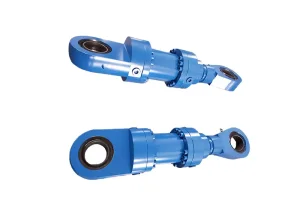
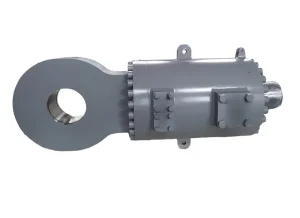
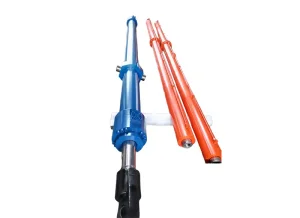
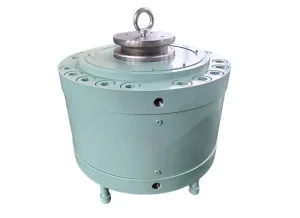
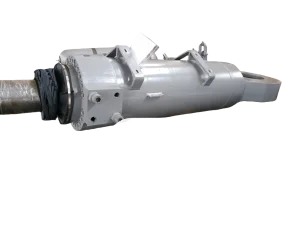
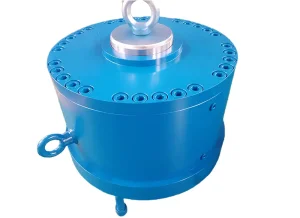
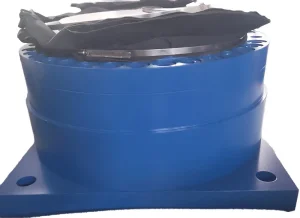
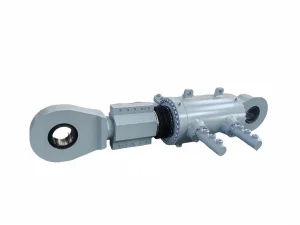
Connect with our senior engineering consultants today. Whether you need drop-in replacement units, high-frequency servo actuators, or specialized mill cylinders built to JIS standards, we deliver guaranteed quality.
Send Inquiry Now