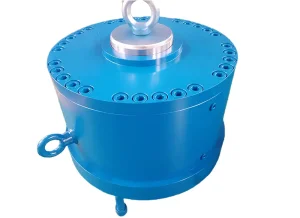
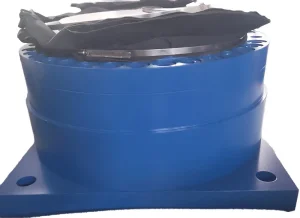
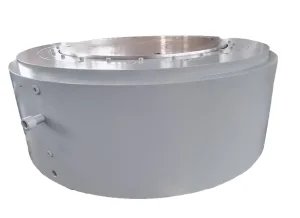
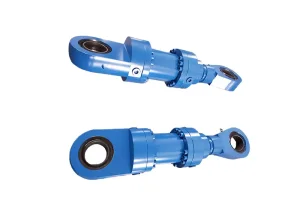
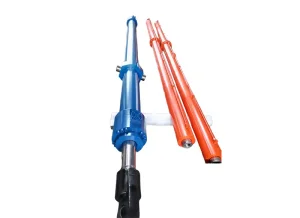
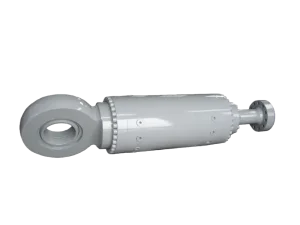
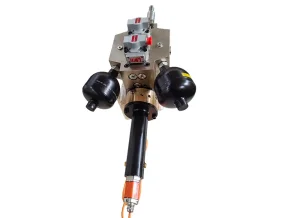
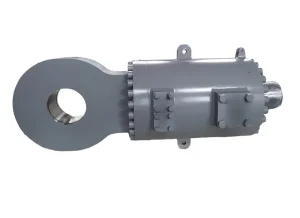
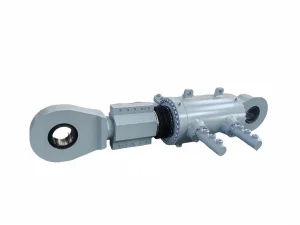
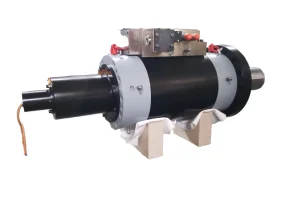
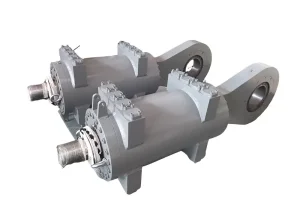
Precision-machined high-pressure cylinders designed to withstand severe pulsation loads and abrasive dust environments in cement and aggregate plants.
An in-depth analysis of hydraulic actuation dynamics, thermal-hygrometric challenges in Central Thailand, and total cost of ownership (TCO) optimization for plant managers.
The Greater Bangkok metropolitan area, spanning through the Saraburi cement production cluster and connecting along the Eastern Economic Corridor (EEC) toward Chonburi and Rayong, represents one of Southeast Asia's most intensive heavy-industrial hubs. Cement grinding plants, aggregate crushing facilities, and steel rolling mills across Thailand operate under unforgiving conditions. Roller presses—serving as primary pre-grinding or finish-grinding units—are subject to continuous operational pressure of 25 to 35 MPa, coupled with severe shock loads during material bed collapses or tramp iron passing.
In the tropical maritime climate of Central Thailand, ambient temperatures regularly exceed 38°C with relative humidity reaching 90-95%. This severe environment causes rapid oil oxidation, moisture condensation within hydraulic reservoirs, and accelerated thermal degradation of conventional polyurethane seals. Standard hydraulic cylinders designed for temperate zones frequently suffer from premature seal hardening, rod pitting, stick-slip vibration, and oil leakage within 6 to 12 months of installation.
To overcome these regional operating challenges, Changzhou Xuanda Hydraulic integrates specialized engineering enhancements into every roller press cylinder dispatched to Bangkok and Southeast Asian clients:
| Technology Type | Friction Index | Lateral Load Capability | Contamination Resistance | Optimal Application in Bangkok Plants |
|---|---|---|---|---|
| Hydrostatic Support Bearings | Ultra-Low (< 0.001) | Extreme (up to 300 kN side load) | High (Oil film flushes dust) | High-capacity roller presses (Leejun CLF, CITIC) running continuously in dusty cement plants. |
| Clearance Seal Cylinders | Near Zero (Frictionless) | Moderate (Requires aligned guide) | Very High (Precision clearance fit) | High-frequency response closed-loop servo positioning rigs and mill gap control systems. |
| Low-Friction Compound Seals | Low (PTFE-Bronze Matrix) | Standard High Load | High (Multi-lip wiper configuration) | Direct drop-in replacements for Loesche, UBE, and FLSmidth ATOX vertical roller mill loading loops. |
| Standard U-Cup Polyurethane | High (Subject to stick-slip) | Low (Fails under tilt shock) | Moderate (Degrades under heat) | Not recommended for tropical cement grinding lines due to rapid heat degradation. |
With over 22 years of heavy industrial manufacturing experience in Changzhou, China, Xuanda Hydraulic designs every roller press cylinder according to rigorous DIN 24333 and ISO 6022 standards. Every unit shipped to Thailand undergoes 100% full-load hydrostatic testing at 1.5 times nominal pressure (up to 50 MPa) to guarantee absolute reliability before installation.
Combining Changzhou's heavy machining density with seamless maritime logistics to Laem Chabang Port.
Located in Changzhou, Jiangsu—the epicenter of China's hydraulic engineering sector—Xuanda leverages direct partnerships with premier steel mills (Baosteel, Shagang Group). We utilize high-purity forged alloy steels (42CrMo4, 35CrMo, 20MnV6) for cylinder barrels and piston rods, ensuring high tensile strength (> 950 MPa) and superior fracture toughness under continuous impact loading.
Understanding that unbudgeted downtime in a 5,000 tpd cement plant costs tens of thousands of dollars daily, we have streamlined our supply chain route. Products are packed in export-grade, sea-worthy wooden cases with vapor-corrosion-inhibitor (VCI) bags, shipped via direct sea routes from Shanghai/Ningbo port to Laem Chabang Port in just 5 to 7 days, with air freight via Suvarnabhumi Airport available for urgent seal kits.
No expensive frame modifications required. Our design engineers reverse-engineer or match precise OEM mounting interfaces for major European, Japanese, and Chinese roller press brands—including Hefei Cement Research Institute (HCRI), Chengdu Leejun, CITIC Heavy Industries, FLSmidth, Loesche, and UBE—delivering 100% dimensional interchangeability.
Delivering measurable reliability across cement, metallurgical, and water conservancy projects worldwide.
How Industry 4.0 digitizes hydraulic performance for Thai plant operators.
Modern cement plants in Thailand are rapidly converting to automated closed-loop control systems. Xuanda integrates non-contact magnetostrictive linear transducers (e.g., MTS Temposonics, Balluff) directly inside the hollow-bored piston rod. This allows real-time monitoring of roller gap alignment down to 0.01 mm resolution, enabling automated skew correction and preventing catastrophic bearing damage under eccentric grinding loads.
By fitting digital pressure transducers, temperature probes, and oil contamination sensors into integral cylinder valve blocks, our intelligent cylinders communicate directly with plant SCADA or IoT cloud platforms. Maintenance personnel in Bangkok can track seal wear, fluid degradation, and pressure pulsation spikes remotely, scheduling preventative seal replacement during planned turnarounds rather than experiencing emergency shutdowns.
Explore our full line of drop-in cylinders tailored for grinding mills, stacker-reclaimers, and precision servo loops.
Follow our streamlined engineering evaluation protocol to ensure zero fit-up error upon delivery.
Gather the original equipment manufacturer (OEM) part number, nameplate photograph, bore size (e.g., Ø400mm–Ø800mm), rod diameter, stroke length, and mounting pin dimensions (Clevis, Trunnion, or Flange).
Specify working pressure (MPa), maximum surge pressure, stroke speed requirements, hydraulic fluid medium (mineral oil ISO VG 46/68, synthetic ester, or fire-resistant fluid), and ambient temperature ranges.
Our Changzhou engineering team generates detailed 2D/3D approval drawings (STEP/DWG formats) within 24 hours. Machining commences immediately upon drawing sign-off by your technical team.
Expert answers regarding custom manufacturing, seal selection, shipping lead times, and warranty support.
Yes, absolutely. We specialize in engineering exact drop-in replacement cylinders for major global roller press and vertical roller mill OEMs, including Hefei Cement Research Institute (HCRI), Chengdu Leejun (CLF series), CITIC Heavy Industries, FLSmidth (ATOX), Loesche (LM), and UBE (UM). We match exact mounting centerlines, pin diameters, port thread configurations (BSP/SAE flange), and working parameters. Brand names belong to their respective trademark holders; Xuanda manufactures compatible engineered replacements.
We configure our tropicalized cylinders with high-grade Fluorocarbon (FKM) wipers combined with bronze-filled PTFE step seals. This combination maintains structural elasticity up to 160°C and avoids stick-slip phenomena even under low-velocity micro-adjustments. Additionally, cylinder rod surfaces receive double-layer hard chrome plating (40–60 µm) or HVOF laser cladding, providing over 1,000 hours of salt spray resistance (ASTM B117) to prevent atmospheric pitting caused by high humidity in Central Thailand.
Standard custom roller press cylinders require a manufacturing lead time of 25 to 35 days, depending on raw material forging availability and testing protocols. Direct sea freight from Shanghai or Ningbo Port to Laem Chabang Port takes approximately 5 to 7 days. For emergency breakdown situations, air cargo via Suvarnabhumi Airport (BKK) can deliver seal kits or compact cylinders within 48 to 72 hours.
Yes. Our engineering team can reverse-engineer a cylinder using physical samples, worn parts, technical nameplate data, and site measurement photos. We digitize the dimensions into 3D CAD models, recalculate safety factors for rod buckling and wall thickness under peak working pressure (up to 40 MPa), and issue a complete set of manufacturing drawings for client approval prior to production.
Every hydraulic cylinder manufactured by Xuanda is subjected to rigorous pressure and leakage testing on our automated hydraulic test bench. Documentation packages provided include: ISO 9001:2015 Compliance Certificate, Raw Material Mill Test Reports (EN 10204 3.1), Ultrasonic Flaw Detection Reports for forgings, Hardness & Chrome Plating Thickness Inspection Reports, and Factory Pressure Test Certificates (verifying 1.5x working pressure holding for 30 minutes with zero leakage).
Hydrostatic support bearings float the piston and rod on a pressurized oil film, making them ideal for handling extreme lateral loads (up to 300 kN) and angular tilting (up to ±3°) caused by uneven material feed beds in heavy roller presses. Clearance seals, on the other hand, maintain a microscopic precision fit between piston and bore without contact seals, yielding zero friction for ultra-high sensitivity in dynamic servo control loops. Our engineers will recommend the optimal seal and bearing structure based on your mill design.