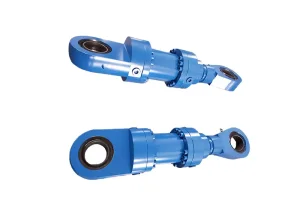
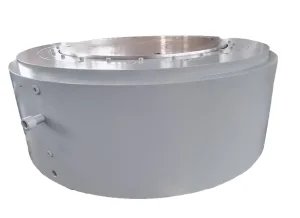
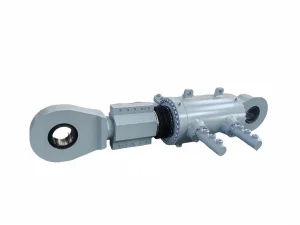
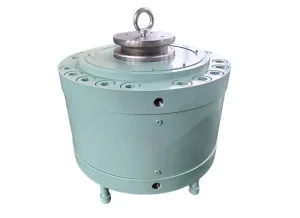
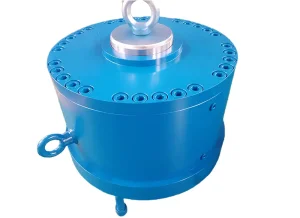
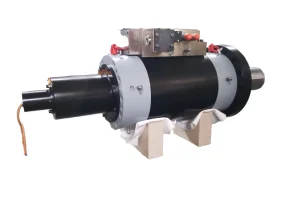
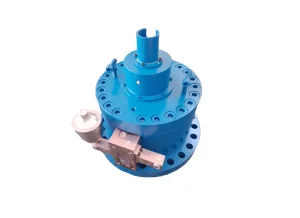
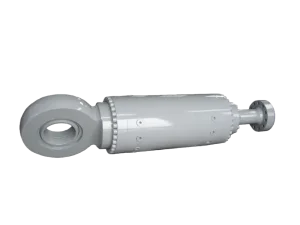
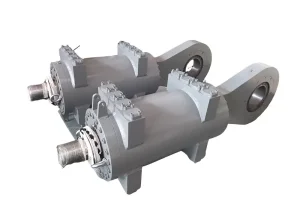
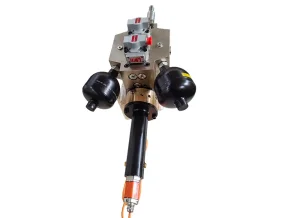
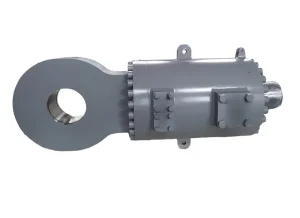
Precision-engineered heavy drive cylinders optimized for Israel's cement production facilities, raw material mills, and high-load industrial machinery.
Israel’s heavy industrial ecosystem—spanning limestone quarrying, clinker production in the Ramla and Har Tuv corridors, chemical processing near the Dead Sea, and aggregate milling in the Negev desert—operates under exceptionally harsh environmental conditions. Among all core machinery in integrated cement manufacturing plants, the clinker grate cooler acts as a vital heat-recovery unit. Operating directly beneath the rotary kiln discharge, grate coolers subject hydraulic stroke cylinders to extreme radiant temperatures exceeding 350°C, highly abrasive clinker dust (composed of calcium silicate, silica, and alumina fines), and continuous cyclic dynamic shock.
For Israeli procurement directors, plant engineers, and maintenance managers, cylinder failure during peak cement demand triggers devastating operational losses. Unscheduled downtime on a grate cooler drive cylinder halts the entire clinker line, resulting in hourly losses upwards of tens of thousands of USD. As a specialized engineering manufacturer and direct exporter in Changzhou, China, Changzhou Xuanda Hydraulic Electromechanical Equipment Co., Ltd. supplies OEM-standard and custom-built Great Cooler hydraulic cylinders engineered specifically to withstand the dual challenges of Israel’s climate and rigorous production cycles.
Integrated internal cooling passages, dual-shield heat deflectors, and high-temperature Viton/PTFE compound seal matrices engineered to retain elastic memory up to 260°C continuous fluid heat.
Multi-stage scraper rings featuring polyurethane and brass-filled PTFE wipers eliminate micro-fine clinker dust ingress, protecting internal bore walls and rod seals from scouring.
Heavy-wall seamless steel tubing (ST52.3 / E355) honed to Ra < 0.2 µm paired with induction-hardened chrome rods withstand millions of 15-30 SPM continuous reciprocation cycles.
Providing genuine Information Gain requires analyzing the mechanical kinematics behind clinker transport inside a grate cooler. Modern high-efficiency grate coolers (such as fourth-generation reciprocating push-floor coolers) rely on hydraulic drive cylinders to move heavy floor grates back and forth at precise, variable frequencies. The hydraulic cylinder must exert massive forward thrust to push tons of incandescent clinker while maintaining smooth deceleration at stroke ends to prevent structural fatigue on the cooler chassis.
Below is a technical parameter comparison highlighting how Xuanda's customized Great Cooler cylinders compare with standard industrial hydraulic units installed across Israeli processing facilities:
| Engineering Attribute | Standard Hydraulic Cylinder | Xuanda Heavy-Duty Great Cooler Cylinder | Operational Benefit for Israeli Plants |
|---|---|---|---|
| Bore Diameter Range | 100mm – 250mm | 160mm – 400mm+ Custom | Higher thrust capacity for high-capacity clinker lines (3,000–10,000 tpd). |
| Piston Rod Surface | Standard Chrome Plating (20-30 µm) | Double Chrome / Laser Cladded Ni-Cr (50-80 µm) | Extreme corrosion resistance against coastal salt air and micro-abrasive dust. |
| Seal Matrix System | Standard NBR / Nitrile Seals | Fluoro-elastomer (Viton) + Bronze-Filled PTFE | Prevents thermal hardening and oil leakage up to 200°C fluid operating temp. |
| Cushioning Mechanism | Fixed Pin Cushioning | Adjustable Hydraulic End-Position Proportional Dampening | Eliminates structural vibration and mechanical shock on push-rod linkages. |
| Side Load Capability | Max 2% - 3% of Axial Force | Up to 10% - 15% via Hydrostatic / Composite Bushings | Prevents cylinder scoring during thermal expansion misalignments of the cooler bed. |
Israeli cement facilities located in regions such as Ramla or the Negev face a dual environmental threat: airborne saline humidity from the Mediterranean coastline coupled with alkaline particulate dust. Standard chrome-plated rods quickly develop pitting corrosion when subjected to atmospheric salts and ambient heat during downtime.
To solve this problem, Xuanda utilizes advanced surface engineering techniques. Our piston rods undergo high-frequency induction hardening (HRC 58–62) followed by electro-chemical double-layer hard chrome plating or specialized HVOF (High-Velocity Oxygen-Fuel) laser cladding. This treatment creates an impervious barrier with salt spray resistance exceeding 1,000 hours under ASTM B117 standards, ensuring zero micro-fissuring and smooth seal interaction over millions of strokes.
In the modern global industrial supply chain, procurement teams in Israel require more than just technical precision—they demand supply chain agility, cost efficiency, and fast delivery timelines. Located in Changzhou, Jiangsu Province—the core hub of China’s advanced machinery manufacturing cluster—Xuanda leverages direct access to world-class raw steel forging facilities, precision seal manufacturers, and deep-hole honing specialization.
Our 20,000m² facility features imported heavy-duty CNC lathes, deep-hole boring machines, and automated honing equipment ensuring bore dimensional tolerances within H7-H8 levels.
Direct maritime shipping routes from Shanghai/Ningbo ports to Haifa and Ashdod ports allow expedited emergency freight options within 18 to 25 days door-to-port delivery.
Even without original European OEM CAD drawings, our technical team reverse-engineers worn cylinders from site measurements or photos, delivering 1:1 drop-in replacement units.
As the global cement sector transitions toward green manufacturing and digital plant optimization, hydraulic actuation systems are undergoing significant technological evolutionary shifts. Israeli industrial producers are under increasing regulatory pressure to optimize energy usage and eliminate uncaptured emissions. Xuanda is actively driving hydraulic innovations aligned with these goals:
Embedding internal linear magnetostrictive position sensors (LVDT) and embedded micro-pressure and temperature sensors. This enables real-time predictive maintenance telemetry directly into plant SCADA systems, preventing unexpected grate cooler failures.
Replacing traditional contact seals with high-precision clearance seals and hydrostatic oil-film bearings. This reduces internal seal friction to near zero, lowering hydraulic power consumption by up to 12% and extending cylinder operating life.
Developing self-contained, compact EHA units for grate coolers and vertical roller mills that eliminate centralized hydraulic piping stations, reducing fluid volume requirement by 70% and preventing fluid leakage risks.
Explore our expanded catalogue of specialized hydraulic cylinders built for cement crushing, raw grinding, vertical mills, and closed-loop industrial automation.
Every Great Cooler hydraulic cylinder leaving Xuanda’s Changzhou facility undergoes 100% factory pressure and performance verification on specialized high-pressure test rigs. We engineer strictly in accordance with international standards including ISO 6020/2, ISO 6022, DIN 24333, and ASME specifications, ensuring seamless integration with existing European or Asian OEM machinery installed across Israel.
All cylinders are subjected to 1.5x nominal working pressure dynamic holding tests (up to 40 MPa / 400 Bar) to guarantee zero internal bypass and rod-seal tightness under peak surge pressures.
Supplied with complete quality documentation, including Material Test Certificates (EN 10204 3.1), Chrome Plating Thickness Reports, Roughness Charts, and Full Assembly CAD Dimensional Records.
We offer direct spare seal kit dispatch (Merkel, Hallite, SKF components) and 24/7 engineering assistance for Israeli cement plant engineers to simplify ongoing lifecycle maintenance.
Technical answers for procurement managers and mechanical engineers sourcing hydraulic cylinders for Israeli industrial operations.
Contact Changzhou Xuanda's engineering specialists today. Obtain technical consultation, detailed CAD drawings, and competitive direct-factory quotes tailored to your plant’s operational demands.