Precision-machined high-load hydraulic actuators tailored for Luzon's heavy manufacturing corridor, cement grinding facilities, and port handling gear.
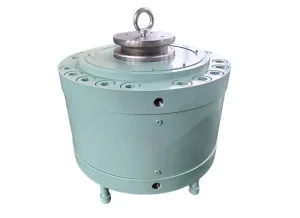
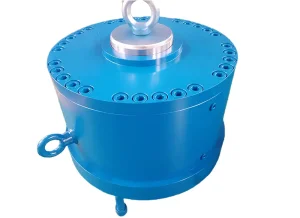
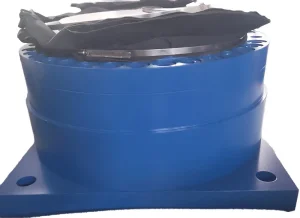
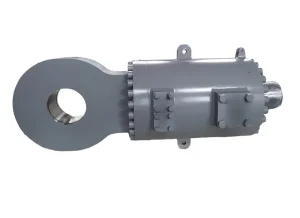
As the economic powerhouse of the Philippines, Metro Manila and its adjoining industrial regions—including Cavite, Laguna, Batangas, Bulacan, and Pampanga—are undergoing unprecedented industrial modernization. Driven by national infrastructure initiatives such as the "Build Better More" program, port expansion projects at Manila North and South Harbors, and massive commercial land reclamations along Manila Bay, the regional demand for heavy-duty industrial engineering cylinders has escalated rapidly.
Local cement manufacturing plants in Rizal and Bulacan, steel rebar rolling mills in Valenzuela, and marine shipyards along Manila Bay operate under demanding continuous-duty cycles. Equipment failure in these sectors incurs massive downtime costs. Consequently, plant procurement officers and chief engineers in Manila are migrating away from standard off-the-shelf actuators toward custom-engineered hydraulic cylinders capable of withstanding extreme pressure spikes (up to 350 bar), heavy side-loads, and harsh ambient tropical moisture.
Globally, the industrial engineering cylinder landscape is experiencing a technological evolution toward energy efficiency, digital twin compatibility, and zero-leakage hydrostatic fluid power systems. Modern heavy industry demands cylinders that do not merely generate mechanical force, but also provide real-time dynamic feedback.
Combining world-class CNC precision machining from Changzhou's advanced hydraulic hub with direct sea-freight logistics to Manila Port, delivering OEM-grade performance at an optimized total cost of ownership.
Our 20,000 m² Changzhou facility utilizes imported horizontal boring mills, deep-hole honing machines (up to 12m stroke), and 5-axis CNC machining centers. Bore tolerances are held within H7/H8, with internal honing surface roughness kept below Ra 0.1–0.2 μm.
No drawings? No problem. Manila maintenance managers can provide physical dimensional measurements or worn samples. Our engineering team reverse-engineers mounting clevises, ports, and internal cushion structures to guarantee 100% drop-in replacement for European and Japanese equipment.
Located in the Yangtze River Delta manufacturing ecosystem, we leverage direct maritime freight channels from Shanghai or Ningbo ports straight to Manila South or North Harbor (6 to 8 days transit time), drastically cutting downtime during planned shutdowns.
Metro Manila presents unique environmental challenges: relative humidity averaging above 80%, atmospheric salt air along Manila Bay, elevated ambient operating temperatures (up to 42°C), and severe dust contamination in cement or mining sites.
| Operating Sector | Key Industrial Locations | Cylinder Type / Application | Technical Solution for Manila Climate |
|---|---|---|---|
| Cement Manufacturing | Bulacan, Rizal, Batangas | Vertical Mill Loading & Roller Press Cylinders | High-temp Viton (FKM) seals, dust scraper rings, and nitrogen accumulator shock suppression. |
| Steel & Rebar Mills | Valenzuela, Caloocan, Laguna | Rolling Mill Thrust & Hydraulic Shear Actuators | Clearance seal zero-friction piston fit, water-glycol resistant seal compounds, 350-bar forged barrels. |
| Ports & Maritime Logistics | Manila North Harbor, South Harbor, Subic | Container Crane & Hatch Cover Cylinders | Dual-layer Nickel-Chrome plated rods (rating 10 NSS), marine C5-M anti-corrosion paint, AISI 316 fittings. |
| Flood Control & Hydro Power | Pasig River, Laguna de Bay Gates | Water Conservancy Dam & Sluice Gate Cylinders | Ceramic-coated piston rods, integrated stroke sensors, long-stroke heavy clevis mountings. |
Every industrial engineering cylinder shipped to Manila undergoes tailored material selection based on finite element analysis (FEA) and fluid motion dynamic modeling:
Whether you are designing a new industrial hydraulic system or sourcing replacement cylinders for aging European, Japanese, or American machinery, our senior engineering group is ready to assist.
To ensure seamless integration and eliminate unexpected engineering revisions during site installation, global procurement officers and Manila EPC contractors should audit five vital technical parameters before issuing POs:
Distinguish clearly between Nominal Working Pressure ($P_n$) and Maximum Peak System Shock Pressure ($P_{max}$). Cement roller presses and heavy hydraulic shears frequently experience pressure spikes 1.5x to 2x higher than static calculations. Barrel wall thickness and head flange bolting must be rated accordingly.
For long-stroke hydraulic cylinders (> 2,000mm), rod column stability (Euler buckling calculation) must be verified under maximum push load. High stroke velocity (> 0.5 m/s) requires end-position hydraulic cushioning (adjustable needle valves) to prevent violent mechanical impact against cylinder heads.
Confirm exact mounting interfaces (ISO 6020/2, ISO 6022, DIN 24339 or custom OEM trunnion/clevis configurations). Ensure oil inlet/outlet ports utilize ISO 11926-1 (SAE straight thread), BSPP (ISO 1179), or SAE 4-bolt code 61/62 flange connections matching Manila site piping manifolds.
Explore our full range of OEM-compatible and custom-built hydraulic cylinders exported directly to industrial plant operators across Manila and global markets.
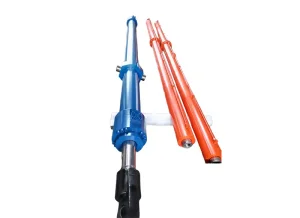
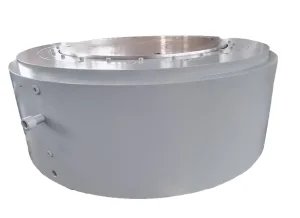
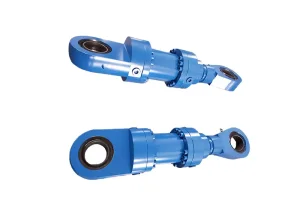
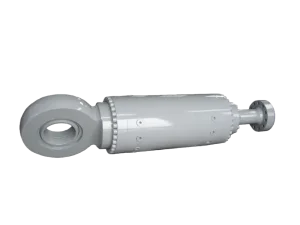
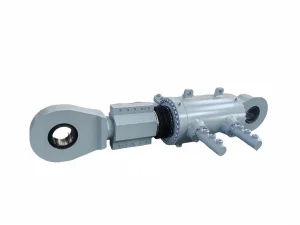
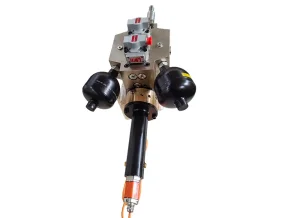
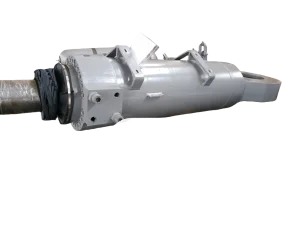
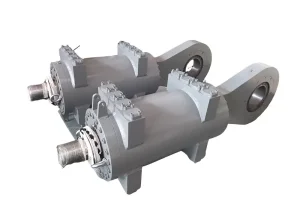
As Manila’s smart manufacturing and automated infrastructure advance, modern industrial cylinders are evolving into intelligent mechatronic actuators equipped with real-time condition monitoring.
Our smart cylinder series features integrated magnetostrictive position transducers, internal pressure sensors, and RTD temperature probes embedded directly within the cylinder head. Data is fed straight into plant SCADA or PLC systems via IO-Link, Profinet, or Modbus, facilitating automated continuous operation.
By monitoring internal pressure differential trends, fluid temperature spikes, and micro-vibration signatures, plant operators in Metro Manila can detect seal degradation or oil contamination weeks before physical failure occurs—shifting maintenance from reactive to predictive.
For heavy lateral dynamic forces found in scrap shear presses and large mill rollers, hydrostatic fluid bearings float the rod on a microscopic oil layer. Friction coefficient drops below 0.001, effectively eliminating stick-slip chatter and dramatically prolonging cylinder service life.
Expert insights on sourcing, compatibility, shipping, and engineering specifications for industrial hydraulic cylinders serving Metro Manila.
Yes. We manufacture heavy-duty loading, tensioning, and drive cylinders matching the mounting interfaces, stroke parameters, and working pressures of major international OEMs including Loesche (LM series), FLSmidth (ATOX series), UBE (UM series), Pfeiffer (MPS series), and Chengdu Leejun (CLF series). Brand names are referenced solely to indicate technical compatibility; Changzhou Xuanda builds compatible, heavy-duty replacement units tailored to your site specifications.
Fabrication and testing lead time generally ranges from 3 to 5 weeks depending on cylinder size, material specs, and quantity. Ocean freight transit from Shanghai or Ningbo ports directly to Manila South Harbor or Manila North Harbor takes approximately 6 to 8 days. For urgent plant breakdown situations, air freight delivery to Ninoy Aquino International Airport (MNL) can be arranged within 3 to 5 days after testing completion.
All exported cylinders destined for coastal or high-humidity regions in the Philippines undergo strict surface protection protocols. Piston rods receive heavy hard chrome plating (minimum 30–50 μm thickness) or optional dual-layer Nickel-Chrome plating achieving ISO 9227 Neutral Salt Spray (NSS) ratings up to 500+ hours. Cylinder barrels are finished with heavy-duty epoxy primer and C5-M marine-grade polyurethane topcoats resistant to salt air, humidity, and industrial chemical exposure.
Every shipment includes a comprehensive technical dossier comprising: 3D/2D general arrangement drawings, Material Mill Test Certificates (MTR) for steel barrels and rods, Hydrostatic Pressure Test Records (pressure chart over time), Quality Inspection Reports (dimensional, chrome thickness, surface roughness), Seal Material Data Sheets, and an Operation & Maintenance Manual in English.
Clearance Seal Cylinders utilize ultra-precise micrometric tolerances between piston and barrel to maintain sealing without elastomeric contact, delivering virtually zero friction and high sensitivity for servo test loops. Low-Friction Seal Cylinders employ specialized PTFE/polyurethane compounds to reduce stick-slip during dynamic control loops. Hydrostatic Support Cylinders float the piston and rod on a pressurized oil film, allowing the unit to handle high lateral side-loads without seal damage or metal contact.
Absolutely. Our reverse-engineering department routinely works from physical samples, dimensional field measurements, and equipment nameplate data provided by Manila plant maintenance teams. We create detailed 3D CAD models and production drawings, submit them to your engineering department for formal sign-off, and proceed with precision CNC manufacturing.
Prior to packaging, 100% of manufactured cylinders undergo full-factory acceptance testing (FAT) on our automated hydraulic test stands. Testing protocols include: Static Proof Pressure Testing at 1.5x working pressure, Internal & External Seal Leakage Verification, Minimum Breakaway Friction Pressure Test, Cushion Performance Evaluation, and Sensor Calibration Checks.
From single custom replacement actuators to full plant project orders, Changzhou Xuanda Hydraulic delivers engineered power, rapid shipping to Manila ports, and full lifecycle engineering support.
