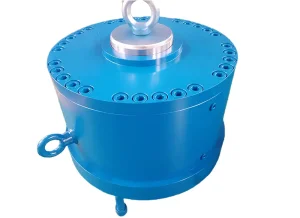
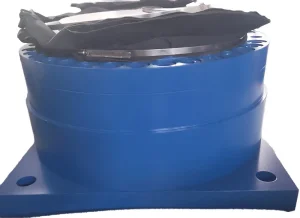
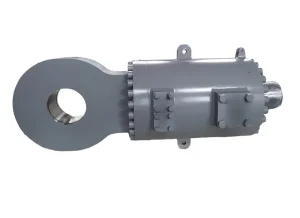
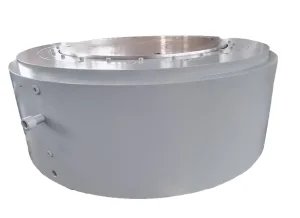
The Greater Jakarta metropolitan region—encompassing Special Capital Region Jakarta, Bekasi, Tangerang, Depok, and extending into the key industrial corridors of Cikarang, Karawang, and Banten (Cilegon)—represents the beating heart of Indonesia’s manufacturing, metallurgical, and infrastructure expansion.
As Indonesia accelerates its national strategic infrastructure initiatives, including port expansions at Tanjung Priok, massive cement clinker production across West Java, and steel rolling mill upgrades in Cilegon, the operational demands placed on heavy-duty hydraulic actuation systems have surged exponentially. Equipment reliability is no longer just a maintenance metric; it is a critical component of supply chain continuity across Southeast Asia.
With major logistics hubs surrounding Tanjung Priok Port and dense manufacturing zones in Cikarang-Karawang, local plants operate under strict 24/7 schedules. Unplanned hydraulic downtime in cement kilns or steel casting lines costs operators tens of thousands of USD per hour.
Greater Jakarta’s tropical climate introduces aggressive environmental factors: continuous relative humidity above 85%, ambient plant temperatures reaching 45°C, high atmospheric salt content along coastal industrial zones, and severe clinker dust abrasiveness.
Indonesian plant engineering directors require hydraulic cylinders that match or exceed original OEM specifications (such as Loesche, UBE, FLSmidth, and Leejun) while offering drop-in dimension interchangeability and superior anti-corrosive rod plating.
As industrial automation transitions toward Industry 4.0, traditional open-loop hydraulic cylinders are being superseded by electro-hydraulic servo systems featuring integrated telemetry, wearless seal profiles, and adaptive fluid mechanics.
Modern hydraulic cylinders deployed across Greater Jakarta cement and power plants are increasingly embedded with non-contact magnetostrictive position sensors (LVDT / SSI) and pressure transducers. These sensors transmit continuous position feedback down to ±0.01 mm and monitor internal cavity pressure spikes, communicating via Modbus, PROFINET, or IO-Link directly to the central SCADA system.
This real-time telemetry allows predictive maintenance algorithms to detect seal degradation, fluid contamination, or rod misalignment weeks before operational failure occurs.
For dynamic, high-frequency, or heavy lateral load operations, conventional elastomer seals experience rapid mechanical friction, stick-slip effect, and premature thermal breakdown. Xuanda’s advanced hydrostatic support cylinders utilize a high-pressure oil film (25–35 MPa) to float the piston rod inside the guide bushing.
This results in near-zero friction, absolute immunity to mechanical stick-slip, and an operational lifespan exceeding 50,000 continuous work hours under extreme lateral side-loads.
| Technical Criterion | Standard OEM Replacement Cylinder | Xuanda Next-Gen Servo / Heavy Duty Actuator |
|---|---|---|
| Sealing System Technology | Standard Polyurethane / NBR Elastomer Seals | Hydrostatic Support Oil Film / PTFE Clearance / Viton FKM |
| Friction Coefficient (μ) | 0.05 – 0.10 (High stick-slip risk) | 0.001 – 0.005 (Near-zero friction, ultra-responsive) |
| Piston Rod Surface Treatment | Single-Layer Hard Chrome (20–25 μm) | Double-Layer Ni-Cr Plating or HVOF Laser Cladding (40–60 μm) |
| Corrosion Resistance (Salt Spray) | 96 to 120 Hours (ASTM B117) | >500 Hours (Rating 10 under ASTM B117 marine test) |
| Sensor Integration | External Limit Switches (Optional) | Embedded Magnetostrictive LVDT (Internal, IP68 rated) |
| Operating Temperature Range | -10°C to +80°C | -20°C to +200°C (High-temp tropicalized seal matrix) |
From raw clinker grinding to deep-sea maritime port logistics, Xuanda Hydraulic provides application-engineered cylinder solutions designed for Indonesia’s specific industrial operating profile.
Equipped for extreme vibration, shock pressure up to 40 MPa, and heavy abrasive clinker environments. Applied in:
Engineered for the continuous casting machines, rolling mills, and hot-strip loops in the Cilegon industrial corridor:
Designed for Tanjung Priok port machinery, quay cranes, and coastal marine dredging installations requiring sea-water corrosion immunity:
Navigating industrial procurement in Indonesia requires total compliance with international manufacturing codes, seamless logistics via Tanjung Priok Port, and fast-response technical support.
Every hydraulic cylinder supplied to the Jakarta market strictly complies with international industrial standards, including ISO 9001:2015, ISO 14001, DIN 24338, ISO 6020/2, and ISO 6022. Furthermore, our engineering team works closely with local Indonesian importers to facilitate compliance documentation required by Indonesian National Standards (SNI) and Ministry of Industry guidelines.
All pressure containment parts undergo 100% hydrostatic testing at 1.5 times working pressure, complete ultrasonic non-destructive testing (NDT), and chemical composition verification via spectral analysis.
Located in Changzhou, China—a premier hydraulic manufacturing cluster—Xuanda maintains direct shipping lines from Shanghai/Ningbo ports directly to Tanjung Priok Port, Jakarta. Emergency transit times are optimized to minimize plant downtime.
We provide comprehensive after-sales technical support across Greater Jakarta, including on-site mounting inspection, seal replacement kit stocking, and reverse-engineering of obsolete European/Japanese hydraulic cylinders.
Changzhou Xuanda Hydraulic Electromechanical Equipment Co., Ltd. combines over 20,000 square meters of state-of-the-art manufacturing facilities with modern German and Japanese CNC precision tooling.
Equipped with heavy-duty deep-hole boring and honing machines capable of processing cylinder bores up to Ø1000mm and strokes up to 10,000mm with micrometer tolerances.
In-house automated hard chrome plating lines and laser cladding equipment ensure consistent layer thickness, micro-hardness exceeding 850 HV, and superior wear resistance.
Can't source original drawings from European OEMs? Our engineering team utilizes 3D laser scanners to reverse-engineer worn physical samples with 100% mounting accuracy.
When procurement heads and plant managers in Jakarta evaluate replacement hydraulic cylinders, focusing solely on initial purchase price often leads to costly premature failures.
To ensure seamless installation and zero modification on site, provide our engineering team with:
A low-quality cylinder with inadequate rod plating or budget seals can fail within 3 to 6 months in a West Java cement plant, resulting in:
The Xuanda Advantage: Engineered for extended MTBF (Mean Time Between Failures), reducing 5-year maintenance expenditures by up to 45%.
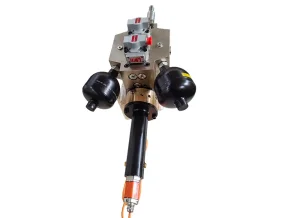
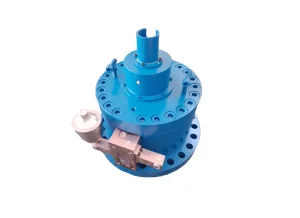
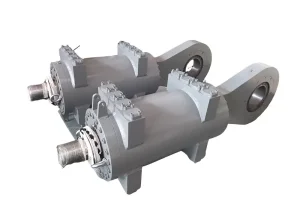
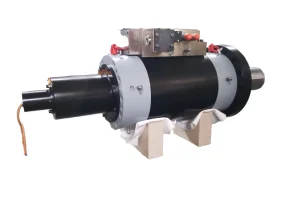
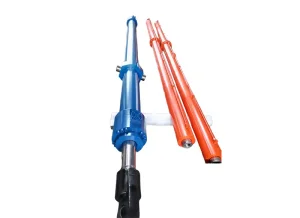
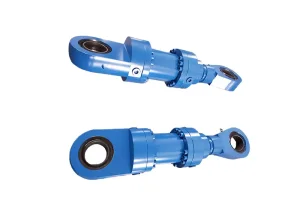
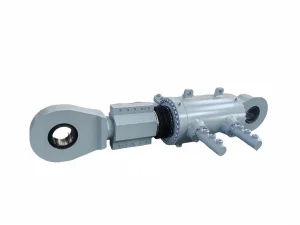
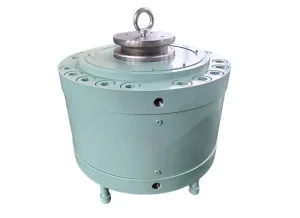
Explore our complete lineup of precision servo cylinders, clearance seal units, and heavy cement plant actuators engineered to drop directly into existing OEM positions.
Expert answers to key engineering, logistical, and technical questions regarding hydraulic cylinder procurement for the Jakarta market.
To combat the humid tropical environment and marine atmospheric corrosion surrounding the Tanjung Priok port zone and West Java coastal plants, Xuanda applies advanced piston rod coating technologies. Piston rods are treated with double-layer Nickel-Chrome plating or High-Velocity Oxygen-Fuel (HVOF) laser cladding. This provides over 500 hours of salt spray resistance (ASTM B117 Rating 10) and prevents pitting corrosion that degrades primary seals.
Yes. Xuanda specializes in manufacturing 100% dimensionally interchangeable replacement cylinders for international OEM machinery. Our cylinders match original mounting centerlines, port threads, pin diameters, and operating pressure ratings. OEM brand names are used for reference purposes; Xuanda provides superior high-durability replacement units engineered for heavy duty cycles.
Manufacturing lead times vary depending on cylinder bore and stroke size, typically ranging between 3 to 5 weeks. Ocean freight from Shanghai or Ningbo ports directly to Tanjung Priok, Jakarta takes approximately 7 to 10 days. For urgent plant breakdowns, emergency air-freight options via Soekarno-Hatta International Airport (CGK) are available.
Clearance seal cylinders rely on high-precision micro-gaps (micrometer fit) between the piston and barrel, eliminating physical contact seals for ultra-fast dynamic response. Low-friction seal cylinders utilize specialized PTFE step-seal compounds to minimize stick-slip in closed-loop servo systems. Hydrostatic support cylinders float the rod on a pressurized oil film, providing complete immunity to heavy lateral side-loads and extreme mechanical vibration.
Absolutely. If original technical drawings are unavailable, our engineers can work from physical nameplate data, high-resolution photographs, field dimensional measurements, or a physical sample. We reconstruct the complete CAD model, verify internal seal geometry, and issue new manufacturing drawings for client approval prior to production.
Every shipment includes a comprehensive Quality Assurance Dossier containing Material Test Certificates (EN 10204 3.1), Hydrostatic Pressure Test Reports, Chrome Coating Thickness Verification, Ultrasonic NDT Test Certificates, Dimension Inspection Sheets, and Certificate of Origin (COO) for customs clearance.
Talk directly with our senior hydraulic application engineers. Get a customized engineering proposal, drop-in replacement drawing, and competitive export quotation within 24 hours.
Send Inquiry Now