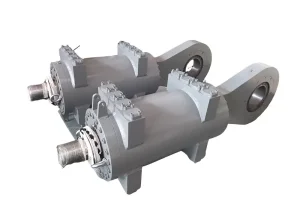
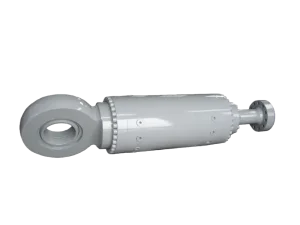
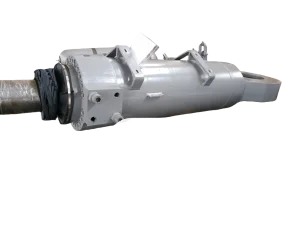
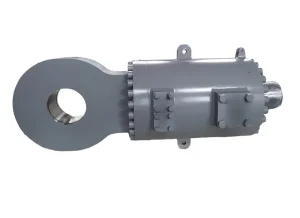
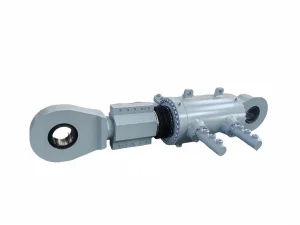
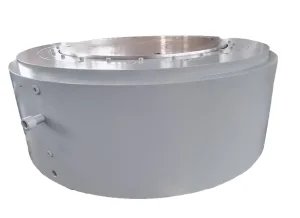
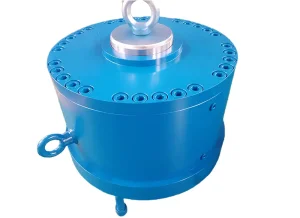
Engineered to original mounting parameters and dynamic duty cycles for major vertical roller mills (VRM) across Ghana's industrial free zones and mining corridors.
As West Africa’s premier gold producer and a fast-expanding industrial economy, the Republic of Ghana has entered a transformative era driven by aggressive infrastructure expansion, urban development, and mineral resource value-addition. Major industrial hubs—including the Tema Port Industrial Zone, the Takoradi Free Zone enclave, and the dense mining belts of Tarkwa, Obuasi, Ahafo, and Akyem—are scaling up their processing capacities. At the center of this industrial push lies high-capacity comminution and grinding equipment: modern Vertical Roller Mills (VRM) and Roller Presses.
In cement manufacturing facilities operated by leaders like Ghacem, Diamond Cement Ghana, CIMAF Ghana, CBI Ghana (Supacem), and Dangote Ghana, VRMs serve as the vital beating heart of raw meal preparation, clinker grinding, and slag processing. Unlike legacy ball mill circuits, vertical roller mills rely heavily on sophisticated hydromechatronic tensioning systems to exert immense, dynamically controlled grinding force onto the material bed.
Deploying heavy hydraulic infrastructure in Ghana presents unique environmental and operational challenges that off-the-shelf catalog cylinders cannot withstand:
From passive mechanical springs to active digital hydromechatronics: How global heavy industry is reducing specific power consumption per ground ton.
Global cement and mining industries are aggressively replacing energy-draining tumbling ball mills with vertical roller mills. VRMs achieve 20 kWh/t to 30 kWh/t lower electrical consumption. Achieving this efficiency requires hydraulic cylinders to maintain precise, unwavering grinding pressure across variable material bed thickness without pressure drift.
Modern vertical mill hydraulic cylinders act as dynamic active dampers. Integrating high-frequency proportional control valves and hydro-pneumatic nitrogen accumulators directly onto the cylinder manifold allows mill rollers to float dynamically over uneven feed beds while maintaining optimal comminution pressure.
Industry 4.0 adoption demands real-time stroke position sensing and internal pressure feedback. Our custom cylinders integrate non-contact magnetostrictive stroke transducers (e.g., MTS Temposonics) and pressure transmitters, delivering data directly to plant SCADA systems for predictive maintenance.
Engineered to excel across Ghana’s primary industrial sectors—from coastal cement grinding terminals to high-altitude mineral extraction operations.
At maritime industrial terminals in Tema and Takoradi, imported clinker, gypsum, and limestone are processed into bagged and bulk cement. High humidity combined with fine clinker dust creates a cementitious paste on exposed piston rods.
Solution: HVOF (High-Velocity Oxygen-Fuel) Cr3C2-NiCr ceramic coating or dual-layer Nickel-Chrome plating combined with aggressive brass-encased scraper rings to prevent rod scoring.
Gold processing facilities in Tarkwa, Obuasi, and Ahafo utilize semi-autogenous and secondary fine-grinding mills. Severe mechanical vibration and dense mineral slurries test cylinder structural integrity.
Solution: Heavy-wall forged 42CrMo4 alloy cylinder bodies with integrated trunnion mounting and hydrostatic sleeve support to eliminate stick-slip friction under extreme lateral loads.
Bauxite and manganese open-pit mining operations require heavy-duty roller presses and crushing mills to reduce raw ore size prior to export or downstream refining.
Solution: Extra-large bore (up to 500mm) double-acting hydraulic cylinders equipped with heavy cushion valves to absorb sudden load dumps without seal blowouts.
Built in Changzhou, China with imported German & Japanese CNC precision machining, tested under simulated industrial shock loads.
| Engineering Parameter | Standard Specification Range | Custom Heavy-Duty Options (Ghana Specification) |
|---|---|---|
| Cylinder Bore Diameter | 160 mm – 400 mm | Up to 600 mm for Ultra-Heavy VRMs |
| Piston Rod Diameter | 110 mm – 280 mm | Forged 42CrMo4 / 20MnV6 Induction Hardened |
| Maximum Working Pressure | 25 MPa (250 bar) – 31.5 MPa | 40 MPa (400 bar) Dynamic Peak Rating |
| Stroke Length | 150 mm – 1200 mm | Custom Stroke with Integrated LVDT Sensing |
| Piston Rod Surface Coating | Hard Chrome Plating (30–50 µm) | HVOF Ceramic (Cr3C2-NiCr) / Laser Cladding |
| Sealing System Architecture | Standard PTFE + NBR Tandem Seals | FKM Viton / Bronze-Filled PTFE Low-Friction Seals |
| Operating Fluid Temperature | -20°C to +80°C | High-Temp Thermal Barrier Seals (-10°C to +120°C) |
| Mounting Interface Styles | Cleves, Trunnion, Spherical Bearing, Flange | 100% Drop-in Compatibility with Loesche, ATOX, MPS, UBE |
If your legacy mill cylinder in Kumasi or Tema is obsolete or lacking original technical drawings, our engineering team can rebuild exact functional replicas from worn samples, physical measurements, nameplates, or high-definition 3D field scans.
A vertical mill hydraulic cylinder cannot perform reliably without a properly sized accumulator system. We deliver fully integrated hydraulic station packages, including manifold blocks, bladder accumulators, and directional control valves calibrated to your mill’s tension profile.
We provide full export-compliant sea-freight and air-freight packaging. Heavy-duty wooden crates treated to ISPM-15 standards protect your cylinders against salt mist and rough handling during transit to Tema Port or Takoradi Harbor.
Technical insights addressing common field challenges, installation questions, and ordering protocols.
Engineered for grinding, pressing, cooling, and heavy material handling across West Africa.
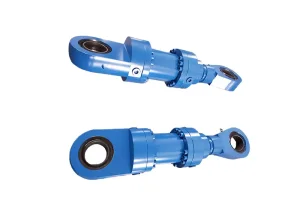
Whether you are upgrading an existing grinding line in Tema, replacing a damaged OEM cylinder in Tarkwa, or engineering a new processing plant, our senior hydraulic engineers are ready to review your parameters.
Send Inquiry Now